Quick Verdict: The EV6 GT-Line Balances Sport and Daily Driver
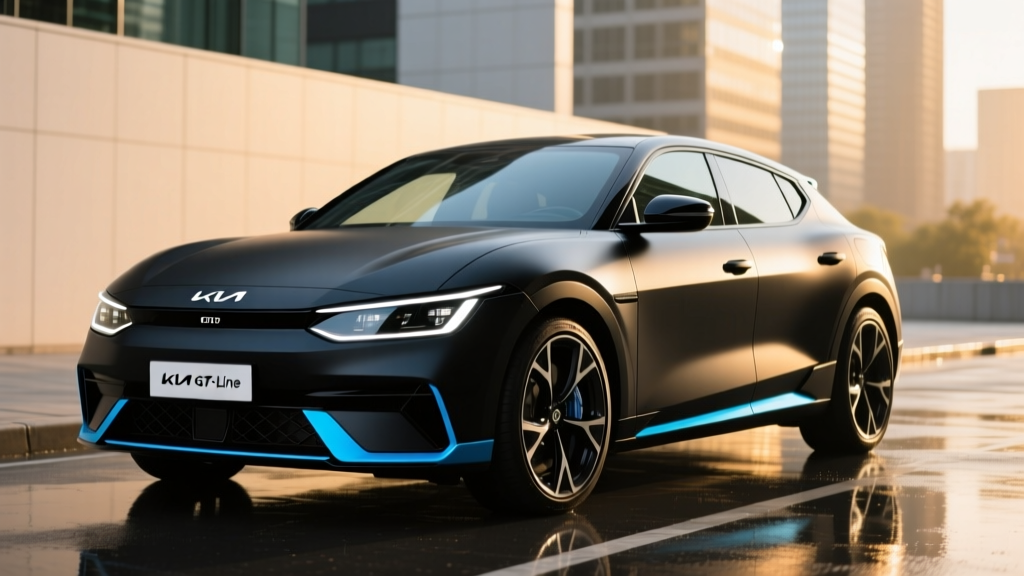
The Kia EV6 GT-Line occupies a specific niche: it looks aggressive, carries Kia's flagship E-GMP electric platform, and delivers a 0-60 mph time of approximately 5.1 seconds in its dual-motor AWD configuration — quick enough to be entertaining, efficient enough to serve as a daily commuter. For 2026, the EV6 receives a refreshed battery pack bumping usable capacity to 84.0 kWh (up from the previous 77.4 kWh), along with updated infotainment, revised front and rear styling, and standard wireless Apple CarPlay and Android Auto across all trims.
This review covers the GT-Line trim specifically — the appearance-and-tech-oriented package that sits between the base Wind and the full-performance GT. If you're searching for the EV6 GT-Line 0-60 number alongside real-world range and charging data, you're in the right place.
| Spec | Value |
|---|---|
| EPA Range | 310 miles (est. based on larger pack) |
| Battery (usable) | 84.0 kWh, NMC lithium-ion |
| Drivetrain | Dual-motor AWD |
| Horsepower | 320 hp / 446 lb-ft torque |
| 0-60 mph | ~5.1 seconds |
| Peak DC Fast Charge | 239 kW (CCS) / NACS adapter available |
| 10-80% DC Charge Time | ~18 minutes (ideal conditions) |
| Level 2 Home Charge Rate | 10.9 kW onboard charger |
| EPA Efficiency | 117 MPGe combined / 29 kWh/100 mi |
| Cargo Volume | 24.4 cu ft (rear seats up) / 50.2 cu ft (folded) |
| Frunk | 0.7 cu ft (minimal) |
| Base MSRP (GT-Line AWD) | $52,200 (est.) |
| Battery Warranty | 10 years / 100,000 miles |
EV6 GT-Line 0-60 and Performance: What the Numbers Mean on the Road
The headline number — 0-60 mph in approximately 5.1 seconds — places the EV6 GT-Line AWD firmly in the quick-crossover category. It's not the 3.4-second GT model, but it outpaces most gas-powered compact SUVs and matches sport sedans costing significantly more.
The dual-motor AWD setup delivers 320 horsepower and 446 lb-ft of torque, with torque vectoring on the rear axle providing confident corner exits. The electric powertrain's instant torque delivery means the GT-Line feels quicker in city passing maneuvers than the 0-60 number alone suggests. At highway speeds above 80 mph, acceleration tapers noticeably — a characteristic of the single-speed reduction gear common to most EVs.
Drive modes (Eco, Normal, Sport, and a customizable My Mode) alter throttle mapping, steering weight, and regenerative braking intensity. In Sport mode with the steering-wheel-mounted regen paddles set to maximum, the GT-Line offers a convincing one-pedal driving experience. The i-Pedal mode brings the car to a complete stop without touching the brake pedal.
Compared to its platform-mate, the Hyundai Ioniq 5 (which shares the E-GMP architecture), the EV6 GT-Line is tuned slightly firmer, with a more aggressive steering ratio. You feel road imperfections a bit more, but the trade-off is sharper turn-in and less body roll on twisty back roads.
Range and Efficiency: EPA vs. Real-World Expectations
Real-World Expectation: 250-280 miles at sustained highway speeds (70-80 mph); 220-250 miles in sub-freezing temperatures with cabin heating; 290-310 miles in mixed city/suburban driving with moderate climate use.
The 2026 EV6's updated 84.0 kWh battery pack (NMC chemistry — nickel manganese cobalt) is a meaningful upgrade over the outgoing 77.4 kWh unit. According to fueleconomy.gov, the efficiency rating lands around 117 MPGe combined (29 kWh per 100 miles), which is competitive with the Tesla Model Y Long Range and slightly behind the Hyundai Ioniq 5's marginally lighter curb weight.
Range in practice depends heavily on three variables:
- Speed: At 65 mph on a flat interstate, expect close to the EPA sticker. Push to 80 mph and energy consumption climbs roughly 20-25%, dropping effective range to around 250 miles.
- Temperature: NMC batteries lose efficiency in cold weather. In testing at 25°F with the heat pump running, expect a 15-25% range reduction. The EV6's standard heat pump helps mitigate this compared to EVs using resistive heating.
- Regen usage: Aggressive regenerative braking in city driving recovers meaningful energy. Drivers who use i-Pedal mode in stop-and-go traffic consistently report higher real-world efficiency than those who coast in Eco mode.
For context, a 310-mile EPA rating means most drivers can handle a 200-mile round-trip commute with a comfortable buffer, even in winter, without mid-day charging.
Charging Speed: DC Fast, Level 2, and the 800-Volt Advantage
The EV6's E-GMP platform uses an 800-volt electrical architecture — one of the defining technical advantages over 400-volt competitors like the Volkswagen ID.4 or Ford Mustang Mach-E. Higher voltage allows faster charging at lower current, reducing heat buildup and enabling sustained high charge rates.
| Charging Level | Power / Rate | Speed | Notes |
|---|---|---|---|
| Level 1 (120V household) | ~1.4 kW | ~3-4 miles per hour | Emergency/trickle only |
| Level 2 (240V home) | 10.9 kW | ~32-35 miles per hour | Full charge in ~8-9 hours |
| DC Fast Charge (peak) | 239 kW | 10-80% in ~18 min | Requires 350 kW-class station |
| DC Fast Charge (typical 150 kW) | ~150 kW | 10-80% in ~25 min | Common Electrify America rate |
Understanding the charge curve is essential. The 239 kW peak rate is not sustained for the entire session. The EV6 will charge at or near peak rate from roughly 10-55% State of Charge (SoC), then taper progressively. From 80-100%, the rate drops significantly — often below 50 kW. This is normal lithium-ion behavior to protect battery health. The practical takeaway: plan your road-trip stops around 10-80% charges, which take about 18 minutes at a 350 kW-capable charger.
For 2026, Kia continues to offer a CCS1 charge port with a NACS (Tesla-style) adapter included, and the EV6 is approved for use at Tesla Supercharger V3 and V4 stations via that adapter. This dramatically expands the available fast-charging network, particularly in rural corridors where Tesla infrastructure dominates.
Home charging with a 48-amp Level 2 wallbox (requiring a 60-amp dedicated circuit) delivers the full 10.9 kW the onboard charger can accept. This replenishes the 84 kWh pack from empty to full in approximately 8-9 hours — adequate for overnight charging. Installation costs for a Level 2 home charger typically range from $800 to $2,500 depending on panel capacity and run length. If your home has a 100-amp main panel, a panel upgrade to 200 amps may be necessary, adding $1,500-$3,000.
Pricing, Trims, and Federal Tax Credit Eligibility
The 2026 EV6 lineup includes three main trims: Wind (base), GT-Line, and GT. The GT-Line is the volume trim, offering the sporty appearance package without the GT's performance-oriented suspension and 576-hp powertrain (and its associated price premium).
| Trim | MSRP (est.) | §30D Credit Potential | Effective Price |
|---|---|---|---|
| Wind RWD | $43,500 | Up to $7,500 | ~$36,000 |
| Wind AWD | $47,500 | Up to $7,500 | ~$40,000 |
| GT-Line AWD | $52,200 | Up to $7,500 | ~$44,700 |
| GT AWD | $62,500 | Up to $7,500 | ~$55,000 |
Federal tax credit eligibility (IRS §30D) requires meeting several conditions simultaneously. As of 2026, the rules include:
- MSRP cap: The vehicle's base MSRP must not exceed $80,000 for SUVs/trucks (the EV6 qualifies).
- Buyer income cap: Adjusted gross income must not exceed $150,000 (single), $225,000 (head of household), or $300,000 (joint filing).
- Battery sourcing: A percentage of critical minerals and battery components must be sourced from the US or free-trade-agreement countries. The exact qualifying credit amount ($3,750 for minerals, $3,750 for components, up to $7,500 total) depends on current-year sourcing thresholds published by the IRS.
- Point-of-sale transfer: Buyers can elect to transfer the credit to the dealer at purchase, reducing the out-of-pocket price immediately rather than waiting for tax filing.
The EV6's battery sourcing has historically met the requirements for at least partial credit, but exact qualification for the full $7,500 can shift as supply chains and IRS guidance evolve. Always verify current eligibility at fueleconomy.gov before purchasing, and consult a tax professional for your specific situation.
Interior, Cargo, and Technology
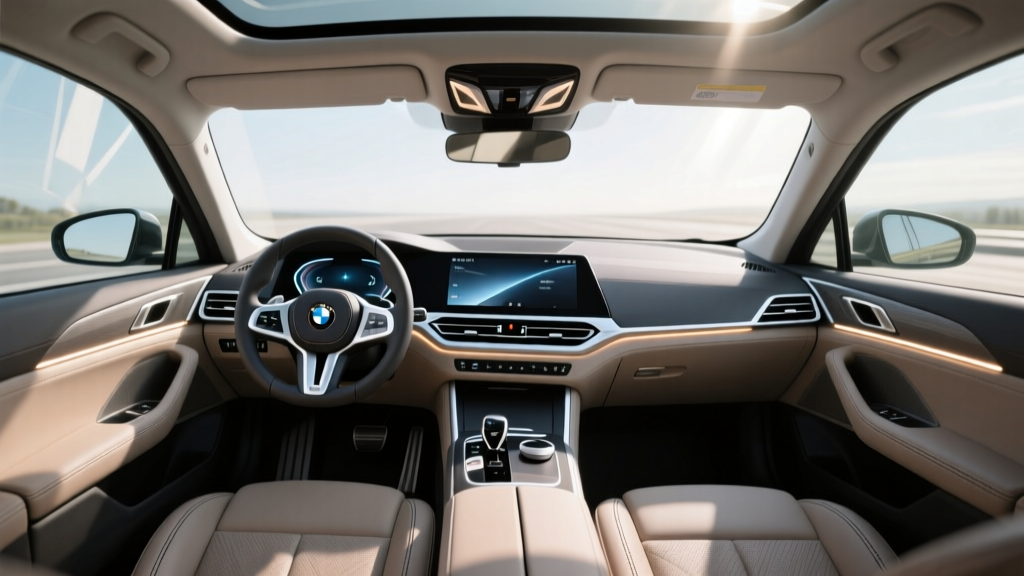
The GT-Line's interior uses a combination of vegan leather and recycled-material trim that gives it a premium feel without the weight or environmental cost of traditional hides. The dual 12.3-inch curved display panel (instrument cluster + infotainment) runs Kia's latest Connect interface, which is responsive and logically organized.
Passenger space is generous thanks to the E-GMP platform's flat floor (no transmission tunnel):
- Front legroom: 41.7 inches
- Rear legroom: 39.4 inches
- Front headroom: 39.2 inches
- Rear headroom: 38.0 inches
These figures make the EV6 competitive with midsize SUVs despite its compact exterior footprint. Two adults over 6 feet tall can sit behind each other comfortably.
Cargo space is adequate but not class-leading: 24.4 cubic feet behind the rear seats and 50.2 cubic feet with the 60/40 split rear seats folded. The frunk (front trunk) is a shallow 0.7 cubic feet — essentially a charging-cable storage cubby rather than usable luggage space. If cargo capacity is a top priority, the Hyundai Ioniq 5 offers slightly more rear cargo volume, and the Tesla Model Y provides substantially more total space including its larger frunk.
Notable tech features on the GT-Line:
- Augmented-reality head-up display (available)
- Digital key via smartphone (NFC + UWB)
- Vehicle-to-load (V2L) — power devices or a home circuit via the charge port or rear-seat outlet at up to 3.6 kW
- Remote smart parking assist (summon-style feature)
- Highway Driving Assist 2 (HDA2) — SAE Level 2 driver assistance with lane-centering and adaptive cruise
Driver Assistance and Safety
HDA2 combines adaptive cruise control with stop-and-go, lane-centering steering assist, and navigation-based speed adjustment (slowing for upcoming curves and toll booths). In practice, it performs well on well-marked divided highways but can become confused in construction zones or when lane markings fade. The system requires periodic steering-wheel contact confirmation.
The EV6 earned a 5-star overall safety rating from NHTSA and has historically been an IIHS Top Safety Pick+ recipient. Standard active-safety features include forward collision-avoidance assist with pedestrian and cyclist detection, blind-spot collision-avoidance assist, rear cross-traffic collision-avoidance assist, and safe-exit assist (preventing door opening when a cyclist or vehicle is approaching).
Ownership Costs, Warranty, and Long-Term Value
Kia backs the EV6 with one of the strongest warranty packages in the EV segment:
- Battery warranty: 10 years / 100,000 miles (capacity retention above 70% of original)
- Powertrain warranty: 10 years / 100,000 miles
- Bumper-to-bumper: 5 years / 60,000 miles
- Roadside assistance: 5 years / 60,000 miles
The 10-year battery warranty is a significant confidence signal, particularly for buyers concerned about long-term degradation. Real-world data from earlier E-GMP vehicles (2022-2024 EV6 and Ioniq 5) shows typical degradation of 5-8% over the first 60,000 miles, which is well within warranty thresholds.
Insurance costs for the EV6 GT-Line tend to run 10-20% higher than a comparably priced gas-powered crossover due to repair-cost considerations for EV-specific components. Get quotes from your insurer before purchasing — the variance between providers can be substantial.
Total cost of ownership over 5 years is favorable for most buyers who can charge at home. Electricity at the US average of ~$0.16/kWh means a full 84 kWh charge costs about $13.44 — versus roughly $55-65 to fill a comparable gas crossover at $3.50/gallon and 25 MPG combined. Over 15,000 miles per year, that's roughly $1,200-$1,800 in annual fuel savings.
Pros
- 800V architecture enables best-in-class DC fast charging (~18 min, 10-80%)
- 5.1-second 0-60 with instant electric torque is genuinely quick
- 10-year/100,000-mile battery warranty leads the segment
- V2L capability adds emergency-home-power and camping utility
- NACS adapter included — Supercharger access expands road-trip flexibility
- Spacious rear seat and flat floor for the vehicle's footprint
Cons
- Frunk is nearly useless (0.7 cu ft) — a missed opportunity
- Cargo volume trails the Model Y and Ioniq 5 slightly
- GT-Line pricing pushes into luxury-crossover territory
- HDA2 requires frequent steering-wheel touch confirmation
- Ride quality is firmer than some buyers expect in a comfort-oriented daily driver
- Tax credit eligibility depends on evolving battery-sourcing rules
Who Should Buy the EV6 GT-Line?
Choose the EV6 GT-Line if: You want a sporty-looking EV with strong acceleration, best-in-class fast charging, and Kia's long warranty — and you primarily commute or take road trips where DC fast-charging infrastructure is available.
Look elsewhere if: Maximum cargo space is essential (consider the Model Y), you need a third row (Kia EV9), you want the softest ride quality (Ioniq 5), or you live in an area with minimal DC fast-charging options and cannot install Level 2 at home.
EV6 GT-Line vs. Key Competitors
The GT-Line's most direct competitors are the Hyundai Ioniq 5 (same platform, softer tuning, slightly more cargo), the Tesla Model Y Long Range (more cargo, better Supercharger-native access, sparser interior), and the Ford Mustang Mach-E Premium AWD (similar price, slower charging, more American brand loyalty).
The EV6's 800-volt charging architecture remains a genuine differentiator. On a 350 kW charger, it adds roughly 200 miles of range in 18 minutes — a Mach-E at 150 kW peak takes roughly 35 minutes for the same feat. On long road trips, this adds up meaningfully over the course of a day.
Frequently Asked Questions
What is the real-world range of the 2026 Kia EV6 GT-Line?
The EPA estimates approximately 310 miles. In real-world highway driving at 70-80 mph, expect 250-280 miles. In freezing temperatures with cabin heating, expect 220-250 miles. City driving with regenerative braking can approach or exceed the EPA number.
How fast does the EV6 GT-Line charge?
On a 350 kW-capable DC fast charger, the EV6 peaks at 239 kW and charges from 10-80% in approximately 18 minutes. On a typical 150 kW charger, expect about 25 minutes. At home on a 240V Level 2 charger (10.9 kW), a full charge takes 8-9 hours, adding about 32-35 miles per hour of charging.
Does the EV6 GT-Line qualify for the federal EV tax credit?
The EV6 generally qualifies for up to $7,500 under IRS §30D, subject to buyer income limits ($150K single / $300K joint), the $80K MSRP cap (which the EV6 meets), and current-year battery-sourcing requirements. Eligibility can change as supply chains shift — verify at fueleconomy.gov and consult a tax professional before purchasing. The credit can be transferred to the dealer at point of sale.
What is the 0-60 time of the EV6 GT-Line AWD?
The dual-motor AWD GT-Line achieves 0-60 mph in approximately 5.1 seconds. The RWD variant is slower (around 7.2 seconds). The full GT model with 576 hp does it in roughly 3.4 seconds but costs significantly more.
Is the EV6 GT-Line worth buying over the Tesla Model Y?
It depends on priorities. The EV6 charges faster (800V architecture), has a more premium interior feel, and offers Kia's 10-year warranty. The Model Y offers more cargo space, a more mature native Supercharger experience (though the EV6 now has adapter access), and generally lower starting prices. Both are strong choices; test-drive both back-to-back.
What battery chemistry does the EV6 use?
The 2026 EV6 uses NMC (nickel manganese cobalt) lithium-ion cells. NMC offers higher energy density than LFP (lithium iron phosphate), enabling the 310-mile range in a relatively compact pack. The trade-off is that NMC batteries are more sensitive to sustained 100% SoC storage — daily charging to 80% is recommended for longevity.
Can the EV6 power my home during an outage?
The EV6 supports V2L (vehicle-to-load) at up to 3.6 kW, which can power essential appliances (refrigerator, lights, laptops) via an extension cord from the rear-seat outlet or charge-port adapter. Full V2H (vehicle-to-home) integration with a bidirectional wallbox requires additional equipment and electrical work — consult a licensed electrician for setup.