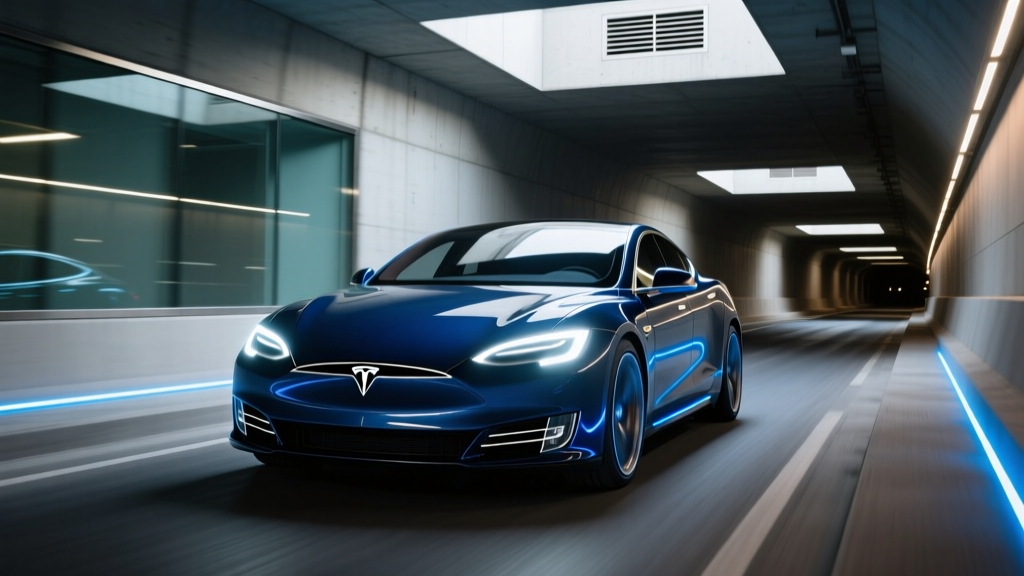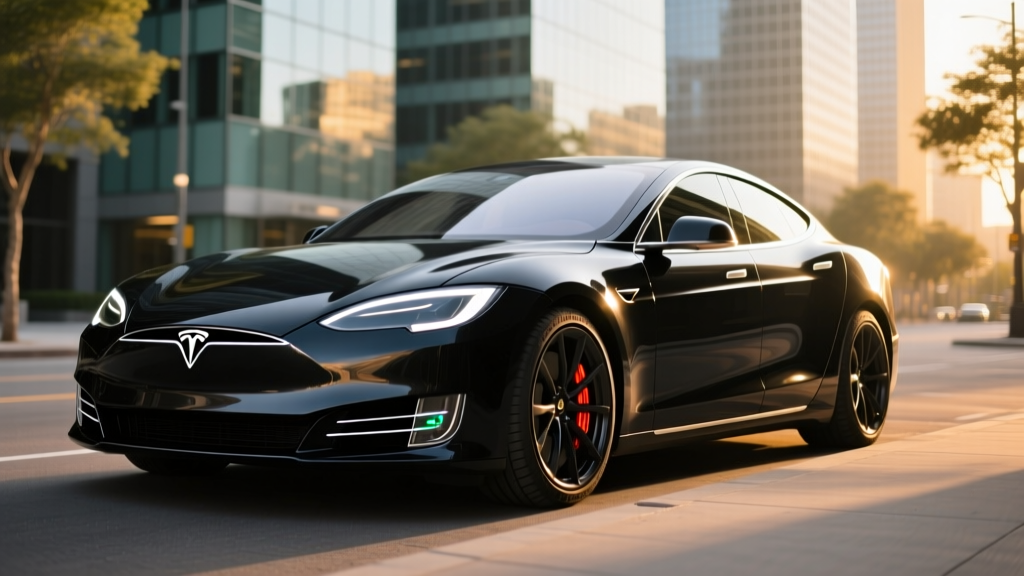
The Tesla Model S Plaid sits at the intersection of absurd performance and genuine daily-driver practicality. With 1,020 horsepower, a sub-2-second 0-60 mph time, and nearly 400 miles of EPA-rated range, it forces the question: can a four-door sedan really do everything a supercar does while still handling school drop-off and road trips? For 2026, the Model S Plaid continues largely unchanged from the refreshed architecture introduced in 2021, but the competitive landscape around it has shifted dramatically. Here's everything you need to know before writing the check.
Tesla Model S Plaid HP and Performance: The Numbers That Matter
The headline figure is 1,020 horsepower (760 kW) generated by a tri-motor all-wheel-drive powertrain — one motor up front, two at the rear. Tesla's carbon-sleeved rotors allow the rear motors to spin to 20,000+ RPM without disintegrating from centrifugal force, which is how the Plaid sustains power delivery well past 150 mph instead of falling off like most EVs at high speed.
| Metric | Value |
|---|---|
| Horsepower | 1,020 hp (760 kW) |
| Torque | 1,050 lb-ft |
| 0-60 mph | 1.99 seconds (with rollout subtracted) |
| Quarter Mile | 9.23 seconds @ 155 mph |
| Top Speed | 200 mph |
| Drivetrain | Tri-motor AWD |
| Curb Weight | 4,766 lbs |
The 1.99-second 0-60 time carries an asterisk: Tesla uses a 1-foot rollout subtraction (drag-racing convention), which shaves roughly 0.2-0.3 seconds. Independent testers at Motor Trend have recorded 0-60 in approximately 2.1-2.3 seconds without rollout — still devastatingly quick and among the fastest production cars ever measured.
What makes the Plaid's powertrain genuinely interesting isn't just peak output; it's torque vectoring. The dual rear motors can independently modulate torque to each rear wheel, providing cornering stability that a single-motor rear axle simply cannot match. On track, this translates to neutral handling and predictable power-on oversteer when you want it.
EPA Range vs. Real-World: What 396 Miles Actually Means
The EPA rates the 2026 Model S Plaid at 396 miles on its 100 kWh battery pack (approximately 95 kWh usable). That figure comes from the combined city/highway test cycle. But sticker range and real-world range diverge significantly depending on how and where you drive.
EPA Combined: 396 miles
Highway (75 mph, moderate temps): ~310-330 miles
Cold Weather (below 32°F, highway): ~250-280 miles
Track/Spirited Driving: 120-160 miles (varies heavily)
The Plaid's tri-motor powertrain and performance tires carry an efficiency penalty versus the dual-motor Model S Long Range (405 mi EPA). Budget 20-25% below EPA for sustained highway driving, and up to 35% in freezing temperatures with cabin heat.
The Model S Plaid uses an NMC (nickel manganese cobalt) battery chemistry, which prioritizes energy density over the cycle-life longevity of LFP packs. Tesla's thermal management system is among the best in the industry — the octovalve heat pump efficiently scavenges waste heat from motors and batteries to warm the cabin, reducing winter range loss compared to resistive-heater EVs. Still, physics is physics: a 100 kWh pack pushing 4,766 pounds at 80 mph in 20°F weather will consume substantially more energy than the EPA test suggests.
Efficiency lands at 120 MPGe combined (28 kWh/100 mi) per fueleconomy.gov. That's competitive for a 1,020-hp vehicle but noticeably thirstier than the dual-motor Long Range variant at 124 MPGe.
Charging Speed: DC Fast, Level 2, and the Supercharger Advantage
Charging speed is where Tesla ownership still carries a tangible advantage, and the Model S Plaid leverages the full breadth of the Supercharger network with its native NACS connector.
| Charging Level | Power/Rate | Speed |
|---|---|---|
| DC Fast Charge (Peak) | 250 kW (V3 Supercharger) | ~183 mi in 15 min |
| 10-80% DC Fast Charge | — | ~30 minutes |
| Level 2 (240V, 48A Mobile Connector) | 11.5 kW | ~34 mi/hr |
| Level 2 (Tesla Wall Connector, 48A) | 11.5 kW | ~34 mi/hr |
| Level 1 (120V, 12A) | ~1.4 kW | ~3-4 mi/hr |
The 250 kW peak rate on V3 Superchargers is well-established, but sustained charging matters more than peak. The Plaid's charge curve holds above 200 kW from roughly 10-30% SoC, then tapers progressively. From 10-80%, expect approximately 30 minutes at a V3 stall — not class-leading (the Hyundai Ioniq 5 and Porsche Taycan both hit 10-80% faster), but adequate for road-trip breaks when paired with Tesla's superior route-planning and stall availability.
At home on a 48-amp Level 2 circuit (requiring a 60-amp breaker), the onboard charger accepts up to 11.5 kW, adding roughly 34 miles of range per hour. A full 0-100% charge takes about 9-10 hours. For most owners who plug in nightly and rarely drain below 30%, a home Level 2 setup replenishes daily driving in 2-3 hours.
One practical note: the Model S Plaid uses the NACS (North American Charging Standard) connector natively. As of 2026, most non-Tesla DC fast-charging networks (Electrify America, EVgo) have added NACS cables, but CCS-only stalls still exist in some regions. Tesla owners traveling cross-country should plan Supercharger stops where possible for the most reliable experience.
Pricing, Trims, and Federal Tax Credit Eligibility
The 2026 Tesla Model S Plaid starts at $89,990 (MSRP, before destination). That positions it firmly in luxury-super-sedan territory, undercutting the Porsche Taycan Turbo S ($190,000+) and Lucid Air Sapphire ($249,000) while exceeding the BMW i7 M70 ($120,000+).
| Trim | MSRP | Key Differences |
|---|---|---|
| Model S Long Range | $74,990 | Dual-motor, 405 mi range, ~670 hp |
| Model S Plaid | $89,990 | Tri-motor, 396 mi range, 1,020 hp |
Options are limited but add up: Ultra Red paint ($2,000), 21" Arachnid wheels ($4,500 — but reduces range to ~359 mi), yoke or round steering wheel (no cost), and Full Self-Driving (Supervised) capability at $8,000. A fully loaded Plaid can approach $104,490.
Under IRS §30D rules for 2026, the Model S Plaid faces two barriers:
1. MSRP Cap: Sedars are capped at $55,000 MSRP for the new-vehicle credit. At $89,990, the Model S Plaid does NOT qualify for the $7,500 federal tax credit.
2. Income Cap: Even if it met the price cap, buyers must fall under modified AGI limits ($150K single / $300K joint).
3. Battery Sourcing: Critical mineral and battery component requirements must be met.
Bottom line: No federal purchase credit applies to the Model S Plaid. Check IRS.gov §30D for current rules. Some state incentives (e.g., California, Colorado) may still apply — verify with your state's energy office or a tax professional.
Interior, Cargo, and Daily Practicality
The Model S interior has been controversial since the 2021 refresh. The 17-inch center touchscreen (landscape orientation, 2200x1300 resolution) handles virtually every vehicle function — there are no physical buttons for climate, media, or glovebox release. The secondary 8-inch rear touchscreen controls rear climate and media, and folds flat when not in use.
Build quality has improved noticeably over the 2021-2023 models, with tighter panel gaps and more consistent material quality. The ventilated front seats are genuinely excellent on long drives, and the glass roof provides an airy cabin feel (though it does contribute to cabin heat in summer — the UV-blocking coating helps but doesn't eliminate it).
| Dimension | Measurement |
|---|---|
| Cargo Volume (rear trunk) | 28 cu ft |
| Frunk (front trunk) | ~5.3 cu ft |
| Total Cargo | ~33 cu ft |
| Front Legroom | 42.7 in |
| Rear Legroom | 35.4 in |
| Seating Capacity | 5 passengers |
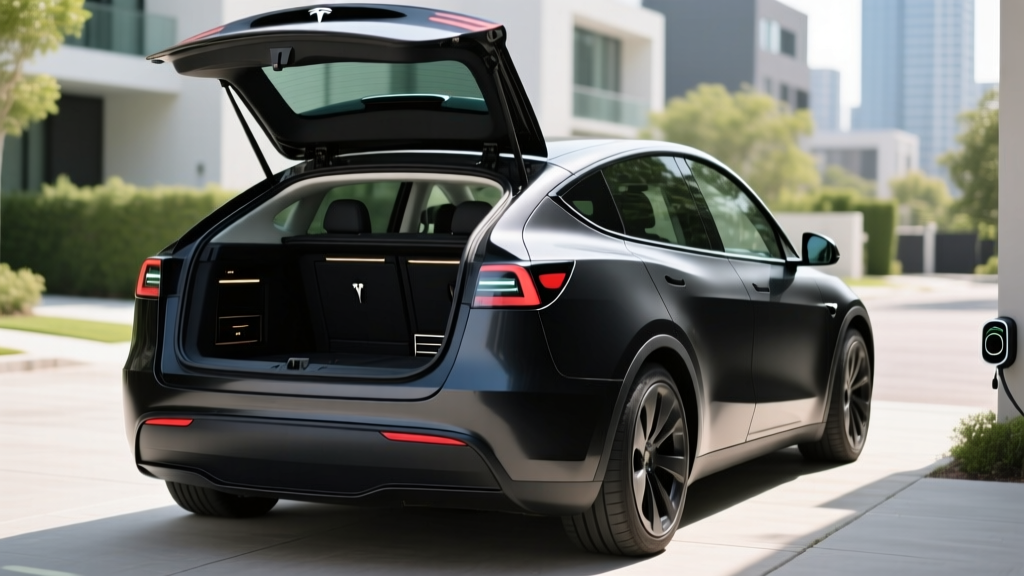
The hatchback-style trunk opening makes loading bulky items far easier than a traditional sedan's trunk lid. The rear seats fold 60/40, extending cargo capacity for longer items. For a performance sedan, practicality is genuinely strong — this is a car you can drive to the track and then haul a week's groceries home in.
Tech, Autopilot, and Driver Assistance
The Model S Plaid ships with Tesla's basic Autopilot (SAE Level 2) standard, which includes Traffic-Aware Cruise Control and Autosteer (lane centering). The optional Full Self-Driving (Supervised) package at $8,000 adds Navigate on Autopilot (automatic highway interchanges), Auto Lane Change, Autopark, Smart Summon, and traffic-light/stop-sign recognition.
Despite the "Full Self-Driving" name, Tesla's FSD (Supervised) is an SAE Level 2 driver-assistance system. The driver must remain fully engaged, hands on the wheel (or applying torque), and eyes on the road at all times. The car does not handle all driving scenarios autonomously. Only Level 4 services like Waymo operate without a human driver — and only in geofenced areas. Treat FSD as an advanced cruise control, not a replacement for your attention.
The Plaid's infotainment remains best-in-class for responsiveness and app ecosystem. The AMD Ryzen processor handles gaming (Cyberpunk 2077 runs natively while charging), streaming, and navigation simultaneously without lag. Over-the-air updates continue to add features — the 2025.44 software introduced adaptive high-beam improvements and enhanced blind-spot camera views.
Notable tech drawbacks: no Apple CarPlay or Android Auto (Tesla's ecosystem is closed), no heads-up display, and the reliance on the touchscreen for basic climate adjustments remains polarizing. Voice commands help but aren't a full substitute for physical knobs.
Warranty and Long-Term Battery Expectations
Tesla covers the Model S Plaid with the following warranty structure:
- Basic Vehicle: 4 years / 50,000 miles
- Battery & Drive Unit: 8 years / 150,000 miles (whichever comes first), with a minimum 70% capacity retention guarantee
- Restraint System: 5 years / 60,000 miles
The 8-year/150,000-mile battery warranty is competitive with Porsche (8/100,000) and slightly below Hyundai/Kia's 10-year/100,000-mile coverage. The 70% retention threshold is industry-standard — if your pack degrades below 70% of original capacity within the warranty period, Tesla will repair or replace it.
NMC battery chemistry in the Plaid typically shows 5-10% degradation in the first 30,000 miles, then flattens to a slow linear decline. Owners who charge to 80-90% daily (rather than 100%) and avoid frequent DC fast-charging in extreme heat tend to see better long-term retention. Tesla's thermal management system actively conditions the battery, which helps — but NMC is inherently more sensitive to high-SoC storage and heat than LFP chemistry.
Who Should Buy the Model S Plaid?
- You want supercar acceleration with four-door practicality
- You value the Supercharger network for road trips
- You want 1,020 hp without spending $200K+ on a Taycan Turbo S
- You need genuine cargo space (hatchback + frunk)
- You're comfortable with touchscreen-centric controls
- You want the longest possible range (Long Range gets 405 mi)
- You prefer physical buttons and traditional luxury materials
- You need a federal tax credit (MSRP exceeds $55K cap)
- You want Apple CarPlay/Android Auto integration
- You prioritize ride comfort over track performance
The Plaid is best suited for the enthusiast-adjacent buyer who wants one car to do everything: daily commute, weekend canyon runs, cross-country road trips, and occasional track days. It's not a dedicated track car (weight and cooling limitations show on sustained hot laps), and it's not a luxury cruiser in the S-Class mold. It occupies a unique niche: the fastest sedan you can actually live with every day.
Frequently Asked Questions
What is the real-world range of the Tesla Model S Plaid?
The EPA rates it at 396 miles combined. In real-world highway driving at 75 mph in moderate temperatures, expect 310-330 miles. In freezing weather with cabin heat, that drops to 250-280 miles. Aggressive or track driving can reduce range to 120-160 miles.
How fast does the Model S Plaid charge at home and on the road?
On a V3 Supercharger, it peaks at 250 kW and charges 10-80% in approximately 30 minutes. At home on a 48-amp Level 2 charger (11.5 kW), it adds about 34 miles of range per hour, or roughly 9-10 hours for a full charge.
Does the Tesla Model S Plaid qualify for the federal EV tax credit?
No. The IRS §30D new-vehicle credit has a $55,000 MSRP cap for sedans. The Model S Plaid at $89,990 exceeds this limit and is ineligible for the $7,500 federal credit. State incentives may still apply depending on your location.
Is the Model S Plaid worth it versus the Porsche Taycan or Lucid Air?
For pure value per horsepower, the Plaid is unmatched — 1,020 hp and 396 mi range at $89,990. The Porsche Taycan Turbo S offers superior build quality, a more engaging chassis, and 800V charging architecture, but starts above $190,000 with less range. The Lucid Air Sapphire has more power (1,234 hp) and luxury, but costs $249,000. If value and Tesla's charging network matter most, the Plaid wins. If build quality and driving dynamics are paramount, the Taycan edges ahead.
What are the biggest drawbacks of the Model S Plaid?
The primary complaints are: (1) no physical climate/media controls — everything routes through the touchscreen, (2) no Apple CarPlay or Android Auto, (3) no heads-up display, (4) road noise on coarse pavement is noticeable for the price point, and (5) the yoke steering wheel, while optional, is controversial for daily driving at low speeds where hand-over-hand maneuvers are needed.