Why the Underground Tesla Tunnel in Vegas Matters to EV Shoppers
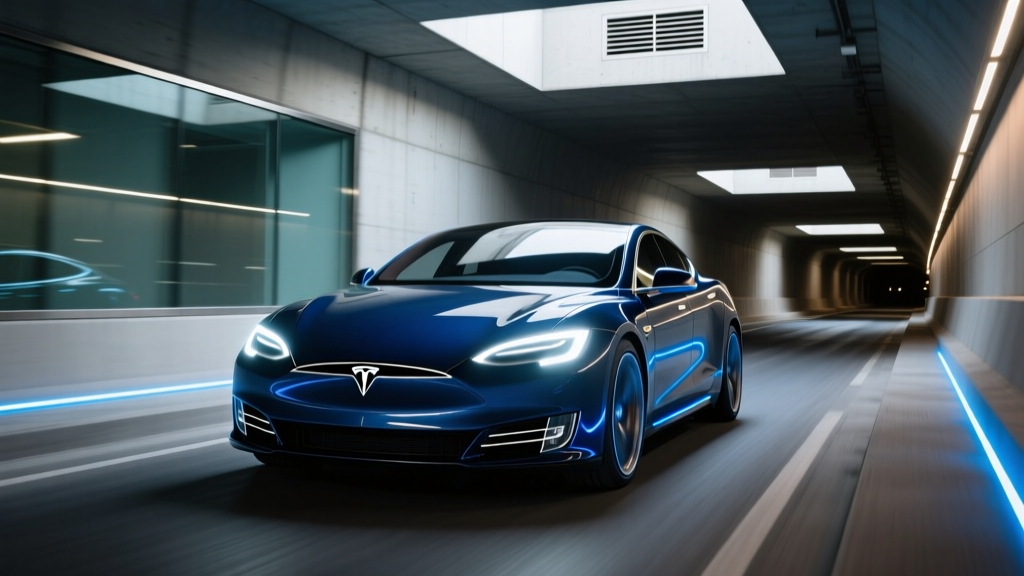
If you've visited the Las Vegas Convention Center since 2021, you've likely seen — or ridden in — the underground Tesla tunnel in Vegas. Officially called the Vegas Loop, this subterranean transit system built by Elon Musk's Boring Company ferries passengers between convention halls, resort casinos, and soon the Las Vegas Strip in a fleet of Tesla vehicles. As of early 2026, the network spans over 5 miles of tunnel with plans to extend to Harry Reid International Airport and Allegiant Stadium.
But here's why this matters beyond the novelty: the Vegas Loop is one of the largest real-world deployments of the Tesla Model Y and Tesla Model 3 in a high-cycle, stop-and-go urban environment. It serves as an unintentional stress test for the very vehicles everyday buyers are considering. In this review, we break down the specs, range realities, charging behavior, and ownership economics of the Teslas powering the Vegas tunnel — and what those numbers mean when you're shopping for one to park in your own garage.
The Vehicles: Tesla Model Y Long Range AWD (2026 Fleet Spec)
The Boring Company primarily deploys the Tesla Model Y Long Range AWD in the Vegas Loop, with some Model 3 sedans on shorter routes. These are stock production vehicles — no special modifications beyond fleet livery and a tablet mount for the operator. Below are the 2026 Model Y Long Range AWD specifications relevant to both fleet operators and retail buyers.
| Spec | Value |
|---|---|
| EPA Estimated Range | 320 miles |
| Battery Capacity | 75 kWh usable (NMC chemistry) |
| Drivetrain | Dual-motor AWD |
| Horsepower | 384 hp (combined) |
| 0–60 mph | 4.8 seconds |
| Max DC Fast-Charge Rate | 250 kW (peak) |
| 10–80% DC Fast Charge | ~27 minutes |
| Level 2 Home Charging (48A) | 11.5 kW / ~44 miles per hour |
| Efficiency | 122 MPGe combined / 28 kWh per 100 mi |
| Cargo Volume | 76.2 cu ft (rear seats folded) |
| Front Legroom / Rear Legroom | 41.8 in / 40.9 in |
| Battery & Drive Unit Warranty | 8 years / 120,000 miles |
| Base MSRP | $47,990 (before destination) |
Real-World Range: What the Vegas Tunnel Teaches Us
Real-World Expectation: ~260–285 miles in mixed highway/city driving; ~220–245 miles in sustained 75+ mph highway travel; expect 15–25% reduction in freezing temperatures (below 32°F) due to cabin heating and battery chemistry limitations.
The Vegas Loop is a unique operating environment: low-speed (vehicles travel ~35 mph in the tunnels), climate-controlled (tunnels stay around 70–75°F year-round), and very short trips between stations. This means fleet vehicles experience far less range degradation than a typical retail owner would. In tunnel conditions, a Model Y can easily achieve 90–95% of its EPA rating because regenerative braking recaptures energy at every station stop, and there's no cold-weather or high-speed aero drag penalty.
For retail buyers, the takeaway is important: your real-world range depends heavily on driving style, speed, and ambient temperature. On a 70°F spring day at 65 mph on the interstate, expect roughly 280 miles before needing to charge. Push that to 80 mph in winter, and you may see as little as 220 miles. The EPA's fueleconomy.gov listing confirms the 320-mile combined figure, but the agency's own methodology notes that "actual results will vary for many reasons, including driving conditions and driver habits."
The NMC (nickel manganese cobalt) battery chemistry in the Long Range Model Y offers higher energy density than LFP, which is why it achieves 320 miles from a 75 kWh pack. However, NMC cells degrade slightly faster over thousands of charge cycles compared to LFP. For fleet operators running 150+ miles daily with frequent DC fast-charging, Tesla recommends a different charging strategy — which we'll cover next.
Charging: Speed, Strategy, and What Fleet Use Reveals
| Level | Power | Speed | Use Case |
|---|---|---|---|
| Level 1 (120V) | ~1.4 kW | ~5 miles per hour | Emergency / trickle |
| Level 2 (240V, 48A) | 11.5 kW | ~44 miles per hour | Home / workplace daily |
| DC Fast (Supercharger V3) | Up to 250 kW peak | 10–80% in ~27 min | Road trips / fleet rapid top-up |
| DC Fast (Supercharger V4) | Up to 325 kW peak | 10–80% in ~22 min | Newer corridor stations |
Charge curve reality check: The Model Y Long Range peaks at 250 kW only between roughly 10% and 30% state of charge. By 50% SoC, power drops to approximately 150 kW, and above 80%, it tapers sharply to under 50 kW. This means the 10–80% time of ~27 minutes is realistic, but attempting to charge from 80–100% at a Supercharger can add another 20–25 minutes for relatively few additional miles. For road-trip planning, the practical strategy is to charge to 80% and drive on.
What the Vegas fleet teaches: Boring Company vehicles charge at dedicated depot Superchargers between shifts, typically overnight on Level 2 and during layovers on DC fast chargers. High-frequency DC fast charging (multiple times daily) accelerates battery degradation — industry data suggests an additional 1–2% annual capacity loss compared to predominantly Level 2 charging. For retail owners who charge at home on Level 2 most nights and use Superchargers only for road trips, long-term battery health is significantly better.
Home charging setup: Installing a Tesla Wall Connector (48A, hardwired) requires a 60A breaker on a 240V circuit. Most homes with a 200A electrical panel can accommodate this without an upgrade. Expect $800–$1,500 for the electrician work if the panel is close to the garage, or $2,500–$4,500 if a panel upgrade or long conduit run is needed. The Wall Connector itself retails for $475.
Pricing, Tax Credits, and the Bottom Line
| Item | Amount |
| Base MSRP | $47,990 |
| Destination Fee | $1,390 |
| Total Before Incentives | $49,380 |
| Federal §30D Tax Credit (if eligible) | Up to $7,500 |
| Effective Price After Full Credit | ~$41,880 |
Federal EV tax credit eligibility is not automatic. Under current IRS §30D rules, the 2026 Model Y must meet several criteria to qualify for the full $7,500 credit:
- MSRP cap: The vehicle's MSRP must not exceed $80,000 for SUVs (Model Y qualifies as an SUV).
- Buyer income limits: Modified AGI must be ≤ $300,000 (joint filers), ≤ $225,000 (head of household), or ≤ $150,000 (single).
- Battery sourcing: A percentage of critical minerals and battery components must be sourced from the US or free-trade-agreement countries. These thresholds increase annually — for 2026, 80% of critical minerals and 75% of battery components must qualify or the credit is reduced to $3,750 or zero.
- Point-of-sale transfer: Since 2024, buyers can transfer the credit to the dealer at purchase, reducing the out-of-pocket cost immediately rather than waiting for a tax refund.
Important caveat: Tesla's battery supply chain has shifted multiple times. Some Model Y vehicles built at Giga Texas use CATL-sourced LFP cells in the Standard Range variant, while the Long Range uses NMC cells from Panasonic (and increasingly LG). The specific battery in your VIN determines credit eligibility. Always verify with your Tesla advisor and consult a tax professional before assuming the full $7,500.
Tech, Interior, and the Driver-Assist Reality Check
The 2026 Model Y continues with Tesla's minimalist interior: a 15.4-inch center touchscreen handles all infotainment, climate, navigation, and vehicle settings. There is no instrument cluster — speed and navigation instructions appear on the upper-left corner of the center display. The latest HW4 (Hardware 4) computer powers the Autopilot suite, which includes:
- Basic Autopilot (included): Traffic-aware cruise control and autosteer within lane markings.
- Enhanced Autopilot ($6,000 option): Adds automatic lane changes, Navigate on Autopilot, autosteer on city streets (limited), and Summon.
- Full Self-Driving Supervised ($8,000 option): Adds traffic light and stop sign recognition, city street autosteer, and the promise of future "unsupervised" capability (not yet approved by regulators as of 2026).
In the Vegas Loop, FSD is not used. Boring Company vehicles are driven by human operators — the tunnels are a controlled, private environment that doesn't require autonomous capability. This is a common misconception among visitors who assume the underground Tesla tunnel in Vegas is a showcase for self-driving technology. It is not; it's a point-to-point ride service using Teslas for their zero tailpipe emissions in enclosed spaces.
Interior practicality: The Model Y's 76.2 cu ft of cargo space (rear seats folded) and available 7-seat configuration make it a strong family hauler. However, the 3rd-row seats are best suited for children — adult legroom back there is under 30 inches. The front trunk (frunk) adds 4.1 cu ft for charging cables or a small bag. Build quality has improved markedly at Giga Texas and Giga Berlin compared to early Fremont cars, though some owners still report panel-gap inconsistencies.
Pros and Cons: The Honest Scorecard
Pros
- Class-leading Supercharger network access (17,000+ stalls in North America)
- 320-mile EPA range covers most road trips with one stop
- 250 kW peak DC charging = practical long-distance travel
- Spacious cargo area (76.2 cu ft) with flat load floor
- OTA software updates add features over time
- Strong resale value relative to non-Tesla EVs
- Zero tailpipe emissions — ideal for garage parking and enclosed spaces (hence the Vegas tunnel)
Cons
- No instrument cluster — all info on center screen
- FSD ($8,000) remains Level 2 despite the name
- NMC battery degrades faster than LFP under heavy DC fast-charging
- Ride quality is firm; some owners find it harsh on rough roads
- Tax credit eligibility depends on battery sourcing — not guaranteed
- Insurance premiums run 15–30% higher than comparable ICE vehicles
- Third-row seat (optional) is only practical for small children
Who Should Buy the Model Y — and Who Should Look Elsewhere?
- You want one vehicle for daily commuting, family hauling, and road trips
- You have access to home Level 2 charging (garage or driveway with 240V)
- You value the Supercharger network for stress-free long-distance travel
- You live in a moderate climate or can tolerate 20% winter range loss
- You need serious towing capacity (Model Y maxes at 3,500 lbs — the Ford F-150 Lightning or Rivian R1S do far better)
- You want a traditional instrument cluster and physical buttons (look at the Hyundai Ioniq 5 or Kia EV6)
- You drive more than 350 miles regularly between charging stops (the Lucid Air or Chevy Silverado EV offer 400+ mile ranges)
- You want LFP battery longevity for frequent DC fast-charging (Model Y Standard Range uses LFP but with less total range)
Competitive Comparison: Model Y vs. the Field
| Spec | Tesla Model Y LR AWD | Hyundai Ioniq 5 Limited | Ford Mustang Mach-E ER AWD |
|---|---|---|---|
| EPA Range | 320 mi | 305 mi | 312 mi |
| Battery (usable) | 75 kWh NMC | 77.4 kWh NMC | 91 kWh NMC |
| Max DC Charge | 250 kW | 238 kW | 150 kW |
| 10–80% Time | ~27 min | ~26 min | ~45 min |
| 0–60 mph | 4.8 sec | 5.1 sec | 5.2 sec |
| Base MSRP (Limited/ER AWD) | $47,990 | $52,600 | $50,995 |
| Cargo (rear seats folded) | 76.2 cu ft | 59.3 cu ft | 59.7 cu ft |
| Battery Warranty | 8 yr / 120,000 mi | 10 yr / 100,000 mi | 8 yr / 100,000 mi |
The Model Y's advantages are clear: most cargo space, fastest DC charging in real-world sustained rates (the Ioniq 5 matches it on paper but with a slightly smaller battery), and the lowest starting price among the three in this trim comparison. The Ioniq 5 wins on warranty length and offers 800V architecture for broader charger compatibility. The Mach-E's slower DC charging is a notable weakness for road-trippers.
Frequently Asked Questions
Is the underground Tesla tunnel in Vegas self-driving?
No. The Vegas Loop uses human drivers operating Tesla Model Y and Model 3 vehicles through the tunnels. Despite Tesla's FSD branding, the system remains SAE Level 2 — meaning a driver must be in control at all times. The Boring Company has discussed autonomous operation in the future, but as of 2026, all Vegas Loop vehicles have human operators.
What is the real-world range of the Tesla Model Y Long Range?
The EPA rates it at 320 miles combined. In real-world mixed driving, expect 260–285 miles. Sustained highway driving at 75+ mph drops that to roughly 220–245 miles, and cold weather (below 32°F) can reduce range by an additional 15–25%. The Vegas Loop fleet sees near-EPA numbers because tunnel driving is low-speed and climate-controlled — conditions most retail owners won't replicate.
How fast does the Model Y charge at home and on the road?
At home on a Level 2 Tesla Wall Connector (48A, 240V), the Model Y adds approximately 44 miles of range per hour — a full overnight charge from 20% to 100% takes about 7 hours. On a V3 Supercharger, it peaks at 250 kW and charges from 10% to 80% in roughly 27 minutes. Above 80%, charging speed drops dramatically — plan your road trips around 80% stops.
Does the 2026 Tesla Model Y qualify for the $7,500 federal tax credit?
It can, but eligibility depends on three factors: (1) your modified adjusted gross income must fall below IRS thresholds ($150K single / $300K joint), (2) the vehicle MSRP must be under $80K for SUVs (Model Y qualifies), and (3) the battery's critical minerals and components must meet 2026 domestic-sourcing thresholds. Because Tesla sources from multiple battery suppliers, eligibility can vary by production batch. Verify with Tesla and a tax professional before purchase. The credit can be applied at the point of sale since 2024.
Is the Model Y worth it vs. the Hyundai Ioniq 5 or Ford Mach-E?
For most buyers, yes — the Model Y offers the best combination of range, charging speed, cargo space, and Supercharger network access at a competitive price. Choose the Ioniq 5 if you prioritize a longer warranty, 800V charging flexibility, or prefer a more conventional interior layout. Choose the Mach-E if you value Ford dealer service proximity or prefer a more traditional driving feel. For road-trippers, the Tesla's Supercharger advantage remains significant.
Why does the Vegas Loop use Teslas instead of dedicated transit vehicles?
The Boring Company's tunnels are narrow (approximately 12 feet in diameter), designed around the footprint of a passenger sedan or compact SUV rather than a full-size bus. Tesla vehicles produce zero tailpipe emissions — critical in an enclosed tunnel — and the company's vertical integration (vehicles + tunnels + charging) simplifies fleet logistics. Whether this scales as efficient mass transit is debated among urban planners; current capacity is roughly 5,000 passengers per hour across the network, far below light rail.
Sources: EPA fueleconomy.gov — 2026 Tesla Model Y, IRS §30D Clean Vehicle Credit rules, Boring Company Vegas Loop.