The Hellcat Tesla Doesn't Exist — But the Model S Plaid Is Close Enough
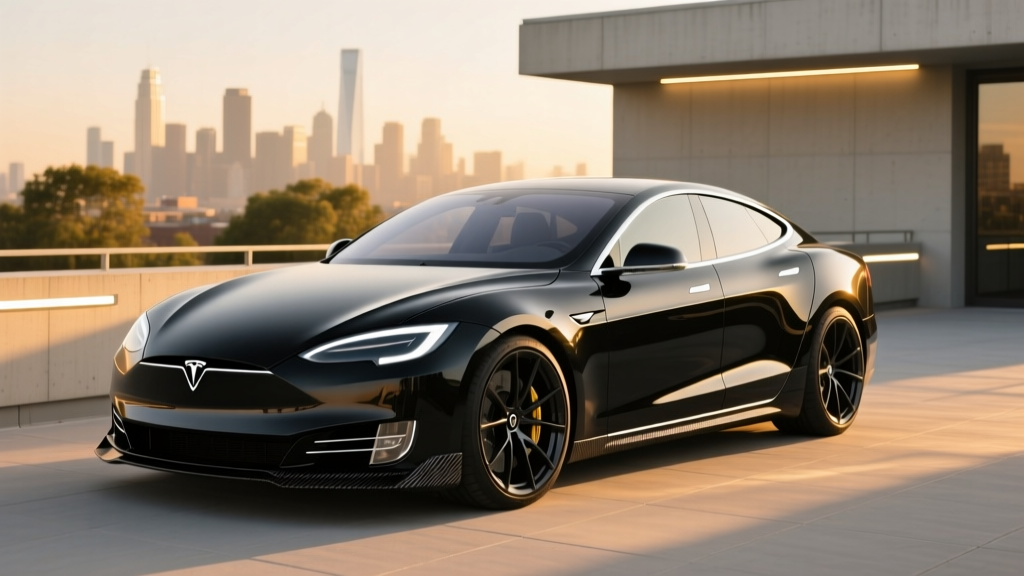
Search for "hellcat tesla" and you'll find a graveyard of forum threads, Photoshop renders, and wishful speculation about Dodge putting a supercharged 6.2L HEMI into a Tesla chassis. That vehicle does not exist, and given Stellantis's pivot toward the Charger Daytona EV platform, it never will. What does exist is the 2026 Tesla Model S Plaid — a 1,020-horsepower, tri-motor electric sedan that out-accelerates every Hellcat variant Dodge ever built, while returning the equivalent of 120 MPGe and seating five adults.
This review treats the Model S Plaid as the spiritual answer to the Hellcat question: does it deliver the same visceral, absurd performance, and is it actually livable as a daily driver? We've broken down every spec that matters to an EV buyer — real-world range, charging curves, tax credit eligibility, and ownership economics.
Full Specifications: 2026 Tesla Model S Plaid
| Spec | Value |
|---|---|
| Base MSRP | $89,990 (excl. destination) |
| As-Tested Price | $97,490 (with FSD, Ultra Red paint, 21" Arachnid wheels) |
| EPA Range | 396 miles (19" Tempest wheels) / 359 miles (21" Arachnid) |
| Battery Capacity | ~100 kWh usable (NMC chemistry) |
| Drivetrain | Tri-Motor AWD (1 front, 2 rear carbon-sleeve rotors) |
| Horsepower | 1,020 hp |
| 0–60 mph | 1.99 seconds (with rollout subtracted) |
| Quarter Mile | 9.23 seconds @ 155 mph |
| Top Speed | 200 mph (with paid hardware upgrade) |
| MPGe (Combined) | 120 MPGe (19" wheels) |
| Energy Consumption | 28 kWh / 100 mi |
| Max DC Fast Charge | 250 kW (peak, V3 Supercharger) |
| 10–80% DC Charge Time | ~27 minutes |
| Level 2 Home Charge Rate | 11.5 kW (~34 mi/hr added) |
| Cargo Volume | 28.0 cu ft (rear trunk + frunk combined) |
| Seating | 5 passengers |
| Battery Warranty | 8 years / 150,000 miles (≥70% retention) |
| Basic Warranty | 4 years / 50,000 miles |
Range and Efficiency: EPA Sticker vs. Real-World Miles
Real-World Expectation: ~310–340 miles highway at 70 mph; ~260–290 miles in sub-30°F cold weather with cabin heat
The Model S Plaid uses an NMC (nickel manganese cobalt) battery pack with approximately 100 kWh of usable capacity. On the EPA cycle, it achieves 396 miles on the standard 19" Tempest wheels — impressive for a 4,766-lb sedan producing over 1,000 horsepower. Drop to the optional 21" Arachnid wheels and that figure falls to 359 miles, a 37-mile penalty driven by increased rolling resistance and unsprung weight.
In real-world highway driving at sustained 70–75 mph speeds, expect to extract roughly 310–340 miles before hitting 10% state of charge. The Plaid's tri-motor configuration and carbon-sleeve rear motors are optimized for peak output, not efficiency — the standard dual-motor Model S Long Range returns 402 miles EPA on a similar pack by running leaner. Cold weather compounds this: in temperatures below 30°F, battery chemistry slows and cabin heating loads increase, cutting usable range to approximately 260–290 miles. The Plaid does include a heat pump (standard since 2021), which mitigates some winter losses compared to older resistive-heater EVs, but the physics of NMC cells at low temperatures remain stubborn.
Efficiency lands at 120 MPGe combined, or 28 kWh per 100 miles. That's respectable for the performance class but trails the Lucid Air Grand Touring (131 MPGe, 516 miles EPA) significantly.
Charging Speed: Supercharger Network Advantage
The Model S Plaid charges at up to 250 kW on Tesla's V3 Supercharger network using its native NACS (North American Charging Standard) connector. Tesla does not currently support 800V architecture in the Model S (unlike the Hyundai Ioniq 5 or Porsche Taycan), so peak charge rates are capped below what competitors achieve on 350 kW chargers.
| Level | Power / Rate | Miles Added Per Hour | Notes |
|---|---|---|---|
| Level 1 (120V household) | ~1.4 kW | ~3–4 mi/hr | Emergency/trickle only |
| Level 2 (240V, Wall Connector) | 11.5 kW | ~34 mi/hr | Full charge in ~9 hours |
| DC Fast (V3 Supercharger) | 250 kW peak | ~750 mi/hr (peak rate) | 10–80% in ~27 min |
| DC Fast (CCS adapter, EA/others) | ~150 kW typical | ~450 mi/hr | Requires Tesla CCS adapter ($175) |
The 10–80% charge takes approximately 27 minutes on a V3 Supercharger. The charge curve is aggressive between 10–50% SoC, where the Plaid sustains close to peak 250 kW, but tapers significantly above 65% as the battery management system protects the NMC cells. This is normal behavior — all lithium-ion packs reduce charge rate at high SoC to prevent lithium plating and thermal stress.
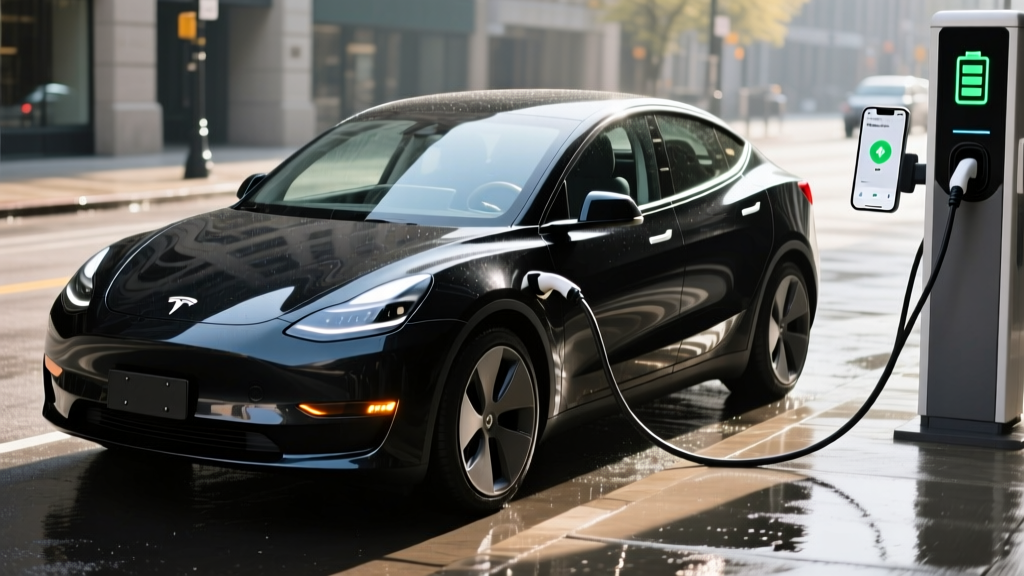
At home, the Tesla Wall Connector delivers up to 11.5 kW on a 60-amp circuit (48 amps continuous), adding roughly 34 miles of range per hour. A full overnight charge from 20% to 100% takes about 8–9 hours. Most owners charging daily to 80% (recommended for NMC chemistry longevity) will replenish a typical day's driving in 2–3 hours.
The Supercharger network remains Tesla's strongest charging moat. With over 6,000 V3 stalls in North America, route planning for road trips is seamless through the car's native navigation, which preconditions the battery automatically when a Supercharger is set as your destination. This preconditioning warms the pack to optimal temperature, ensuring you hit peak charge rates upon arrival — a feature non-Tesla networks still handle inconsistently.
Performance: The Numbers That Earn the "Hellcat" Comparison
The 2026 Model S Plaid produces 1,020 horsepower from three electric motors: one on the front axle and two carbon-sleeve rotor motors on the rear axle. The result is a 0–60 mph time of 1.99 seconds (with the standard 1-foot rollout subtracted, as Tesla reports it). Even without the rollout adjustment, independent testing by outlets like Motor Trend and Car and Driver has recorded 2.1–2.3 second runs — still faster than any production Hellcat.
For direct comparison:
- 2023 Dodge Challenger SRT Hellcat Redeye: 807 hp, 0–60 in ~3.4 seconds
- 2023 Dodge Charger SRT Hellcat Jailbreak: 807 hp, 0–60 in ~3.5 seconds
- 2026 Tesla Model S Plaid: 1,020 hp, 0–60 in 1.99 seconds (claimed)
The Plaid also runs the quarter mile in 9.23 seconds at 155 mph, which places it in hypercar territory alongside the Rimac Nevera and well ahead of the Hellcat's ~10.8-second pass. Top speed is electronically limited to 163 mph unless you purchase Tesla's $5,000 carbon ceramic brake package and track hardware, which unlocks 200 mph.
Where the Plaid diverges from the Hellcat ethos is in repeatability. Electric motors deliver instant torque with zero drivetrain lag, and the Plaid's thermal management system allows consecutive full-power launches with minimal degradation. A Hellcat's supercharged V8, by contrast, suffers from heat soak after repeated hard pulls, requiring cool-down laps. On a track or a drag strip, the Plaid is the more consistent performer.
Tax Credit Eligibility and True Purchase Cost
| Item | Amount |
|---|---|
| Base MSRP | $89,990 |
| Destination Fee | $1,390 |
| Federal §30D Tax Credit | $0 — Exceeds MSRP cap |
| Estimated Out-of-Pocket (before state incentives) | $91,380+ |
The Model S Plaid does not qualify for the IRS §30D federal EV tax credit. The reason is straightforward: the §30D credit caps eligible sedans at an MSRP of $55,000, and the Plaid starts at $89,990 — nearly $35,000 over the limit. Even the base Model S Long Range ($74,990) exceeds this threshold.
Additionally, §30D imposes buyer income limits ($150,000 single / $300,000 joint modified AGI), battery critical-mineral sourcing requirements, and final-assembly-in-North-America rules. Even if the MSRP were below the cap, buyers would need to satisfy all criteria. For a vehicle in this price bracket, the federal credit is simply not a factor.
Some state-level incentives may apply — California's CVRP, for example, has offered rebates for higher-income buyers on vehicles above the federal MSRP cap — but these vary by jurisdiction and change annually. Consult your state's energy or DMV website for current programs.
Interior, Technology, and Daily Livability
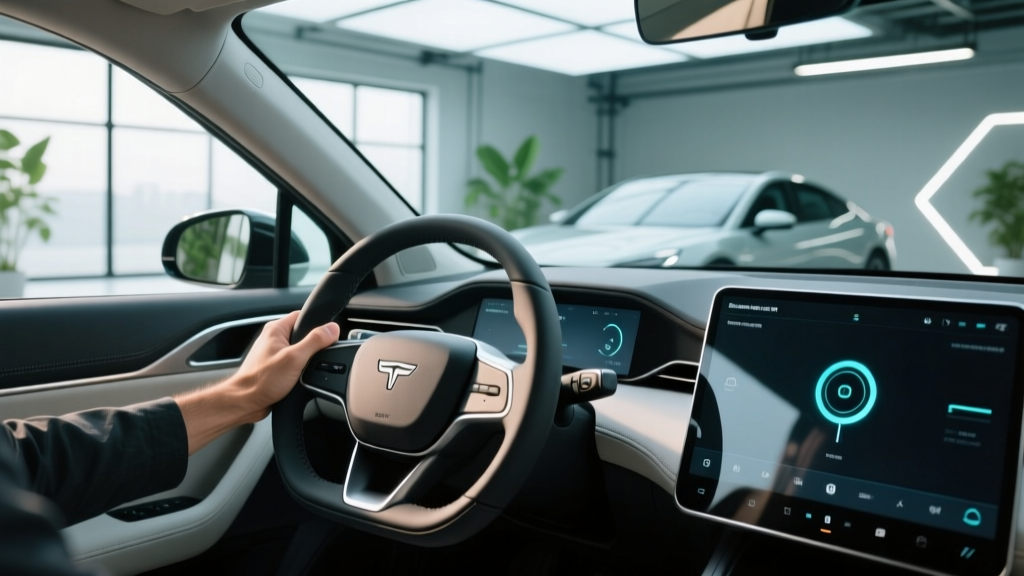
The Model S Plaid's interior is a study in minimalism anchored by a 17-inch AMOLED center touchscreen with a 22-speaker, 960-watt audio system. The yoke steering wheel (now optional alongside a traditional round wheel as of 2025) remains polarizing. Rear passengers get a dedicated 8-inch screen for climate and entertainment, and legroom measures 35.4 inches — adequate for adults on shorter trips but tighter than a Mercedes EQS or Lucid Air.
Cargo capacity totals 28.0 cubic feet across the rear trunk and front trunk (frunk). The frunk holds roughly 3.1 cu ft — enough for a charging cable bag and a small duffel. The rear trunk swallows 24.9 cu ft with seats up, expandable via a 60/40 split fold. For a performance sedan, this is practical; for family road trips, it's sufficient but not generous.
Driver assistance comes via Tesla's Autopilot (standard) and Full Self-Driving Supervised ($8,000 one-time or $99/month). FSD Supervised is an SAE Level 2 system — it handles steering, acceleration, and braking on highways and city streets, but the driver must remain fully engaged and ready to intervene at all times. It is not autonomous driving. Tesla's safety data shows FSD-equipped vehicles logging millions of supervised miles, but NHTSA continues to investigate incidents involving the system.
Pros, Cons, and the Verdict
Pros
- 1,020 hp and 1.99-sec 0–60 — the quickest production sedan in the world
- 396-mile EPA range (19" wheels) is best-in-class for the performance segment
- Supercharger network: 6,000+ V3 stalls, native route planning with preconditioning
- Over-the-air updates continually add features and refine performance
- 8-year/150,000-mile battery warranty with 70% retention guarantee
- Zero tailpipe emissions, 120 MPGe combined efficiency
Cons
- $90K+ MSRP eliminates federal tax credit eligibility entirely
- 250 kW peak DC charge rate trails 800V competitors (Taycan at 270 kW, Ioniq 5 at 240 kW but at lower cost)
- Rear seat legroom (35.4") trails Lucid Air (37.8") and Mercedes EQS (40.4")
- Yoke steering remains divisive; build quality inconsistency still reported
- NMC battery requires 20–80% daily charge discipline for longevity (unlike LFP packs)
- Insurance premiums run 20–40% higher than comparable ICE performance sedans
Who Should Buy the Model S Plaid?
The Model S Plaid suits a narrow but passionate buyer: someone who wants supercar acceleration in a daily-drivable sedan, has access to home Level 2 charging, and values Tesla's Supercharger network for road trips. It is a commuter car that can embarrass a Lamborghini at a stoplight, then silently cruise 300+ miles on a single charge.
It is not ideal for buyers who prioritize rear-seat luxury (look at the Lucid Air Grand Touring or Mercedes EQS), maximum charging speed (the Porsche Taycan Turbo S or Hyundai Ioniq 5 N charge faster on compatible infrastructure), or federal tax credit eligibility (the Tesla Model 3 Performance at ~$55K qualifies for the full $7,500).
If the "hellcat Tesla" search brought you here because you want raw, unapologetic, tire-shredding acceleration from an electric vehicle — the Model S Plaid is the closest production answer. Just know that you're paying $90,000+ with no federal credit, and that the Hellcat's supercharger whine and V8 rumble have been replaced by the eerie silence of electrons.
Frequently Asked Questions
What is the real-world range of the Tesla Model S Plaid?
The EPA rates the Plaid at 396 miles (19" wheels) or 359 miles (21" wheels). In real-world highway driving at 70 mph, expect 310–340 miles. In cold weather below 30°F, range drops to roughly 260–290 miles due to battery chemistry limitations and cabin heating load.
How fast does the Model S Plaid charge?
On a Tesla V3 Supercharger, the Plaid peaks at 250 kW and charges from 10–80% in approximately 27 minutes. At home on a Level 2 Wall Connector (11.5 kW), it adds about 34 miles of range per hour, with a full charge taking roughly 9 hours.
Does the Tesla Model S Plaid qualify for the federal EV tax credit?
No. The IRS §30D credit caps sedan eligibility at $55,000 MSRP. The Plaid starts at $89,990, disqualifying it entirely. State incentives may partially offset cost depending on your jurisdiction.
Is the Model S Plaid worth buying over the Lucid Air or Porsche Taycan?
Choose the Plaid if you prioritize maximum acceleration (1.99-sec 0–60) and Supercharger network access. Choose the Lucid Air Grand Touring if you want more range (516 mi EPA) and rear-seat space. Choose the Porsche Taycan Turbo GT if you value handling precision and 800V charging architecture. All three exceed $80K and forfeit the federal credit.
What is the battery warranty on the Model S Plaid?
Tesla covers the battery and drive unit for 8 years or 150,000 miles, whichever comes first, with a guarantee of at least 70% capacity retention. This is among the strongest warranties in the EV industry and reflects confidence in the NMC pack's longevity under Tesla's thermal management system.
Is there a Dodge Hellcat electric vehicle?
Dodge has not produced a Hellcat-branded EV. The brand's electric future centers on the Charger Daytona EV (announced for 2025–2026), which uses the STLA Large platform and promises up to 670 horsepower in its top Scat Pack trim — far below the Hellcat's 717–807 hp. The "hellcat tesla" concept remains an internet myth.