The Fastest Tesla Money Can Buy: 2026 Model S Plaid at a Glance
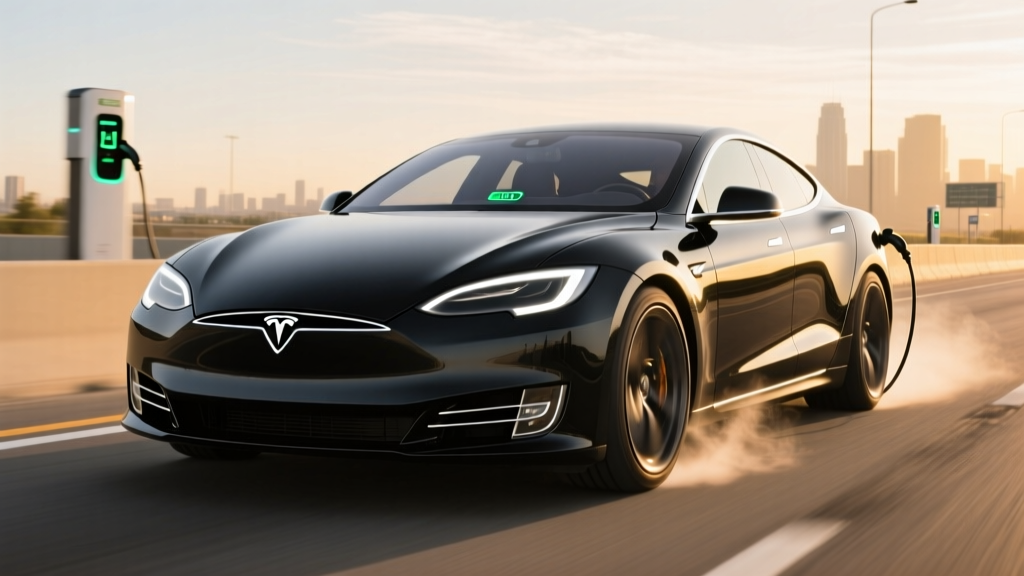
If you type "fastest Tesla" into a search bar, the answer in 2026 remains the Tesla Model S Plaid. With a manufacturer-claimed 0-60 mph time of 1.99 seconds (with rollout subtracted) and 1,020 horsepower from its tri-motor all-wheel-drive powertrain, the Plaid holds the performance crown not just within Tesla's lineup, but among production sedans globally. The upcoming Roadster may eventually claim the title, but as of this writing, it remains an announced vehicle with no firm delivery date — making the Model S Plaid the fastest Tesla you can actually order and drive today.
But brute acceleration is only part of the ownership equation. Real buyers need to know what happens after the launch-control bragging rights fade: What's the real-world range on a highway road trip? How quickly does it charge on a Supercharger? Does it still qualify for any federal incentives? And at nearly $90,000, does the math work against rivals like the Lucid Air Sapphire or Porsche Taycan Turbo GT? This review answers those questions with exact numbers, not marketing copy.
| Spec | Value |
|---|---|
| EPA Range | 396 miles (19" wheels) |
| Battery Capacity | ~100 kWh usable (NMC chemistry) |
| Drivetrain | Tri-Motor AWD |
| Horsepower | 1,020 hp |
| 0-60 mph | 1.99 sec (w/ rollout); ~2.1 sec real-world |
| Top Speed | 200 mph |
| Max DC Fast Charge | 250 kW (peak) |
| 10-80% DC Charge Time | ~27 minutes |
| Level 2 Home Charging | 11.5 kW (~41 miles/hr) |
| EPA Efficiency | 116 MPGe combined / 29 kWh/100mi |
| Cargo Volume | 28 cu ft (rear) + 5.3 cu ft (frunk) |
| Base MSRP | $89,990 |
| Battery Warranty | 8 years / 150,000 miles |
Real-World Range: What 396 EPA Miles Actually Means
The EPA rates the 2026 Model S Plaid at 396 miles when equipped with the standard 19-inch Tempest wheels. Opt for the 21-inch Arachnid wheels and that figure drops to approximately 359 miles due to increased rolling resistance and aerodynamic drag. These are strong numbers for a 1,020-hp performance sedan, but the EPA sticker is a laboratory estimate — your mileage will vary based on speed, temperature, and terrain.
- City / moderate-speed commuting: 370-395 miles — regenerative braking recovers energy in stop-and-go traffic
- Highway (70-75 mph, fair weather): 310-340 miles — aerodynamic drag dominates at sustained speed
- Highway (80+ mph): 270-300 miles — efficiency drops sharply above 75 mph
- Cold weather (below 32°F, highway): 250-290 miles — battery resistance increases and cabin heating draws power
The Plaid's tri-motor setup and heavy performance-oriented components add weight compared to the Long Range variant, which is why its efficiency (29 kWh/100mi) trails the dual-motor Model S Long Range (28 kWh/100mi, EPA 402 miles). On a 300-mile winter highway drive, plan for one charging stop.
Tesla's heat pump (standard on all current Model S variants) helps mitigate cold-weather losses by efficiently scavenging waste heat from the powertrain, but physics is physics — expect a 20-30% range reduction in sub-freezing conditions compared to the EPA sticker. Preconditioning the battery while plugged in before departure recovers some of this loss by warming the cells using grid power rather than battery energy.
Charging Speed: Supercharger Network and Home Setup
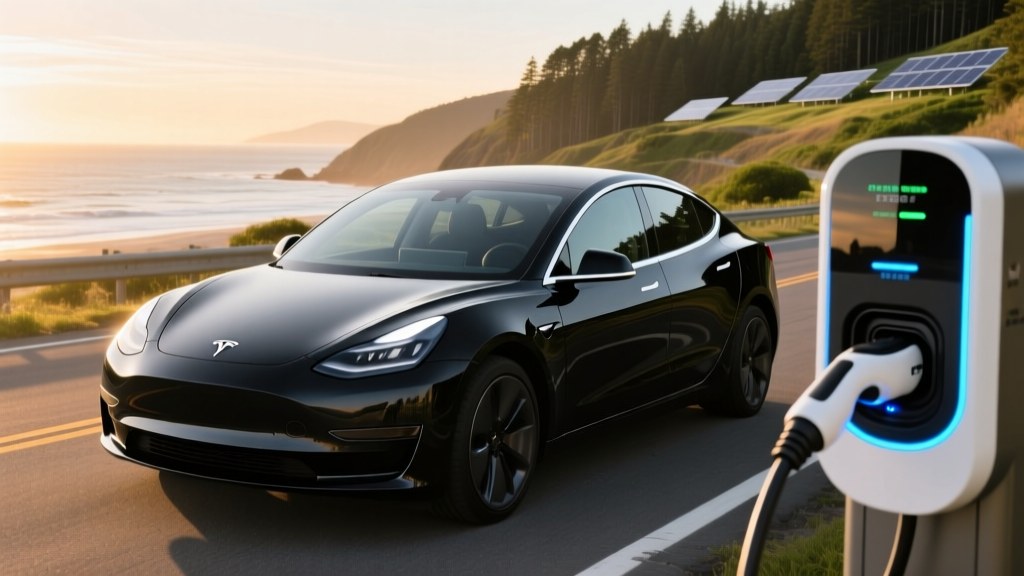
The Model S Plaid uses Tesla's proprietary NACS (North American Charging Standard) connector and can access the full Tesla Supercharger network, which remains the most reliable and extensive DC fast-charging infrastructure in the U.S. The Plaid's peak charge rate is 250 kW on a V3 Supercharger.
| Charging Level | Power / Connector | Speed | Notes |
|---|---|---|---|
| Level 1 (120V) | ~1.4 kW / NACS | ~5 miles/hr | Emergency/trickle only |
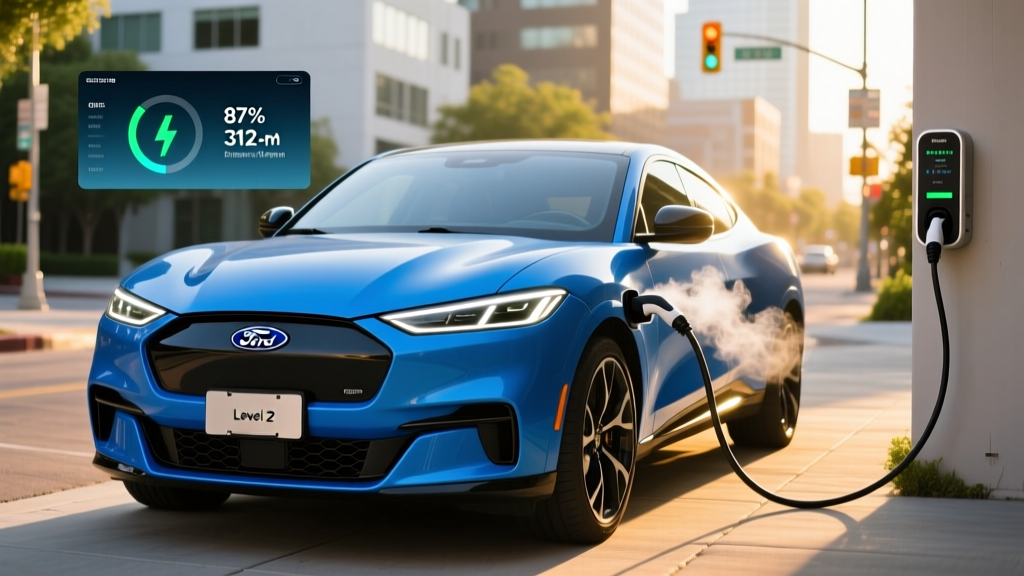
| Level 2 (240V) | 11.5 kW / NACS or J1772 w/ adapter | ~41 miles/hr | Full charge in ~9 hours |
| DC Fast (V3 Supercharger) | 250 kW peak / NACS | ~200 miles in 15 min | 10-80% in ~27 min |
| DC Fast (V4 Supercharger) | Up to 250 kW / NACS | Similar to V3 | Newer stalls; CCS adapter not needed |
A critical nuance: the 250 kW figure is a peak, not a sustained rate. The Plaid's charge curve is aggressive in the 10-40% state-of-charge (SoC) window, pulling close to peak power. Above 50% SoC, the rate tapers progressively, and above 80%, it drops significantly to protect battery longevity. This is why the 10-80% metric (~27 minutes) matters more than peak kW claims. For context, charging from 80-100% can add another 20+ minutes — plan your road-trip stops around the 10-80% sweet spot.
At home, the onboard 11.5 kW charger means a Tesla Wall Connector (or any Level 2 EVSE with a NACS plug or J1772 with Tesla's included adapter) on a 60-amp circuit will add roughly 41 miles of range per hour. A full overnight charge from 20% to 100% takes about 8-9 hours, which is practical for daily use. Home charging installation typically costs $800-$2,000 depending on panel capacity and run length — budget for a licensed electrician to assess your 200-amp panel headroom.
Performance: Tri-Motor AWD and the 1.99-Second Claim
The Plaid's powertrain uses three permanent-magnet synchronous reluctance motors — one on the front axle and two on the rear — delivering a combined 1,020 horsepower and 1,050 lb-ft of torque. Tesla's 1.99-second 0-60 mph claim uses a 1-foot rollout subtraction (common in drag racing), which shaves roughly 0.1-0.2 seconds. In real-world conditions on a prepared surface, independent testers have consistently recorded 2.0-2.2 second 0-60 times, which is still otherworldly for a five-passenger sedan.
Beyond straight-line speed, the Plaid features torque vectoring across the rear motors, a carbon-sleeved rotor design that enables the motors to spin up to 20,000 RPM without structural failure, and a track mode that adjusts cooling, suspension damping, and stability control for circuit use. The adaptive air suspension lowers the car at speed for aerodynamic efficiency and raises for driveway clearance.
For comparison, the dual-motor Model S Long Range (670 hp, 0-60 in 3.1 seconds) costs roughly $15,000 less and delivers nearly identical range. The Plaid's performance premium is for buyers who want supercar-rivaling acceleration in a sedan body — and who will actually use it.
Interior, Cargo, and Daily-Use Practicality
The 2026 Model S interior centers on a 17-inch landscape-oriented touchscreen that controls virtually every vehicle function, from climate to glovebox release. A secondary 8-inch rear touchscreen handles rear-seat climate and media. The yoke steering wheel remains standard on the Plaid (a conventional round wheel is available as a no-cost option), and a heated, ventilated front-seat setup with a panoramic glass roof rounds out the cabin.
Cargo space is generous for the segment: 28 cubic feet behind the rear seats (hatchback-style liftgate) plus 5.3 cubic feet in the front trunk (frunk). Folding the 60/40 rear seatbacks opens up approximately 71 cubic feet, enough for bulky items like bicycles or luggage for a family road trip. Rear legroom measures 35.4 inches — adequate for adults on shorter trips, though the sloping roofline limits headroom for passengers over 6 feet.
Notable drawbacks include the yoke's learning curve for low-speed parking maneuvers, the absence of physical stalks for turn signals and wipers (now touch-capacitive on the yoke), and panel-gap inconsistency that still occasionally surfaces in Tesla's Fremont production. The infotainment system, while responsive, does not support Apple CarPlay or Android Auto — Tesla's proprietary interface is the only option.
Pricing, Tax Credits, and Total Cost
The 2026 Model S Plaid starts at $89,990 (MSRP, before destination). Adding Ultra Red or Midnight Silver Metallic paint, the 21-inch Arachnid wheels, or Full Self-Driving (Supervised) capability pushes the as-tested price past $100,000. Tesla occasionally adjusts pricing, so check the configurator for current figures.
| Item | Amount |
|---|---|
| Base MSRP (Plaid) | $89,990 |
| Destination Fee | $1,390 |
| Federal §30D Tax Credit | $0 — MSRP exceeds $55,000 sedan cap |
| Estimated Out-the-Door (base) | ~$91,380 + tax/title |
The critical tax-credit detail: the Model S Plaid does not qualify for the federal §30D clean vehicle credit. Under current IRS rules, new sedans must have an MSRP at or below $55,000 to be eligible. The Plaid's $89,990 sticker disqualifies it regardless of battery sourcing or buyer income. Additionally, §30D imposes adjusted gross income caps ($300,000 joint / $150,000 single) and critical-mineral/battery-component sourcing requirements — but those are moot here because the MSRP cap alone eliminates eligibility.
Some state-level incentives (California's CVRP, Colorado's state credit) may offer partial rebates, but these vary by jurisdiction and often have their own MSRP or income limits. Consult your state's energy office or a tax professional for specifics.
On the ownership-cost side, the Plaid's efficiency (29 kWh/100mi) means home charging at the U.S. average electricity rate of ~$0.17/kWh costs roughly $4.93 per 100 miles. Compare that to a BMW M5 getting ~17 mpg combined at $3.50/gallon: $20.59 per 100 miles. Over 15,000 annual miles, the Plaid saves approximately $2,350 in fuel costs — though insurance premiums for a $90,000, 1,020-hp EV will be significantly higher than average. Expect $3,500-$5,000/year depending on your profile and location.
Tech, Driver Assistance, and the Autopilot Reality
The Model S Plaid ships with Tesla's Autopilot suite, which includes Traffic-Aware Cruise Control and Autosteer (lane centering). The optional Full Self-Driving (Supervised) package ($8,000 or $99/month as of early 2026) adds Navigate on Autopilot, Auto Lane Change, Autopark, Summon, and traffic-light/stop-sign recognition.
Despite the "Full Self-Driving" name, Tesla's FSD (Supervised) is an SAE Level 2 driver-assistance system. The driver must remain fully engaged, keep hands on the yoke/wheel, and monitor the road at all times. It does not make the vehicle autonomous. Only Level 4 services like Waymo operate without a human driver — and those are geofenced robotaxis, not consumer vehicles.
The Plaid also features a 22-speaker, 960-watt audio system, wireless phone charging, over-the-air software updates that periodically add features, and a gaming-capable infotainment system (the front screen supports AAA-level games while parked). Tesla's mobile app provides remote climate control, charging status, Sentry Mode camera access, and vehicle location tracking.
Model S Plaid vs. the Competition
The Plaid's competitive set is small but formidable. The Lucid Air Sapphire (1,234 hp, 0-60 in ~1.89 sec, EPA 427 miles, ~$249,000) is faster and has more range, but costs nearly three times as much. The Porsche Taycan Turbo GT (1,019 hp w/ Launch Control, 0-60 in 2.1 sec, EPA ~269 miles, ~$230,000) matches the Plaid's power but trails on range and price. The BMW i7 M70 (650 hp, 0-60 in 3.5 sec, ~$170,000) is a luxury cruiser, not a performance benchmark.
Within Tesla's own lineup, the Model S Long Range ($74,990, 670 hp, 402 miles EPA) offers 95% of the Plaid's daily usability at $15,000 less — and is the smarter buy for anyone who won't regularly exploit 1,020 horsepower. The Model 3 Performance ($52,990, 510 hp, 315 miles EPA) is a more agile, affordable alternative if rear-seat space isn't a priority.
- Sub-2-second 0-60 mph — fastest production sedan available
- 396-mile EPA range is exceptional for a performance EV
- Access to Tesla Supercharger network (most reliable in the U.S.)
- Spacious hatchback cargo area + frunk
- Over-the-air updates keep the vehicle current
- Strong resale value relative to luxury EV competitors
- $89,990 MSRP — no federal tax credit eligibility
- Yoke steering and lack of physical stalks divide owners
- No Apple CarPlay or Android Auto
- Panel-gap quality inconsistency
- High insurance costs ($3,500-$5,000+/year)
- FSD (Supervised) remains Level 2 despite the name and price
Who Should Buy the Fastest Tesla?
The Model S Plaid is best suited for buyers who want supercar performance in a practical daily driver, have access to home Level 2 charging, and can absorb the $90,000+ price without relying on federal incentives. It's a strong road-trip EV thanks to 396-mile range and Supercharger access, a capable commuter with one-pedal driving and regenerative braking, and a legitimate track car in the right setting.
It is not the right choice for budget-conscious buyers (the Long Range variant is the value play), those who prioritize traditional luxury build quality (consider Mercedes or Porsche), or anyone expecting autonomous driving from FSD. If you want the fastest Tesla and understand what that entails — financially and practically — the Plaid delivers in a way no other production sedan matches.
Frequently Asked Questions
What is the real-world range of the Tesla Model S Plaid?
The EPA rates the Plaid at 396 miles (19" wheels). In real-world highway driving at 70-75 mph, expect 310-340 miles. In cold weather (below 32°F), plan for 250-290 miles on the highway. City driving with regenerative braking can approach the EPA estimate.
How fast does the Model S Plaid charge at home and on the road?
On a Tesla V3 Supercharger, the Plaid peaks at 250 kW and charges from 10-80% in approximately 27 minutes. At home on a Level 2 Wall Connector (11.5 kW), it adds about 41 miles of range per hour, with a full charge taking 8-9 hours.
Does the Model S Plaid qualify for the federal EV tax credit?
No. Under current IRS §30D rules, sedans must have an MSRP of $55,000 or less to qualify. The Plaid's $89,990 base price exceeds this cap. State incentives may be available depending on your jurisdiction — check with your state energy office.
Is the Model S Plaid worth it vs. the Model S Long Range?
If you need 1,020 hp and sub-2-second acceleration, yes. For most buyers, the Long Range ($74,990, 670 hp, 402 miles EPA) offers nearly identical daily usability, slightly more range, and $15,000 in savings. The Plaid is a performance statement; the Long Range is the rational choice.
What is the battery warranty on the Model S Plaid?
Tesla covers the Plaid's battery and drive units for 8 years or 150,000 miles (whichever comes first), with a minimum 70% capacity retention guarantee over that period. Tesla's NMC battery chemistry has shown strong long-term durability, with most vehicles retaining 85-90% capacity at 100,000 miles based on fleet data.
Is Tesla's Full Self-Driving actually self-driving?
No. FSD (Supervised) is an SAE Level 2 driver-assist system. The driver must remain attentive, keep hands on the steering yoke or wheel, and be prepared to take over at any time. It is not autonomous driving.