Quick Verdict: What Does the Tesla Model S Plaid Actually Cost?
The 2026 Tesla Model S Plaid starts at $89,990 before destination and options — a figure that positions it as a six-figure supercar killer wrapped in a luxury sedan body. But the headline Tesla Plaid cost only tells part of the story. Between federal tax credit ineligibility (due to MSRP caps), insurance premiums that rival exotic cars, and electricity costs that vary wildly by region, the real cost of Plaid ownership demands a closer look.
This review breaks down every number that matters: EPA and real-world range, DC fast-charging curves, battery chemistry, cabin space, and how the Plaid stacks up against the Porsche Taycan Turbo GT, Lucid Air Sapphire, and BMW i7 M70. If you're weighing a Plaid purchase in 2026, here's the data you need.
2026 Tesla Model S Plaid: Core Specifications
| Specification | 2026 Tesla Model S Plaid |
|---|---|
| Base MSRP (before destination) | $89,990 |
| As-Tested Price (with FSD, 21" wheels) | ~$101,490 |
| EPA Range | 396 miles (19" wheels) / 359 miles (21" wheels) |
| Battery Capacity | ~100 kWh usable, NMC (Nickel Manganese Cobalt) |
| Drivetrain | Tri-Motor AWD |
| Horsepower | 1,020 hp |
| 0-60 mph | 1.99 seconds (manufacturer, with rollout) |
| Top Speed | 200 mph |
| MPGe (Combined) | 116 MPGe |
| Efficiency | 29 kWh/100 mi |
| Max DC Fast Charge Rate | 250 kW (V3 Supercharger) |
| 10-80% DC Charge Time | ~30 minutes |
| Level 2 Home Charge Rate | 11.5 kW (~41 mi/hr at 48A) |
| Battery & Drive Unit Warranty | 8 years / 150,000 miles |
| Cargo Volume (rear + frunk) | 28.0 cu ft rear + 3.1 cu ft frunk |
| Rear Legroom | 35.4 inches |
Range and Efficiency: EPA vs. Reality
EPA Estimate: 396 miles (19" Tempest wheels) / 359 miles (21" Arachnid wheels)
Real-World Expectation: Expect 320–350 miles on highway road trips at 70-80 mph. In cold weather (below 40°F), plan for 250–290 miles before needing a charger. Aggressive driving in Plaid mode will slash range to under 200 miles.
The Model S Plaid's 100 kWh (usable) NMC battery pack is one of the largest in any production sedan, and the 396-mile EPA figure on 19-inch wheels is genuinely impressive for a 1,020-hp vehicle. But physics always collects its debt.
At sustained highway speeds of 75-80 mph, aerodynamic drag pushes consumption to roughly 32-34 kWh/100 mi, translating to about 320-340 miles of actual range. In winter conditions — particularly below freezing where battery internal resistance increases and cabin heating draws significant power — EPA data and independent testing consistently show a 20-30% range reduction for EVs. The Plaid's heat pump helps mitigate this, but 250-290 miles is a realistic winter highway figure.
The 21-inch Arachnid wheels look aggressive and improve cornering grip, but they cost you 37 miles of EPA-rated range. For road-trip-heavy owners, the 19-inch wheels are the pragmatic choice.
Efficiency sits at 29 kWh/100 mi combined — competitive for this power class. The Lucid Air Grand Touring achieves better efficiency (around 26 kWh/100 mi) thanks to its more aerodynamic profile and smaller-displacement drive units, while the Porsche Taycan Turbo GT consumes closer to 35 kWh/100 mi under similar conditions.
Charging Speed: Supercharger Network Advantage
| Charging Level | Power | Speed / Time |
|---|---|---|
| Level 1 (120V household) | ~1.4 kW | ~3-4 mi/hr (overnight trickle only) |
| Level 2 (240V home, Wall Connector) | 11.5 kW (48A) | ~41 mi/hr; 0-100% in ~9 hours |
| DC Fast Charge (V3 Supercharger) | Peak 250 kW | 10-80% in ~30 min; ~200 mi in 15 min |
| DC Fast Charge (CCS adapter at EA) | Up to 250 kW | Similar to V3; depends on station output |
Tesla's charging architecture remains a core ownership advantage, but the Plaid's charge curve tells a nuanced story. The tri-motor sedan peaks at 250 kW on V3 Superchargers, which is strong but no longer class-leading — the Lucid Air can accept over 300 kW, and the Porsche Taycan (with its 800V architecture) sustains high charge rates longer thanks to superior thermal headroom.
On a V3 Supercharger, the Plaid ramps quickly to its 250 kW peak between roughly 10-30% state of charge, then tapers progressively. By 60% SoC, you're seeing around 150-170 kW; above 80%, the rate drops sharply to protect the NMC cells, falling below 50 kW. The 10-80% time of approximately 30 minutes is acceptable for road trips but not exceptional by 2026 standards.
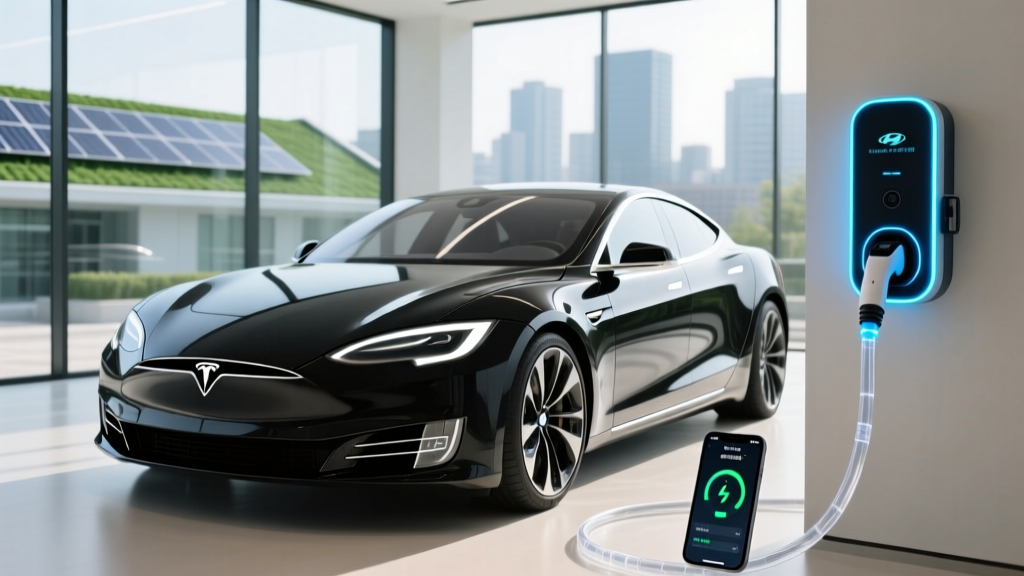
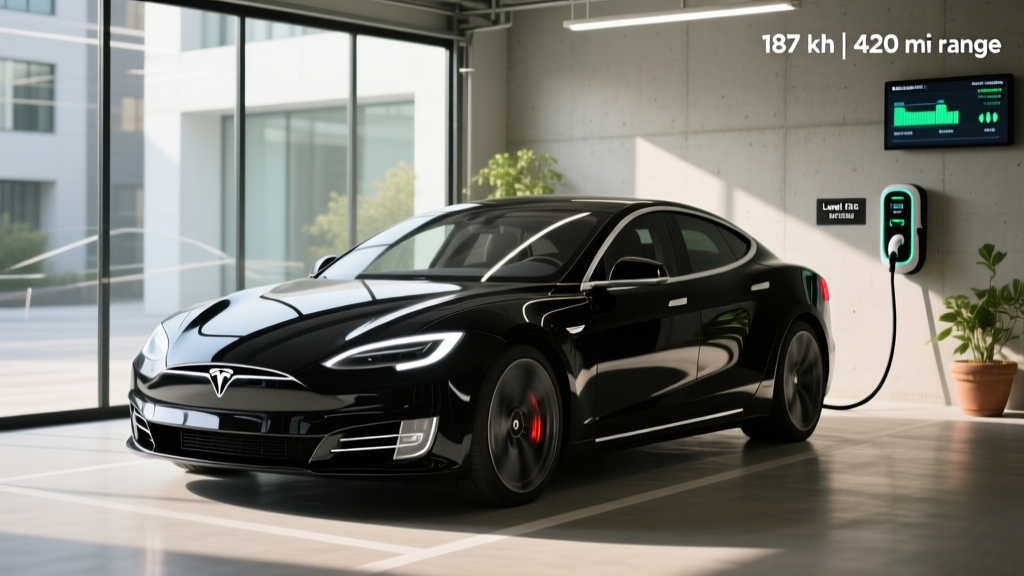
At home, the Tesla Wall Connector at 48 amps delivers 11.5 kW, adding roughly 41 miles of range per hour of charging. A full charge from near-empty takes about 9 hours — easily accomplished overnight. Most Plaid owners who charge at home daily will rarely visit a Supercharger except on road trips.
One practical note: Tesla includes a CCS adapter for non-Tesla DC fast-charging networks like Electrify America. While the Supercharger network remains the most reliable in the U.S., having CCS compatibility adds flexibility in areas where Supercharger coverage is thinner.
Performance and Driving Dynamics
The numbers are staggering, and they haven't gotten old. The Plaid's tri-motor setup — one motor up front, two in the rear — produces 1,020 horsepower and delivers a manufacturer-claimed 1.99-second 0-60 mph time (with one foot of rollout subtracted, as drag racing convention dictates). Independent testing by outlets like Motor Trend has confirmed sub-2.0-second runs on prepped surfaces. In real-world conditions on typical asphalt, expect 2.1-2.3 seconds — still ferociously quick.
Beyond straight-line fury, the Plaid's torque-vectoring rear axle and adaptive air suspension give it legitimate cornering ability. The yoke steering (standard) takes adaptation but offers an unobstructed view of the 12.3-inch driver display. Carbon ceramic rotors are available for track use, though the standard steel brakes handle spirited canyon driving without complaint.
The trade-off is ride quality. Even in Comfort mode, the Plaid is firm. The low-profile tires on 21-inch wheels transmit road imperfections noticeably. Compared to the BMW i7 M70's cosseting air suspension, the Plaid prioritizes performance over isolation.
Tesla Plaid Cost: Pricing, Trims, and Tax Credit Reality
| Cost Item | Amount |
|---|---|
| Base MSRP (Model S Plaid) | $89,990 |
| Destination Fee | $1,500 (estimated) |
| FSD (Supervised) Package | $8,000 (one-time) or $99/mo |
| 21" Arachnid Wheels | $4,500 |
| Full Self-Driving + Wheels As-Tested | ~$101,490 |
| Federal §30D Tax Credit | $0 — Does NOT qualify |
Here's where the Tesla Plaid cost conversation requires honesty. The IRS §30D federal tax credit caps eligibility for sedans at an MSRP of $55,000. At $89,990, the Model S Plaid exceeds this cap by over $34,000 and is categorically ineligible for the up-to-$7,500 federal credit — regardless of your income, battery sourcing, or any other factor.
Additionally, §30D imposes buyer income caps ($150,000 single / $300,000 joint modified AGI) and battery critical-mineral sourcing requirements. Even if the MSRP cap didn't disqualify the Plaid, many buyers at this price point would exceed the income limits. Bottom line: do not budget for a federal tax credit on the Model S Plaid.
Some states offer their own EV rebates or luxury-tax exemptions for electric vehicles — check your state's energy or DMV website for specifics, as these vary widely and change frequently.
Insurance is another significant cost factor. Plaid owners should budget $3,500-$6,000+ annually for comprehensive coverage, depending on location, driving record, and insurer. The combination of a $90,000+ vehicle with 1,020 hp pushes premiums into exotic-car territory. Get quotes before purchasing.
Interior, Tech, and Daily Livability
The Model S interior received its major refresh in 2021 and carries forward into 2026 with incremental updates. The 17-inch center touchscreen remains the command center, running Tesla's proprietary infotainment OS with access to Netflix, YouTube, Arcade games (the Plaid's 10-teraflop GPU handles Cyberpunk 2077 capably), and a surprisingly good 22-speaker audio system.
Practicality is a genuine Plaid strength versus its exotic-car rivals. The rear hatch opens to reveal 28.0 cubic feet of cargo space — more than many compact SUVs — expandable with the 60/40 split rear seats folded. The front trunk (frunk) adds 3.1 cubic feet for charging cables or a small bag. Rear legroom measures 35.4 inches, adequate for adults on longer trips though not limousine-spacious.
On the driver-assistance front, Tesla's Autopilot comes standard with adaptive cruise and lane-keeping. Full Self-Driving (Supervised) adds automated lane changes, intersection handling, and Navigate on Autopilot for highway on-ramp-to-off-ramp driving. It is critical to understand: FSD is an SAE Level 2 system. You must remain engaged, hands on the yoke, eyes on the road. It is not autonomous driving. The $8,000 price tag (or $99/month subscription) is a personal value judgment based on how much you commute in highway traffic.
Notable drawbacks: The yoke steering remains polarizing and can require hand-over-hand shuffling at low speeds. There are no physical buttons for climate or wipers — everything routes through the touchscreen. Build quality has improved substantially since 2021, but panel-gap consistency still trails Porsche and BMW at this price point.
Model S Plaid vs. Key Competitors
At the $90,000-$130,000 performance-EV-sedan tier, the Plaid faces serious competition:
vs. Lucid Air Grand Touring (~$94,900): The Lucid offers superior range (516 mi EPA), faster peak charging (300+ kW), and a more spacious rear seat. The Plaid wins on raw acceleration, Supercharger network access, and software ecosystem. If range and efficiency are your priorities, the Lucid edges ahead.
vs. Porsche Taycan Turbo GT (~$161,000): The Taycan is dramatically more expensive but delivers superior build quality, 800V charging architecture (sustained high-rate charging), and a more engaging analog driving feel. The Plaid offers 80% of the performance at 55% of the price.
vs. BMW i7 M70 (~$125,000): The i7 is a luxury limousine first, performance car second. It offers superior ride comfort, a more opulent interior, and better rear-seat space. The Plaid destroys it in acceleration and costs $35,000 less.
Who Should Buy the Tesla Model S Plaid?
The Plaid suits a specific buyer: someone who wants supercar acceleration in a practical, daily-drivable sedan with access to the best charging network in North America. It's a legitimate four-door family car that can demolish a drag strip, carry a week's worth of groceries in the hatch, and road-trip cross-country with 25-minute Supercharger stops.
It does not suit buyers who prioritize ride comfort over performance, those who want the absolute longest range (look at Lucid), or anyone counting on a federal tax credit to offset the purchase price.
Pros
- 1.99-sec 0-60 mph — among the fastest production cars ever built
- 396-mile EPA range is excellent for the performance class
- Supercharger network access for reliable road-trip charging
- Hatchback practicality with 28 cu ft cargo space
- Over-the-air updates continuously add features
- 8-year/150,000-mile battery & drive unit warranty
Cons
- $89,990+ MSRP — no federal §30D tax credit eligibility
- Insurance costs rival exotic sports cars ($3,500-$6,000+/yr)
- 250 kW peak DC charging is no longer class-leading
- Yoke steering requires adaptation and polarizes owners
- Firm ride quality compared to BMW i7 or Mercedes EQS
- No physical buttons — all controls via touchscreen
Frequently Asked Questions
What is the real-world range of the Tesla Model S Plaid?
EPA-rated at 396 miles on 19-inch wheels and 359 miles on 21-inch wheels. In real-world highway driving at 70-80 mph, expect 320-350 miles. In cold weather below 40°F, plan for 250-290 miles. Aggressive Plaid-mode driving will reduce range to under 200 miles.
How fast does the Model S Plaid charge at home and on the road?
On a Tesla V3 Supercharger, the Plaid peaks at 250 kW and charges from 10-80% in approximately 30 minutes, adding about 200 miles in 15 minutes under ideal conditions. At home on a Level 2 Wall Connector (48A/11.5 kW), it adds roughly 41 miles per hour, fully charging overnight in about 9 hours.
Does the Tesla Model S Plaid qualify for the federal EV tax credit?
No. The IRS §30D federal tax credit caps sedan eligibility at $55,000 MSRP. At $89,990, the Model S Plaid is ineligible regardless of buyer income or battery sourcing. Do not factor a federal credit into your Plaid purchase budget. Check your state's own incentive programs for possible local rebates.
How much does the Tesla Plaid cost to own over 5 years?
Beyond the $89,990+ purchase price, budget approximately $4,000-$5,500/year for insurance, $600-$900/year for home electricity (at 12,000 mi/yr and $0.14/kWh), and minimal maintenance (no oil changes; tire rotation and cabin filter replacement). Tires wear faster due to the weight and torque — budget $1,500-$2,500 for a set of performance tires every 20,000-25,000 miles.
Is the Model S Plaid worth buying vs. the Lucid Air or Porsche Taycan?
The Plaid offers the best acceleration and Supercharger network access at a lower price than the Taycan Turbo GT. The Lucid Air Grand Touring wins on range (516 mi) and charging speed. Choose the Plaid if you want maximum performance, Tesla's software ecosystem, and road-trip charging reliability. Choose Lucid for range and luxury; choose Porsche for build quality and 800V charging.
What is the battery warranty on the Model S Plaid?
Tesla covers the battery and drive unit for 8 years or 150,000 miles, whichever comes first, with a minimum 70% capacity retention threshold. This is competitive with the segment. NMC chemistry in the Plaid has shown moderate degradation in fleet data — typically 8-12% loss over the first 100,000 miles under normal use patterns.