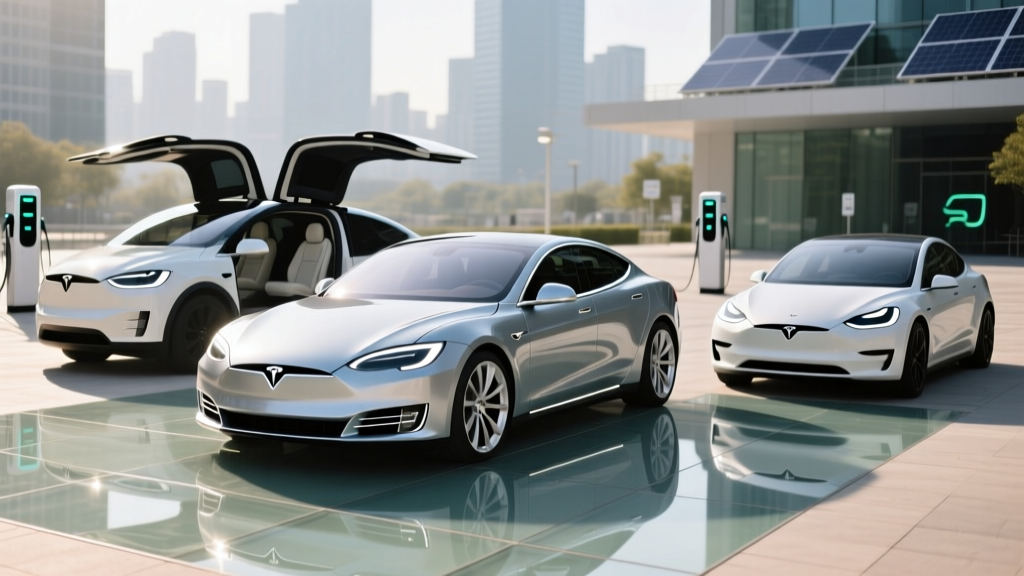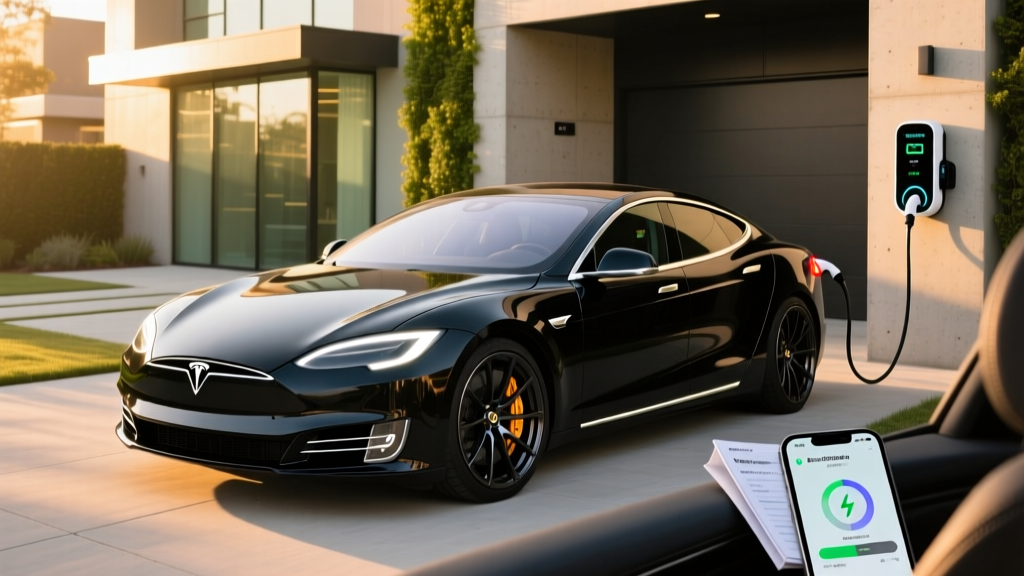
The 2023 Tesla Model S Plaid occupies a singular position in the electric vehicle market: a four-door luxury sedan that delivers hypercar-rivaling acceleration while maintaining daily-drivable range and access to the Supercharger network. With 1,020 horsepower, a sub-2-second 0-60 mph time, and an EPA-estimated 396 miles of range, the Plaid asks buyers to reconcile two seemingly contradictory priorities — extreme performance and long-distance practicality. This review breaks down the exact numbers, real-world ownership data, and charging realities you need before committing to a six-figure EV.
2023 Tesla Model S Plaid: Key Specifications at a Glance
| Specification | Value |
|---|---|
| Base MSRP | $89,990 (before incentives) |
| As-Tested Price (typical config) | $97,490–$105,990 |
| EPA Range | 396 miles (19" wheels) / 359 miles (21" wheels) |
| Battery Capacity (usable) | ~95 kWh (NMC chemistry) |
| Drivetrain | Tri-motor AWD |
| Horsepower | 1,020 HP |
| 0-60 mph | 1.99 seconds (with rollout subtracted) |
| Top Speed | 200 mph (with hardware upgrade) |
| MPGe (combined) | 116 MPGe |
| Efficiency | 29 kWh/100 mi |
| Max DC Fast Charge | 250 kW (V3 Supercharger) |
| 10-80% DC Charge Time | ~27 minutes |
| Level 2 Home Charging | 11.5 kW (~41 mi/hr) |
| Cargo Volume | 28 cu ft (rear) + ~3 cu ft (frunk) |
| Rear Legroom | 35.4 inches |
| Battery & Drive Unit Warranty | 8 years / 150,000 miles (70% retention) |
| Federal Tax Credit (§30D) | Eligible for up to $7,500 (subject to income/MSRP/sourcing rules) |
Range and Efficiency: EPA vs. Real World
The EPA rates the 2023 Model S Plaid at 396 miles on the 19-inch Tempest wheel configuration and 359 miles on the optional 21-inch Arachnid wheels. These figures place the Plaid among the longest-range production EVs available, trailing only the Lucid Air Grand Touring and the standard Model S Long Range.
- Highway cruising (70-80 mph, 75°F): Expect 310–340 miles before reaching 5% SoC. The tri-motor Plaid consumes more energy at sustained highway speeds than the dual-motor Long Range variant.
- Cold weather (20-30°F): Range drops to approximately 260–290 miles. The Plaid uses a heat pump for cabin and battery thermal management, which mitigates but does not eliminate cold-weather loss.
- Aggressive driving / track use: Range can fall below 200 miles if you're frequently accessing the Plaid's full power output. Launch control sessions drain the battery rapidly.
- City / moderate driving: You can approach or even exceed the EPA figure thanks to regenerative braking recovering energy in stop-and-go traffic.
The Plaid's efficiency rating of 116 MPGe combined (29 kWh per 100 miles) is impressive for a 4,766-pound vehicle producing over 1,000 horsepower. For context, that's roughly $0.09–$0.14 per mile to charge at home depending on your local electricity rate — compared to $0.20–$0.30 per mile for a similarly quick gasoline sports sedan on premium fuel.
Charging Speed and Infrastructure
Tesla's Supercharger network remains the Plaid's strongest ownership advantage for road-trip charging. The vehicle supports a peak DC fast-charge rate of 250 kW on V3 Superchargers.
| Charging Level | Power / Rate | Miles Added per Hour | Notes |
|---|---|---|---|
| Level 1 (120V household) | ~1.4 kW | ~3–5 mi/hr | Emergency/trickle only |
| Level 2 (240V home Wall Connector) | 11.5 kW (48A) | ~41 mi/hr | Full charge in ~9 hours |
| Level 2 (public, lower amperage) | 7.2 kW (32A) | ~26 mi/hr | Common at workplaces, hotels |
| DC Fast (V3 Supercharger) | Peak 250 kW | ~200 mi in 15 min | 10-80% in ~27 min |
| DC Fast (V2 Supercharger) | Peak 150 kW | ~130 mi in 15 min | Older stations, taper more aggressively |
| DC Fast (CCS adapter, 3rd-party) | Up to 250 kW | Varies by station | Requires Tesla CCS adapter (sold separately or included with newer deliveries) |
Charging curve reality: The Plaid does not sustain 250 kW for the entire charging session. Peak power is available between roughly 10-30% State of Charge, after which the rate tapers progressively. By 60% SoC, expect roughly 150 kW; by 80%, approximately 70-80 kW. This is why Tesla (and all automakers) quote 10-80% times rather than 0-100%. Charging above 80% on DC fast chargers is slow and generally not worth the wait unless you need maximum range for the next leg.
Preconditioning matters: Navigate to a Supercharger using the car's built-in navigation, and the Plaid will automatically precondition the battery to optimal temperature for maximum charge rate upon arrival. Arriving at a fast charger without preconditioning — especially in cold weather — can cut your peak charge rate by 50% or more.
Performance: The 1,020-HP Daily Driver
The tri-motor powertrain uses one motor on the front axle and two on the rear (Tesla's "carbon-sleeved rotors" allow the rear motors to spin to 20,000+ RPM without disintegrating from centrifugal force). The result: 1,020 horsepower and a manufacturer-claimed 1.99-second 0-60 mph time when using the car's drag strip launch mode with rollout subtracted.
Independent testing by outlets like Motor Trend and Car and Driver has recorded 0-60 times between 2.1 and 2.3 seconds — still among the quickest production cars ever tested, regardless of powertrain. The quarter-mile runs in the low 9-second range.
But the Plaid isn't just a straight-line weapon. The torque-vectoring rear axle and adaptive air suspension provide genuinely capable handling, though the 4,766-pound curb weight is always perceptible during direction changes. The carbon-ceramic brake package (a $15,000 option introduced for 2023) addresses the stock brakes' tendency to fade under repeated hard use, and is required to unlock the 200 mph top speed.
Drive modes: The Plaid offers a unique "Plaid" drive mode alongside standard Comfort, Sport, and Track settings. Plaid mode remaps throttle response, suspension damping, and torque distribution for maximum performance. The yoke steering wheel (standard, with a conventional round wheel available as a no-cost option) takes some acclimation, particularly for low-speed parking maneuvers and hand-over-hand turns.
Interior, Technology, and Daily Livability
The 2023 Model S interior received a significant refresh from earlier generations, with a 17-inch landscape-oriented touchscreen, a secondary 8-inch rear-seat display, ventilated front seats, a HEPA air filtration system, and a 22-speaker audio system. Build quality improved noticeably over the 2020-2021 Model S, though panel-gap consistency still varies by vehicle.
Infotainment: Tesla's proprietary operating system handles navigation, media, climate, vehicle settings, and gaming (yes, you can play Cyberpunk 2077 on the center display while charging). There is no Apple CarPlay or Android Auto — Tesla's ecosystem is self-contained. For some buyers, this is a dealbreaker; for Tesla owners, the integrated system is a key draw.
Driver assistance: Basic Autopilot (adaptive cruise control, lane centering, automatic emergency braking) comes standard. Full Self-Driving (Supervised) capability is a $15,000 option (or $199/month subscription as of 2023 pricing) that adds automated lane changes, navigation-on-autopilot, traffic light/stop sign recognition, and the controversial city-street "FSD Beta" functionality.
Cargo and passenger space: The Model S offers 28 cubic feet of rear cargo space (with the hatchback-style trunk providing wide opening access) plus approximately 3 cubic feet in the front trunk (frunk). Rear legroom measures 35.4 inches — adequate for adults on shorter trips, though taller passengers may find the sloping roofline limits headroom compared to boxier competitors like the Lucid Air or Mercedes EQS. The Model S seats five, though the optional rear-facing third-row jump seat (which previously allowed seating for seven) was discontinued.
Pricing, Tax Credits, and Total Cost
The 2023 Tesla Model S Plaid carries a base MSRP of $89,990 (excluding destination). Common configurations with premium paint ($2,000-$2,500), 21-inch wheels ($4,500), and FSD ($15,000) push the as-tested price to $97,000–$105,000+. The carbon-ceramic brake package adds $15,000.
| Item | Cost |
|---|---|
| Base MSRP (Plaid trim) | $89,990 |
| Destination fee | $1,990 |
| Premium paint (Ultra Red, for example) | $2,500 |
| 21" Arachnid wheels | $4,500 |
| Full Self-Driving (Supervised) | $15,000 |
| Carbon-ceramic brakes | $15,000 |
| Max configured price | ~$128,980 |
Federal Tax Credit Eligibility (§30D)
The 2023 Model S Plaid is eligible for the federal EV tax credit under IRS §30D, but several conditions apply:
- MSRP cap: Sedans must have an MSRP at or below $55,000 to qualify. The Model S Plaid at $89,990 exceeds this cap and does NOT qualify for the new-vehicle §30D credit. (Note: SUVs, vans, and trucks have a higher $80,000 cap, but the Model S is classified as a sedan.)
- Buyer income cap: Modified adjusted gross income must not exceed $300,000 (joint filers), $225,000 (head of household), or $150,000 (individual).
- Battery sourcing: Critical mineral and battery component requirements phase in annually and affect credit amount ($3,750 for minerals + $3,750 for components = up to $7,500 total).
- Point-of-sale transfer: As of 2024, eligible buyers can transfer the credit to the dealer for an immediate price reduction, but this requires the vehicle itself to qualify first.
Bottom line: The Model S Plaid does not qualify for the new-vehicle federal tax credit because its MSRP exceeds the $55,000 sedan cap. Buyers should consult a tax professional and check current rules at IRS.gov. State and local incentives may still apply — check fueleconomy.gov for your area.
Warranty and Long-Term Ownership
Tesla covers the Model S Plaid's battery and drive units for 8 years or 150,000 miles (whichever comes first), with a guaranteed minimum 70% capacity retention over that period. The limited vehicle warranty covers 4 years or 50,000 miles.
Battery chemistry: The Plaid uses an NMC (nickel manganese cobalt) lithium-ion battery pack, chosen for its high energy density necessary to deliver both 396 miles of range and the extreme discharge rates required for 1,020 HP. NMC cells generally show slightly faster long-term degradation than LFP (lithium iron phosphate) cells, but Tesla's thermal management system and the pack's large capacity provide a meaningful buffer.
Real-world degradation data: Tesla's own impact report and owner-collected data suggest Model S/X battery packs retain approximately 88-90% capacity after 150,000 miles. Complete battery replacement outside of warranty would cost approximately $20,000–$25,000 based on current service center pricing, though this figure is expected to decline as battery costs continue falling industry-wide.
How the Plaid Compares: Key Competitors
| Specification | Tesla Model S Plaid | Lucid Air Grand Touring | Porsche Taycan Turbo S | Mercedes-AMG EQS 53 |
|---|---|---|---|---|
| Base MSRP | $89,990 | $138,000 | $190,500 | $147,550 |
| EPA Range | 396 mi | 516 mi | 222 mi | 235 mi |
| 0-60 mph | 1.99 sec | 3.0 sec | 2.4 sec | 3.4 sec |
| Horsepower | 1,020 | 819 | 750 | 649 |
| Max DC Charge | 250 kW | 300+ kW | 270 kW | 200 kW |
| Charging Network | Supercharger (native) | Electrify America + NACS adapter | Electrify America + CCS | CCS networks |
| Tax Credit | No (MSRP cap) | No (MSRP cap) | No (MSRP cap) | No (MSRP cap) |
The Plaid's value proposition becomes clearest in this comparison: it is the quickest, one of the longest-range, and the least expensive of this group by a wide margin. The Lucid Air Grand Touring offers superior range and a more spacious, luxurious interior but costs nearly $50,000 more. The Taycan Turbo S excels in handling precision and build quality but sacrifices nearly half the range. The EQS 53 prioritizes comfort over outright performance.
Pros
- Sub-2-second 0-60 mph — quickest production sedan
- 396-mile EPA range (class-leading for a performance EV)
- Supercharger network access (most reliable DC charging)
- Continuous OTA updates add features post-purchase
- Best performance-per-dollar in the luxury EV segment
- Practical hatchback cargo area + frunk
Cons
- No federal tax credit (exceeds sedan MSRP cap)
- Yoke steering divisive; compromises low-speed maneuvering
- Rear-seat headroom tight for tall passengers
- No Apple CarPlay / Android Auto
- Stock brakes fade under track use (carbon-ceramic is a $15K fix)
- Panel gap and interior fit/finish inconsistent vs. German rivals
- FSD (Supervised) remains Level 2 despite premium pricing
Who Should Buy the 2023 Model S Plaid?
The Plaid is ideal for: Performance-oriented drivers who want a daily-drivable four-door EV with road-trip capability. If you regularly drive 200+ miles between charging stops, value instant acceleration, and want access to the most mature fast-charging network, the Plaid is unmatched at its price point.
Look elsewhere if: You prioritize rear-seat comfort for tall adults (consider the Lucid Air), you want a traditional luxury interior with physical controls (Porsche Taycan, Mercedes EQS), or you need federal tax credit eligibility (the Model S Plaid's MSRP disqualifies it).
Frequently Asked Questions
What is the real-world range of the 2023 Tesla Model S Plaid?
Expect 310–340 miles on highway road trips in mild weather, 260–290 miles in cold conditions (20-30°F), and up to 396 miles in city/mixed driving in moderate temperatures. The 21-inch wheel option reduces EPA range to 359 miles.
How fast does the Model S Plaid charge at home and on the road?
At home on a 240V/48A Tesla Wall Connector, the Plaid adds approximately 41 miles of range per hour (11.5 kW), reaching a full charge overnight in about 9 hours. On a V3 Supercharger, it peaks at 250 kW and charges from 10-80% in roughly 27 minutes.
Does the 2023 Model S Plaid qualify for the federal EV tax credit?
No. The Plaid's $89,990 MSRP exceeds the IRS §30D sedan cap of $55,000. Buyers with income above $300,000 (joint) are additionally excluded. Always verify current rules at IRS.gov and consult a tax professional.
Is the Model S Plaid worth buying versus the Lucid Air or Taycan?
If your priority is the best acceleration and longest range for the lowest price, yes — the Plaid wins both categories decisively against competitors costing $40,000-$100,000 more. If interior luxury, rear-seat space, or traditional build quality matter more, the Lucid Air Grand Touring or Porsche Taycan may be better fits despite the price premium.
How long will the Plaid's battery last?
Tesla warranties the battery for 8 years / 150,000 miles with a 70% capacity retention floor. Real-world data from high-mileage Model S owners suggests 88-90% retention at 150,000 miles. The NMC chemistry degrades slightly faster than LFP but the large pack size provides ample buffer for long-term usability.
Does the Plaid require the carbon-ceramic brake package?
For street driving and occasional spirited runs, the stock brakes are adequate. For repeated track use, launch control sessions, or unlocking the 200 mph top speed, the $15,000 carbon-ceramic package is effectively mandatory. Plan your configuration around your intended use case.