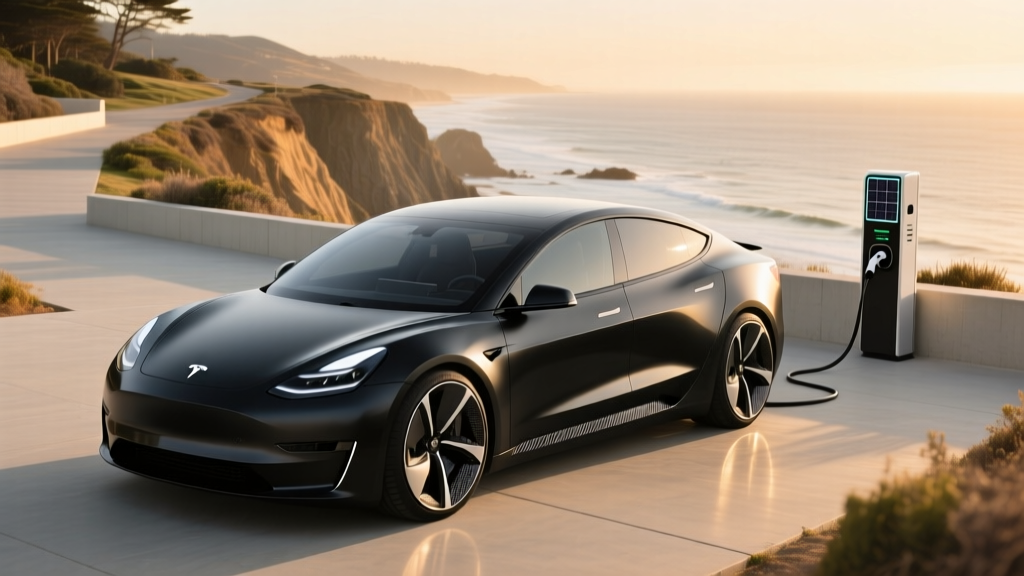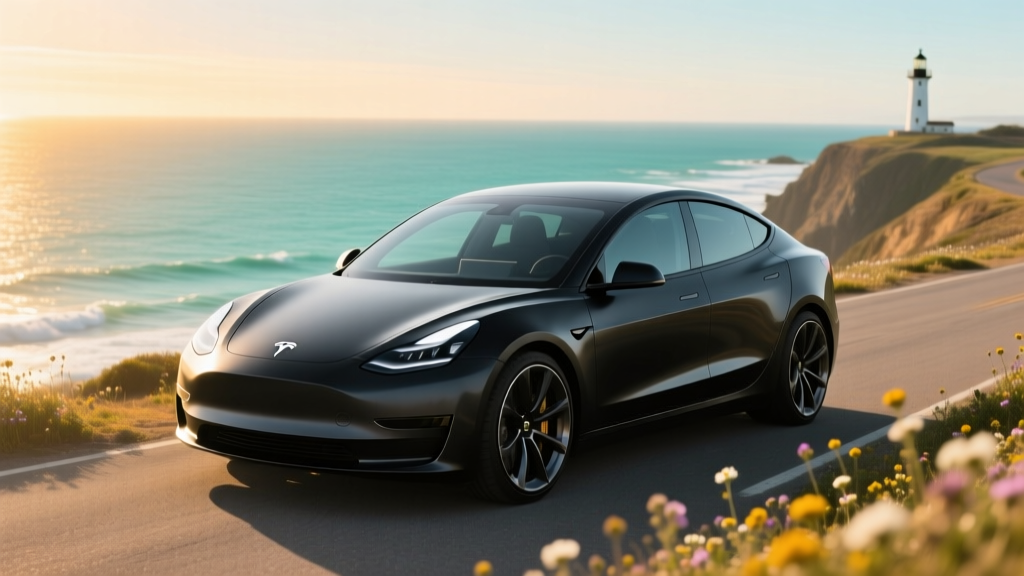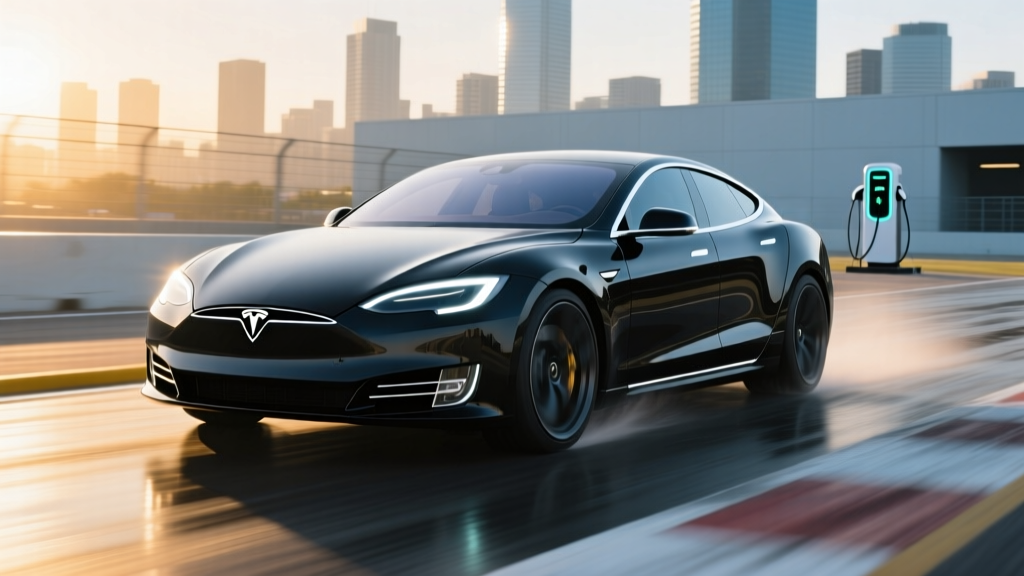
The Tesla Model S Plaid occupies a strange corner of the EV market: a four-door luxury sedan that runs supercar quarter-mile times while still offering 28 cubic feet of cargo space and over-the-air updates. For drag-racing enthusiasts and spec-sheet obsessives, the headline number is its 1/8 mile performance — a metric that matters more than 0-60 for real-world roll-on acceleration and highway passing confidence. In 2026, the Plaid remains the fastest production sedan Tesla sells, but its value proposition extends well beyond the drag strip.
This review breaks down the Model S Plaid's real-world range, charging behavior, ownership costs, and whether its $89,990 starting price makes sense against rivals like the Lucid Air Sapphire and Porsche Taycan Turbo GT.
Tesla Model S Plaid 1/8 Mile Time and Performance Specs
The Model S Plaid's tri-motor all-wheel-drive powertrain produces 1,020 horsepower and an estimated 1,050 lb-ft of torque. Tesla claims a 0-60 mph time of 1.99 seconds (with rollout subtracted), which independent testers have verified in the low 2.0-second range on prepped surfaces.
For the specific metric enthusiasts search for — the Tesla Plaid 1/8 mile time — recorded runs at drag strips consistently fall in the 5.5 to 5.8 second range at trap speeds around 145-150 mph, depending on surface prep, tire condition, and battery state of charge. The full quarter-mile typically clocks in at 9.2-9.4 seconds at 152-155 mph. These numbers place the Plaid firmly in hypercar territory from a vehicle with a back seat and a frunk.
| Spec | Value |
|---|---|
| Powertrain | Tri-Motor AWD (1 front, 2 rear) |
| Horsepower | 1,020 hp |
| 0-60 mph | 1.99 sec (manufacturer, w/ rollout) |
| 1/8 Mile Time | ~5.5–5.8 sec @ ~148 mph |
| 1/4 Mile Time | ~9.2–9.4 sec @ ~153 mph |
| Top Speed | 200 mph (with hardware) |
| Battery (usable) | ~95 kWh, NMC chemistry |
| EPA Range | 396 miles (19" wheels) |
| Efficiency | 116 MPGe combined / 29 kWh/100mi |
| Curb Weight | ~4,766 lbs |
One nuance often missed: the Plaid's carbon-sleeve rotors on the rear motors enable sustained high-RPM output without the power fade that affects some EVs on repeated hard launches. Tesla also requires the battery to be above approximately 95% state of charge and adequately preconditioned for maximum-power launches. Below 50% SoC, expect 0-60 times to stretch toward 2.5-3.0 seconds — still fast, but noticeably off peak.
EPA Range vs. Real-World Expectations
The EPA rates the Model S Plaid at 396 miles on the 19-inch Tempest wheels, dropping to 359 miles on the optional 21-inch Arachnid wheels. That 37-mile penalty for larger wheels is significant and worth considering if you're not committed to the aesthetic.
Real-World Range Reality Check: On highway road trips at 70-75 mph in moderate temperatures (60-80°F), expect 310-340 miles from a full charge on 19" wheels. In cold weather (below 30°F), range drops to roughly 260-290 miles due to battery resistance and cabin heating demands. City driving with regenerative braking can match or slightly exceed the EPA figure.
The Plaid uses an NMC (nickel manganese cobalt) battery pack, which offers higher energy density than LFP chemistry — necessary to hit the 396-mile target in a performance sedan. However, NMC cells are more sensitive to sustained 100% charging. Tesla recommends daily charging to 80-90% and only charging to 100% before long trips. This means your practical daily range is closer to 315-355 miles at a 90% state of charge.
According to fueleconomy.gov, the Plaid achieves 116 MPGe combined, translating to 29 kWh per 100 miles. That efficiency figure is impressive for a 1,020-hp vehicle, though it trails the Long Range Model S (122 MPGe) due to the tri-motor drivetrain's weight and parasitic losses.
Charging Speed: DC Fast Charging and Home Level 2
The Model S Plaid uses Tesla's NACS (North American Charging Standard) connector natively, giving it direct access to the Supercharger network — still the most reliable DC fast-charging infrastructure in the U.S. as of 2026.
| Charging Level | Power | Speed / Time |
|---|---|---|
| Level 1 (120V household) | ~1.4 kW | ~3-4 miles per hour |
| Level 2 (240V, Tesla Wall Connector) | 11.5 kW (48A) | ~34 miles per hour |
| Level 2 (240V, 60A circuit) | 11.5 kW max onboard | ~34 miles per hour |
| DC Fast Charge (V3 Supercharger) | Peak 250 kW | 10-80% in ~27 minutes |
| DC Fast Charge (V4 Supercharger) | Peak 250 kW (vehicle-limited) | 10-80% in ~27 minutes |
A critical detail on the DC fast-charging curve: the Plaid peaks at 250 kW but only sustains that rate between roughly 10-30% SoC. From 30-50%, power tapers to approximately 170-190 kW. Above 80%, charging slows dramatically to protect the NMC cells — expect 80-100% to add another 20+ minutes. For road trips, the optimal strategy is charging from 10-80% and skipping the slow top-off unless you need every last mile.
At home, the Tesla Wall Connector on a 60-amp circuit delivers up to 11.5 kW, adding roughly 34 miles of range per hour. A full overnight charge (8 hours) replenishes approximately 270 miles — enough to refill the pack from 20% to nearly full. Installation costs for a Wall Connector typically range from $800 to $2,500 depending on panel capacity and conduit run length. Always consult a licensed electrician for your specific setup.
Interior, Cargo, and Daily Usability
The refreshed Model S interior features a 17-inch center touchscreen (now with USB-C and wireless phone charging), a 12.3-inch instrument cluster, and a rear-seat entertainment screen. Build quality on 2025-2026 models has improved notably over early Palo Alto production, with more consistent panel gaps and higher-grade materials.
Passenger space remains generous for a performance sedan:
- Front legroom: 42.7 inches
- Rear legroom: 35.4 inches
- Front headroom: 39.7 inches
- Rear headroom: 38.1 inches
Cargo volume totals 28 cubic feet behind the rear seats (including the frunk), which is competitive with midsize luxury sedans and far more practical than any two-door supercar. The rear hatch design makes loading bulky items easier than a traditional trunk. However, the rear seat doesn't fold flat in the Plaid trim due to the rear subframe and motor packaging, limiting long-item utility.
The yoke steering wheel remains standard on the Plaid, which is polarizing. At low speeds and parking maneuvers, the yoke requires more hand-over-hand adjustment than a round wheel. On highway drives and canyon roads, most owners adapt within a week. A conventional round wheel is available as a no-cost option if you specify it at order time.
Pricing, Trims, and Federal Tax Credit Eligibility
For 2026, the Tesla Model S is available in two trims:
| Trim | Base MSRP | §30D Credit Eligible? | Effective Price (if eligible) |
|---|---|---|---|
| Model S Long Range | $74,990 | No — exceeds $55,000 sedan MSRP cap | $74,990 |
| Model S Plaid | $89,990 | No — exceeds $55,000 sedan MSRP cap | $89,990 |
Federal tax credit reality: The Model S Plaid does not qualify for the IRS §30D new clean vehicle credit. Under current IRS rules, sedans must have an MSRP at or below $55,000 to be eligible. At $89,990, the Plaid exceeds this cap by a wide margin. Additionally, buyer income limits apply ($150,000 single / $300,000 joint MAGI), and battery component and critical mineral sourcing requirements must be met. Even if the MSRP cap didn't disqualify it, the Plaid's battery sourcing may not satisfy the full $7,500 threshold.
Buyers should also check state-level incentives — some states (California, Colorado, Massachusetts) offer separate rebates that are not subject to the federal MSRP cap. Consult your state's energy office or a tax professional for current local programs.
A well-equipped Plaid with the 21-inch Arachnid wheels ($4,500), Full Self-Driving capability ($8,000), and premium interior colors can push the as-tested price above $105,000 before delivery fees and taxes.
Battery Warranty, Degradation, and Long-Term Ownership
Tesla covers the Model S Plaid's battery and drive unit with an 8-year / 150,000-mile warranty, whichever comes first, with a minimum 70% capacity retention guarantee. This is more generous than the Long Range model's 8-year/120,000-mile coverage, reflecting Tesla's confidence in the Plaid's thermal management under high-load use.
Real-world degradation data from Tesla's own fleet reports and third-party tracking (Tessie, Recurrent Auto) show NMC packs in the Model S losing approximately 10-12% capacity over the first 100,000 miles, with the curve flattening significantly afterward. Owners who avoid frequent 100% charges, minimize DC fast charging to above 90%, and use scheduled departure preconditioning tend to see better long-term retention.
If a battery replacement is ever needed out of warranty, current estimates for a Model S pack replacement range from $12,000 to $20,000 depending on whether Tesla offers a refurbished unit. This cost has been declining as Tesla's remanufacturing program matures.
The vehicle limited warranty covers 4 years / 50,000 miles — standard for the luxury segment but shorter than Genesis or Hyundai's coverage. Given the Plaid's price, some buyers opt for an extended service agreement.
Autopilot, FSD, and Smart Driving Features
Every Model S Plaid ships with Tesla's Basic Autopilot, which includes Traffic-Aware Cruise Control and Autosteer (lane-keeping). These are SAE Level 2 driver-assistance features — the driver must remain fully engaged, keep hands on the yoke/wheel, and monitor the road at all times.
SAE Level 2 — Not Self-Driving: Tesla's Full Self-Driving (Supervised) capability, available as an $8,000 add-on, remains a Level 2 system despite the name. It can navigate city streets, stop signs, and highway interchanges, but requires constant driver supervision. Only Level 4 systems (like Waymo's robotaxi) operate without a human driver. Tesla's FSD has improved substantially through 2025-2026 neural net updates, but it is not a substitute for an attentive driver.
The Plaid also includes Tesla's latest Hardware 4 (HW4) camera suite with higher-resolution sensors and improved low-light performance compared to HW3. However, Tesla removed ultrasonic sensors (USS) in late 2022, relying on Tesla Vision for parking proximity — a change that drew criticism for reduced precision in tight parking situations. The 2025-2026 software updates have improved Vision-based parking, but some owners still find it less reliable than ultrasonic-based systems.
How the Plaid Compares: Lucid Air Sapphire and Porsche Taycan Turbo GT
The Plaid's closest competitors in the ultra-performance EV sedan segment are the Lucid Air Sapphire ($249,000) and the Porsche Taycan Turbo GT ($230,000+). Both are dramatically more expensive, which is the Plaid's most compelling argument.
The Lucid Air Sapphire produces 1,234 hp and runs a quicker quarter-mile (approximately 8.9 seconds), but at nearly three times the Plaid's price. The Porsche Taycan Turbo GT offers superior chassis dynamics and track stamina thanks to its two-speed rear transmission, but its EPA range (approximately 269 miles) trails the Plaid by over 120 miles.
For buyers who want 90% of the performance at 40% of the price, the Model S Plaid has no direct equal. The trade-off is Tesla's minimalist interior (which some love and others find sparse for a $90K car), the yoke learning curve, and the lack of federal tax credit eligibility.
Pros, Cons, and Who Should Buy the Model S Plaid
Pros
- Sub-5.8 second 1/8 mile — hypercar acceleration from a sedan
- 396-mile EPA range (19" wheels) is best-in-class for performance EVs
- Access to Tesla Supercharger network — most reliable DC fast-charging
- Tri-motor torque vectoring provides exceptional corner-exit grip
- Over-the-air updates continuously improve the vehicle
- 28 cu ft cargo space with hatchback practicality
Cons
- $89,990 MSRP — no federal §30D tax credit eligibility (sedan MSRP cap: $55,000)
- Yoke steering is polarizing and impractical for some drivers
- 250 kW peak DC charging trails newer 800V architectures (Hyundai, Porsche)
- Rear seats don't fold flat — limited long-cargo flexibility
- Minimalist interior lacks physical controls some luxury buyers expect
- Insurance premiums run 30-50% higher than Long Range Model S
Best for: Performance enthusiasts who need daily-driver practicality, tech-forward buyers who want continuous software improvements, and road-trippers who value Supercharger network access. The Plaid works as a one-car solution for someone who wants supercar acceleration without sacrificing back-seat usability or range.
Not ideal for: Buyers seeking traditional luxury interior ambiance (consider Mercedes EQS or BMW i7), those on a budget who need tax credit eligibility, or track-day regulars who want the sustained cooling of a dedicated sports car.
Frequently Asked Questions
What is the Tesla Model S Plaid's 1/8 mile time?
Recorded 1/8 mile runs for the Model S Plaid typically fall between 5.5 and 5.8 seconds at trap speeds of 145-150 mph. Exact times depend on tire condition, surface preparation, ambient temperature, and battery state of charge (above 95% SoC is required for peak power).
What is the real-world highway range of the Model S Plaid?
On the highway at 70-75 mph in moderate weather, expect approximately 310-340 miles on 19-inch wheels. The EPA sticker says 396 miles, but sustained highway speeds, HVAC use, and elevation changes reduce that figure. In cold weather (below 30°F), plan for 260-290 miles.
Does the Tesla Model S Plaid qualify for the $7,500 federal EV tax credit?
No. Under IRS §30D rules, sedans must have an MSRP of $55,000 or less to qualify. The Plaid starts at $89,990, well above the cap. State-level incentives may still apply depending on your jurisdiction. Consult a tax professional for your specific situation.
How fast does the Plaid charge at home and on the road?
At home on a Level 2 Tesla Wall Connector (240V, 48A), the Plaid charges at up to 11.5 kW, adding about 34 miles of range per hour. On a V3 or V4 Supercharger, it peaks at 250 kW and charges from 10-80% in approximately 27 minutes, with significant taper above 80%.
Is the Model S Plaid worth it over the Long Range trim?
The Long Range Model S starts at $74,990, offers 402 miles of EPA range, and runs 0-60 in 3.1 seconds — which is fast by any normal standard. The Plaid's $15,000 premium buys you 1,020 hp, tri-motor torque vectoring, carbon-sleeve rotors, and track-mode capability. If you'll never use the extra 700 hp or visit a drag strip, the Long Range is the rational choice. If performance is a priority, the Plaid's price-to-performance ratio is unmatched.
What is the battery warranty on the Model S Plaid?
Tesla covers the Plaid's battery and drive unit for 8 years or 150,000 miles (whichever comes first) with a minimum 70% capacity retention guarantee. The vehicle limited warranty is 4 years / 50,000 miles.