The Verdict: Is the Tesla Model S Plaid Still the Acceleration King?
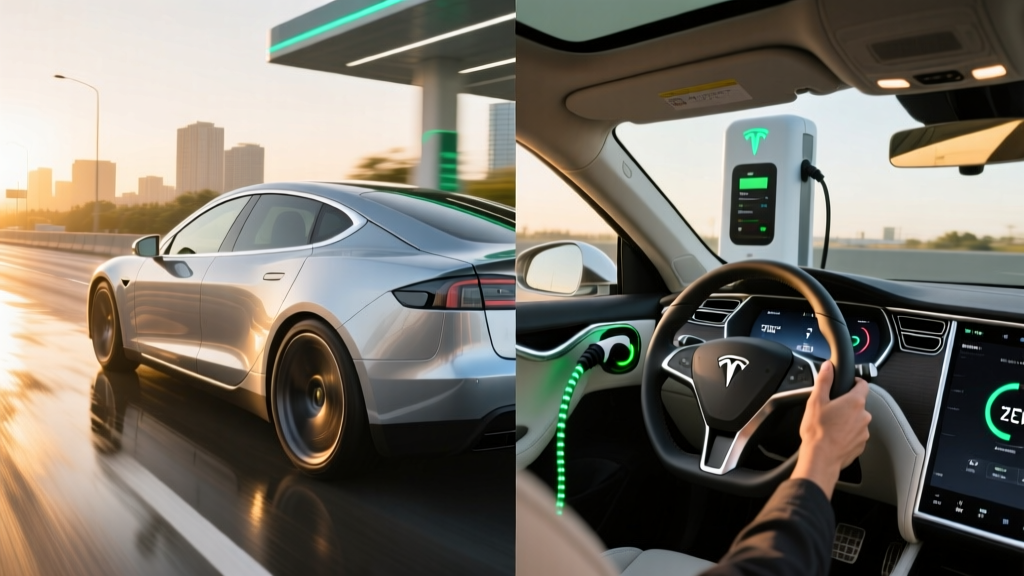
The Tesla Model S Plaid remains one of the quickest production sedans on the planet. With a manufacturer-claimed 0-60 mph time of 1.99 seconds (with rollout subtracted) and a real-world tested time hovering around 2.1 to 2.3 seconds on prepped surfaces, the Plaid's tri-motor powertrain delivers violence that belies its four-door luxury packaging. But beyond the headline-grabbing acceleration, the 2026 Model S Plaid is a 405-mile EPA-rated grand tourer with access to the most reliable DC fast-charging network in North America, a spacious hatchback cargo area, and the kind of daily usability that makes a supercar-compliant 0-60 time genuinely practical.
This review breaks down every number that matters — from sustained highway range and charging-curve taper to tax-credit ineligibility and real ownership costs — so you can decide whether the Plaid earns a spot in your garage or whether a competitor makes more sense.
Tesla Model S Plaid: Full Spec Sheet at a Glance
| Specification | 2026 Tesla Model S Plaid |
|---|---|
| Base MSRP | $89,990 (excl. $1,390 destination) |
| As-Tested Price (typical) | $96,490 (w/ FSD, Ultra Red, 21" Arachnids) |
| EPA Range | 396 mi (19" wheels) / 359 mi (21" wheels) |
| Battery (usable) | ~95 kWh, NMC (nickel manganese cobalt) |
| Drivetrain | Tri-Motor AWD (1 front, 2 rear carbon-sleeved rotors) |
| Horsepower | 1,020 hp (peak) |
| 0-60 mph | 1.99 sec (mfg, rollout subtracted) / ~2.1-2.3 sec real-world |
| Top Speed | 200 mph |
| Max DC Fast Charge | 250 kW (V3 Supercharger) |
| 10-80% DC Charge Time | ~30 minutes (peak conditions) |
| Level 2 Home Charge Rate | 11.5 kW / 44 mi/hr (48A Wall Connector) |
| Efficiency | 120 MPGe combined / 28 kWh/100 mi |
| Cargo Volume | 28 cu ft (rear seats up) / 64 cu ft (rear folded) |
| Frunk | 3.1 cu ft |
| Battery Warranty | 8 years / 150,000 miles (70% retention) |
| Federal Tax Credit (§30D) | Not eligible — exceeds $55,000 sedan MSRP cap |
Real-World Range: What the EPA Sticker Doesn't Tell You
EPA Sticker: 396 miles (19" Tempest wheels) / 359 miles (21" Arachnid wheels)
Real-World Highway (70-75 mph, mild weather): ~300-330 miles
Cold Weather (below 30°F, highway): ~240-280 miles
Mixed Commute (city/regen-heavy): ~350-380 miles
The Model S Plaid's 396-mile EPA rating is impressive on paper, but the tri-motor setup and performance-tuned tire compound carry an efficiency penalty versus the dual-motor Long Range variant (rated at 402 miles). On sustained highway runs at 75 mph in 65-75°F conditions, expect to use roughly 300-330 miles of range before needing a charge stop. That's a meaningful gap from the EPA number, driven by aerodynamic drag at speed and the Plaid's heavier tri-motor hardware.
Cold weather compounds the loss. Lithium-ion NMC cells lose efficiency in freezing temperatures, and while Tesla's heat pump and battery preconditioning mitigate some of the hit, a winter highway drive at 70 mph will realistically deliver 240-280 miles. City driving with aggressive regenerative braking recovers more energy, pushing real-world range closer to the EPA figure in stop-and-go conditions.
According to EPA data at fueleconomy.gov, the Plaid's combined efficiency sits at 120 MPGe (28 kWh/100 mi). That's slightly less efficient than the Long Range AWD at 124 MPGe, a trade-off for 400 additional horsepower.
Charging Speed: 250 kW Peak, but Read the Fine Print
The Model S Plaid supports a maximum DC fast-charge rate of 250 kW on Tesla V3 Superchargers. Under ideal conditions — a battery preconditioned via navigation routing to a Supercharger, starting at roughly 10% state of charge (SoC), and ambient temperatures between 60-85°F — you'll see peak rates near 250 kW in the initial phase.
However, like all EVs, the Plaid follows a charging curve that tapers significantly as SoC increases. Here's what to actually expect:
| Charging Level | Power / Rate | Typical Speed |
|---|---|---|
| Level 1 (120V household) | ~1.4 kW | ~5 miles per hour |
| Level 2 (240V / 48A Wall Connector) | 11.5 kW | ~44 miles per hour |
| DC Fast Charge (V3 Supercharger) | Up to 250 kW peak | 10-80% in ~30 min; 80-100% adds ~25+ min |
| DC Fast Charge (V4 Supercharger) | Up to 250 kW (current Plaid limit) | Same as V3; future vehicles may support higher |
Charging curve reality: The 250 kW peak holds only briefly in the 10-30% SoC window. By 50% SoC, rates typically drop to ~150 kW, and above 80% they taper sharply to protect the NMC cells. A 10-80% charge takes roughly 30 minutes; charging from 80-100% can take nearly as long as the first 70%. For road trips, plan stops around the 10-80% window to minimize time plugged in.
At home, the Tesla Wall Connector at 48 amps delivers 11.5 kW, replenishing the ~95 kWh usable battery from empty in roughly 9-10 hours. Most owners who plug in nightly never need public charging for daily driving. Installation of a 60A circuit (required for 48A continuous draw) typically costs $500-$2,000 depending on panel proximity and local electrical codes — factor this into your budget.
Performance: The Tesla Plaid 0 to 60 Experience
Three carbon-sleeved permanent-magnet synchronous motors — one front, two rear — produce a combined 1,020 horsepower and route torque through all four wheels with microsecond-level vectoring. Tesla claims a 1.99-second 0-60 mph time with one foot of rollout subtracted (a drag-racing convention that shaves roughly 0.1-0.2 seconds from the raw standing-start figure).
In independent testing by outlets including Motor Trend and Car and Driver, the Plaid has recorded 0-60 times between 2.1 and 2.3 seconds on prepared surfaces without rollout subtraction. That puts it in the same territory as the Bugatti Chiron and well ahead of the Lucid Air Sapphire (2.1 sec claimed) in some conditions, though the Lucid edges ahead in quarter-mile times and top-end pulls.
The Plaid's acceleration isn't just about the number. The instant torque delivery — no gear shifts, no turbo spool, no traction-management hesitation — makes it feel even quicker than the stopwatch suggests. Launch control engagement is straightforward: hold brake, press accelerator, release brake. The car squats, grips, and simply teleports.
Beyond straight-line speed, the Plaid's adaptive air suspension, revised damping, and wider rear tires give it legitimate cornering composure that the pre-refresh Model S never had. It's still a heavy sedan (~4,766 lbs), but it manages its mass well on canyon roads.
Interior, Tech, and Daily Usability
The Model S Plaid's interior centers on a 17-inch landscape touchscreen running Tesla's latest software, a 12.3-inch digital instrument cluster, and a yoke-style steering wheel (a conventional round wheel is available as a no-cost option). The infotainment system handles navigation, media, climate, vehicle settings, and a surprisingly capable gaming suite — the AMD Ryzen-powered MCU renders games like Cyberpunk 2077 at playable frame rates while parked.
Driver Assistance: Every Plaid ships with Tesla's Basic Autopilot (adaptive cruise, lane-keeping). Full Self-Driving (Supervised) is a $8,000 option (or $99/month subscription as of 2026). FSD remains an SAE Level 2 system — it does not make the car self-driving. The driver must remain attentive, keep hands available, and is fully responsible for all vehicle operation. Tesla's naming convention has drawn scrutiny from NHTSA, and buyers should understand that FSD Supervised is an advanced lane-level navigation assist, not autonomous driving.
Cargo and passenger space remain the Plaid's practical advantage over two-door supercars and even the Lucid Air. The hatchback design opens to 28 cubic feet behind the rear seats and 64 cubic feet with the 60/40 split folded — enough for road-trip luggage for four or a full Costco run. The 3.1-cu-ft frunk handles charging cables and small bags. Rear legroom measures 35.4 inches, adequate for adults on longer trips, though the sloping roofline limits headroom for passengers over 6 feet.
Notable drawbacks: The yoke steering wheel remains polarizing and can make low-speed parking maneuvers awkward. Panel-gap consistency, while improved since the 2021 refresh, still lags German competitors. There's no Apple CarPlay or Android Auto — Tesla's native system is the only option. And road noise at highway speeds is more pronounced than in a Mercedes EQS or BMW i7.
Pricing, Tax Credits, and Ownership Costs
The 2026 Tesla Model S Plaid starts at $89,990 before the $1,390 destination fee. A typical build with Ultra Red paint ($2,000), 21-inch Arachnid wheels ($4,500), and FSD ($8,000) lands around $104,880 before taxes and registration.
The Model S Plaid does not qualify for the $7,500 federal EV tax credit under IRS §30D. The sedan MSRP cap is $55,000, and the Plaid's $89,990 base price far exceeds it. Income caps ($150K single / $300K joint) and battery-sourcing requirements are moot here. See IRS clean vehicle credit rules for full details. Some state-level incentives (e.g., California, Colorado) may still apply — check your local DMV or energy office.
| Cost Factor | Model S Plaid Estimate |
|---|---|
| Base MSRP | $89,990 |
| Destination Fee | $1,390 |
| Federal Tax Credit | $0 (MSRP exceeds cap) |
| Estimated Annual Insurance | $3,200-$4,800 (varies by state/driver) |
| Annual Electricity (12,000 mi @ $0.14/kWh) | ~$470 |
| Estimated 5-Year Maintenance | ~$1,500-$2,500 (tires are the big cost) |
| 5-Year Total Cost of Ownership (est.) | ~$115,000-$130,000 (incl. depreciation) |
Insurance is a real factor: the Plaid's performance profile and Tesla's repair-cost history push premiums well above those of a Lucid Air Pure or even a BMW i7. Get quotes before ordering. Tire replacement is another ownership reality — the Michelin Pilot Sport 4S or Pirelli P Zero tires on 21-inch wheels wear quickly under the Plaid's torque and typically last 12,000-18,000 miles at $350-$450 per corner.
Depreciation is the largest ownership cost. The Model S historically loses 40-50% of its value in the first three years, though Plaid variants hold slightly better than base Long Range trims due to their halo status. If you plan to keep the car 5+ years, depreciation matters less; if you trade frequently, factor it in.
How the Plaid Stacks Up Against Key Competitors
| Spec | Tesla Model S Plaid | Lucid Air Sapphire | Porsche Taycan Turbo GT | BMW i7 M70 |
|---|---|---|---|---|
| Base Price | $89,990 | $249,000 | $236,300 | $168,800 |
| 0-60 mph | ~2.1 sec | ~2.1 sec | ~2.3 sec | ~3.5 sec |
| EPA Range | 396 mi | 427 mi | 269 mi | 295 mi |
| HP | 1,020 | 1,234 | 1,092 | 650 |
| Max DC Charge | 250 kW | 300+ kW | 320 kW | 195 kW |
| Cargo (rear) | 28 cu ft | 22 cu ft | 14.3 cu ft | 17.7 cu ft |
| Tax Credit | No | No | No | No |
The Plaid's value proposition is clear: it delivers 95% of the Lucid Air Sapphire's performance for roughly one-third of the price. The Sapphire is the more accomplished driver's car with a longer range and faster charging, but at $249K, it occupies a different stratosphere. The Porsche Taycan Turbo GT is a sharper handling instrument but sacrifices over 100 miles of range and costs $146K more. The BMW i7 M70 is the luxury cruiser in the group — quieter, more opulent, but not in the same performance league.
For buyers whose priority is maximum acceleration per dollar with the practicality of a family-sized hatchback and access to the Supercharger network, the Model S Plaid has no direct equal at its price point.
Pros and Cons: The Honest Scorecard
- Sub-2.3-second 0-60 mph — supercar acceleration in a sedan
- 396-mile EPA range (19" wheels) covers most road trips with one stop
- Access to 6,000+ Tesla Supercharger stations — most reliable DC network
- Hatchback cargo versatility (28/64 cu ft) beats every competitor
- Over-the-air updates continuously add features
- Strong battery warranty: 8 yr / 150,000 mi at 70% retention
- $89,990+ with no federal tax credit eligibility
- Insurance premiums are steep ($3,200-$4,800/yr)
- Yoke steering is awkward for parking and low-speed turns
- No Apple CarPlay or Android Auto support
- Highway road noise exceeds luxury competitors
- Rapid tire wear under performance driving (~12K-18K mi)
- Depreciation remains significant in first 3 years
Who Should Buy the Tesla Model S Plaid?
- You want the quickest 0-60 sedan available under $100K and will use that performance
- You need four doors, real rear-seat space, and hatchback cargo versatility
- You road-trip frequently and want Supercharger network reliability
- You can charge at home (Level 2) and don't rely solely on public charging
- You accept higher insurance and tire costs as the price of 1,020 hp
- You need the federal $7,500 tax credit to justify your EV purchase
- Quiet, Mercedes-grade luxury isolation is your top priority (consider the EQS or i7)
- You want the absolute longest range available (Lucid Air Grand Touring: 512 mi)
- You prefer traditional switchgear, Apple CarPlay, or a conventional steering wheel
Frequently Asked Questions
What is the real 0-60 time of the Tesla Model S Plaid?
Tesla claims 1.99 seconds with one foot of rollout subtracted. Independent testing without rollout typically records 2.1 to 2.3 seconds on prepared surfaces. Both numbers are extraordinary — the difference is a measurement convention, not a performance shortfall.
Does the Model S Plaid qualify for the $7,500 federal EV tax credit?
No. Under IRS §30D rules, sedans must have an MSRP at or below $55,000 to qualify. The Plaid starts at $89,990 and is ineligible regardless of buyer income or battery sourcing. Some state incentives may still apply.
How fast does the Model S Plaid charge at home?
On a Tesla Wall Connector at 48 amps (11.5 kW), the Plaid adds roughly 44 miles of range per hour. A full charge from near-empty takes about 9-10 hours. Most owners plug in overnight and wake up to a full battery every morning.
What's the real-world highway range?
Expect roughly 300-330 miles at 70-75 mph in mild weather with the 19-inch wheels. In cold weather (below 30°F), that drops to approximately 240-280 miles. City driving with regenerative braking can approach the 396-mile EPA figure.
Is the Plaid faster than the Lucid Air Sapphire?
In 0-60 testing, they're nearly identical — both hover around 2.1 seconds. The Sapphire has a slight edge in quarter-mile times and top-end acceleration due to its 1,234 hp, but it costs $249,000 versus the Plaid's $89,990. The value comparison heavily favors Tesla.
How long will the Plaid's battery last?
Tesla warrants the battery for 8 years or 150,000 miles, whichever comes first, with a minimum 70% capacity retention guarantee. NMC chemistry in Teslas historically degrades roughly 10-15% over the first 100,000 miles based on fleet data, then slows. With proper care (avoiding frequent 100% charges, using preconditioning for DC charging), the battery should outlast 200,000 miles with usable capacity.
Is Full Self-Driving worth it on the Plaid?
FSD (Supervised) costs $8,000 or $99/month and provides lane-level navigation assist, automatic lane changes, and traffic-light recognition. It remains an SAE Level 2 system requiring constant driver supervision. If your commute involves heavy highway miles, the monthly subscription is worth trying. If you expect autonomous driving, no system currently sold delivers that — FSD included.