The P100D Legacy: Why Enthusiasts Still Search for This Model S
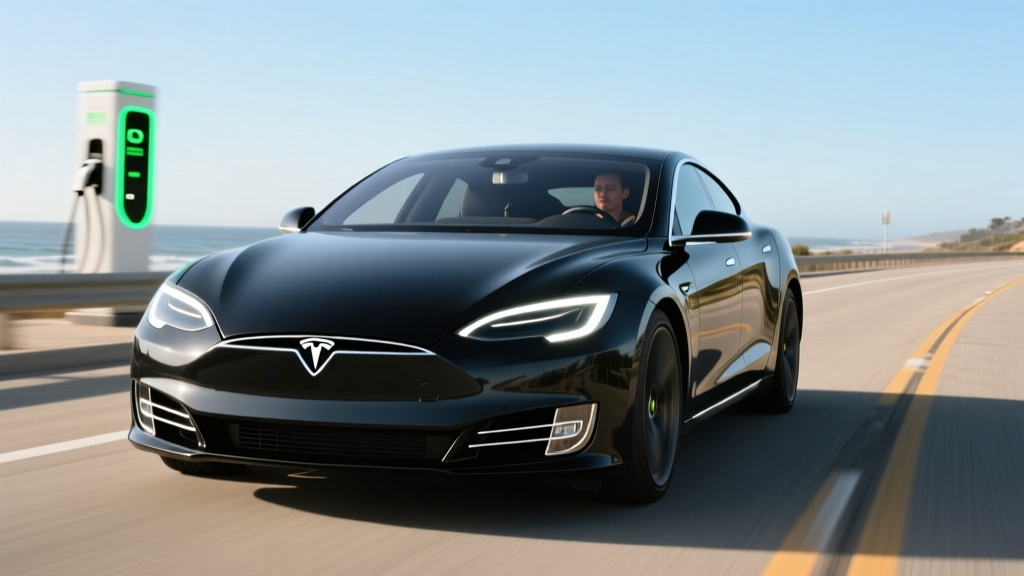
If you've searched for Model S P100D 0 60 performance data, you already know this car redefined what an electric sedan could do. Launched in late 2016 and produced through 2017 (with residual inventory into early 2018), the P100D with Ludicrous Mode posted a manufacturer-claimed 0-60 mph time of just 2.5 seconds — faster than a Bugatti Veyron and, at the time, the quickest production car in the world.
But in 2026, the P100D is a used vehicle. Tesla replaced it with the refreshed Model S Plaid (0-60 in 1.99 seconds, tri-motor) and the dual-motor Model S Long Range. So the question for today's buyer isn't whether the P100D is fast — it absolutely is — but whether a 2017-2018 example holds up as a daily driver, what its real-world range looks like after battery degradation, and how charging speeds compare to modern EVs.
This profile covers every spec that matters: range, battery health, charging curves, ownership costs, and how the P100D stacks up against the current Model S lineup and competitors like the Lucid Air and Porsche Taycan.
Model S P100D Specifications at a Glance
| Specification | Value |
|---|---|
| 0-60 mph (Ludicrous Mode) | 2.5 seconds |
| Horsepower | ~762 hp (combined, peak output with battery preconditioning) |
| Torque | ~791 lb-ft |
| Drivetrain | Dual-motor AWD |
| Battery Capacity (gross) | 100 kWh (NMC chemistry) |
| Battery Capacity (usable) | ~98 kWh |
| EPA Range (original) | 315 miles |
| EPA Efficiency | 98 MPGe combined / 34 kWh per 100 miles |
| Max DC Fast Charge | ~120 kW peak (Supercharger V2 era) |
| 10-80% DC Charge Time | ~45-50 minutes |
| Level 2 Home Charge Rate | Up to 16.5 kW (72-amp onboard charger option) or 11.5 kW (48-amp standard) |
| Cargo Volume | 26.3 cu ft (rear trunk) + 5.3 cu ft (frunk) = 31.6 cu ft total |
| Rear Legroom | 35.4 inches |
| Curb Weight | ~4,941 lbs |
| Battery/Drive Unit Warranty | 8 years / unlimited miles (original) |
| Original MSRP | $134,500 (base) — $150,000+ (fully optioned) |
Real-World Range: What 315 EPA Miles Means in 2026
The P100D's 100 kWh battery pack uses NMC (nickel manganese cobalt) chemistry, which was the industry standard for performance-oriented EVs of this era. NMC offers high energy density — essential for packing 315 miles into a sedan — but it is more sensitive to high state-of-charge stress than the LFP (lithium iron phosphate) batteries Tesla now uses in some Model 3 and Model Y variants.
Battery degradation on the P100D typically follows a curve common to 100 kWh packs: expect roughly 8-12% capacity loss over the first 80,000-100,000 miles, after which degradation slows significantly. According to data aggregated from Tesla owner forums and fleet analyses, most P100Ds with 60,000-90,000 miles on the odometer retain 88-93% of original capacity. That translates to approximately 280-295 miles of range at 100% SoC under ideal conditions.
The P100D does not feature the heat pump that Tesla introduced in the 2021 Model S refresh. Instead, it uses a resistive PTC heater for cabin warmth and battery thermal management. This means cold-weather range loss is more pronounced than in newer Teslas — plan for meaningful range reduction on sub-freezing mornings.
For authoritative efficiency data, the EPA's fueleconomy.gov listing confirms the original 98 MPGe combined rating and 34 kWh per 100 miles consumption figure.
Charging Speeds: V2 Supercharger Era Limitations
One of the most important ownership considerations for a used P100D is that its charging architecture predates Tesla's V3 Supercharger rollout (250 kW) and the industry-wide shift toward 800-volt platforms. The P100D was designed around 400-volt architecture and charges at the following rates:
| Charging Level | Power (kW) | Miles Added Per Hour | Notes |
|---|---|---|---|
| Level 1 (120V household) | ~1.4 kW | ~3-4 mi/hr | Emergency/trickle only |
| Level 2 (240V, 48-amp) | 11.5 kW | ~31 mi/hr | Standard onboard charger |
| Level 2 (240V, 72-amp option) | 16.5 kW | ~45 mi/hr | Dual-charger option (rare) |
| DC Fast Charge (V2 Supercharger) | ~120 kW peak | ~200 mi in ~45 min (10-80%) | Tapers sharply above 60% SoC |
| DC Fast Charge (V3 Supercharger) | ~120 kW (capped by car) | Same as V2 for this vehicle | V3 stations won't charge P100D faster |
Charging curve reality: The P100D peaks at approximately 120 kW only when the battery is preconditioned and state of charge is below 30%. As SoC rises past 50-60%, charge rate drops to 60-80 kW, and above 80% it falls to roughly 20-30 kW. A 10-80% session at a V2 Supercharger takes approximately 45-50 minutes. Connecting to a V3 Supercharger (250 kW capable) does not help — the car's onboard architecture caps intake at ~120 kW regardless of station capability.
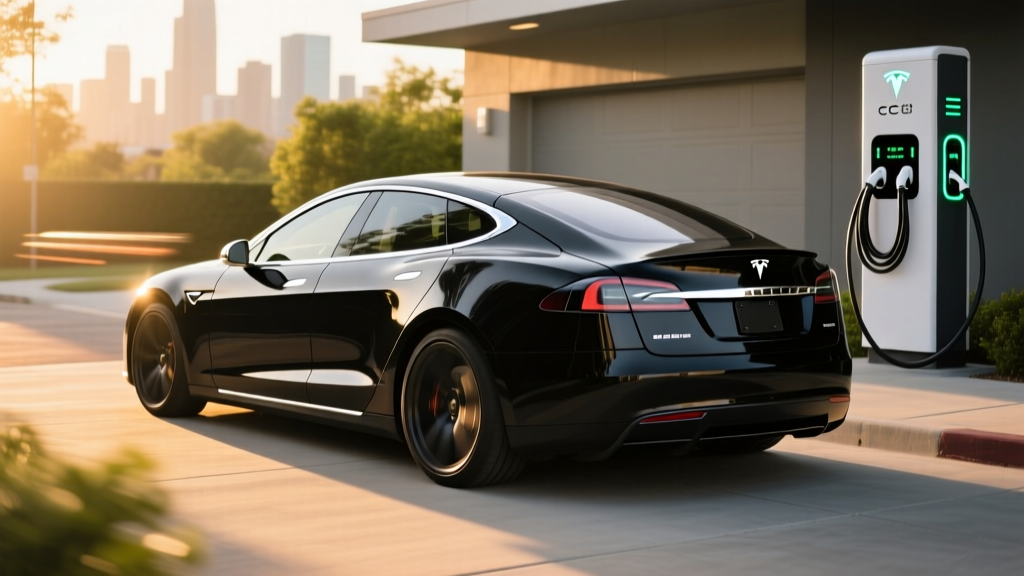
For home charging, a Level 2 wall connector delivering 48 amps (11.5 kW) will replenish a depleted P100D battery in roughly 9-10 hours. That's overnight-friendly for most daily driving needs. The optional 72-amp onboard charger (16.5 kW) was a $1,500 add when new and is uncommon on used examples.
Connector note: The P100D uses Tesla's proprietary connector (now designated NACS). With Tesla opening the Supercharger network to other brands via NACS adoption, P100D owners retain full access to the Supercharger network, which remains the most reliable DC fast-charging infrastructure in the U.S. For non-Tesla public chargers (Electrify America, EVgo), a CCS-to-NACS adapter may be needed depending on the station — though Tesla now sells an official adapter.
Performance: The 0-60 Number That Started a Supercar War
The P100D's 2.5-second 0-60 mph claim was verified by multiple independent testers, including Motor Trend's instrumented testing. This figure requires Ludicrous Mode engagement, a fully charged battery (above 90% SoC), and battery preconditioning. In standard Sport mode without Ludicrous, expect 0-60 in approximately 3.2-3.5 seconds — still blisteringly fast.
The dual-motor all-wheel-drive system pairs a front AC induction motor with a rear AC induction motor, delivering a combined peak output of approximately 762 horsepower and 791 lb-ft of torque. Unlike modern Tesla models that use permanent-magnet synchronous motors for improved efficiency, the P100D's induction motors prioritize peak power delivery at the cost of some highway efficiency.
Top speed is electronically limited to 155 mph. The P100D also features launch control functionality that manages torque distribution and traction for consistent 2.5-second runs — though repeated launches will thermally stress the battery and trigger power-reduction protection.
For context, the current 2026 Model S Plaid achieves 0-60 in 1.99 seconds with its tri-motor, 1,020-hp setup. The P100D is slower, but 2.5 seconds remains in elite hypercar territory and delivers a visceral experience that few vehicles at any price can match.
Tech, Interior, and Driver Assistance
The P100D-era Model S interior reflects Tesla's pre-2021 design language: a 17-inch vertically oriented touchscreen, a smaller instrument cluster behind the steering wheel, and a minimalist center console. Key technology features include:
- Autopilot (Level 2): Standard adaptive cruise control and lane-keeping assist. The P100D uses Tesla's Hardware 2.0 or 2.5 suite (cameras and radar). Full Self-Driving (FSD) capability was available as a paid add-on, though it remains a SAE Level 2 driver-assistance system requiring continuous driver supervision — it is not autonomous driving.
- Over-the-air updates: Tesla continues to push software updates to older Model S vehicles, though the P100D's Hardware 2.x limits access to the latest FSD features available on Hardware 3.0+ and Hardware 4.0 vehicles.
- Premium interior: Most P100Ds were optioned with the Premium Interior package including Nappa leather, Alcantara accents, LED ambient lighting, and a 12-speaker audio system with active noise cancellation.
- Air suspension: Smart Air Suspension was standard, providing adjustable ride height and adaptive damping. Note that air suspension components on 2017-2018 vehicles are now 8-9 years old and may require costly repairs — budget $1,500-$3,000 per corner for replacement struts.
- Frunk and cargo: The front trunk (frunk) offers 5.3 cu ft, and the rear liftback trunk provides 26.3 cu ft, for a total of 31.6 cu ft. Rear seats fold 60/40 for extended cargo. Rear legroom measures 35.4 inches — adequate for adults but tighter than the Lucid Air.
Pricing, Tax Credits, and Used-Market Value in 2026
The P100D is no longer in production. Original MSRP ranged from $134,500 (base) to over $160,000 with full options and FSD. In the 2026 used market, expect to pay:
| Condition / Mileage | Approximate Price Range |
|---|---|
| Low miles (<40k), excellent condition | $55,000 - $70,000 |
| Mid miles (40k-80k), good condition | $42,000 - $55,000 |
| High miles (80k-120k), fair condition | $32,000 - $42,000 |
Federal tax credit note: The IRS §30D new-vehicle tax credit (up to $7,500) does not apply to the P100D since it is a discontinued, used vehicle. However, the Used Clean Vehicle Credit (§25E) may provide up to $4,000 or 30% of the sale price (whichever is less) if you purchase from a licensed dealer, the sale price is $25,000 or less, and you meet income caps ($75,000 single / $150,000 married filing jointly). Given that most P100Ds sell above $25,000, many transactions will not qualify. Always verify current rules at IRS.gov and consult a tax professional.
How the P100D Compares to Modern Alternatives
| Spec | P100D (Used) | 2026 Model S LR | 2026 Lucid Air Pure | 2026 Taycan 4S |
|---|---|---|---|---|
| 0-60 mph | 2.5 sec | 3.1 sec | 3.8 sec | 3.8 sec |
| EPA Range | 315 mi (orig.) | 402 mi | 419 mi | 288 mi |
| Max DC Charge | ~120 kW | 250 kW | 300 kW | 270 kW |
| 10-80% Charge | ~45-50 min | ~27 min | ~22 min | ~23 min |
| Starting Price | $32k-$70k (used) | $79,990 | $74,990 | $96,500 |
| Federal Credit | Up to $4k used (§25E) | Up to $7,500 (§30D) | Up to $7,500 (§30D) | Up to $7,500 (§30D) |
The P100D's advantage is its combination of supercar acceleration and a lower entry price on the used market. Its disadvantages are clear: slower charging, older infotainment hardware, no heat pump, and higher maintenance risk on aging components (air suspension, drive unit, MCU screen delamination).
Pros, Cons, and Who Should Buy
- 2.5-second 0-60 — still world-class performance
- Spacious liftback sedan with frunk (31.6 cu ft total)
- Full Supercharger network access (NACS)
- OTA software updates still supported
- Strong depreciation already absorbed by original owners
- 120 kW max charge rate — slow by 2026 standards
- No heat pump — significant cold-weather range loss
- Aging air suspension and MCU1 screen (delamination risk)
- Hardware 2.x limits FSD capability
- Out-of-warranty battery replacement: $15,000-$22,000
- Most examples priced above $25k used-credit threshold
Best for: The performance enthusiast who wants supercar acceleration at a fraction of a supercar's price, drives mostly in moderate climates, has home Level 2 charging, and accepts that road-trip charging stops will take longer than in a modern EV. The P100D is also a strong weekend/collector car given its historical significance.
Not ideal for: High-mileage commuters in cold climates, buyers who prioritize the latest tech and fastest charging, or anyone unwilling to budget $2,000-$4,000 annually for potential out-of-warranty repairs on air suspension and electronics.
Frequently Asked Questions
What is the real-world range of a used Model S P100D in 2026?
Expect 260-290 miles in mixed driving with a battery at 88-93% state of health. Highway driving at 75+ mph reduces this to roughly 230-260 miles. In cold weather (below 32°F), range can drop to 180-210 miles due to the resistive heater and lack of a heat pump.
How fast does the P100D charge compared to modern EVs?
The P100D peaks at approximately 120 kW on DC fast chargers, with a 10-80% session taking 45-50 minutes. Modern EVs like the 2026 Model S Long Range (250 kW) or Lucid Air (300 kW) complete the same session in roughly 22-27 minutes. At home on Level 2 (11.5 kW), a full charge takes about 9-10 hours.
Does the P100D qualify for any federal EV tax credit?
Not the §30D new-vehicle credit. The §25E used-vehicle credit may apply if the dealer sale price is $25,000 or less and you meet income caps — but most P100Ds sell above that threshold. Verify eligibility at IRS.gov and consult a tax professional before relying on any credit.
Is the P100D worth buying over a new Model S Long Range?
It depends on budget and priorities. The P100D offers comparable (and in 0-60 terms, superior) performance to the current Long Range at roughly half the price. But the new Model S delivers 402 miles of range, 250 kW charging, a heat pump, Hardware 4.0, and a full warranty. If you can afford $80,000, the new car is the better daily driver. If you want 2.5-second runs for under $50,000, the P100D is unmatched.
What are the most common maintenance issues on a used P100D?
Watch for: air suspension failure ($1,500-$3,000 per corner), MCU1 screen delamination ($1,500-$2,500 repair or MCU2 upgrade), drive unit whine or failure (covered under 8-year/unlimited-mile warranty if still active), and 12V lead-acid auxiliary battery replacement ($300-$500). The high-voltage battery is generally robust but budget for a potential $15,000-$22,000 replacement if it falls below 70% capacity outside warranty.
What is the P100D's battery warranty status in 2026?
Tesla's original battery and drive unit warranty was 8 years with unlimited miles, guaranteeing 70% capacity retention. For 2017 models, this warranty expired in 2025. For 2018 models, it expires in 2026. Check the specific vehicle's in-service date to confirm whether any coverage remains. After expiration, all battery and drive unit repairs are owner-responsible.