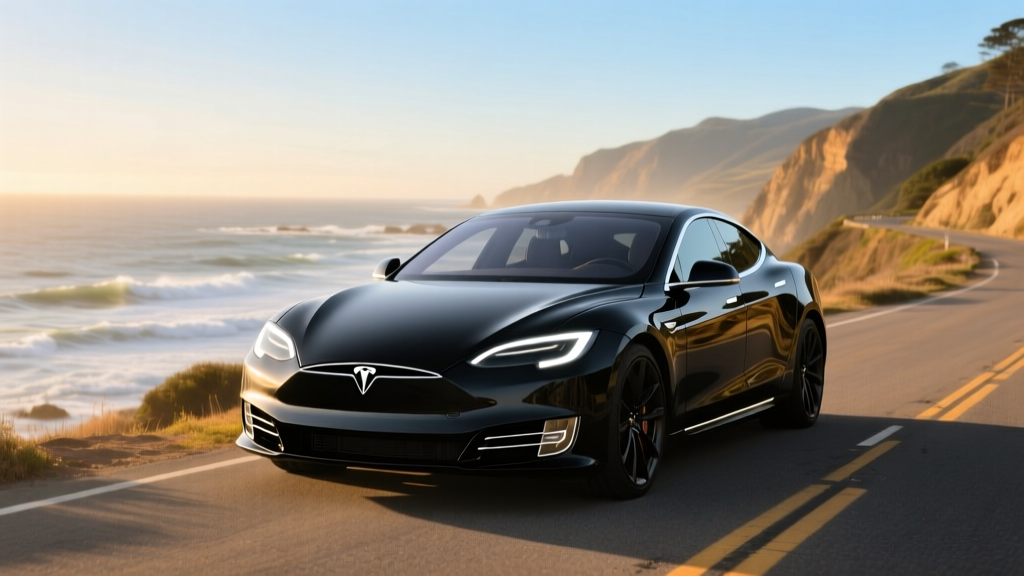
The 2026 Tesla Model S: Still the Benchmark Luxury EV Sedan?
The Tesla Model S has been in production for over a decade, yet it remains one of the most capable electric sedans on the market. If you're researching a Tesla Model S order in 2026, you're likely weighing its class-leading range and Supercharger network access against a luxury EV market that has grown significantly more competitive. The Lucid Air, Mercedes-Benz EQS, and BMW i7 all offer compelling alternatives, and the Model S is showing its age in interior fitment and ride quality.
This review covers the 2026 Model S lineup — the Long Range and the performance-focused Plaid — with exact EPA figures, real-world range data, charging benchmarks, pricing, and federal tax credit eligibility under current IRS §30D rules. Whether you're a daily commuter, a frequent road-tripper, or someone who simply wants a fast, spacious electric sedan, here's everything you need to know before configuring your order.
Specs at a Glance: 2026 Tesla Model S Long Range vs. Plaid
| Specification | Model S Long Range | Model S Plaid |
|---|---|---|
| EPA Range | 402 miles | 396 miles |
| Battery (usable) | ~100 kWh (NMC) | ~100 kWh (NMC) |
| Drivetrain | Dual-Motor AWD | Tri-Motor AWD |
| Horsepower | 670 hp | 1,020 hp |
| 0–60 mph | 3.1 seconds | 1.99 seconds |
| Top Speed | 155 mph | 200 mph |
| Max DC Fast Charge | 250 kW | 250 kW |
| 10–80% DC Charge Time | ~30 minutes | ~30 minutes |
| Level 2 Charge Rate | 11.5 kW (44 mi/hr) | 11.5 kW (44 mi/hr) |
| MPGe (combined) | 120 MPGe | 116 MPGe |
| Efficiency | 28 kWh/100 mi | 29 kWh/100 mi |
| Cargo Volume | 28 cu ft (rear seats up) | 28 cu ft (rear seats up) |
| Base MSRP | $74,990 | $89,990 |
Source: fueleconomy.gov and Tesla.com.
Range and Efficiency: EPA vs. the Real World
The Model S Long Range carries an EPA-estimated 402 miles of range, making it one of the longest-range EVs available in 2026. The Plaid, despite its tri-motor powertrain and higher curb weight, still achieves 396 miles. Both figures are remarkable on paper, but real-world results depend heavily on how and where you drive.
EPA Estimate: 402 miles (Long Range) / 396 miles (Plaid)
Highway driving at 75 mph: Expect ~320–340 miles before needing a charge stop. Aerodynamic drag at sustained highway speeds is the primary range killer for any sedan.
Cold weather (below 32°F): Range can drop 20–30%, putting realistic winter range at approximately 280–320 miles for the Long Range. The Model S uses a heat pump for cabin and battery thermal management, which mitigates some loss compared to resistive heating, but cold still increases battery internal resistance and accessory loads.
City/mixed driving in mild weather: 370–400 miles is achievable thanks to regenerative braking and lower average speeds.
Efficiency figures from the EPA rate the Long Range at 120 MPGe combined (28 kWh per 100 miles) and the Plaid at 116 MPGe (29 kWh/100 mi). These are strong numbers for a full-size luxury sedan, and they reflect Tesla's industry-leading powertrain efficiency. For context, the Lucid Air Grand Touring achieves 131 MPGe, while the Mercedes EQS 580 sits at 97 MPGe.
The ~100 kWh usable battery uses NMC (nickel manganese cobalt) chemistry. NMC offers higher energy density than LFP, which is why Tesla reserves it for long-range and performance models. However, NMC batteries are generally recommended to be charged to 80–90% for daily use to maximize longevity, unlike LFP packs that tolerate regular 100% charges. For a 402-mile EPA vehicle, daily 80% charging still yields over 300 miles of practical range — more than enough for virtually any commute.
Charging Speed: Supercharger Network and Home Charging
Charging infrastructure access remains one of Tesla's strongest competitive advantages. Every Model S order includes native access to the Tesla Supercharger network, which in 2026 operates over 6,000 stations across North America with consistently high uptime and plug-and-charge simplicity.
| Charging Level | Power | Speed (Miles Added) | Use Case |
|---|---|---|---|
| Level 1 (120V household) | ~1.4 kW | ~4–5 mi/hr | Emergency/trickle only |
| Level 2 (240V home, Wall Connector) | 11.5 kW | ~44 mi/hr | Daily overnight charging |
| DC Fast Charge (Supercharger V3) | Peak 250 kW | ~200 mi in 15 min | Road trips |
| DC Fast Charge (CCS adapter, non-Tesla) | Up to 250 kW | Varies by station | Non-Tesla networks |
DC fast charging deep dive: The Model S peaks at 250 kW on V3 Superchargers. In practice, the charging curve tapers significantly above 50–60% state of charge. A 10–80% session takes approximately 30 minutes, which is competitive but not class-leading — the Hyundai Ioniq 5 and Porsche Taycan can complete 10–80% in roughly 18–22 minutes on compatible chargers thanks to 350 kW peak rates and 800V architectures. If you frequently take long road trips, this 10-minute difference per stop is worth considering.
Home Level 2 charging: The Tesla Wall Connector (included with some configurations or available for ~$475) delivers up to 11.5 kW on a 60-amp circuit, adding roughly 44 miles of range per hour of charging. An overnight session from 20% to 80% takes approximately 5–6 hours — perfectly suited for daily use. Installation costs vary widely: expect $500–$1,500 for a straightforward install near your electrical panel, or $2,000–$4,000+ if a panel upgrade or long conduit run is needed. Always get a quote from a licensed electrician before ordering.
Tesla also offers a CCS adapter (approximately $175–$250), enabling Model S owners to use Electrify America, EVgo, and other non-Tesla DC fast-charging networks. With the broader industry's shift to NACS (the Tesla connector standard), an increasing number of third-party chargers now feature native NACS plugs, reducing the need for adapters over time.
Performance and Driving Dynamics
The Model S has always been a performance sedan first, and the 2026 lineup continues that tradition with startling acceleration figures.
Model S Long Range: The dual-motor all-wheel-drive powertrain produces 670 horsepower and achieves a 0–60 mph time of 3.1 seconds. This is firmly in sports-car territory, and the instant torque delivery from the electric motors makes it feel even quicker in real-world roll-on acceleration. The Long Range is the sweet spot for most buyers — it offers supercar-level acceleration without the Plaid's price premium.
Model S Plaid: The tri-motor setup (one front, two rear) produces 1,020 horsepower and a claimed 0–60 mph of 1.99 seconds (with rollout subtracted, on a prepared surface). It is one of the quickest production cars ever built. However, sustaining that performance requires careful battery preconditioning, and the Plaid's extra weight (~4,766 lbs vs. ~4,561 lbs for the Long Range) is noticeable in cornering. For track use, the Plaid is extraordinary; for daily driving, the Long Range is the more balanced choice.
Ride quality is where the Model S shows its age compared to newer competitors. The adaptive air suspension provides adjustable ride height and firmness, but the overall tuning is firmer than a Mercedes EQS or BMW i7, and some owners report interior rattles that wouldn't be acceptable in a traditional luxury sedan at this price point. The yoke steering wheel (now optional alongside a conventional round wheel) remains polarizing, and the lack of physical stalks for turn signals requires an adjustment period.
Interior, Tech, and Cargo Space
The Model S cabin is dominated by a 17-inch center touchscreen that handles virtually all vehicle functions — climate, navigation, media, and vehicle settings. A secondary 8-inch screen for rear passengers provides climate and entertainment controls. The 12.3-inch digital instrument cluster behind the yoke/steering wheel displays speed, range, and navigation information.
Notable tech features include:
- Tesla Supercharger integration: Automatic route planning with charge stops, preconditioning, and real-time stall availability
- Over-the-air updates: Tesla regularly pushes feature updates, performance improvements, and UI refinements
- Sentry Mode and Dashcam: Built-in camera recording for security and incident capture
- Gaming: The center screen supports full gaming (including Cyberpunk 2077) while parked
- HEPA air filtration: Bioweapon Defense Mode with hospital-grade cabin air filtration
Autopilot and FSD (Supervised): Every Model S comes with basic Autopilot (traffic-aware cruise control and lane centering). Full Self-Driving (Supervised) is available as an $8,000 option or $99/month subscription. FSD adds automatic lane changes, intersection handling, and navigate-on-autopilot. Important: FSD is an SAE Level 2 driver-assistance system — the driver must remain fully attentive with hands on the wheel and eyes on the road at all times. It is not autonomous driving.
Cargo and passenger space:
- Rear cargo (seats up): 28 cu ft
- Rear cargo (seats folded): 79 cu ft
- Front trunk (frunk): 5.3 cu ft
- Rear legroom: 35.4 inches
- Front legroom: 42.7 inches
The hatchback design with a power liftgate gives the Model S significantly more usable cargo volume than traditional trunk sedans like the EQS or i7. The frunk adds convenient storage for charging cables or small bags. However, rear-seat comfort — particularly thigh support and seat cushion length — falls short of what you'd find in a Mercedes S-Class or BMW 7 Series.
Pricing, Trims, and Federal Tax Credit Eligibility
The 2026 Tesla Model S is available in two trims:
| Trim | Base MSRP | Typical As-Tested | §30D Federal Credit | Effective Price |
|---|---|---|---|---|
| Long Range | $74,990 | $76,490 (w/ FSD monthly) | $0 (MSRP cap exceeded) | $74,990+ |
| Plaid | $89,990 | $92,000+ | $0 (MSRP cap exceeded) | $89,990+ |
- MSRP cap: §30D limits the new EV credit to sedans priced at $55,000 or below. Both Model S trims exceed this threshold.
- Income caps (if it did qualify): AGI limits of $150K single / $300K married filing jointly.
- Battery sourcing: Critical mineral and battery component requirements continue to tighten annually through 2026.
- Point-of-sale transfer: Qualifying vehicles can transfer the credit to the dealer for an instant price reduction — but this does not apply to the Model S.
If the lack of a federal tax credit is a dealbreaker, consider that the used EV tax credit (§25E) may apply if you purchase a pre-owned Model S priced at $25,000 or below from a dealer — though finding a Model S at that price point remains unlikely in 2026. Some state-level incentives (such as California's CVRP or Colorado's state tax credit) may still apply regardless of MSRP caps. Check your state's energy office for current programs.
Notable paid options include FSD (Supervised) at $8,000 upfront or $99/month, premium paint colors ($1,500–$2,500), 21-inch Arachnid wheels ($4,500), and cream or white interior ($2,000). A well-equipped Long Range can easily approach $85,000–$90,000 before delivery fees.
Warranty and Long-Term Battery Outlook
Tesla provides the following warranty coverage for the 2026 Model S:
- Basic vehicle: 4 years / 50,000 miles
- Battery and drive unit: 8 years / 150,000 miles (Long Range), 8 years / 150,000 miles (Plaid)
- Battery capacity retention threshold: 70% of original capacity during the warranty period
Tesla's NMC battery packs have demonstrated strong longevity in real-world ownership. Data aggregated from high-mileage Model S owners shows typical degradation of approximately 8–12% over the first 100,000 miles, with the curve flattening significantly thereafter. Following best practices — avoiding frequent 100% charges, minimizing DC fast charging when possible, and keeping the battery between 20–80% for daily use — can further reduce degradation.
Out-of-warranty battery replacement for the Model S currently ranges from $13,000 to $20,000 depending on the pack configuration and labor, based on service center estimates. This is a significant potential cost, though most packs last well beyond 150,000 miles before falling below the 70% threshold.
How Does the Model S Compare to Key Competitors?
- 402-mile EPA range (Long Range) — best in its price segment
- Supercharger network access with seamless trip planning
- Class-leading acceleration even in base Long Range trim
- Hatchback cargo versatility (28 cu ft + frunk)
- Continuous OTA updates add new features post-purchase
- Strong resale value relative to most luxury EVs
- No federal tax credit eligibility (MSRP exceeds $55K cap)
- Interior quality and ride comfort lag behind EQS, i7, Lucid Air
- 250 kW peak DC charge rate trails 350 kW competitors (Taycan, Ioniq 5)
- Turn signals on yoke/steering wheel buttons require adaptation
- Rear-seat space and comfort not on par with traditional luxury flagships
- Panel gaps and build consistency remain inconsistent
Model S vs. Lucid Air Grand Touring: The Air offers 516 miles of EPA range, a more luxurious interior, and a starting price around $125,000. If range and comfort are paramount and budget allows, the Air is the superior luxury sedan. The Model S wins on Supercharger access and price.
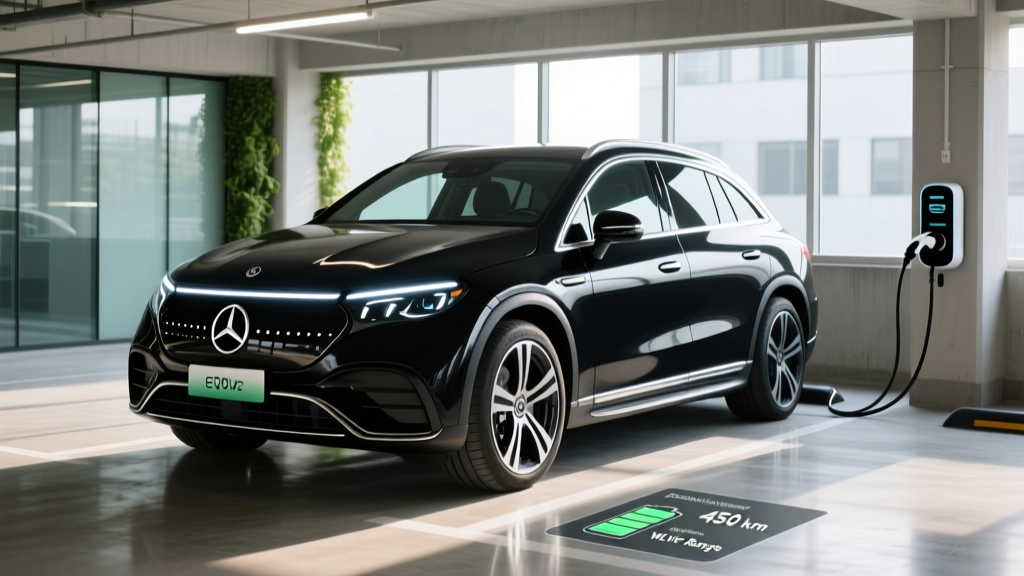
Model S vs. Mercedes-Benz EQS 580: The EQS offers a more refined ride, superior rear-seat comfort, and a 350-mile EPA range. It lacks Supercharger access but qualifies for some state incentives. Choose the EQS for traditional luxury; choose the Model S for range and tech.
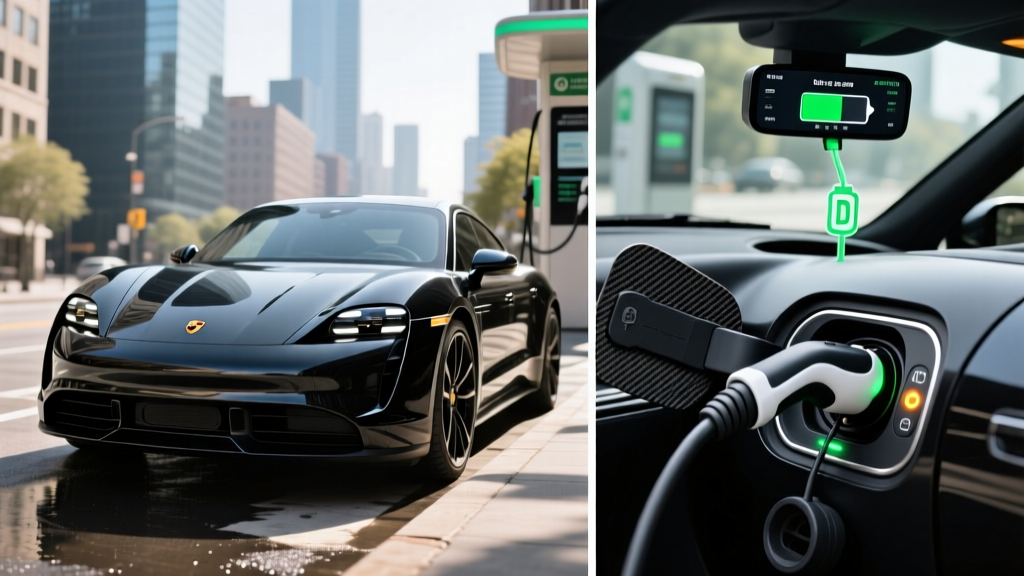
Model S vs. Porsche Taycan: The Taycan charges faster (up to 350 kW on 800V architecture) and handles better, but its range (246–318 miles depending on trim) falls well short. The Taycan is a driver's car; the Model S is a tech-forward grand tourer.
Who Should Order the Tesla Model S?
- You want 400+ miles of range and the security of the Supercharger network for road trips
- You need a practical hatchback with substantial cargo space
- You value over-the-air updates and a tech-forward ownership experience
- Your budget is $75,000–$85,000 and the lack of a federal tax credit is acceptable
- You want the fastest-accelerating sedan on the market and plan to use track mode
- You value the tri-motor AWD system for all-weather traction
- Your budget exceeds $90,000 and you prioritize performance over luxury refinement
- You need the most luxurious interior in this price range (consider EQS, i7, or Lucid Air)
- Federal tax credit eligibility is important to your purchase math
- You want the fastest DC charging speeds available (consider Taycan or Ioniq 5/6)
- Build quality consistency and traditional luxury dealer service are priorities
Frequently Asked Questions
What is the real-world range of the Tesla Model S?
The EPA rates the Long Range at 402 miles and the Plaid at 396 miles. In real-world highway driving at 75 mph, expect 320–340 miles. In cold weather below freezing, plan for 280–320 miles. City driving in mild conditions can approach the EPA figures.
How fast does the Model S charge at home and on the road?
At home on a Level 2 Wall Connector (11.5 kW), the Model S adds approximately 44 miles of range per hour, fully charging overnight in 8–10 hours. On a V3 Supercharger, it peaks at 250 kW and charges from 10–80% in about 30 minutes.
Does the Tesla Model S qualify for the $7,500 federal EV tax credit?
No. Under current IRS §30D rules, the new clean vehicle credit is capped at $55,000 MSRP for sedans. Both Model S trims exceed this limit. State incentives may still apply — check your state's energy office.
Is the Model S worth buying over the Lucid Air or Mercedes EQS?
The Model S wins on range-per-dollar, Supercharger network access, and performance. The Lucid Air offers more range and a better interior at a higher price. The EQS provides superior ride comfort and traditional luxury. Your priorities determine the right choice.
How long will the Model S battery last?
Tesla warranties the battery for 8 years / 150,000 miles with a 70% capacity retention guarantee. Real-world data from high-mileage owners shows approximately 8–12% degradation over the first 100,000 miles, with most packs lasting well beyond 200,000 miles before significant capacity loss.
Can I charge a Model S at non-Tesla charging stations?
Yes. Tesla sells a CCS adapter that allows the Model S to use Electrify America, EVgo, and other CCS-equipped networks. Additionally, many third-party networks are adding NACS (Tesla-standard) connectors throughout 2025–2026, expanding compatibility natively.
Is Full Self-Driving (FSD) worth the $8,000 option?
FSD (Supervised) is an SAE Level 2 driver-assist system that requires constant driver attention. It handles highway lane changes, some city streets, and parking maneuvers, but it is not autonomous. Many owners find the $99/month subscription a better value than the $8,000 upfront purchase, especially since feature delivery timelines remain uncertain for promised capabilities.