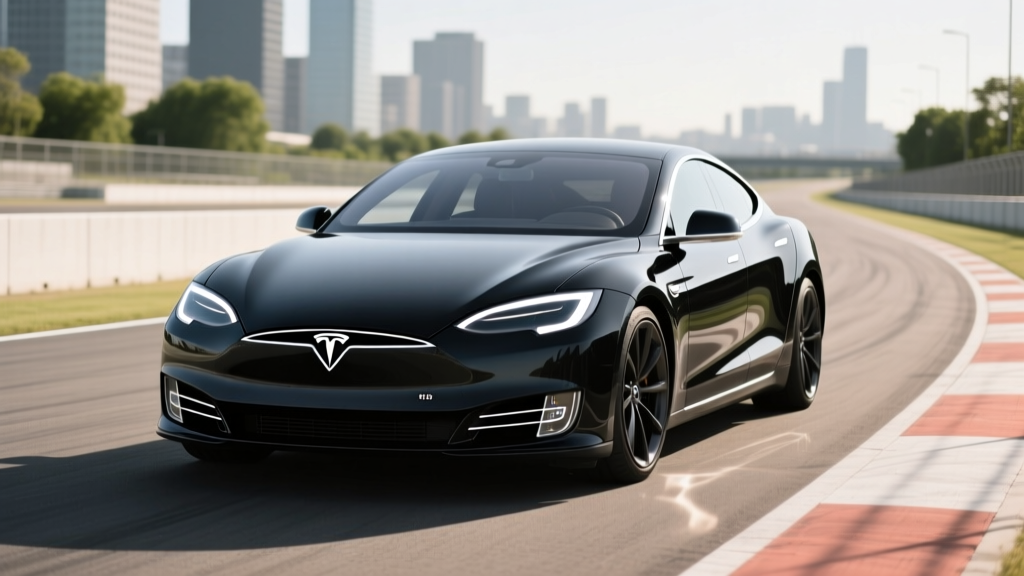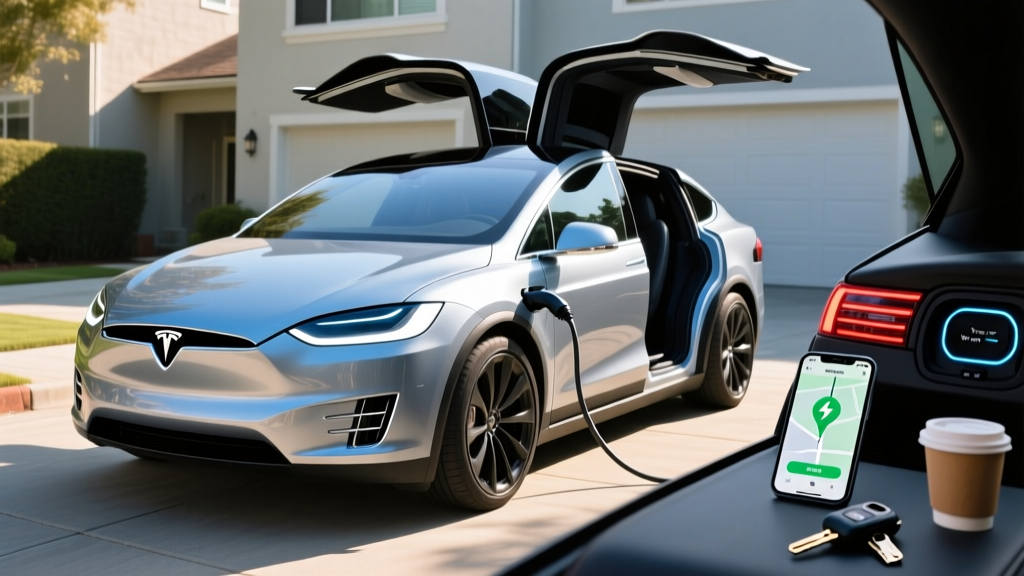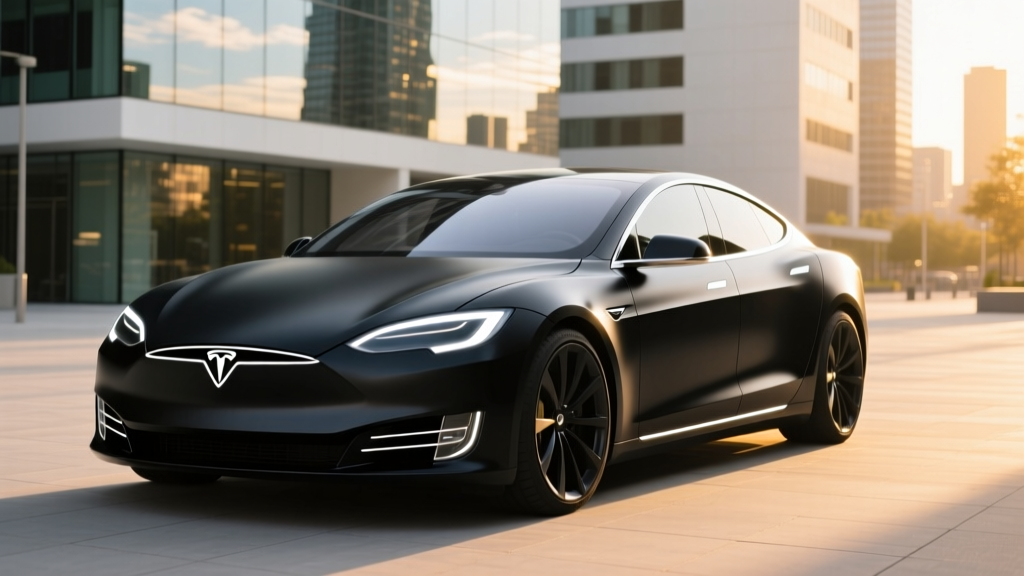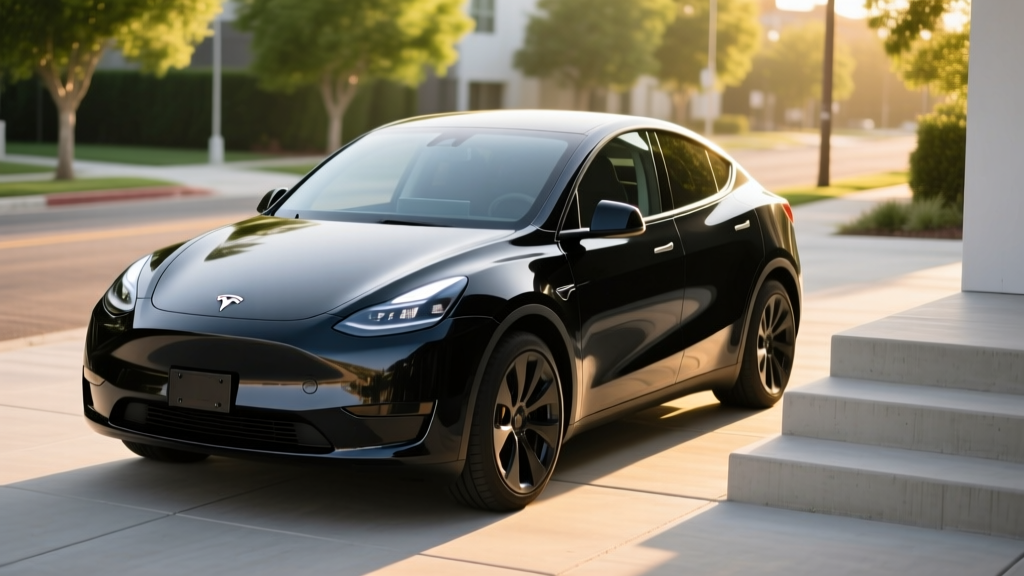
The 2026 Tesla Model Y Rear-Wheel Drive arrives as the brand's most accessible SUV, starting at $39,990 before incentives. This base trim strips the dual-motor AWD system and swaps to a lithium iron phosphate (LFP) battery, trading some range and cold-weather performance for a significantly lower entry price. For shoppers asking whether this entry-level Model Y delivers enough for daily life, the answer depends heavily on your climate, commute, and road-trip habits.
2026 Model Y RWD: The Numbers That Matter
Tesla's base SUV borrows the Juniper refresh styling introduced in 2025 — slimmer headlights, full-width light bar, ventilated front seats, and a rear touchscreen for passengers. The powertrain is where the cost-cutting happens: a single rear motor and a smaller LFP pack.
| Spec | Value |
|---|---|
| Base MSRP | $39,990 (+ $1,390 destination) |
| EPA Range | 300 miles |
| Battery (usable) | ~60 kWh, LFP chemistry |
| Efficiency | 125 MPGe combined / 27 kWh/100 mi |
| Max DC Fast Charge | 150 kW peak |
| 10–80% DCFC Time | ~28 minutes (preconditioned) |
| Level 2 Home Charging | 11.5 kW / ~44 mi/hr |
| 0–60 mph | 5.8 seconds |
| Powertrain | Single motor, RWD, 295 hp |
| Cargo (rear seats up / folded) | 30.2 / 72.1 cu ft |
| Rear Legroom | 41.6 in |
| Battery Warranty | 8 yr / 100,000 mi (70% retention) |
| Limited Warranty | 4 yr / 50,000 mi bumper-to-bumper |
Real-World Range vs. the EPA Sticker
The 300-mile EPA figure is competitive for the price class, but LFP chemistry and a single motor produce a distinct real-world signature you should understand before buying.
What to actually expect from a full charge
EPA sticker: 300 miles. Real-world highway (70 mph, 75°F): ~255–270 miles. Cold-weather (30°F, mixed driving): ~210–235 miles. City / stop-and-go with regen: close to or slightly above EPA.
Two physics realities drive those gaps. First, LFP cells have slightly lower energy density than the NMC packs in the Long Range, so the usable capacity is genuinely smaller. Second, the RWD Model Y does not include a heat pump in every market year — confirm for the 2026 VIN, because resistive cabin heating in winter can shave 25–35% off range on short, cold commutes where the cabin cycles on and off. On long highway runs the taper is less severe. For most owners with home charging and commutes under 80 miles round-trip, the buffer is plenty; for cross-country drivers, the Long Range AWD's ~320-mile EPA rating and NMC pack remain the safer pick.
Per fueleconomy.gov, the combined 125 MPGe translates to roughly $0.045–$0.06 per mile at the U.S. average residential electricity rate (~$0.17/kWh) — about one-third the per-mile cost of a 28-MPG gas crossover at $3.40/gallon.
Charging: DCFC Curve and Home Setup
The RWD's 150 kW peak is modest compared to the Long Range's ~250 kW, but Tesla's preconditioning and Supercharger network integration keep real charging stops reasonable. The charge curve is the detail most spec sheets hide: the RWD sustains roughly 140–150 kW from 10% to ~35% SoC, then tapers through 100 kW to 60%, and drops steeply above 80%. That 28-minute 10–80% claim assumes a V3 or V4 Supercharger and a preconditioned battery — navigate with the Supercharger as your destination and the car handles it automatically.
| Level | Power | Miles Added | Typical Use Case |
|---|---|---|---|
| Level 1 (120V, 12A) | ~1.4 kW | ~4 mi/hr | Emergency / overnight trickle |
| Level 2 (240V, 48A wall connector) | 11.5 kW | ~44 mi/hr | Primary home charging |
| Level 2 public (common) | 7.2–9.6 kW | 28–37 mi/hr | Workplace, shopping, hotels |
| DC fast (V3 Supercharger) | 150 kW peak | ~180 mi in 15 min (10–55%) | Road trips |
| DC fast (CCS adapter + EA) | Up to 150 kW | Varies by station | Non-Tesla networks |
Home charging on a 48A Tesla Wall Connector replenishes a near-empty pack in roughly 6 hours, which is ideal for overnight top-ups. Installation typically runs $800–$2,200 depending on panel proximity and whether a 200A service upgrade is needed. The included Mobile Connector with a NEMA 14-50 plug delivers about 30 mi/hr — sufficient for many owners who don't want a hardwired unit.
Performance, Ride, and Daily Drivability
The single-motor RWD layout posts a 5.8-second 0–60 — quick enough for freeway merges and more responsive than most gas crossovers in its price band. The trade-off versus the dual-motor Long Range is traction, not power: on wet roads or unplowed snow, the RWD relies entirely on its traction-control software and the weight of the rear-mounted pack over the drive axle. In dry and mild-wet conditions, it feels planted; in heavy snow-belt winters, AWD is the prudent call.
Ride quality in the Juniper chassis is noticeably softer than the pre-2025 Model Y, with revised damper tuning and acoustic glass that cuts cabin noise. Ventilated front seats are now standard across the lineup, which matters in hot climates where the glass roof still radiates heat. Rear passengers get a small 8-inch touchscreen for climate and media, plus the same 41.6 inches of legroom as higher trims — no compromise there.
Tech, Driver Assistance, and What's Missing
Every 2026 Model Y ships with Tesla's Basic Autopilot (SAE Level 2): traffic-aware cruise control and lane-centering on divided highways. Enhanced Autopilot ($6,000) adds auto lane change and navigation-guided on-ramp-to-off-ramp assist; Full Self-Driving Supervised ($8,000 or $99/mo) adds city-street traffic-light and stop-sign handling. None of these remove the driver's responsibility — hands-on, eyes-on is the legal and practical reality, and Tesla's cabin camera enforces attention.
Driver-assist reality check
Tesla Autopilot and FSD Supervised are SAE Level 2 systems. They do not make the car self-driving. You must keep hands on the wheel, eyes on the road, and be ready to intervene at any moment. Liability remains with the driver.
The 15.4-inch front touchscreen runs Tesla's latest software with Netflix/YouTube streaming while parked, a revamped navigation stack, and over-the-air updates. Notable omissions on the RWD trim: no premium audio upgrade option (base 13-speaker system is competent but not audiophile-grade), no tow hitch from the factory (the RWD is not rated for towing in the U.S.), and no HomeLink garage-door opener standard — it's bundled in the Enhanced Autopilot package or available as a standalone accessory.
Pricing, Trims, and Federal Tax Credit Eligibility
The 2026 Model Y lineup is deliberately simple:
| Trim | MSRP | Est. After $7,500 Credit* |
|---|---|---|
| RWD (this review) | $39,990 | ~$32,490 |
| Long Range AWD | $46,630 | ~$39,130 |
| Performance AWD | $51,630 | ~$44,130 |
*Point-of-sale transfer of the §30D credit requires meeting all IRS eligibility criteria. Final price excludes destination, state fees, and taxes.
IRS §30D eligibility checklist for the 2026 Model Y
- Vehicle MSRP cap: SUVs must be ≤ $80,000 — all Model Y trims qualify.
- Buyer income cap: AGI ≤ $150,000 single / $225,000 head of household / $300,000 joint.
- Battery components: must meet North American assembly thresholds (phased yearly through 2029).
- Critical minerals: must meet sourced-from-FTA-country thresholds (also phased yearly).
- FEOC restriction: no battery components from a "foreign entity of concern" — Tesla's supply chain has been restructured to comply, but verify the specific VIN on the IRS eligible-vehicle list before purchase.
- Point-of-sale transfer: available at delivery; you assign the credit to Tesla and pay the reduced price, then reconcile on your tax return.
Rules under IRS §30D have tightened annually on critical-mineral and battery-component sourcing. As of the current model year, the Model Y RWD's LFP pack — historically sourced from CATL in China — has been the subject of Tesla's supply-chain migration to FTA-partner countries. Confirm your specific VIN's eligibility at the time of order; the dealer's point-of-sale attestation is the binding document, not marketing material.
Ownership Costs: Insurance, Warranty, and Depreciation
The battery carries an 8-year / 100,000-mile warranty guaranteeing 70% capacity retention; the drivetrain shares the same term. Bumper-to-bumper coverage is a shorter 4 yr / 50,000 mi, which is typical for the segment but lags Hyundai/Kia's 10-year powertrain coverage.
Insurance is the line item that surprises new Tesla owners. National averages for a Model Y run $1,900–$2,600/year for a 40-year-old driver with a clean record, roughly 30–50% above a comparable Toyota RAV4 Hybrid. Tesla Insurance is available in many states and uses real-time driving data; it can undercut legacy carriers for low-mileage drivers but penalizes hard-braking events. Always pull three quotes before delivery day.
Depreciation on the base RWD trim is the open question of 2026. Tesla's aggressive price cuts in 2023–2024 cratered residual values on used Model Ys; the stabilized 2026 pricing and Juniper refresh should help, but LFP packs historically trade at a modest discount on the used market versus NMC due to perceived range limitations. Expect roughly 45–52% retention at 5 years / 60,000 miles based on current auction data — competitive with non-luxury EVs but below Toyota and Lexus hybrids.
Who the 2026 Model Y RWD Is For — and Who Should Skip It
Buy the RWD if:
- You live in a mild climate (rarely below 35°F) and commute under 80 miles round-trip.
- You have reliable Level 2 home charging and want the lowest entry price into a premium EV SUV.
- You prioritize Supercharger network access for the 2–3 road trips per year you actually take.
- You want LFP's longer cycle life and tolerance for daily 100% charging.
Step up to Long Range AWD if:
- You drive in sustained winter conditions or mountain passes.
- Your typical road trip exceeds 250 miles between stops and you want the 320+ mile buffer.
- You need the 3,500-lb tow rating (RWD is not tow-rated in the U.S.).
- You plan to keep the car 8+ years and want NMC's higher energy density as degradation accrues.
Pros and Cons at a Glance
Pros
- Lowest MSRP in the premium EV SUV class at $39,990.
- Access to Tesla's Supercharger network — still the most reliable DCFC ecosystem.
- LFP battery tolerates daily 100% charging; longer cycle life than NMC.
- Juniper cabin is materially quieter and better-ventilated than pre-2025 Model Y.
- Strong cargo volume (72.1 cu ft) and rear legroom for the footprint.
Cons
- Real-world winter range drops to ~210–235 miles; not ideal for cold-climate road-trippers.
- 150 kW peak DCFC is outpaced by Hyundai Ioniq 5 (240 kW) and Kia EV6 (233 kW).
- No factory tow rating on RWD — a dealbreaker for boat/trailer owners.
- Insurance premiums run 30–50% above segment average.
- Driver-assist packages are expensive add-ons, not standard.
How It Stacks Up Against Key Competitors
The RWD Model Y's real competition is not other Teslas — it's the Hyundai Ioniq 5 SE Standard Range ($42,000, 290 mi EPA, 240 kW DCFC), the Ford Mustang Mach-E Select RWD ($43,000, ~250 mi EPA), and the Nissan Ariya Engage FWD (~$40,000, 289 mi EPA). On pure MSRP, the Model Y wins. On DC fast-charge speed, Hyundai/Kia's 800V architecture is decisively faster (10–80% in ~18 minutes vs Tesla's ~28). On charging-network reliability, Tesla still leads; Electrify America and the CCS ecosystem have improved but remain inconsistent in rural corridors.
Against internal cross-shopping: the Model Y Long Range AWD adds 20 miles of EPA range, dual motors, a heat pump, and a tow hitch for $6,640 more — a justifiable upgrade for anyone outside the Sun Belt or with towing needs.
Frequently Asked Questions
Does the 2026 Tesla Model Y RWD qualify for the $7,500 federal tax credit?
It can — but eligibility depends on your AGI (≤ $150k single / $300k joint), the VIN's battery-component and critical-mineral sourcing at the time of delivery, and Tesla's point-of-sale attestation. Always verify on the IRS eligible-vehicle list and with your tax professional before signing.
What is the real-world range of the Model Y RWD?
Expect ~255–270 miles on the highway at 70 mph in mild weather, ~210–235 miles in freezing temperatures, and near-EPA numbers in city driving with regenerative braking. The 300-mile EPA figure is a ceiling, not a guarantee.
How fast does it charge at home and on road trips?
Home Level 2 at 11.5 kW adds ~44 miles per hour, filling the pack overnight. On a V3 Supercharger, 10–80% takes ~28 minutes preconditioned, with peak 150 kW sustained only in the lower third of the battery.
Is it worth buying versus the Hyundai Ioniq 5 or Ford Mach-E?
Choose the Model Y RWD for the lowest MSRP, Supercharger access, and LFP longevity. Choose the Ioniq 5 if DC fast-charge speed and 800V architecture matter for your road trips. Choose the Mach-E if you prefer a more traditional dealership experience and a slightly more driver-focused cockpit.
Can I tow with the RWD Model Y?
No. The U.S.-spec RWD trim is not tow-rated. If you need towing, step up to the Long Range AWD (3,500-lb rating) or consider a competitor like the Ioniq 5 (up to 2,300 lb with the tow package).
Is the LFP battery worse than NMC?
Not categorically. LFP trades ~10–15% lower energy density for longer cycle life, better thermal stability, and the ability to charge to 100% daily without accelerated degradation. For a daily commuter, LFP is often the better ownership experience; for road-trippers chasing maximum range per charge, NMC wins.
Sources: fueleconomy.gov, IRS §30D Clean Vehicle Credit guidance, Tesla 2026 Model Y specification sheet.