Tesla's flagship sedans and SUVs have been around for over a decade, but the 2026 Tesla Model S and Model X remain benchmarks in the luxury EV segment. With EPA ranges topping 400 miles, tri-motor Plaid variants that embarrass supercars, and access to the largest fast-charging network in North America, these vehicles set the bar — even as newer rivals close the gap. This review covers everything a 2026 buyer needs to know: real-world range, charging speeds, pricing after incentives, and whether these legacy Teslas still justify their premium over the Lucid Air, BMW iX, and Rivian R1S.
2026 Model S and Model X at a Glance
| Spec | Model S Long Range | Model S Plaid | Model X Long Range | Model X Plaid |
|---|---|---|---|---|
| EPA Range | 402 mi | 359 mi | 335 mi | 320 mi |
| Battery (usable) | ~100 kWh (NMC) | ~100 kWh (NMC) | ~100 kWh (NMC) | ~100 kWh (NMC) |
| Drivetrain | Dual-Motor AWD | Tri-Motor AWD | Dual-Motor AWD | Tri-Motor AWD |
| Horsepower | 670 hp | 1,020 hp | 670 hp | 1,020 hp |
| 0–60 mph | 3.1 sec | 1.99 sec | 3.8 sec | 2.5 sec |
| Peak DC Charge | 250 kW | 250 kW | 250 kW | 250 kW |
| 10–80% DCFC | ~30 min | ~30 min | ~31 min | ~31 min |
| Level 2 Rate | 11.5 kW (44 mi/hr) | 11.5 kW (44 mi/hr) | 11.5 kW (36 mi/hr) | 11.5 kW (36 mi/hr) |
| MPGe (combined) | 120 MPGe | 116 MPGe | 109 MPGe | 103 MPGe |
| EPA Efficiency | 28 kWh/100 mi | 29 kWh/100 mi | 31 kWh/100 mi | 33 kWh/100 mi |
| Base MSRP | $79,990 | $94,990 | $84,990 | $99,990 |
Sources: EPA / fueleconomy.gov, Tesla Model S specs, Tesla Model X specs. Pricing excludes destination.
Real-World Range: What the EPA Sticker Doesn't Tell You
EPA estimate: 402 miles
Expected highway (70 mph, moderate temps): ~330–350 miles
Expected cold-weather (below 32°F, mixed driving): ~260–300 miles
Plaid variants lose roughly 10–15% from these figures due to higher energy draw.
The Model S Long Range's 402-mile EPA figure is among the highest of any production EV sold in 2026. But as with every EV, that number assumes a mix of city and highway driving at moderate temperatures. On sustained highway runs at 70–75 mph, expect 330–350 miles before needing a charge — still exceptional, and enough to cover most road-trip legs between Supercharger stops.
Cold weather is the real range killer. Tesla's heat pump helps, but lithium-ion chemistry and cabin heating demands can cut range by 25–35% in sub-freezing conditions. Model S owners in northern climates should budget 260–300 miles of usable range in winter. The Model X, heavier and less aerodynamic, sees proportionally greater losses — plan for 220–270 miles in cold weather for the Long Range variant.
One advantage Tesla retains: the Supercharger network's density means you rarely need to use the full range. Most highway corridors have stations spaced 120–180 miles apart, so even in winter, range stress is minimal if you precondition the battery before arrival.
Charging Speed and Infrastructure
| Level | Power / Voltage | Rate (mi/hr added) | Notes |
|---|---|---|---|
| Level 1 (120V) | ~1.4 kW | ~3–5 mi/hr | Emergency/trickle only |
| Level 2 (240V, 48A) | 11.5 kW | 36–44 mi/hr | Full overnight charge in ~9–10 hr |
| DC Fast (Supercharger V3) | 250 kW peak | ~200 mi in 15 min | 10–80% in ~30 min; tapers above 80% |
| DC Fast (CCS adapter) | Up to 250 kW | Varies by station | Non-Tesla networks via included adapter |
Both the Model S and Model X peak at 250 kW on V3 Superchargers. In practice, the charge curve is aggressive in the 10–50% SoC window, pulling near peak rate, then tapering progressively. The 10–80% charge takes roughly 30 minutes — competitive but no longer class-leading. The Hyundai Ioniq 5 and Porsche Taycan can hit 10–80% in 18–22 minutes thanks to 350 kW and 800V architectures.
Tesla's advantage is ecosystem, not peak speed. The Supercharger network in 2026 exceeds 6,500 stations and 65,000+ stalls in North America, with industry-leading uptime and plug-and-charge billing. The included CCS adapter also opens Electrify America, EVgo, and other networks — though adapter-based charging can be slightly slower due to protocol overhead.
At home, the onboard 11.5 kW charger replenishes the Model S at roughly 44 miles of range per hour on a 48-amp Level 2 circuit. A full charge from 10% takes about 9 hours. Most owners charge nightly from 40–80% (the recommended daily window for NMC batteries), which takes about 4 hours on Level 2.
Performance and Driving Dynamics
The Model S Plaid's 1.99-second 0–60 mph time remains one of the quickest production-car launches ever recorded. Three electric motors (one front, two rear) deliver 1,020 hp with instantaneous torque. Even the Long Range's 670 hp and 3.1-second sprint would have been supercar territory a decade ago.
The Model X Plaid manages 2.5 seconds to 60 mph despite weighing over 5,100 lbs — a physics-defying figure enabled by the same tri-motor setup. The Long Range X hits 60 in 3.8 seconds, still quicker than most performance SUVs.
Ride quality has improved with the current-generation adaptive air suspension, but neither car matches the isolation and refinement of a Lucid Air or BMW i7. Road noise at highway speed is noticeable, and the steering — while precise — lacks the feedback of European rivals. These are fast, competent grand tourers, not luxury limousines.
Towing is an X-exclusive advantage: the Model X is rated for up to 5,000 lbs (with the optional tow package), making it viable for light trailers and boat hauling. The Model S is not rated for towing.
Interior, Cargo, and Technology
The Model S interior is minimalist and tech-forward, dominated by a 17-inch center touchscreen and a 12.3-inch driver display. Build quality has improved meaningfully since the 2021 refresh — panel gaps are tighter, materials are softer, and the yoke steering wheel (optional) remains polarizing. Rear legroom is 35.4 inches, adequate for adults on longer trips.
Cargo capacity is a Tesla strength. The Model S offers 28 cu ft behind the rear seats and a generous 5.1 cu ft front trunk (frunk) — 33 cu ft total. Fold the rear seats and you get 79.3 cu ft, rivaling some crossovers.
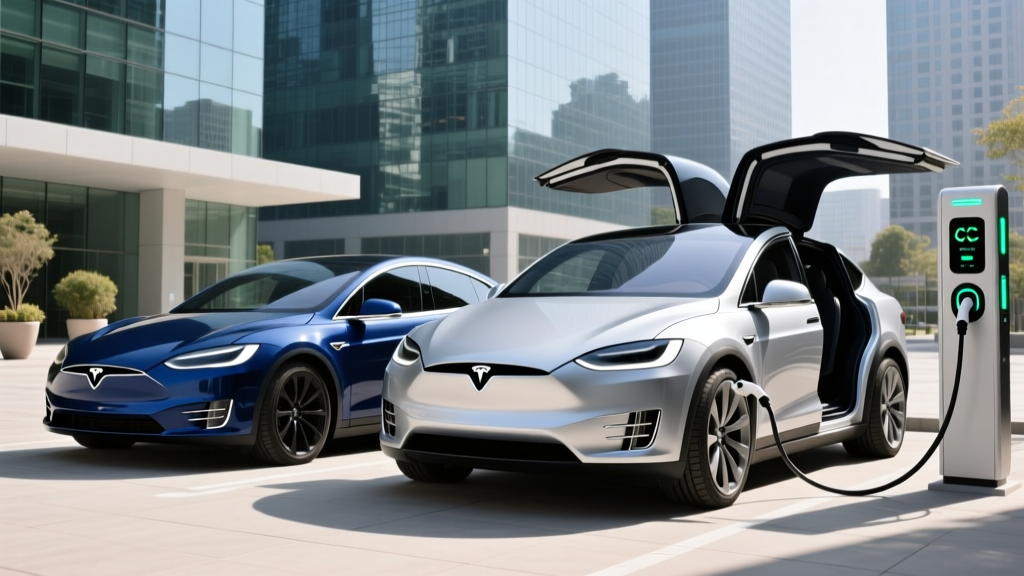
The Model X adds versatility with optional six- or seven-seat configurations. Behind the third row, cargo space is 15.8 cu ft; fold both rows and you access up to 85.7 cu ft. The falcon-wing rear doors are dramatic and genuinely useful in tight parking spaces, though they add mechanical complexity.
On the tech front, Tesla's infotainment remains best-in-class for responsiveness and over-the-air update frequency. The available Full Self-Driving (Supervised) package is a SAE Level 2 driver-assist system — it handles highway lane-keeping, navigation-based lane changes, and traffic-light recognition, but the driver must remain attentive and hands on (or near) the wheel at all times. It is not autonomous driving.
Pricing, Tax Credits, and Ownership Costs
| Trim | Base MSRP | §30D Credit Eligible? | Est. After-Credit Price |
|---|---|---|---|
| Model S Long Range | $79,990 | No (MSRP exceeds $55K sedan cap) | $79,990 |
| Model S Plaid | $94,990 | No | $94,990 |
| Model X Long Range | $84,990 | No (MSRP exceeds $80K SUV cap) | $84,990 |
| Model X Plaid | $99,990 | No | $99,990 |
Neither the Model S nor Model X qualifies for the IRS §30D federal EV tax credit in 2026. The Model S, classified as a sedan, exceeds the $55,000 MSRP cap. The Model X, classified as an SUV, exceeds the $80,000 cap. Additionally, buyer income limits ($150K single / $300K joint) and battery critical-mineral sourcing requirements would further restrict eligibility even if pricing qualified.
Some buyers in states with separate EV rebates (California, Colorado, Massachusetts, and others) may access $2,000–$5,000 in state-level incentives — check your local DMV or energy office for current programs.
Ownership costs favor Tesla in two areas: charging and depreciation. Supercharger pricing averages $0.28–$0.35/kWh nationally, making a full Model S charge roughly $28–$35. Home charging at $0.13/kWh drops that to ~$13. Tesla's resale values have historically outperformed most EV competitors, though the premium has narrowed as the luxury EV market matures. Insurance premiums run 15–25% above the luxury-segment average — get a quote before committing.
Battery Chemistry, Warranty, and Longevity
Both vehicles use nickel-manganese-cobalt (NMC) lithium-ion battery packs with approximately 100 kWh of usable capacity. NMC chemistry delivers higher energy density than LFP (lithium iron phosphate), enabling the 400+ mile range — but it degrades slightly faster with repeated deep cycling and sustained high-SoC storage.
Tesla recommends daily charging to 80% for NMC packs, reserving 100% for road trips. Following this guideline, long-term owners report 5–10% capacity loss over the first 100,000 miles, with degradation slowing significantly thereafter.
The battery and drive unit warranty covers 8 years or 150,000 miles (whichever comes first) with a minimum 70% capacity retention threshold. This is among the better warranties in the segment, though Hyundai's 10-year/100,000-mile coverage on the Ioniq 5 is longer on the time axis.
How the Model S and Model X Compare to Rivals
Model S vs. Lucid Air: The Lucid Air Grand Touring offers 516 miles of EPA range, faster 300+ kW charging, and a more luxurious interior — but starts at $112,000 and lacks Tesla's Supercharger network. The Model S wins on value and charging access; the Air wins on range and refinement.
Model S vs. BMW i7: The i7 xDrive60 ($120K+) prioritizes ride comfort and cabin luxury over raw performance. It's a better luxury car but a less compelling EV — 318 miles of range and slower charging.
Model X vs. Rivian R1S: The R1S offers superior off-road capability, a more traditional SUV layout, and better third-row space. But the Model X charges faster on a more reliable network and offers the Plaid's absurd acceleration. The Rivian also fails the §30D MSRP cap at most trims.
Model X vs. BMW iX: The iX is quieter, better-built, and more comfortable. The Model X is faster, has more range, and offers falcon-wing doors. Neither qualifies for the federal credit.
Who Should Buy the Model S or Model X?
- Class-leading range (Model S LR: 402 mi EPA)
- Access to 65,000+ Supercharger stalls nationwide
- Plaid performance is unmatched at any price
- Best-in-class OTA updates and infotainment
- Strong cargo capacity and frunk utility
- Low operating cost vs. gas luxury competitors
- No federal tax credit eligibility (MSRP caps)
- Charging speed (250 kW) trails 800V rivals
- Cabin refinement lags Lucid, BMW at this price
- Insurance premiums 15–25% above segment average
- Yoke steering remains divisive; no stalks
- Platform aging — no major redesign since 2021
Choose the Model S if you want maximum range and performance in a sedan, prioritize charging-network reliability above all else, and regularly take road trips where Supercharger density matters.
Choose the Model X if you need three-row seating (occasional use), want SUV cargo versatility with sports-car acceleration, and value the falcon-wing doors for tight urban parking.
Look elsewhere if cabin luxury is your top priority (Lucid Air, BMW i7), you need genuine off-road capability (Rivian R1S), or you want the fastest possible DC charging (Hyundai Ioniq 5, Porsche Taycan).
Frequently Asked Questions
What is the real-world range of the 2026 Tesla Model S?
The Model S Long Range carries a 402-mile EPA estimate. In real-world highway driving at 70 mph, expect 330–350 miles. In freezing temperatures, plan for 260–300 miles. The Plaid variant delivers roughly 290–320 miles on the highway.
How fast do the Model S and Model X charge?
Both peak at 250 kW on V3 Superchargers, achieving 10–80% in approximately 30 minutes. At home on a 48-amp Level 2 charger (11.5 kW), the Model S adds about 44 miles of range per hour; the Model X adds about 36 miles per hour due to lower efficiency.
Does the 2026 Model S or Model X qualify for the federal EV tax credit?
No. Under current IRS §30D rules, the Model S exceeds the $55,000 sedan MSRP cap, and the Model X exceeds the $80,000 SUV cap. Buyer income limits and battery-sourcing rules further restrict eligibility. No federal credit applies to new purchases of either vehicle in 2026.
Is the Model S worth buying over the Lucid Air?
The Model S Long Range at $79,990 undercuts the Lucid Air Grand Touring by over $30,000 and offers the Supercharger network advantage. The Air delivers 114 more miles of EPA range, faster charging architecture, and a more luxurious cabin. If budget is flexible and range is paramount, the Air wins. If value and charging infrastructure matter more, the Model S is the stronger pick.
What battery chemistry do the Model S and Model X use?
Both use NMC (nickel-manganese-cobalt) lithium-ion packs with approximately 100 kWh usable capacity. NMC provides high energy density for maximum range but benefits from daily charging limited to 80% to minimize long-term degradation.
How long is the battery warranty?
Tesla covers the battery and drive unit for 8 years or 150,000 miles, whichever comes first, with a guaranteed minimum of 70% capacity retention over that period.
Is Tesla's Full Self-Driving actually self-driving?
No. FSD (Supervised) is an SAE Level 2 driver-assistance system. It can manage highway lane changes, navigate on-ramps, and recognize traffic controls — but the driver must remain fully attentive and ready to take over at any moment. It does not make the vehicle autonomous.