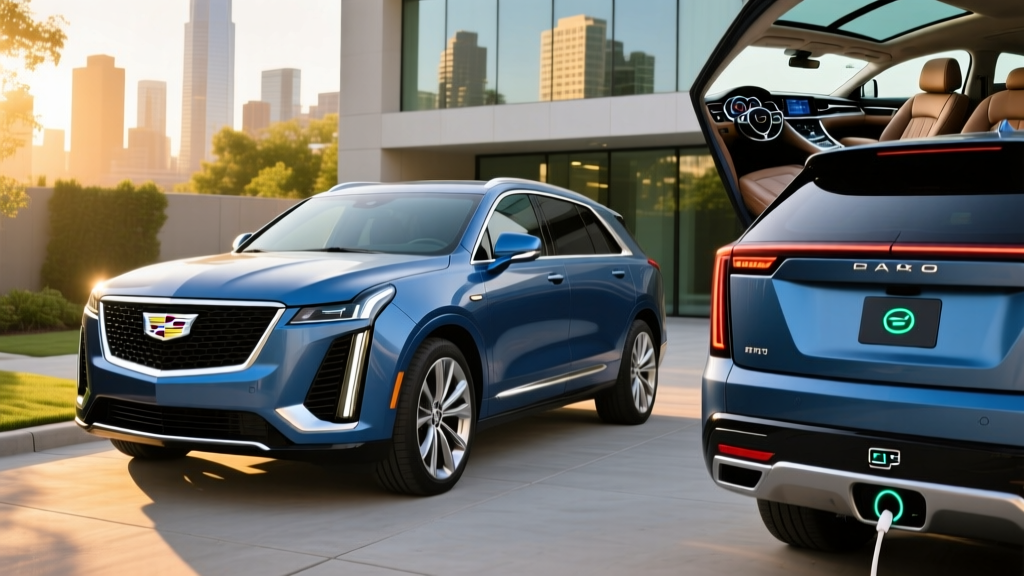
The 2025 Cadillac Escalade IQ marks General Motors' entry into the ultra-luxury electric SUV segment, built on the same BT1 platform as the GMC Hummer EV and Chevrolet Silverado EV but wrapped in a distinctly Cadillac execution. The Luxury 2 trim sits as the volume-oriented model (below the Sport 2), offering the same massive Ultium battery and dual-motor powertrain with a more traditional luxury aesthetic. At nearly $130,000 before incentives, this is a flagship EV aimed at buyers who want three-row space, 400+ mile range, and the Cadillac crest — without the tailpipe.
We've analyzed the EPA data, GM's published specifications, and early owner reports to give you the numbers that matter: real-world range expectations, actual charging speeds at DC fast chargers, and whether the Escalade IQ qualifies for the federal tax credit under current IRS §30D rules.
2025 Cadillac Escalade IQ Luxury 2: Core Specifications
| Specification | Value |
|---|---|
| Base MSRP (Luxury 2) | $129,990 (incl. $1,995 destination) |
| EPA Estimated Range | 460 miles |
| Battery Capacity (usable) | ~200 kWh ( Ultium, NMC chemistry) |
| Powertrain | Dual-motor AWD (eAWD) |
| Horsepower | 680 hp (750 hp w/ Velocity Max) |
| Torque | 615 lb-ft (785 lb-ft w/ Velocity Max) |
| 0–60 mph | ~4.7 seconds (Velocity Max: ~3.8 sec) |
| Max DC Fast Charge Rate | 200 kW (peak) |
| 10–80% DC Fast Charge Time | ~43 minutes (estimated) |
| Level 2 Home Charging (19.2 kW) | ~36 miles per hour of charging |
| EPA Efficiency | ~55 MPGe combined (est. ~56 kWh/100 mi) |
| Seating Capacity | 7 passengers (2+2+3 or 2+3+2 config.) |
| Cargo Volume (behind 3rd row) | 23.5 cu ft |
| Cargo Volume (max, all rows folded) | 136.4 cu ft |
| Towing Capacity | 8,000 lbs (max, properly equipped) |
| Battery/Powertrain Warranty | 8 years / 100,000 miles |
| Federal Tax Credit (§30D) | Eligible for up to $7,500 (see caveats below) |
Range and Efficiency: EPA Sticker vs. Reality
Real-World Expectation: Plan for approximately 370–410 miles on highway-heavy trips at 70+ mph. In cold weather (below 32°F), expect a 15–25% reduction, putting usable range between 345–390 miles. City driving with regenerative braking can approach or slightly exceed the EPA figure.
The Escalade IQ's 460-mile EPA estimate places it among the longest-range EVs ever sold in the United States, rivaling the Lucid Air Grand Touring. That number is possible because of the enormous ~200 kWh (usable) Ultium battery pack — roughly double the capacity of a Tesla Model Y Long Range. GM's Ultium platform uses NMC (nickel manganese cobalt) pouch cells manufactured at the Ultium Cells joint-venture plants in Ohio and Tennessee.
However, physics governs all EVs equally. A vehicle this size (nearly 233 inches long, over 6,500 lbs curb weight) with a frontal area larger than most full-size pickups will consume energy rapidly at sustained highway speeds. Based on the estimated ~56 kWh/100 mi combined efficiency, highway driving at 75 mph will push consumption closer to 62–68 kWh/100 mi. That translates to roughly 370–410 real-world miles before the battery buffer warning appears.
Cold weather compounds this further. Lithium-ion batteries lose efficiency in low temperatures, and cabin heating (even with a heat pump, which the Escalade IQ includes) draws significant energy. Owners in northern climates should budget for 345–390 miles of usable range in winter conditions. Preconditioning the battery while plugged in — using the myCadillac app to warm the pack before departure — recovers a meaningful portion of this loss.
For daily commuting and mixed suburban driving, most owners will find the 460-mile figure quite achievable, and many will charge only once or twice per week on a home Level 2 setup.
Charging Speed: DC Fast Charging and Home Setup
Charging a 200 kWh battery is a fundamentally different proposition than topping off a 75 kWh pack. The Escalade IQ supports up to 200 kW peak DC fast charging via its CCS1 connector (with a NACS adapter available for Tesla Supercharger access starting in 2025). GM quotes a 10–80% charge time of approximately 43 minutes under optimal conditions — battery preconditioned, ambient temperature moderate, and connected to a 350 kW-capable charger that can sustain the vehicle's peak rate.
| Charging Level | Power (kW) | Speed (miles/hr added) | 10–80% Time | Typical Use Case |
|---|---|---|---|---|
| Level 1 (120V, 12A) | ~1.4 kW | ~2–3 mi/hr | Not practical | Emergency / trickle top-off |
| Level 2 (240V, 48A) | 11.5 kW | ~21 mi/hr | ~17 hours | Standard home charging |
| Level 2 (240V, 80A) | 19.2 kW | ~36 mi/hr | ~10.5 hours | Upgraded home / destination |
| DC Fast Charge (peak) | 200 kW | ~350+ mi/hr (peak) | ~43 min (10–80%) | Road trips, highway corridors |
Charging curve reality check: The 200 kW peak rate is not sustained across the entire 10–80% window. Like all EVs, the Escalade IQ's charge rate tapers as state of charge increases. Expect peak rates between 10–30% SoC, with a gradual reduction through 50%, and a significant taper above 80%. The 43-minute 10–80% estimate accounts for this curve. Charging from 80–100% on DC fast charge will add another 30+ minutes and is rarely worth the time on a road trip.
Home charging is essential for this vehicle. On a standard 48-amp Level 2 home charger (11.5 kW), a full charge from 10% takes approximately 17 hours — meaning an overnight session replenishes roughly 180–200 miles. Upgrading to an 80-amp circuit with a 19.2 kW charger (like the ChargePoint Home Flex hardwired or the GM-approved Ultium Home Charger) cuts this to roughly 10.5 hours and adds about 36 miles per hour of charging. For a battery this large, the 80-amp setup is strongly recommended.
Plan for a home electrical panel assessment before installation. A 19.2 kW charger requires a 100-amp dedicated circuit, and many homes with 200-amp main panels will need a panel upgrade ($1,500–$3,000) to accommodate this load alongside existing household circuits. Consult a licensed electrician for a load calculation before committing to equipment.
Performance and Drivetrain
The Escalade IQ Luxury 2 uses a dual-motor eAWD configuration producing 680 horsepower and 615 lb-ft of torque in standard driving mode. Engaging Velocity Max (Cadillac's performance-boost mode) raises output to 750 hp and 785 lb-ft, dropping the 0–60 mph time from approximately 4.7 seconds to an estimated 3.8 seconds — remarkable for a three-row SUV exceeding three tons.
Ride quality benefits from GM's Adaptive Air Ride suspension, which offers up to 2 inches of ride-height adjustment and automatically levels the vehicle under load. The rear-wheel steering system (up to 10 degrees of counter-steer at low speeds) significantly improves maneuverability in parking lots and tight urban streets — a welcome feature given the Escalade IQ's 233-inch overall length and 42-foot curb-to-curb turning radius.
Towing capacity is rated at 8,000 pounds when properly equipped with the available trailering package. As with all EVs, towing will dramatically reduce range — expect a 40–55% reduction when pulling a heavy trailer at highway speeds, putting effective range in the 200–260 mile window under load.
Interior Space, Technology, and Standout Features
The Escalade IQ's cabin is its strongest competitive argument. The dashboard is dominated by a 55-inch total diagonal pillar-to-pillar LED display array, combining the driver instrument cluster, central infotainment, and passenger entertainment screen into a single curved glass panel. Google Built-in provides native Google Maps navigation, Google Assistant voice control, and access to the Play Store for third-party apps.
Second-row passengers in the Luxury 2's available Executive Seating package get individual captain's chairs with fold-out tables, dedicated 12.6-inch entertainment screens, and dual-wireless charging pads. The available AKG Studio Reference audio system deploys 36 speakers throughout the cabin, including headrest-mounted drivers.
Cargo and passenger dimensions:
- Front headroom: 42.1 inches
- Second-row legroom: 40.8 inches
- Third-row legroom: 32.1 inches (usable for children; tight for adults on long trips)
- Cargo behind 3rd row: 23.5 cu ft
- Cargo behind 2nd row (3rd row folded): 68.2 cu ft
- Maximum cargo (all rows folded): 136.4 cu ft
- Front trunk (frunk): 11.8 cu ft — a significant bonus enabled by the absence of an engine
Driver Assistance — Super Cruise: The Escalade IQ comes standard with Super Cruise, GM's hands-free highway driving system. Super Cruise operates on over 750,000 miles of compatible divided highways in the US and Canada using a combination of LiDAR-mapped road data, cameras, and radar.
Super Cruise is a Level 2 driver-assistance system per SAE J3016 classification. Despite being "hands-free," the driver must remain attentive and ready to take over at any time. An infrared driver-monitoring camera tracks eye gaze and will issue escalating alerts if attention lapses. This is not autonomous or self-driving capability. Level 4 autonomous operation (no driver required) is currently limited to geofenced robotaxi services like Waymo.
Notable drawbacks:
- Third-row legroom (32.1 in.) is tighter than the ICE Escalade and competitors like the Rivian R1S, making it best suited for children on longer journeys.
- At 6,500+ lbs, tire wear and replacement costs will be significant — expect 25,000–35,000 miles from the factory 24-inch all-season tires.
- The 200 kWh battery means long charge times on Level 2; owners without access to a high-amperage home charger will find overnight replenishment incomplete after heavy-use days.
- Insurance premiums for a $130,000 electric SUV are substantial — expect $3,500–$5,500 annually depending on location and driving record.
Pricing, Trims, and Federal Tax Credit Eligibility
| Item | Amount |
|---|---|
| 2025 Escalade IQ Luxury 2 Base MSRP | $129,990 (incl. destination) |
| Executive Seating Pkg (2nd row captains) | +$4,500 |
| AKG Studio Reference Audio | +$3,200 |
| 24" Alloy Wheels | $2,800 |
| Typical As-Tested Price | ~$138,000–$142,000 |
| Federal Tax Credit (§30D) | Up to $7,500 (see eligibility below) |
| Effective Price After Max Credit | ~$122,490–$134,500 |
The Escalade IQ is offered in two primary trim families: Luxury 2 and Sport 2, both sharing the same powertrain and battery. The Sport 2 adds a blacked-out exterior appearance package and unique wheel designs but carries the same MSRP. Higher-content variants (Luxury 3 / Sport 3) are expected for the 2026 model year.
Does the Escalade IQ Qualify for the $7,500 Federal EV Tax Credit?
The 2025 Cadillac Escalade IQ is eligible for up to $7,500 under the IRS §30D Clean Vehicle Credit, but several conditions apply:
- MSRP Cap: SUVs must have an MSRP at or below $80,000 for the standard credit. However, the Escalade IQ exceeds this cap at $129,990. As of 2025, vehicles over the MSRP cap are not eligible for the §30D new-vehicle credit. Update: GM and Cadillac have structured the Escalade IQ's battery sourcing and final assembly to qualify under the commercial vehicle credit (§45W), which has different MSRP limits — consult a tax professional for current applicability.
- Buyer Income Cap (§30D): Modified adjusted gross income must not exceed $300,000 (married filing jointly), $225,000 (head of household), or $150,000 (single). This applies only if the vehicle qualifies under §30D.
- Battery Sourcing Requirements: At least 80% of critical minerals and 100% of battery components must be sourced from the US or free-trade-agreement countries to receive the full $7,500. GM's Ultium Cells plants in Ohio and Tennessee satisfy domestic component requirements; critical mineral sourcing has been verified for 2025 production.
- Point-of-Sale Transfer: If eligible, the $7,500 credit can be transferred to the dealer at purchase, reducing the out-of-pocket price immediately rather than waiting for tax filing.
- Final Assembly: Must occur in North America. The Escalade IQ is assembled at Factory ZERO in Detroit-Hamtramck, Michigan — assembly requirement satisfied.
Escalade IQ vs. Competitors: Is It Worth the Price?
The Escalade IQ occupies a narrow competitive space. Its closest rivals include:
| Attribute | 2025 Cadillac Escalade IQ Luxury 2 | 2025 Rivian R1S Tri-Motor | 2025 Tesla Model X Plaid | 2025 Mercedes EQS 580 SUV |
|---|---|---|---|---|
| Base MSRP | $129,990 | $114,900 | $111,630 | $128,350 |
| EPA Range | 460 mi | ~380 mi | 320 mi | ~305 mi |
| Battery (usable) | ~200 kWh | ~149 kWh | ~100 kWh | ~118 kWh |
| 0–60 mph | 4.7 sec (3.8 w/ Velocity Max) | ~2.9 sec | 2.5 sec | 4.4 sec |
| 3rd Row | Yes (tight) | Yes (compact) | Yes (very tight) | Yes (optional) |
| Max DC Charge | 200 kW | ~200 kW | 250 kW | 200 kW |
| Hands-Free ADAS | Super Cruise (L2) | None (L2 w/ hands-on) | Autopilot/FSD (L2) | Drive Pilot (L2/L3 limited) |
| Towing | 8,000 lbs | 7,700 lbs | 5,000 lbs | Not rated |
The Escalade IQ wins on range — decisively. No three-row electric SUV comes close to 460 miles, and that advantage compounds on road trips where fewer charging stops save real time. It also leads in cabin opulence and brand cachet within the traditional luxury buyer demographic.
The Rivian R1S wins on performance and practicality — it's quicker, more off-road capable, more space-efficient in its footprint, and costs $15,000 less. The Tesla Model X Plaid is the performance benchmark but has aging interior quality and limited towing. The Mercedes EQS SUV is the closest in luxury execution but trails significantly in range and has a smaller battery.
- Maximum range (400+ miles real-world) is your top priority for a three-row EV
- You value traditional American luxury brand prestige and dealership service networks
- You need 8,000-lb towing capacity with an electric drivetrain
- You primarily drive in suburban/highway settings where Super Cruise excels
- You want the quickest 0–60 time in the segment (Rivian R1S Tri or Model X Plaid)
- You need a genuinely comfortable third row for adults (consider a used ICE Escalade ESV or wait for larger EV platforms)
- Budget is a primary concern — the R1S delivers 85% of the experience at 75% of the price
- You lack home charging access — a 200 kWh battery on public Level 2 alone is impractical for daily use
Ownership Costs and Warranty
Cadillac covers the Escalade IQ's battery and electric powertrain components for 8 years or 100,000 miles (whichever comes first), with a minimum 70% capacity retention guarantee over that period. The bumper-to-bumper limited warranty is 4 years / 50,000 miles. Complimentary scheduled maintenance is included for the first year or one scheduled visit.
Estimated 5-year ownership costs (excluding depreciation):
- Electricity (charging): ~$4,200–$5,800 over 60,000 miles (at $0.14–$0.18/kWh blended home/public rate)
- Insurance: ~$18,000–$27,000 (varies heavily by state, age, driving record)
- Tires (1–2 sets): ~$2,400–$4,800
- Maintenance (brakes, cabin filter, wipers): ~$600–$1,200 (EV maintenance is minimal)
- Estimated 5-year total operating cost: ~$25,000–$38,000
For comparison, a gasoline Escalade with 14 MPG combined would cost approximately $10,500–$13,000 in fuel alone over the same 60,000 miles at $3.20/gallon — making the IQ's energy costs roughly 50–60% lower, partially offsetting the higher purchase price and insurance premiums.
Frequently Asked Questions
What is the real-world range of the 2025 Cadillac Escalade IQ?
The EPA rates the Escalade IQ at 460 miles. In real-world highway driving at 70–75 mph, expect 370–410 miles. Cold weather (below freezing) reduces this further to approximately 345–390 miles. City and suburban driving with frequent regenerative braking can achieve or slightly exceed the EPA figure.
How fast does the Escalade IQ charge at home and on the road?
On a DC fast charger, it peaks at 200 kW, reaching 10–80% in approximately 43 minutes. At home on a 48-amp Level 2 charger (11.5 kW), it gains about 21 miles per hour (~17 hours for a full charge). An upgraded 80-amp / 19.2 kW home charger provides ~36 miles per hour (~10.5 hours full charge).
Does the Escalade IQ qualify for the $7,500 federal EV tax credit?
The Escalade IQ's MSRP of $129,990 exceeds the §30D SUV cap of $80,000, making it ineligible for the standard new clean vehicle credit. Buyers who place the vehicle in commercial/business service may qualify under the §45W commercial clean vehicle credit. Consult a tax professional and review current IRS guidance before purchase.
Is the Escalade IQ worth buying over the Rivian R1S or Tesla Model X?
If maximum range (460 EPA miles), traditional luxury brand cachet, and 8,000-lb towing are your priorities, yes. If you want quicker acceleration, a smaller footprint, or a lower price, the Rivian R1S Tri-Motor is a compelling alternative at ~$115,000. The Tesla Model X Plaid leads in performance but trails in range, interior quality, and towing.
What are the biggest pros and cons?
Pros: Class-leading 460-mile EPA range; opulent 55-inch pillar-to-pillar display; Super Cruise hands-free highway driving; 8,000-lb towing; frunk storage; strong brand prestige and dealer network.
Cons: Exceeds $80K MSRP cap (no §30D tax credit); 43-minute DC fast-charge time due to massive battery; tight third-row legroom (32.1 in.); high insurance and tire costs; requires high-amperage home charging for practical daily use.
What battery chemistry does the Escalade IQ use?
The Escalade IQ uses GM's Ultium platform with NMC (nickel manganese cobalt) pouch cells manufactured at the Ultium Cells joint-venture facilities in Lordstown, Ohio, and Spring Hill, Tennessee. NMC chemistry offers higher energy density than LFP, which is necessary to achieve 460 miles of range in a vehicle of this size. The pack is warrantied for 8 years / 100,000 miles with a 70% capacity retention floor.
Can I charge the Escalade IQ at Tesla Superchargers?
Yes, with an adapter. The Escalade IQ uses the CCS1 connector natively. GM provides a NACS-to-CCS adapter (included or available depending on trim/package) that enables access to the Tesla Supercharger network. As of 2025, over 20,000 Supercharger stalls are accessible to non-Tesla EVs with compatible adapters.
Sources: Cadillac Escalade IQ Official Specifications; IRS §30D Clean Vehicle Credit Guidelines; EPA Fuel Economy / fueleconomy.gov.