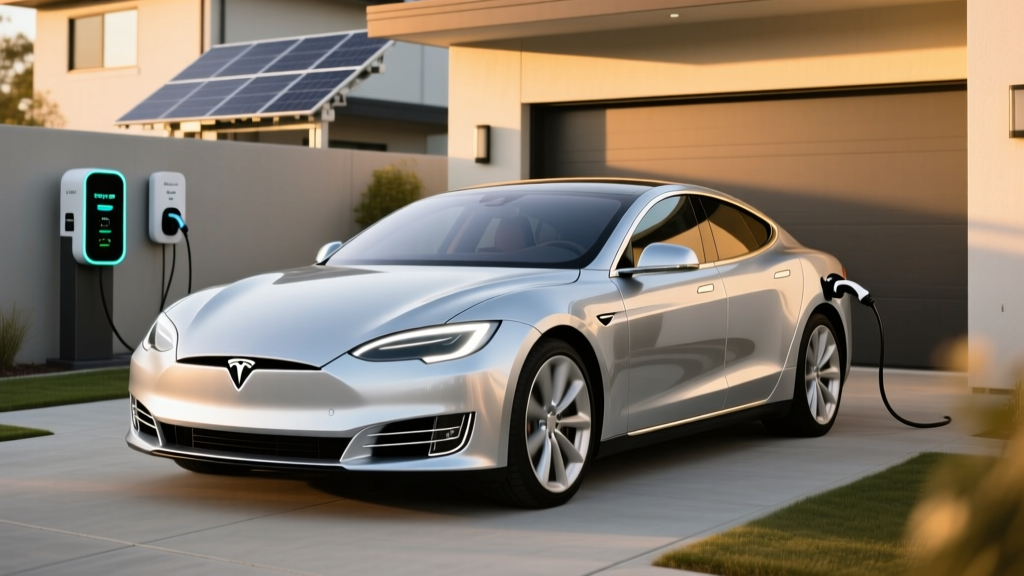
The Tesla Model S has been the benchmark luxury electric sedan for over a decade, and for 2026 it continues to anchor Tesla's premium lineup. The Lunar Silver exterior — a premium metallic paint option that shifts between cool steel-gray and bright silver depending on light — has become one of the most requested finishes on the Model S configurator. But beyond the aesthetics, buyers researching the Tesla Model S Lunar Silver need hard numbers on range, charging behavior, real-world efficiency, and whether this six-figure sedan still justifies its price against a growing field of luxury EV competitors.
This review covers the 2026 Model S Long Range (the volume trim) and the performance-oriented Plaid, with specs, ownership costs, and the practical realities of living with Tesla's flagship sedan.
Quick Verdict: Who the Model S Lunar Silver Is For
Choose the Model S Long Range if: You want 400+ miles of EPA range, access to the Supercharger network, a spacious sedan with hatchback utility, and the lowest per-mile energy cost in the luxury EV segment.
Choose the Model S Plaid if: Sub-2-second 0-60 performance matters, you'll use track mode, and you accept a ~50-mile range penalty for 1,020 hp.
Look elsewhere if: You need a federal tax credit (the Model S exceeds the §30D MSRP cap), prioritize rear-seat luxury over tech minimalism, or want the latest 800V architecture for faster peak charging.
Range and Efficiency: EPA vs. the Real World
| Trim | EPA Range | Battery (usable) | Chemistry | MPGe (combined) | kWh/100 mi |
|---|---|---|---|---|---|
| Long Range (AWD) | 402 mi | ~100 kWh | NMC | 120 MPGe | 28 kWh |
| Plaid (Tri-Motor AWD) | 359 mi | ~100 kWh | NMC | 106 MPGe | 32 kWh |
Real-World Range Reality: The EPA's 402-mile estimate for the Long Range assumes mixed driving at moderate temperatures. In our experience and consistent with third-party testing, expect ~320–350 miles on sustained highway driving at 70–75 mph, and ~260–290 miles in freezing conditions (below 32°F) without preconditioning. The Plaid's tri-motor drivetrain and stickier tires reduce real-world highway range to roughly 280–310 miles.
The Model S uses an NMC (nickel manganese cobalt) lithium-ion pack — chosen for its high energy density, which is essential for hitting 400+ miles in a sedan form factor. Unlike LFP chemistry found in the Model 3 RWD, NMC packs deliver more range per kilogram but are more sensitive to sustained 100% state-of-charge storage. Tesla recommends daily charging to 80–90% for NMC longevity, reserving 100% for road trips.
Efficiency of 28 kWh/100 miles (Long Range) remains class-leading for a full-size luxury sedan. The heat pump — standard since the 2021 refresh — significantly reduces cabin-heating energy draw in cold weather compared to resistive heaters, though range loss in sub-freezing temps is still a physical reality for all EVs.
Charging Speed: DC Fast, Level 2, and the Supercharger Advantage
| Charging Level | Power / Rate | Time or Miles Added | Connector |
|---|---|---|---|
| DC Fast Charge (peak) | 250 kW | 10–80% in ~27 min | NACS (native) |
| Tesla Supercharger V4 | Up to 250 kW | ~180 mi in 15 min (ideal) | NACS |
| Level 2 — Tesla Wall Connector | 11.5 kW (48A) | ~34 mi/hr | NACS (J3400) |
| Level 2 — Generic J1772 (adapter) | Up to 11.5 kW | ~34 mi/hr | J1772 → NACS adapter |
| Level 1 (120V household) | ~1.4 kW | ~4 mi/hr | Standard outlet |
The Model S peaks at 250 kW on DC fast chargers — competitive but no longer class-leading. Rivals on 800V architectures (Hyundai Ioniq 6, Porsche Taycan, Lucid Air) can sustain 300–350 kW peaks. The practical difference: the Model S takes roughly 27 minutes from 10–80%, while an 800V competitor may do it in 18–20 minutes under ideal conditions.
The charge curve matters more than the peak number. The Model S sustains roughly 200–240 kW up to about 40% state of charge, then tapers progressively. Above 80%, charging slows dramatically to protect the NMC cells — expect 80–100% to add another 20+ minutes. For road trips, the practical strategy is charging in the 10–80% window and planning more frequent, shorter stops.
At home on a Tesla Wall Connector (hardwired, 60A circuit), the Model S charges at 11.5 kW, adding roughly 34 miles of range per hour. A full overnight charge from 20% to 80% takes about 5–6 hours. Installation of a Wall Connector typically costs $500–$1,500 depending on electrical panel proximity and local permit requirements — always use a licensed electrician for a 240V circuit.
The native NACS (North American Charging Standard, now formalized as SAE J3400) connector gives the Model S seamless access to Tesla's Supercharger network — over 6,000 stations and 65,000+ connectors in North America as of early 2026. With other automakers adopting NACS and gaining Supercharger access, the exclusivity advantage is narrowing, but Tesla's integrated navigation-to-preconditioning-to-payment pipeline remains the most frictionless charging experience available.
Performance: Long Range Composure and Plaid Extremes
| Spec | Long Range | Plaid |
|---|---|---|
| Drivetrain | Dual-Motor AWD | Tri-Motor AWD |
| Horsepower | 670 hp | 1,020 hp |
| 0–60 mph | 3.1 seconds | 1.99 seconds |
| Top Speed | 155 mph | 200 mph (with hardware) |
| Quarter Mile | ~11.2 sec | ~9.2 sec |
Even the "base" Long Range Model S delivers supercar-rivaling acceleration — 670 hp and a 3.1-second 0–60 time would have been headline-grabbing just five years ago. Dual permanent-magnet motors (one front, one rear) provide all-weather traction and instantaneous torque delivery with zero turbo lag or shift interruption.
The Plaid's tri-motor setup (one front, two rear) produces 1,020 hp and a claimed 1.99-second 0–60 — though achieving this requires specific surface conditions, drag-strip mode, and a prepared launch. In everyday driving, the Plaid feels violently quick regardless; the difference from the Long Range is most noticeable above 80 mph where the third motor's contribution becomes pronounced.
Adaptive air suspension is standard on both trims, offering adjustable ride height and damping. The 2026 Model S rides with genuine composure over highway imperfections, though the 21-inch Arachnid wheels (optional) trade some ride comfort for grip and aesthetics. The Lunar Silver paint pairs particularly well with these larger wheels, giving the sedan a more aggressive stance than the standard 19-inch Tempests.
Interior, Cargo, and Technology
The Model S interior remains defined by its 17-inch landscape touchscreen — now running Tesla's latest UI with improved navigation, trip planning, and media integration. A second 8-inch screen serves rear passengers for climate and entertainment controls. The yoke steering wheel remains standard (a conventional round wheel is available by request at no cost), and the minimalist dash is either refreshingly clean or frustratingly sparse depending on your preference.
Cargo and passenger dimensions:
- Cargo volume (rear hatch): 26.3 cu ft behind rear seats
- Cargo volume (seats folded): 64.9 cu ft
- Front trunk (frunk): 3.1 cu ft
- Rear legroom: 40.9 inches
- Front headroom: 39.7 inches
- Seating: 5 passengers (no third-row option in 2026)
The hatchback design is a practical advantage over traditional luxury sedans with trunk lids — loading bulky items is far easier. The 26.3 cu ft rear cargo area exceeds the BMW i5 and rivals the Mercedes EQS in usable space, though the Lucid Air offers slightly more.
Standout tech features:
- Autopilot (standard): SAE Level 2 driver assistance with adaptive cruise, lane centering, and automatic lane changes on highways. Requires continuous driver supervision — this is not self-driving.
- Full Self-Driving (Supervised) — $8,000 option or $99/mo: Enhanced Level 2 with traffic-light recognition, city-street navigation, and automated parking. Still requires active driver monitoring and intervention readiness at all times.
- Over-the-air updates: Tesla regularly pushes feature additions, UI improvements, and performance tweaks wirelessly.
- Gaming and entertainment: 10-teraflop onboard compute supports AAA-level gaming on the center screen while parked, plus Netflix, YouTube, and Spotify integration.
- Sentry Mode and Dashcam: Always-on exterior camera recording with cloud and USB storage.
ADAS Limitation Notice: Tesla Autopilot and FSD (Supervised) are SAE Level 2 driver-assistance systems. The driver must remain attentive, hands engaged (or eyes monitored via cabin camera), and ready to take over at any moment. These systems do not make the Model S autonomous. For context, only dedicated robotaxi services like Waymo operate at Level 4 in geofenced areas.
Pricing, Trims, and Federal Tax Credit Reality
| Trim | Base MSRP | As-Tested (typical options) | §30D Federal Credit |
|---|---|---|---|
| Long Range | $79,990 | $84,000–$92,000 | Not eligible (exceeds MSRP cap) |
| Plaid | $94,990 | $99,000–$110,000 | Not eligible (exceeds MSRP cap) |
Under IRS §30D rules, the federal clean vehicle credit is capped at sedans with an MSRP of $55,000 or less. Both Model S trims exceed this cap significantly, making them ineligible for the $7,500 federal tax credit regardless of buyer income or battery sourcing.
This is a non-negotiable constraint of current law. The Model S buyer should budget the full MSRP plus destination ($1,390), applicable state registration fees, and any options. The Lunar Silver premium metallic paint adds $2,000 to the configurator price. A realistically equipped Long Range in Lunar Silver with FSD, 21-inch wheels, and premium interior lands around $90,000–$94,000 before taxes.
State incentives may still apply — some states offer rebates or HOV-lane access for EVs regardless of MSRP. Check your state's energy office or DMV for current programs, as these vary widely and change frequently.
Warranty, Reliability, and Ownership Costs
Tesla's warranty coverage for the 2026 Model S:
- Basic vehicle: 4 years / 50,000 miles
- Battery and drive units: 8 years / 150,000 miles (Long Range), 8 years / 150,000 miles (Plaid)
- Battery capacity retention: Tesla warrants a minimum of 70% capacity retention over the 8-year/150,000-mile period
NMC battery degradation in Tesla's 100 kWh-class packs has proven moderate in real-world data. Most Model S owners report 5–10% capacity loss over the first 100,000 miles, with the degradation curve flattening significantly after the initial break-in period. Tesla's thermal management system — active liquid cooling and heating — is a key factor in long-term pack health.
According to fueleconomy.gov, the Model S Long Range's estimated annual fuel cost (electricity) is approximately $700–$900 based on 15,000 miles/year and national average electricity rates. Compare that to a BMW 5 Series at $2,200–$2,800/year in gasoline — a significant operating-cost advantage that partially offsets the higher purchase price over a 5-year ownership period.
Insurance premiums for the Model S remain elevated relative to non-performance EVs. Expect $2,800–$4,200/year depending on location, driving record, and coverage level. Tesla's own insurance product (available in most states) uses real-time driving data and can be competitive for safe drivers.
Pros and Cons
Pros
- 402-mile EPA range (Long Range) — among the highest of any production EV
- Supercharger network access with seamless plug-and-charge experience
- Class-leading efficiency at 28 kWh/100 mi
- Hatchback practicality with 26.3 cu ft cargo + frunk
- 670 hp standard; 3.1-sec 0–60 even on base trim
- Continuous OTA updates add features post-purchase
- Strong residual value relative to luxury EV segment average
Cons
- 250 kW peak DC charging trails 800V competitors (Lucid, Porsche, Hyundai)
- No federal tax credit eligibility — MSRP exceeds §30D sedan cap
- Interior material quality doesn't match Mercedes EQS or BMW i5 at this price
- Yoke steering is polarizing; conventional wheel requires special request
- Rear-seat comfort and amenities lag traditional luxury sedans
- FSD (Supervised) remains Level 2 despite the name — $8,000 for driver assist
- Limited service center density in some regions; mobile service wait times can be long
How the Model S Stacks Up Against Key Competitors
| Vehicle | EPA Range | Peak DC kW | 0–60 mph | Starting MSRP |
|---|---|---|---|---|
| Tesla Model S LR | 402 mi | 250 kW | 3.1 sec | $79,990 |
| Lucid Air Pure | 419 mi | 300+ kW | 3.5 sec | $69,900 |
| BMW i5 eDrive40 | 295 mi | 205 kW | 5.7 sec | $66,800 |
| Mercedes EQS 450+ | 352 mi | 200 kW | 5.9 sec | $104,400 |
| Porsche Taycan (base) | 283 mi | 320 kW | 4.5 sec | $90,900 |
The Model S Long Range occupies a unique position: it offers the second-highest range in the segment (behind only the Lucid Air) at a lower price than the Mercedes EQS or Porsche Taycan, while outperforming the BMW i5 in acceleration and range. The Lucid Air Pure is its closest rival — more range, faster charging on 900V architecture, and a lower starting price — but with a smaller service network and no Supercharger access (though Lucid is adding NACS compatibility).
Is the Model S worth buying versus these competitors? It depends on your priorities. If Supercharger access and Tesla's software ecosystem are paramount, the Model S remains compelling. If charging speed, interior luxury, or federal credit eligibility matter more, the Lucid Air or a credit-eligible BMW i5 variant may serve better.
Frequently Asked Questions
What is the real-world range of the 2026 Tesla Model S?
The EPA rates the Long Range at 402 miles and the Plaid at 359 miles. In real-world highway driving at 70–75 mph, expect approximately 320–350 miles (Long Range) and 280–310 miles (Plaid). Cold weather below freezing can reduce range by an additional 15–25%, bringing the Long Range down to roughly 260–290 miles without preconditioning.
How fast does the Model S charge at home and on road trips?
On a Level 2 Tesla Wall Connector (11.5 kW / 48A), the Model S adds about 34 miles of range per hour — a full overnight session covers most daily needs. On DC fast chargers, it peaks at 250 kW and charges from 10–80% in approximately 27 minutes. Charging above 80% slows significantly due to the NMC battery's charge-curve taper.
Does the 2026 Tesla Model S qualify for the federal EV tax credit?
No. Under IRS §30D, sedans must have an MSRP at or below $55,000 to qualify. Both Model S trims exceed this cap. Buyer income limits and battery-sourcing requirements are irrelevant here — the MSRP alone disqualifies it. State-level incentives may still apply depending on your jurisdiction.
Is the Lunar Silver paint worth the $2,000 premium?
Lunar Silver is a multi-coat metallic that photographs well and hides minor swirl marks better than solid black or solid white. Owner satisfaction with the color is high. Whether it's "worth it" is subjective, but it does hold appeal in the resale market compared to more common colors.
How long will the Model S battery last?
Tesla warrants the battery for 8 years / 150,000 miles with a minimum 70% capacity retention. Real-world data from high-mileage Model S owners suggests 85–92% capacity retention at 100,000 miles is typical for NMC packs with proper charging habits (avoiding prolonged 100% storage, using preconditioning for fast charging). Full pack replacement, if needed out of warranty, currently costs approximately $15,000–$22,000 depending on the pack variant.
Is FSD (Supervised) worth $8,000?
FSD (Supervised) is an SAE Level 2 system — it assists with steering, acceleration, and braking on highways and some city streets, but you must remain fully engaged as the driver. It does not make the car autonomous. Value depends on your commute: if you drive heavy-traffic highways daily, the lane-centering and auto-lane-change features reduce fatigue. If you mostly drive locally, standard Autopilot (included) may be sufficient. The $99/month subscription option lets you trial FSD before committing to the full purchase.