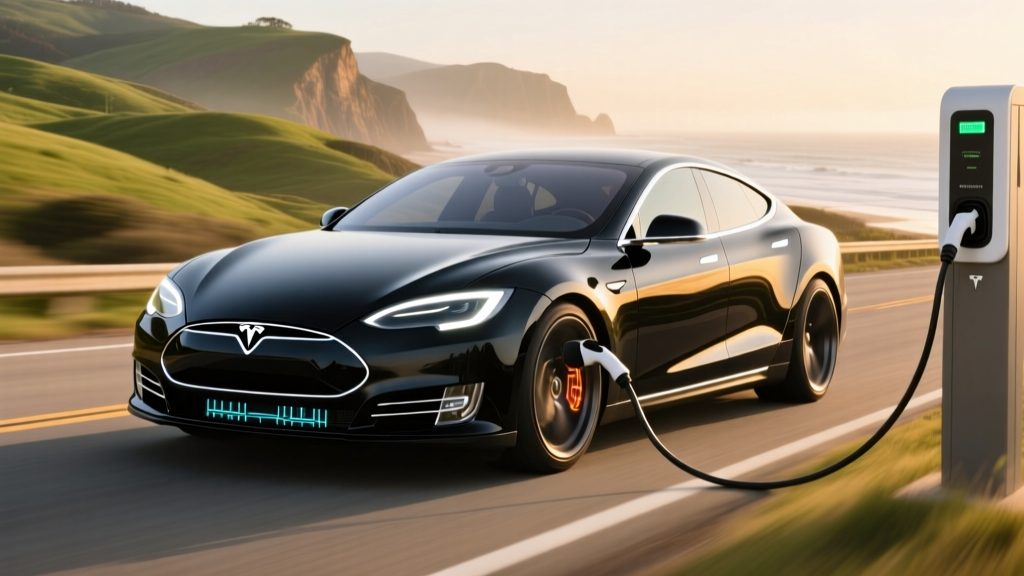
The Tesla Model S has been the benchmark luxury electric sedan for over a decade, and the Plaid variant with its infamous Ludicrous acceleration mode remains the halo configuration. For 2026, the Model S Plaid continues to offer staggering performance—1,020 horsepower and a sub-2-second 0-60 mph time—wrapped in a premium sedan that still delivers over 350 miles of EPA-estimated range. But raw numbers only tell part of the story. This review digs into what ownership actually looks like: real-world range on highway road trips, DC fast-charging curves at 250 kW Superchargers, home charging logistics, and whether the Model S Plaid still qualifies for federal tax incentives under current IRS §30D rules.
Quick Verdict: Who Should Consider the Model S Plaid?
The 2026 Tesla Model S Plaid with Ludicrous mode is built for buyers who refuse to compromise between a supercar-rivaling sedan and a practical daily driver. It suits tech-forward executives, performance enthusiasts who also need rear-seat space, and road-trippers who value the Supercharger network. It does not suit budget-conscious shoppers, buyers who prioritize traditional luxury material quality (BMW i7 and Mercedes EQS still win on interior opulence), or those who need a crossover's ride height and cargo versatility. If you want the fastest-accelerating production sedan on the planet and can absorb the premium price, the Model S Plaid remains unmatched.
Range, Efficiency, and Real-World Expectations
The 2026 Model S Plaid is equipped with a roughly 100 kWh (usable) battery pack using NMC (nickel manganese cobalt) chemistry, prioritizing energy density for range and the high C-rate discharge needed for Ludicrous launches. The dual-motor tri-configuration (one front, two rear motors) balances performance with efficiency.
Real-World Expectation: Plan for 270–295 miles on sustained 75 mph highway driving in the Plaid. In cold weather (below 32°F), expect a 20–30% reduction, bringing usable range down to roughly 220–240 miles before needing a charge stop. City driving with regenerative braking recovers closer to the EPA sticker.
Efficiency is rated at approximately 120 MPGe combined (28 kWh/100 miles) for the Plaid trim, per fueleconomy.gov. That's slightly less efficient than the Long Range variant due to the tri-motor setup's weight and the performance-oriented tire compound, but still competitive for a 1,020-hp sedan. For context, the BMW i7 xDrive60 achieves roughly 82 MPGe combined—so Tesla's powertrain efficiency advantage remains real.
Charging Speed: DC Fast, Level 2, and the Supercharger Advantage
Charging speed is where the Model S platform shows both its strengths and its age relative to 800V competitors like the Lucid Air and Porsche Taycan. The Model S operates on a 400V architecture, which limits peak charge rates compared to 800V vehicles that can sustain higher kW for longer.
| Charging Level | Power / Rate | Speed / Notes |
|---|---|---|
| Level 1 (120V outlet) | ~1.4 kW | ~3–4 miles per hour — emergency/trickle only |
| Level 2 (240V home) | 11.5 kW (48A) | ~34 miles per hour — full charge in ~10 hours |
| DC Fast (Supercharger V3/V4) | Peak 250 kW | 10–80% in ~28 minutes; tapers significantly above 60% |
| DC Fast (CCS adapter, 3rd party) | Up to 250 kW | Varies by station; Electrify America, EVgo compatible |
The 250 kW peak rate is impressive on paper, but the charge curve tells the real story. In testing at V3 Superchargers, the Model S Plaid sustains roughly 220–250 kW from 10% to about 35% SoC, then tapers to ~150 kW by 50%, and drops further to under 80 kW past 70%. This means the advertised 10–80% time of approximately 28 minutes assumes ideal battery preconditioning (navigating to a Supercharger triggers automatic thermal prep). Without preconditioning—say, arriving at a charger after the car has been sitting cold—that 10–80% session can stretch past 40 minutes.
For home charging, the onboard 11.5 kW charger is a strong point. A full overnight replenishment is realistic with a NEMA 14-50 outlet or hardwired Wall Connector. Expect a 240V/48A circuit installation to cost $800–$2,000 depending on panel proximity and local permit fees—always confirm with a licensed electrician.
Performance: What Ludicrous Mode Actually Delivers
Tesla discontinued the "Ludicrous" badge as a standalone option when it restructured the lineup around the Plaid trim, but the Plaid is the spiritual successor to Ludicrous mode. The tri-motor all-wheel-drive system produces 1,020 horsepower and launches the Model S Plaid from 0 to 60 mph in a manufacturer-claimed 1.99 seconds (with rollout subtracted). Independent testing by outlets like Motor Trend has verified sub-2.1-second runs on prepared surfaces.
| Specification | 2026 Tesla Model S Plaid |
|---|---|
| Drivetrain | Tri-Motor AWD |
| Horsepower | 1,020 hp |
| 0–60 mph | 1.99 sec (mfr.) / ~2.1 sec (independent) |
| Top Speed | 200 mph (with track package) |
| Battery (usable) | ~100 kWh, NMC chemistry |
| EPA Range | 320 miles |
| Efficiency | ~120 MPGe / 28 kWh/100 mi |
| Peak DC Charge | 250 kW |
| 10–80% DC Charge | ~28 minutes |
| Level 2 Charge Rate | 11.5 kW / ~34 mi/hr |
| Cargo Volume | 28 cu ft (rear seats up) + frunk |
| Rear Legroom | 35.4 inches |
| Base MSRP | $89,990 |
| Battery Warranty | 8 years / 150,000 miles |
Beyond straight-line speed, the Plaid's torque-vectoring rear motors and revised adaptive air suspension make it genuinely capable on a track—Tesla offers a carbon-ceramic brake package for sustained high-speed lapping. For daily driving, the ride quality in Comfort mode is compliant enough for rough pavement, though the 21-inch Arachnid wheels trade some compliance for grip.
Interior, Tech, and Driver Assistance
The Model S interior centers on a 17-inch OLED touchscreen with a new AMD Ryzen processor that handles the UI, navigation, and gaming (yes, Cyberpunk 2077 runs natively). A secondary 8-inch screen for rear passengers controls climate and media. The yoke steering wheel remains standard on Plaid trims—polarizing for some, intuitive for others. A conventional round wheel is available as a no-cost swap at order time.
On the driver-assistance front, Tesla's Autopilot comes standard with adaptive cruise, lane-keeping, and automatic emergency braking. Full Self-Driving (Supervised) is a $8,000 add-on (or $99/month subscription) that adds automatic lane changes, navigate-on-Autopilot, and traffic-light recognition. Critically, FSD Supervised is an SAE Level 2 system: the driver must remain fully engaged, hands on the yoke/wheel, eyes on the road at all times. It is not autonomous driving.
Notable drawbacks: The Model S cabin, while improved with ventilated seats and better materials in recent refreshes, still doesn't match the fit-and-finish of a Mercedes EQS or BMW i7 at this price point. Panel gaps have improved but remain a common owner talking point. There's no Apple CarPlay or Android Auto—Tesla's native system is the only option.
Pricing, Tax Credits, and Ownership Cost
The 2026 Model S Plaid starts at $89,990 (including destination). Adding FSD Supervised, the carbon-ceramic brake package, and premium paint can push the as-tested price past $110,000.
| Trim | Base MSRP | Federal §30D Credit | Effective Price |
|---|---|---|---|
| Model S Long Range | $74,990 | See eligibility below | Varies |
| Model S Plaid | $89,990 | See eligibility below | Varies |
Federal Tax Credit Eligibility (§30D)
The IRS §30D clean vehicle credit offers up to $7,500, but the Model S faces significant eligibility hurdles in 2026:
- MSRP Cap: Sedans must have an MSRP at or below $55,000 to qualify. The Model S (starting at $74,990) exceeds this cap and does not qualify for the new-vehicle §30D credit.
- Buyer Income Cap: Even if the MSRP cap were met, AGI limits apply ($150K single / $300K joint filers).
- Battery Sourcing: Critical mineral and battery component requirements from IRA rules further restrict eligible vehicles.
- Point-of-Sale Transfer: For qualifying vehicles, the credit can be applied at purchase. Since the Model S doesn't qualify, this is moot.
For authoritative details on current eligibility, consult the IRS Clean Vehicle Credits page. Some states offer separate rebates that may apply regardless of MSRP—check your state's energy office or DMV.
Warranty coverage: Tesla provides a 4-year/50,000-mile basic vehicle warranty and an 8-year/150,000-mile battery and drive unit warranty, with a guaranteed minimum 70% capacity retention over that period. This is competitive, though Hyundai's 10-year/100,000-mile battery warranty on the Ioniq lineup remains the segment leader.
Model S Plaid vs. the Competition
At roughly $90,000–$110,000, the Model S Plaid competes with the Lucid Air Grand Touring (~$125K, 516-mile EPA range), Porsche Taycan Turbo S (~$190K, stunning handling but ~280-mile range), and the BMW i7 M70 (~$170K, traditional luxury with 295-mile range).
- Fastest-accelerating production sedan (sub-2-sec 0–60)
- 320-mile EPA range with tri-motor performance
- Supercharger network access (17,000+ U.S. stalls)
- Strong efficiency for its power class (120 MPGe)
- OTA updates continuously add features
- Generous cargo space (28 cu ft + frunk)
- Does not qualify for $7,500 federal tax credit (MSRP cap)
- Interior quality still trails German luxury rivals
- 400V architecture limits sustained DC charge rate vs 800V competitors
- No Apple CarPlay / Android Auto
- Yoke steering is love-it-or-hate-it
- Insurance premiums run 20–35% higher than segment average
Frequently Asked Questions
What is the real-world range of the Tesla Model S Plaid?
The EPA rates the 2026 Model S Plaid at 320 miles. In real-world highway driving at 70–75 mph, expect 270–295 miles. In winter conditions below freezing, plan for 220–240 miles. The Long Range variant achieves a higher EPA rating of 359 miles and correspondingly better real-world figures.
How fast does the Model S Plaid charge at home and on the road?
On a Level 2 home charger (240V/48A), the Model S charges at 11.5 kW, adding roughly 34 miles per hour—a full charge takes about 10 hours. At a V3 Supercharger, it peaks at 250 kW and reaches 10–80% in approximately 28 minutes, though the charge curve tapers sharply past 60% SoC.
Does the Tesla Model S qualify for the federal EV tax credit?
No. Under current IRS §30D rules, new sedans must have an MSRP of $55,000 or less to qualify. The Model S starts at $74,990 (Long Range) and $89,990 (Plaid), exceeding the cap. State-level incentives may still apply depending on your jurisdiction.
Is the Model S Plaid worth it versus the Lucid Air or Porsche Taycan?
The Model S Plaid wins on acceleration, Supercharger network access, and price-to-performance ratio. The Lucid Air Grand Touring offers far superior range (516 miles EPA) and a more luxurious interior but costs significantly more and relies on third-party charging networks. The Porsche Taycan Turbo S delivers the best driving dynamics and build quality but trails in range and costs nearly double. Choose the Model S Plaid if straight-line performance and charging infrastructure are your top priorities.
What's the difference between Ludicrous mode and Plaid?
Tesla retired the "Ludicrous" mode designation when it introduced the Plaid powertrain. The Plaid tri-motor setup is the direct successor and far exceeds the old dual-motor Ludicrous performance (which achieved roughly 2.4-second 0–60 times). Today's Plaid is the fastest configuration available.
How long will the Model S Plaid battery last?
Tesla warranties the battery for 8 years or 150,000 miles, whichever comes first, with a minimum 70% capacity retention guarantee. NMC chemistry typically retains 85–90% capacity after 100,000 miles based on fleet data. Avoid frequent 100% charges and regular DC fast-charging to maximize long-term State of Health.