Tesla Model S Dimensions: Length, Width, and Interior Space
If you've been searching for the exact Model S length and overall dimensions before pulling the trigger on Tesla's flagship sedan, you're not alone. The Model S occupies a specific niche in the full-size luxury EV segment, and whether it fits your garage, your parking spot, or your family depends on knowing the precise numbers — not just the marketing gloss.
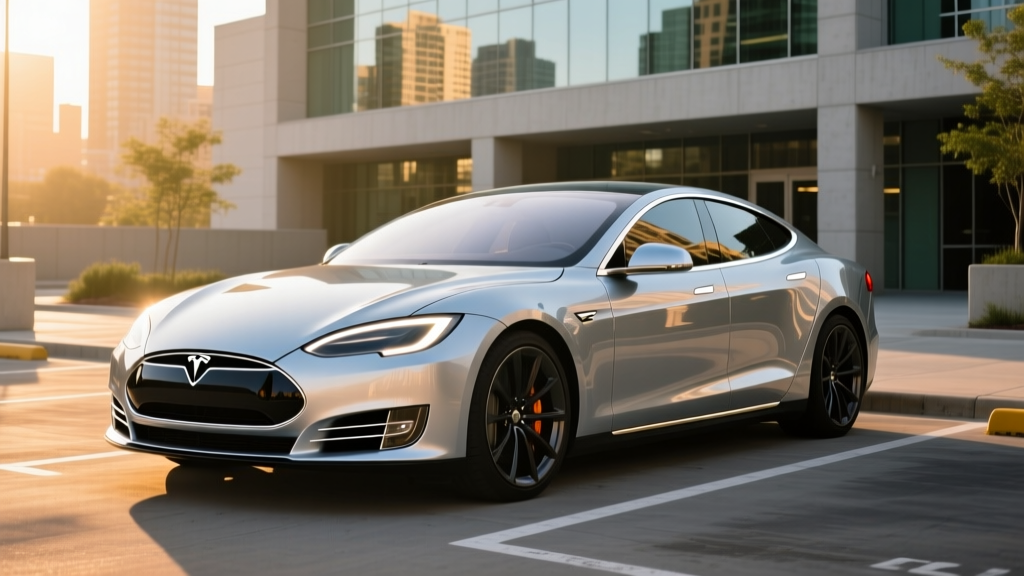
For the 2026 model year, the Tesla Model S measures 196.0 inches (4,978 mm) in overall length, 77.3 inches (1,963 mm) wide without mirrors (86.2 inches with mirrors deployed), and stands 56.9 inches (1,445 mm) tall. The wheelbase stretches 116.5 inches (2,960 mm), which is the key dimension governing interior cabin room.
Compared to rivals, the Model S slots between the Mercedes EQS sedan (205.4 inches) and the BMW i7 (212.2 inches) in length, making it one of the more compact full-size luxury EVs — a genuine advantage for urban parking and garage fitment.
| Dimension | Inches | Millimeters |
|---|---|---|
| Overall Length | 196.0 | 4,978 |
| Width (no mirrors) | 77.3 | 1,963 |
| Width (mirrors deployed) | 86.2 | 2,189 |
| Height | 56.9 | 1,445 |
| Wheelbase | 116.5 | 2,960 |
| Ground Clearance | 5.2 | 132 |
| Curb Weight (Long Range) | 4,561 lbs | 2,069 kg |
Real-World Range, Battery, and Efficiency
The 2026 Tesla Model S Long Range carries an EPA-estimated 405 miles of range, while the tri-motor Model S Plaid is rated at 359 miles. Both trims use a ~100 kWh usable battery pack (gross capacity approximately 105 kWh) with NMC (nickel manganese cobalt) chemistry. Tesla has not transitioned the Model S to LFP — the iron-phosphate chemistry is reserved for the lower-cost Model 3 and Model Y RWD trims where energy density is less critical.
Model S Long Range: EPA 405 mi. Expect ~340–370 mi on sustained highway driving at 70–75 mph. In freezing temperatures (below 32°F), plan for 270–310 mi of usable range before needing to charge. City and suburban driving with regenerative braking can approach or slightly exceed the EPA figure.
Model S Plaid: EPA 359 mi. Highway real-world: ~290–320 mi. Cold weather: ~240–275 mi. The Plaid's tri-motor drivetrain and stickier tires extract an efficiency penalty.
Efficiency on the Long Range comes in at 124 MPGe combined (EPA), which translates to roughly 27 kWh per 100 miles. The Plaid drops to 116 MPGe combined, or about 29 kWh/100 mi. For context, these figures make the Model S Long Range one of the most efficient large luxury sedans on the market — the Mercedes EQS 450+ achieves a similar 97 MPGe but weighs considerably more.
| Trim | EPA Range | Real-World Hwy | Cold Weather | MPGe (Combined) | kWh/100mi |
|---|---|---|---|---|---|
| Long Range (AWD) | 405 mi | 340–370 mi | 270–310 mi | 124 | 27 |
| Plaid (Tri-Motor AWD) | 359 mi | 290–320 mi | 240–275 mi | 116 | 29 |
Charging Speed: DC Fast Charging and Home Level 2
The Model S uses Tesla's proprietary NACS (North American Charging Standard) connector natively — no adapter needed at any of the 6,000+ Tesla Supercharger stations across North America. This remains one of the strongest practical advantages of owning a Tesla in 2026, as the Supercharger network consistently delivers higher uptime and more reliable plug-and-charge sessions than third-party networks.
On DC fast charging, the Model S Long Range peaks at approximately 250 kW at V3 Superchargers. However, as with every EV, peak rate is not sustained rate. The charging curve tapers meaningfully above 50% state of charge. A 10–80% charge takes approximately 27–30 minutes at a V3 Supercharger, adding roughly 200 miles in the first 15 minutes if the battery is properly preconditioned via the car's navigation-routed battery prep.
For home charging, the Model S accepts up to 11.5 kW on Level 2 (48 amps on a 60-amp circuit). This delivers roughly 34–38 miles of range per hour of charging — enough to fully replenish the pack overnight in about 9–10 hours from near-empty. Tesla's Wall Connector ($420) is the recommended home unit, though any J1772/NACS Level 2 EVSE rated at 48A+ will work.
| Charging Level | Max Power | Rate | Time |
|---|---|---|---|
| Level 1 (120V / 12A) | ~1.4 kW | ~4 mi/hr | ~70+ hrs (full) |
| Level 2 (240V / 48A) | 11.5 kW | 34–38 mi/hr | ~9–10 hrs (full) |
| DC Fast (V3 Supercharger) | 250 kW peak | ~200 mi in 15 min | 10–80% in ~27–30 min |
| DC Fast (CCS adapter, 3rd-party) | ~150–175 kW* | Varies | 10–80% in ~35–45 min |
*Using Tesla's CCS adapter on Electrify America or EVgo stations, the Model S typically peaks lower than its native NACS Supercharger rate due to adapter and station handshake limitations. Preconditioning only activates when a Supercharger is set as the navigation destination.
Performance, Drivetrain, and What It's Like to Drive
The Model S Long Range uses a dual-motor all-wheel-drive powertrain producing 670 horsepower and achieving a 0–60 mph time of 3.1 seconds. That figure, which would have been supercar territory a decade ago, is now the baseline for the Model S lineup.
The Model S Plaid escalates with a tri-motor AWD system (one front, two rear motors) generating 1,020 horsepower. Tesla claims a 0–60 mph time of 1.99 seconds (with rollout subtracted; independently tested at approximately 2.1–2.3 seconds with standard timing). Top speed is electronically limited to 200 mph with the appropriate wheels and tires.
Both trims feature adaptive air suspension that adjusts ride height based on speed and terrain, with the ability to raise for driveways or lower for highway efficiency. The steering is precise and well-weighted, though road feel is somewhat filtered compared to a Porsche Taycan. Where the Model S genuinely excels is effortless passing power at any speed — the instant torque delivery means highway merging requires zero planning.
| Spec | Long Range | Plaid |
|---|---|---|
| Drivetrain | Dual-Motor AWD | Tri-Motor AWD |
| Horsepower | 670 hp | 1,020 hp |
| 0–60 mph | 3.1 sec | 1.99 sec* |
| Top Speed | 155 mph | 200 mph |
| Suspension | Adaptive Air | Adaptive Air |
*With 1-ft rollout subtracted per manufacturer. Independent testing typically yields 2.1–2.3 sec.
Interior, Cargo, and Passenger Space
The Model S cabin has been substantially refreshed since the 2021 "Palladium" overhaul, featuring a 17-inch center touchscreen, a 12.3-inch digital instrument cluster, and a rear-seat 8-inch touchscreen for climate and entertainment controls. Build quality on 2025–2026 models has improved noticeably over earlier years, with tighter panel gaps and higher-grade materials, though it still trails the Mercedes EQS and BMW i7 in perceived luxury.
The controversial yoke steering wheel remains optional (a round wheel is now standard at no extra charge). Ventilated front seats, a panoramic glass roof, and a 22-speaker audio system are included on all trims.
| Measurement | Front | Rear |
|---|---|---|
| Headroom | 39.7 in | 38.1 in |
| Legroom | 42.7 in | 35.4 in |
| Shoulder Room | 58.0 in | 55.4 in |
| Hip Room | 54.8 in | 51.7 in |
Cargo capacity totals 28.0 cubic feet with the rear seats upright (split between the rear hatch area and the front trunk/frunk). Fold the rear seats and that expands to approximately 55.0 cubic feet. The frunk alone provides about 3.1 cu ft — enough for a charging cable kit and a small bag. For comparison, the Mercedes EQS offers 22 cu ft of trunk space (no frunk), giving the Model S a clear practicality edge.
Pricing, Tax Credits, and Ownership Cost
The 2026 Tesla Model S Long Range starts at a base MSRP of $79,990 (including destination). The Model S Plaid starts at $94,990. Options are limited to paint color ($1,500–$2,500), wheels ($1,500–$4,500), yoke steering ($1,000), and Full Self-Driving (Supervised) capability at $8,000 or $99/month subscription.
A typical well-equipped Long Range — with metallic paint and premium wheels — lands around $84,000–$87,000 before any incentives.
As of 2026, the Tesla Model S does NOT qualify for the $7,500 federal EV tax credit under IRS §30D. The reason: the credit has an MSRP cap of $55,000 for sedans (and $80,000 for SUVs/trucks/vans). Since the Model S is classified as a sedan and starts at $79,990, it exceeds the cap. The point-of-sale transfer option is irrelevant here — the vehicle simply doesn't meet the price threshold.
Additionally, the §30D credit has adjusted gross income caps ($150,000 single / $300,000 joint filers) and critical mineral and battery component sourcing requirements that phase in more strictly each year. Even if the MSRP cap were higher, buyers should verify current-year battery sourcing compliance on IRS.gov.
Bottom line: Budget the full MSRP for the Model S. Check your state for any additional rebates (California, Colorado, and others offer state-level incentives that may apply), but don't count on the federal credit.
| Trim | Base MSRP | Typical As-Tested | Federal §30D Credit | Net Cost (After Credit) |
|---|---|---|---|---|
| Long Range AWD | $79,990 | $84,000–$87,000 | $0 (exceeds sedan MSRP cap) | $79,990+ |
| Plaid Tri-Motor AWD | $94,990 | $98,000–$103,000 | $0 (exceeds sedan MSRP cap) | $94,990+ |
Warranty, Reliability, and Long-Term Ownership
Tesla provides a 4-year/50,000-mile basic vehicle warranty and an 8-year/150,000-mile battery and drive unit warranty for the Model S. The battery warranty guarantees that the pack will retain at least 70% of its original capacity during the coverage period. If degradation falls below that threshold, Tesla will repair or replace the battery at no cost.
Based on long-term fleet data from sources like fueleconomy.gov and owner surveys, Model S battery degradation typically follows a curve of about 5–8% loss in the first 50,000 miles, then slows significantly, with most packs retaining 88–92% capacity at 100,000 miles. NMC chemistry in the Model S has proven durable, though it is more sensitive to sustained 100% state-of-charge storage than LFP — Tesla recommends daily charging to 80–90% for longevity.
Maintenance costs are low compared to ICE luxury sedans: no oil changes, no transmission fluid, and regenerative braking extends pad life to 80,000+ miles in many cases. The main recurring costs are tires (the Model S wears through rubber faster than lighter EVs due to its weight and torque), cabin air filter replacement every 2 years, and brake fluid checks.
Autopilot, FSD, and Smart Driving Features
Every Model S comes standard with Tesla Autopilot, which includes Traffic-Aware Cruise Control and Autosteer (lane centering). This is a SAE Level 2 driver-assistance system — it does not make the car self-driving. The driver must keep hands on the wheel (or apply torque to the yoke) and remain fully attentive at all times.
The optional Full Self-Driving (Supervised) package ($8,000 or $99/mo) adds automatic lane changes, Navigate on Autopilot (highway on/off-ramp handling), Autopark, Summon, and traffic light/stop sign recognition. Despite the name, FSD Supervised remains SAE Level 2. It can handle many suburban and highway scenarios impressively, but it makes errors in construction zones, unmapped areas, and complex intersections. Driver supervision is mandatory and legally required.
Neither Autopilot nor FSD (Supervised) is a self-driving system. Both are SAE Level 2 driver-assist features that require continuous driver engagement. Tesla's camera-only vision approach (no lidar or radar on current models) can struggle in heavy rain, fog, direct sun glare, and poorly marked roads. Never treat these systems as a substitute for an alert driver.
Pros, Cons, and Who Should Buy the Model S
- Class-leading 405-mi EPA range (Long Range)
- Supercharger network access — best public charging experience in the US
- Blistering performance even on the base trim (3.1s 0–60)
- Strong cargo practicality with hatchback + frunk (28 cu ft)
- Over-the-air updates continuously add features
- Low maintenance costs vs. ICE luxury sedans
- Does not qualify for $7,500 federal tax credit (MSRP cap)
- Rear seat legroom (35.4 in) is tight for the class vs. EQS and i7
- Build quality improved but still not at German luxury level
- 250 kW peak charge rate trails Hyundai/Kia's 350 kW capability
- No Apple CarPlay or Android Auto
- FSD ($8,000) remains Level 2 despite the name and price
Who the Model S is best for: Tech-forward professionals and driving enthusiasts who prioritize range, performance, and access to the Supercharger network over traditional luxury ambiance. It's an outstanding road-trip EV — the combination of 405-mile range and fast, reliable Supercharger stops makes 500+ mile journeys practical. Families with older children will find it adequate, but those needing maximum rear-seat space should cross-shop the Mercedes EQS or consider the Model X.
Who should look elsewhere: Buyers whose priority is rear-seat luxury and ride comfort (the BMW i7 and Mercedes EQS are superior here), those who need the $7,500 federal credit to make the math work, and anyone who wants Apple CarPlay integration. If towing is a priority, note that the Model S is not rated for towing — you'll need the Model X or a truck-platform EV.
Frequently Asked Questions
What is the exact length of the Tesla Model S?
The 2026 Tesla Model S is 196.0 inches (4,978 mm) long. This makes it shorter than the Mercedes EQS (205.4 in), BMW i7 (212.2 in), and Lucid Air (197.5 in), giving it an advantage in garage fitment and urban maneuverability among full-size luxury EV sedans.
What is the real-world range of the Model S on a road trip?
On highway road trips at 70–75 mph, expect 340–370 miles from the Long Range trim and 290–320 miles from the Plaid. In cold weather (below freezing), reduce those figures by roughly 20–25%. The Supercharger network means you'll rarely need the full range — most road-trip stops are spaced 120–180 miles apart, and a 15-minute charge adds ~200 miles.
How fast does the Model S charge at home and on the road?
At home on a 240V/48A Level 2 charger, the Model S charges at up to 11.5 kW, adding 34–38 miles per hour (full charge in ~9–10 hours). On a Tesla V3 Supercharger, it peaks at 250 kW DC and charges from 10–80% in approximately 27–30 minutes. Preconditioning the battery via navigation routing is essential for achieving peak charge speeds.
Does the Tesla Model S qualify for the $7,500 federal EV tax credit?
No. Under IRS §30D rules, the Model S exceeds the $55,000 MSRP cap for sedans. The Long Range starts at $79,990 and the Plaid at $94,990. The federal credit is unavailable regardless of buyer income or battery sourcing. State-level incentives may still apply — check your state's energy or DMV website for details. Always verify current rules at IRS.gov.
Is the Model S worth buying over the Mercedes EQS or Lucid Air?
It depends on your priorities. Choose the Model S if Supercharger network access, outright performance, and proven over-the-air software are your top criteria. Choose the Mercedes EQS if rear-seat luxury, ride comfort, and a quieter cabin matter more (though the EQS has a less reliable public charging experience). Choose the Lucid Air if maximum range (up to 516 mi EPA on the Air Grand Touring) and interior space are paramount, though the Lucid's service network is far smaller than Tesla's.
What is the Model S battery warranty?
Tesla covers the Model S battery and drive unit for 8 years or 150,000 miles, whichever comes first. The warranty guarantees at least 70% battery capacity retention during the coverage period. Real-world data suggests most Model S packs retain 88–92% capacity at 100,000 miles with normal charging habits (daily charge limited to 80–90%).