Quick Verdict: Is a Tesla Model S Lease the Right Move?
The 2026 Tesla Model S remains the benchmark luxury electric sedan — a 402-mile EPA range, 250 kW DC fast charging, and access to the most reliable charging network in North America. But at a starting MSRP of $82,385 (before any incentives), it occupies a narrow lane: buyers who want flagship EV performance without stepping into six-figure Plaid territory. For many, a Tesla Model S lease offers a way to access that performance while sidestepping depreciation risk and battery longevity concerns. This review breaks down the exact specs, real-world range expectations, charging economics, and federal tax credit mechanics you need to evaluate whether leasing the Model S makes financial sense in 2026.
Range, Battery, and Real-World Efficiency
The 2026 Model S Long Range is EPA-rated at 402 miles of range from a 100 kWh usable battery pack (NMC chemistry). The high-performance Plaid trim drops to 359 miles EPA due to its tri-motor powertrain and stickier tire compound.
EPA 402 mi (Long Range). Expect ~340–360 mi on sustained 75 mph highway driving, and ~280–310 mi in sub-30°F winter conditions. The Model S heat pump mitigates cold-weather cabin losses, but battery chemistry still saps 15–25% of range in deep freezes. City/regenerative driving can push closer to or slightly above the EPA figure.
Efficiency lands at 120 MPGe combined (Long Range AWD) per fueleconomy.gov, or roughly 28 kWh per 100 miles. That's slightly less efficient than the lighter Model 3, but competitive for a 4,500+ lb luxury sedan.
| Spec | Long Range AWD | Plaid |
|---|---|---|
| EPA Range | 402 mi | 359 mi |
| Battery (usable) | ~100 kWh, NMC | ~100 kWh, NMC |
| Drivetrain | Dual-motor AWD | Tri-motor AWD |
| Horsepower | 670 hp | 1,020 hp |
| 0–60 mph | 3.1 sec | 1.99 sec |
| Top Speed | 155 mph | 200 mph |
| Efficiency (combined) | 120 MPGe / 28 kWh/100mi | 112 MPGe / 30 kWh/100mi |
| Cargo (trunk + frunk) | 28 cu ft (trunk) + 3.1 cu ft (frunk) | 28 cu ft + 3.1 cu ft |
| Rear Legroom | 35.4 in | 35.4 in |
| Base MSRP (2026) | $82,385 | $108,385 |
Charging Speed: DC Fast, Level 2, and Supercharger Access
Tesla's vertical integration — controlling both the vehicle and the Supercharger network — remains the Model S's strongest practical advantage. Peak DC fast-charge rate is 250 kW at V3/V4 Superchargers, translating to a 10–80% charge in approximately 27 minutes. Note that the charge curve tapers significantly above 80%; a 10–90% session will take closer to 40 minutes.
| Charging Level | Power / Rate | Miles Added per Hour | Typical Use Case |
|---|---|---|---|
| Level 1 (120V) | ~1.4 kW | ~3–4 mi/hr | Emergency/trickle |
| Level 2 (240V, 48A) | 11.5 kW | ~34 mi/hr | Home overnight |
| DC Fast (Supercharger V3/V4) | Peak 250 kW | ~200 mi in 15 min | Road trips |
For home Level 2 charging, the Model S's onboard charger maxes at 11.5 kW (48 amps). A full 0–100% charge at home takes roughly 9.5 hours — easily completed overnight on a Tesla Wall Connector or equivalent NACS-compatible unit. Installation of a 60-amp dedicated circuit typically runs $800–$2,000 depending on panel proximity and local permitting. If your electrical panel is at capacity, a 200-amp service upgrade may add $1,500–$3,500.
One critical advantage: Tesla Superchargers now welcome non-Tesla EVs via NACS adapters, but Tesla owners still benefit from native plug-and-charge integration, no adapter hassle, and generally higher station reliability compared to third-party CCS networks. According to Tesla's Supercharger page, the network exceeds 60,000 connectors globally, with dense coverage across US interstate corridors.
Pricing, Lease Economics, and Tax Credit Eligibility
The 2026 Model S Long Range starts at $82,385 (including destination). The Plaid begins at $108,385. Popular options like Full Self-Driving (Supervised) add $8,000, and premium paint colors add $1,500–$2,500. A realistically equipped Long Range with FSD and metallic paint lands near $92,000–$95,000.
Federal Tax Credit: Does the Model S Qualify?
This is where the math gets nuanced. Under IRS §30D clean vehicle rules, the Model S faces two disqualifying barriers for most buyers:
- MSRP cap: Sedans must be priced at or below $55,000 to qualify. The Model S Long Range at $82,385 far exceeds this limit. (SUVs/vans/trucks have an $80,000 cap, but the Model S is classified as a sedan.)
- Income cap: Modified adjusted gross income must not exceed $150,000 (single) / $300,000 (joint). Many Model S buyers exceed these thresholds.
- Battery sourcing: Critical minerals and battery component requirements further restrict eligible vehicles — Tesla's supply chain partially complies, but the MSRP cap moots the point.
Bottom line: The new Model S does not qualify for the $7,500 federal tax credit. However, leasing changes the equation. Under §30D, the lessor (the financing entity, typically Tesla's captive finance arm or a partner bank) may claim the commercial clean vehicle credit under §45W, and some lessors pass a portion of this benefit to the lessee through reduced lease payments. This is not guaranteed — confirm with the dealer or leasing company whether any credit pass-through applies to your specific lease agreement.
| Scenario | Long Range AWD | Plaid |
|---|---|---|
| Base MSRP | $82,385 | $108,385 |
| As-Tested (FSD + paint) | ~$93,885 | ~$119,885 |
| Federal Tax Credit (purchase) | $0 (MSRP cap) | $0 (MSRP cap) |
| Estimated Lease Credit Pass-Through | Varies — confirm with lessor | Varies — confirm with lessor |
| Typical 36-mo Lease Payment* | ~$1,100–$1,400/mo | ~$1,600–$2,000/mo |
*Estimates based on typical money factors and residual values; actual payments vary by credit score, down payment, state taxes, and lessor terms.
Performance, Interior, and Standout Technology
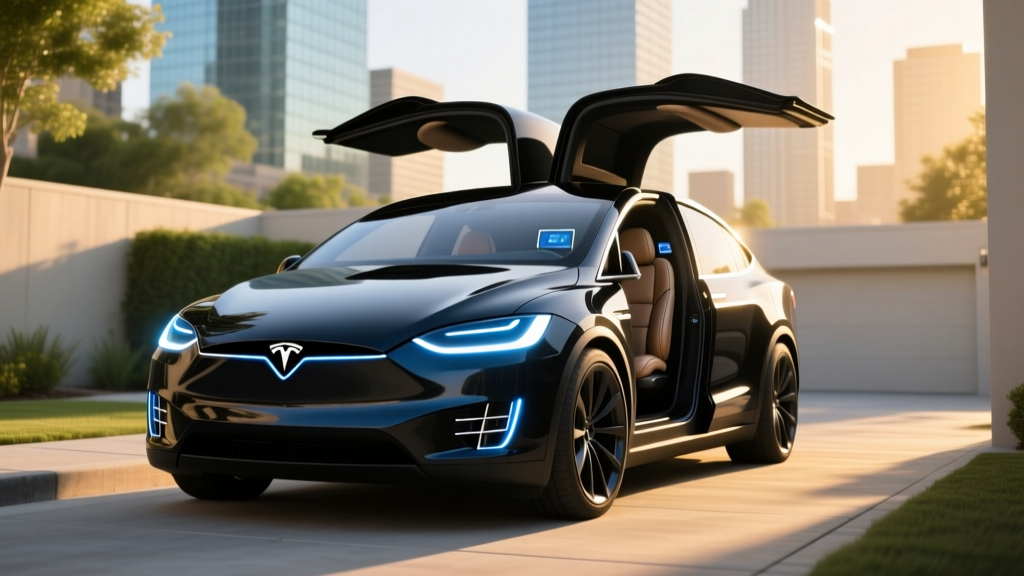
The Long Range dual-motor setup delivers 670 hp and a 3.1-second 0–60 time — ferociously quick by any sedan standard, and all the more impressive given the 4,561-lb curb weight. The Plaid's 1,020 hp and sub-2-second sprint exist in hypercar territory, but at a $26,000 premium and reduced range, it serves a narrower buyer.
Inside, the 17-inch landscape touchscreen remains the command center for everything from climate to media to vehicle settings. The yoke steering wheel is standard (a conventional round wheel is available at no cost). Build quality on the 2026 refresh has improved meaningfully — panel gaps are tighter, and the ventilated front seats and premium audio (22 speakers) match German luxury rivals. Rear-seat legroom at 35.4 inches is adequate for adults on shorter trips but trails the BMW i7 and Mercedes EQS.
Cargo versatility is a genuine differentiator: the hatchback liftgate opens to 28 cu ft of trunk space (expandable with 60/40 seat fold), and the 3.1 cu ft frunk handles charging cables or a small bag. Total utility rivals midsize SUVs.
Driver Assistance: Autopilot and FSD (Supervised)
Tesla's Autopilot (standard) and Full Self-Driving (Supervised) are SAE Level 2 driver-assist systems. The driver must remain fully engaged — hands on wheel (or yoke), eyes on road — at all times. FSD adds automated lane changes, traffic light/stop sign response, and city street navigation, but it does not replace the driver. Level 4 autonomy (no driver required) remains limited to geofenced robotaxi services like Waymo.
On highway use, Autopilot is among the smoothest adaptive cruise + lane-centering systems available. FSD (Supervised) has improved in urban environments but still requires frequent driver intervention on complex intersections and construction zones. The $8,000 FSD purchase or $99/month subscription is a personal value judgment — test it during your lease's early weeks before committing.
Warranty, Reliability, and Ownership Costs
Tesla covers the Model S with:
- Basic vehicle warranty: 4 years / 50,000 miles
- Battery & drive unit warranty: 8 years / 150,000 miles (Long Range) with a minimum 70% capacity retention threshold
The 8-year battery warranty provides meaningful peace of mind, especially relevant for lease terms of 24–36 months where you'll never approach the mileage limit. NMC chemistry in the Model S has demonstrated approximately 85–90% state-of-health retention at 100,000 miles based on fleet data — well within the warranty threshold.
Insurance remains a cost factor: Model S premiums average 30–50% higher than comparable ICE luxury sedans due to repair costs and parts pricing. Expect $2,800–$4,500 annually depending on your profile and state. Tesla's own insurance product (available in select states) uses real-time driving data and can be competitive for clean-record drivers.
Who the Model S Suits Best
The Model S excels for: high-mileage commuters who value Supercharger access on frequent road trips, tech-forward buyers who want OTA updates and a minimalist cockpit, and performance-sedan enthusiasts who want supercar acceleration with daily-driver practicality. It's less ideal for: buyers prioritizing rear-seat luxury (look at the BMW i7 or Mercedes EQS), those on a sub-$70k budget, or anyone whose primary use case is urban-only driving where the 402-mile range is overkill.
Model S vs. Key Competitors: Is It Worth Leasing Over Alternatives?
- Supercharger network access is a priority for road trips
- You want 400+ miles of range with proven real-world validation
- Acceleration and tech-forward UX matter more than traditional luxury materials
- You prefer OTA software updates that add features over time
- Rear-seat luxury and ride comfort are paramount (BMW i7, Mercedes EQS)
- You want to qualify for the $7,500 federal tax credit on purchase (neither the Model S nor most luxury EV sedans qualify, but luxury SUVs like the BMW iX may)
- You prefer a more conventional luxury dealership experience
Against the BMW i7 eDrive50 (~$106,000, 318 mi EPA), the Model S wins on range, efficiency, and charging speed. The i7 counters with a quieter cabin, superior rear-seat comfort, and a traditional dealer network. Against the Mercedes EQS 450+ (~$105,000, 352 mi EPA), the Model S again leads on range and performance, though the EQS offers a more opulent interior and available hyperscreen dashboard. The Lucid Air Pure (~$70,000, 419 mi EPA) undercuts the Model S on price and slightly beats it on range, but Lucid's service center footprint and charging partnerships (no proprietary network) remain a concern for some buyers.
Pros and Cons at a Glance
- 402-mile EPA range — longest of any production sedan in its class
- Native Supercharger access with plug-and-charge simplicity
- 250 kW DC fast charging; 10–80% in ~27 min
- Hatchback cargo versatility (28 cu ft trunk + frunk)
- 3.1-sec 0–60 with dual-motor AWD traction
- Continuous OTA updates add features post-purchase
- 8-year/150,000-mi battery warranty covers full lease term
- No federal §30D tax credit on purchase (MSRP exceeds $55k sedan cap)
- Insurance premiums 30–50% above ICE luxury sedans
- Rear-seat legroom (35.4 in) trails BMW i7 and Mercedes EQS
- Yoke steering polarizing; learning curve for low-speed maneuvers
- FSD ($8,000) remains Level 2 — not autonomous
- Minimalist interior lacks physical controls some luxury buyers expect
- Service center wait times can stretch in lower-density markets
Frequently Asked Questions
What is the real-world range of the 2026 Tesla Model S?
The EPA rates the Long Range at 402 miles. In real-world highway driving at 70–75 mph, expect approximately 340–360 miles. In cold weather (below 30°F), range can drop to 280–310 miles due to battery chemistry limitations, though the heat pump helps preserve cabin efficiency. City driving with regenerative braking can approach or slightly exceed the EPA figure.
How fast does the Model S charge at home and on the road?
At a V3/V4 Supercharger, the Model S peaks at 250 kW, adding roughly 200 miles in 15 minutes and reaching 10–80% in about 27 minutes. At home on a 240V Level 2 charger (48A / 11.5 kW), it adds about 34 miles per hour, completing a full charge overnight in roughly 9.5 hours. The charge curve tapers above 80% SoC to protect battery health.
Does the 2026 Model S qualify for the federal EV tax credit?
No — for direct purchase, the Model S does not qualify for the §30D $7,500 credit because its MSRP ($82,385+) exceeds the $55,000 cap for sedans. However, when leasing, the lessor may claim a commercial clean vehicle credit under §45W and may pass some benefit through as a lower lease payment. Always confirm credit pass-through terms with the leasing company before signing.
Is leasing a Tesla Model S better than buying?
Leasing protects you from the steep depreciation luxury EVs can experience (the Model S has historically lost 40–55% of value over 3 years), eliminates battery degradation risk beyond the lease term, and offers lower monthly outlay. Buying makes sense if you plan to keep the car 6+ years, drive under 15,000 miles annually, and want to build equity. For most buyers considering a $90k+ EV, a 36-month lease is the lower-risk path.
How does the Model S compare to the Lucid Air and BMW i7?
The Model S beats both on charging infrastructure (Supercharger network) and acceleration. The Lucid Air Pure offers slightly more range (419 mi EPA) at a lower price (~$70k) but lacks a proprietary charging network. The BMW i7 delivers a more refined rear-seat experience and traditional luxury dealership service but costs more and offers less range (318 mi EPA). The right choice depends on whether you prioritize range/charging (Model S), value (Air), or rear-seat luxury (i7).
What does the Model S battery warranty cover?
Tesla warrants the battery and drive unit for 8 years or 150,000 miles (whichever comes first) on the Long Range, with a guaranteed minimum 70% capacity retention. If the battery degrades below 70% of original capacity within that window, Tesla will repair or replace it. For a typical 36-month lease, you'll never approach these limits.