Quick Verdict: A Polarizing Used EV Family Hauler
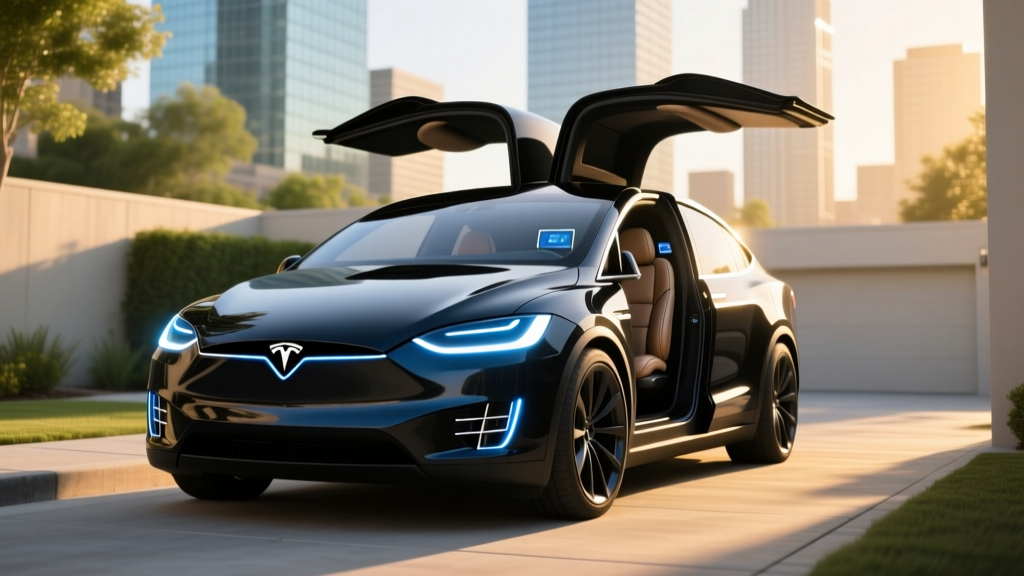
The 2017 Tesla Model X remains one of the most distinctive used electric vehicles on the market nearly a decade after its debut. With its signature falcon-wing rear doors, available third row, and access to Tesla's Supercharger network, it still turns heads and fills a niche no other used EV quite matches. But prospective buyers in 2026 must weigh aging battery health, expensive out-of-warranty repairs, and the reality that newer EVs now match or exceed its range for less money. This profile breaks down exactly what you're getting — and what to watch for — when shopping a 2017 Model X today.
Range, Battery, and Real-World Efficiency
The 2017 Model X was offered in three main battery configurations during its production run. The most common you'll encounter on the used market is the 100D, which carries a ~100 kWh NMC (nickel-manganese-cobalt) lithium-ion pack. Tesla also sold a 75D (75 kWh) and briefly a P100D performance variant.
| Spec | 75D | 100D | P100D |
|---|---|---|---|
| Battery (usable, approx.) | ~75 kWh | ~100 kWh | ~100 kWh |
| Chemistry | NMC | NMC | NMC |
| EPA Range (original) | 237 mi | 295 mi | 289 mi |
| MPGe (combined, EPA) | 92 MPGe | 97 MPGe | 89 MPGe |
| Efficiency | ~36 kWh/100 mi | ~34 kWh/100 mi | ~38 kWh/100 mi |
| Drivetrain | Dual-Motor AWD | Dual-Motor AWD | Dual-Motor AWD |
| 0-60 mph | 6.0 sec | 4.7 sec | 2.9 sec (Ludicrous) |
| Horsepower (approx.) | ~518 hp | ~518 hp | ~670 hp |
| Seating | 5, 6, or 7 | 5, 6, or 7 | 5, 6, or 7 |
Real-World Range Expectations in 2026
EPA sticker (100D): 295 miles
Expected today with ~10-15% degradation: ~250-265 miles at full charge
Highway (70+ mph): ~220-240 miles
Cold weather (below 32°F): ~180-210 miles
NMC batteries from this era typically show 10-18% capacity loss after 8-9 years depending on charging habits and climate. A Carfax or Tesla service-center battery health report (State of Health, or SoH) is essential before purchase. According to fueleconomy.gov, the original 100D achieved 97 MPGe combined — competitive for a 5,000+ lb SUV at the time, but notably less efficient than modern platforms like the Hyundai Ioniq 5 or BMW iX.
Charging Speeds: Supercharger and Home
The 2017 Model X uses Tesla's proprietary connector (now being standardized as NACS) and charges via the vehicle's onboard charger for Level 2 AC, or directly via DC fast charge at Superchargers. This generation predates Tesla's V3/V4 Supercharger optimizations, so peak rates are limited compared to current models.
| Charging Level | Power | Speed / Time |
|---|---|---|
| Level 1 (120V household) | ~1.4 kW | ~3-4 mi/hr added |
| Level 2 (240V, Wall Connector) | Up to ~11.5 kW (48A) | ~29-34 mi/hr added |
| DC Fast Charge (V2 Supercharger) | Peak ~120 kW | 10-80% in ~40-45 min |
| DC Fast Charge (V3 Supercharger) | Peak ~120 kW (capped by vehicle) | 10-80% in ~40-45 min |
Charging curve reality: The 2017 Model X peaks around 120 kW at low states of charge but tapers significantly above 60% SoC. Plan for 40-45 minutes for a 10-80% session at a V2 or V3 Supercharger — not the 20-25 minutes newer 800V architectures deliver. On a home Level 2 charger at 48 amps, a full overnight charge from 20% takes roughly 8-9 hours, which is adequate for daily use.
One advantage: Tesla's NACS connector now has adapter support for CCS networks via Tesla's CCS adapter (sold separately), expanding public charging options beyond the Supercharger network. However, charge speeds on non-Tesla DC chargers may vary.
Performance and Driving Dynamics
Even by 2026 standards, a 2017 Model X 100D or P100D delivers thrilling straight-line acceleration. The P100D's Ludicrous mode hits 0-60 mph in roughly 2.9 seconds — supercar territory in a three-row SUV. The 100D manages a still-respectable 4.7 seconds. All variants are dual-motor all-wheel drive with precise torque vectoring.
The air suspension provides adjustable ride height and a reasonably comfortable highway ride, though it's known to be a maintenance liability on older units (more on that below). The large 22-inch wheels available on some trims reduce range by 5-10% and produce a firmer ride. Steering is quick but offers minimal feedback — a common Tesla trait of this era.
Towing capacity is rated at 5,000 lbs when properly equipped, though towing cuts range roughly in half — expect ~130-150 miles from a 100D while pulling a trailer at highway speeds.
Interior, Cargo, and Technology
The Model X interior blends minimalist design with genuine practicality. The 17-inch center touchscreen controls nearly every vehicle function, and the digital instrument cluster provides speed, range, and navigation information. However, the 2017 model year runs Tesla's older MCU1 (Media Control Unit) hardware, which is noticeably slower than the MCU2 and AMD Ryzen chips in newer Teslas. Some 2017 units received MCU2 upgrades under a service campaign — verify this with the seller.
Cargo volume:
- Behind third row: ~26.2 cu ft
- Behind second row (third row folded): ~56.8 cu ft
- Max (all rear seats folded): ~88.1 cu ft
- Front trunk (frunk): ~6.6 cu ft
Passenger space (100D/P100D):
- Front legroom: 41.2 in
- Second-row legroom: 38.4 in
- Third-row legroom: 32.7 in (best for children)
The falcon-wing rear doors are the Model X's party trick — they open upward on double hinges, providing excellent access to the second and third rows in tight parking spaces. However, they rely on complex sensors and motors that can be expensive to repair. Early-build 2017 models had more door-related service issues; later production units improved.
Driver assistance: The 2017 Model X includes Autopilot hardware 2.0 (or 2.5 on later builds). Basic Autopilot (Traffic-Aware Cruise Control + Autosteer) is a SAE Level 2 driver-assistance system — the driver must remain fully engaged at all times. Full Self-Driving (FSD) capability was sold as an add-on but remains Level 2 even today. It does not make the vehicle autonomous.
Autopilot / FSD — Not Self-Driving
All 2017 Model X driver-assistance features operate at SAE Level 2. This means the system can steer, accelerate, and brake under certain conditions, but the human driver must continuously supervise and be prepared to take over immediately. No consumer Tesla has achieved Level 3 or higher. For context, only purpose-built robotaxi services like Waymo operate at Level 4 in geofenced areas.
Pricing, Tax Credits, and Used-Buyer Economics
The 2017 Model X originally started around $79,500 (75D) and climbed past $140,000 for a fully optioned P100D. In the 2026 used market, prices have depreciated significantly:
| Trim | Original MSRP | Typical Used Price (2026) |
|---|---|---|
| 75D | ~$79,500 | $28,000 - $36,000 |
| 100D | ~$96,000 | $35,000 - $48,000 |
| P100D | ~$140,000+ | $42,000 - $58,000 |
Federal tax credit eligibility: Under IRS §30D rules, the federal EV tax credit applies only to new qualifying vehicles purchased from a dealer. A used 2017 Model X does not qualify for the $7,500 new-vehicle credit. However, under the Used Clean Vehicle Credit (§25E), you may be eligible for up to $4,000 (or 30% of the sale price, whichever is less) if:
- The sale price is $25,000 or less
- You purchase from a licensed dealer
- Your modified adjusted gross income falls below IRS thresholds ($75,000 single / $150,000 joint)
- The vehicle is at least 2 model years old (a 2017 qualifies)
This means a 2017 75D priced at $24,000-$25,000 from a dealer could net up to $4,000 in federal credit. Higher-priced 100D and P100D examples exceed the $25,000 cap and would not qualify. Always verify current rules at IRS.gov and consult a tax professional, as regulations evolve.
Warranty, Reliability, and Ownership Costs
The original 2017 Model X came with:
- Basic vehicle warranty: 4 years / 50,000 miles (expired on all examples)
- Battery & drive unit warranty: 8 years / 150,000 miles (100D, P100D) or 8 years / 120,000 miles (75D), with a minimum 70% capacity retention guarantee
As of 2026, most 2017 Model X examples are at or beyond the 8-year battery warranty expiration depending on their in-service date. Some late-2017 builds may still carry a few months of battery warranty coverage — check the exact in-service date on the vehicle's history. Out-of-warranty battery replacement for a 100 kWh pack currently runs $12,000-$18,000 at Tesla service centers, though third-party refurbishment options are emerging at lower cost.
Known Issues to Inspect
- Falcon-wing door motors and sensors: Expensive to replace (~$2,000-$4,000 per door mechanism)
- Air suspension struts: Common failure point; replacement runs $1,500-$2,500 per corner
- MCU1 screen delamination / yellowing: Check for display quality; MCU2 upgrade preferred
- Half-shaft and drive unit noise: Listen for clunking or whining from the front drive unit
- Wind noise: Early 2017 builds had more cabin wind noise; improved over the model year
Insurance costs for a used Model X remain elevated compared to mainstream EVs due to repair costs and parts pricing. Expect annual premiums of $2,200-$3,500 depending on your location, driving record, and coverage level. Get a quote before committing to a purchase.
Pros, Cons, and Who Should Buy
Pros
- Tesla Supercharger network access (the most reliable DC fast-charging network in the US)
- Class-leading acceleration, especially P100D
- Falcon-wing doors provide unique rear-seat access
- Available third row (rare among used EVs)
- Over-the-air updates still delivered (though limited on MCU1 hardware)
- 5,000-lb towing capacity
Cons
- Battery degradation reduces range to ~250 mi or less on high-mile examples
- Charging speed capped at ~120 kW (slow vs modern 250+ kW EVs)
- Falcon-wing doors and air suspension are expensive out-of-warranty repairs
- MCU1 infotainment is sluggish and may lack newer features
- No eligibility for $7,500 new-vehicle tax credit; $4,000 used credit only under strict price/income caps
- Higher insurance premiums than comparable-age ICE SUVs
- Third row is tight — best for children only
Best suited for: Families who need Supercharger road-trip capability, value quick acceleration, and can budget for potential out-of-warranty repairs. The 100D is the sweet spot for range and value. Buyers primarily commuting short distances and never road-tripping may find a newer, cheaper used EV (like a 2020+ Model Y or Hyundai Kona Electric) more practical with lower maintenance risk.
Buy a 2017 Model X If...
- You need a three-row EV with Supercharger access for family road trips
- You can find a 100D under $45,000 with a verified battery SoH above 85%
- You budget $2,000-$4,000/year for potential air suspension or door repairs
Look Elsewhere If...
- Your budget is firm under $30,000 — a used Model 3 or Bolt EUV offers lower risk
- You prioritize low maintenance costs and modern charging speeds
- You don't need a third row — a used Model Y (2020+) is more efficient and cheaper to insure
Frequently Asked Questions
What is the real-world range of a 2017 Tesla Model X today?
A 100D in good battery health (SoH ~88-90%) will deliver approximately 250-265 miles at a full charge in mixed driving. Highway-only driving at 75 mph reduces this to around 220-240 miles. In freezing temperatures, expect 180-210 miles. The 75D yields roughly 190-210 miles in real-world conditions today.
How fast does the 2017 Model X charge at home and on the road?
On a 240V Level 2 home charger (48A / ~11.5 kW), you'll add about 30-34 miles per hour — a full overnight charge handles daily needs. On DC fast charge, the vehicle peaks around 120 kW at Tesla Superchargers, taking roughly 40-45 minutes from 10-80%. This is notably slower than modern EVs with 250-350 kW peak capability.
Does a used 2017 Model X qualify for any federal tax credit?
Not the $7,500 new-vehicle credit. However, under the §25E Used Clean Vehicle Credit, you may qualify for up to $4,000 if the dealer sale price is $25,000 or less and your income falls under IRS caps ($75K single / $150K joint). In practice, only lower-mileage 75D examples priced at or below $25,000 tend to qualify. Verify at IRS.gov.
Is the 2017 Model X worth buying versus a used Model Y or Rivian R1S?
The Model X offers unique advantages: falcon-wing doors, a third row, and Supercharger access. But a 2020+ Model Y is more efficient, charges faster, and costs less to insure and maintain. The Rivian R1S (if you can find one in your budget) is more capable off-road and has a more conventional, repairable design. Choose the Model X if its specific features are non-negotiable for your family.
What should I check before buying a used 2017 Model X?
Prioritize: (1) Battery State of Health via Tesla service or third-party diagnostic, (2) air suspension function at all ride heights, (3) falcon-wing door operation and sensor calibration, (4) whether the MCU has been upgraded to MCU2, (5) complete service history including any drive unit or battery replacements under warranty. A pre-purchase inspection at a Tesla service center is strongly recommended.
Can the 2017 Model X use non-Tesla charging networks?
Yes, with Tesla's CCS adapter (sold separately by Tesla), the 2017 Model X can charge at Electrify America, EVgo, and other CCS-equipped public stations. However, charge speeds will be limited by the vehicle's ~120 kW peak acceptance rate. Tesla's NACS connector is becoming the industry standard, and more networks are adding NACS cables, which will improve compatibility over time.