Quick Verdict: Is the Model S Still the Luxury EV Benchmark?
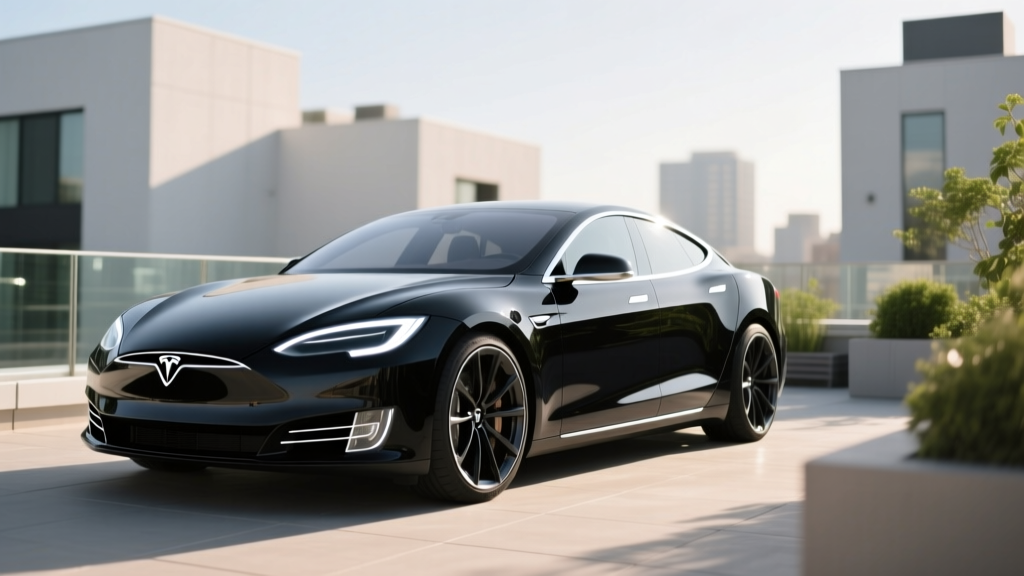
The 2026 Tesla Model S remains the original flagship electric sedan that redefined what a battery-electric vehicle could be. With an EPA-estimated 402 miles of range in Long Range trim and a staggering 1,020 horsepower in Plaid guise, it continues to set the performance ceiling for luxury EVs. But at a starting MSRP above $74,000 — and with lease pricing that often surprises first-time luxury EV shoppers — the Model S demands a closer look at total cost, real-world efficiency, and whether its tech stack justifies the premium over newer rivals like the Lucid Air, BMW i5, and Mercedes EQS.
This review breaks down every number that matters: EPA range versus what you'll actually see on the highway, DC fast-charging curves, home charging logistics, federal tax credit eligibility under current IRS §30D rules, and the lease-versus-buy math that determines whether the Model S fits your budget.
Range, Battery & Efficiency: What the EPA Number Doesn't Tell You
Real-World Expectation: 320–360 miles highway; 280–310 miles in freezing weather with cabin heating
The 2026 Model S Long Range uses a ~100 kWh usable battery pack built on Tesla's 4680 cell architecture with an NMC (nickel-manganese-cobalt) cathode chemistry. NMC delivers higher energy density than LFP (lithium iron phosphate), which is why Tesla reserves LFP for the lower-cost Model 3 and Model Y Standard Range variants. The trade-off: NMC cells benefit more from keeping state of charge between 20–80% for daily driving, reserving 100% charges for road trips.
On the efficiency front, the Long Range AWD achieves approximately 124 MPGe combined (per fueleconomy.gov), translating to roughly 27 kWh per 100 miles driven. That's competitive with the Lucid Air Grand Touring but slightly behind the BMW i5 eDrive40's more conservative powertrain tuning.
Real-world range reality check: On a 75°F day at 65 mph on flat terrain, expect 350–370 miles from a full charge. Push speeds to 80 mph or encounter sustained headwinds, and that drops to 310–330 miles. In sub-30°F winter conditions, battery chemistry resistance and cabin heating demands can reduce range by 20–30%, putting real-world winter range at approximately 280–320 miles. Tesla's heat pump system mitigates some of this loss compared to older resistive-heating EVs, but physics is physics — cold weather reduces lithium-ion efficiency.
| Spec | Long Range AWD | Plaid |
|---|---|---|
| EPA Range | 402 miles | 396 miles |
| Battery (usable) | ~100 kWh, NMC | ~100 kWh, NMC |
| Drivetrain | Dual-Motor AWD | Tri-Motor AWD |
| Horsepower | 670 hp | 1,020 hp |
| 0–60 mph | 3.1 seconds | 1.99 seconds |
| Top Speed | 155 mph | 200 mph |
| MPGe (combined) | 124 MPGe | 116 MPGe |
| Base MSRP | $74,990 | $89,990 |
Charging Speed: DC Fast, Level 2 & the Supercharger Advantage
The Model S supports a peak DC fast-charge rate of 250 kW on Tesla's V3 and V4 Supercharger network. At that peak rate, Tesla advertises up to 200 miles of range added in 15 minutes. However, sustained charge rates tell a more complete story.
Charge curve reality: The 250 kW peak only holds between approximately 10–30% state of charge (SoC). From 30–60%, the rate tapers to roughly 150–170 kW. Above 80%, the vehicle dramatically slows charging to protect battery health, dropping below 50 kW. A realistic 10–80% session takes approximately 25–30 minutes at a V3 Supercharger.
| Charge Level | Power (kW) | Rate | Notes |
|---|---|---|---|
| Level 1 (120V) | ~1.4 kW | ~3–4 mi/hr | Emergency/trickle only |
| Level 2 (240V, 48A) | 11.5 kW | ~34–41 mi/hr | Home Wall Connector; full charge ~10 hrs |
| Level 2 (240V, 32A) | 7.7 kW | ~23–28 mi/hr | Mobile Connector on dryer outlet |
| DC Fast (V3 Supercharger) | Peak 250 kW | ~200 mi in 15 min | 10–80% in ~25–30 min |
| DC Fast (CCS adapter) | Up to 250 kW | Varies by station | Requires Tesla CCS adapter |
For home charging, the Tesla Wall Connector delivers up to 11.5 kW on a 60-amp circuit (48A continuous). This adds roughly 34–41 miles of range per hour, meaning an overnight session from 20% to 80% takes about 6–7 hours — perfect for daily top-ups. If you're limited to a standard NEMA 14-50 outlet with the Mobile Connector, expect 7.7 kW and roughly 23–28 miles per hour.
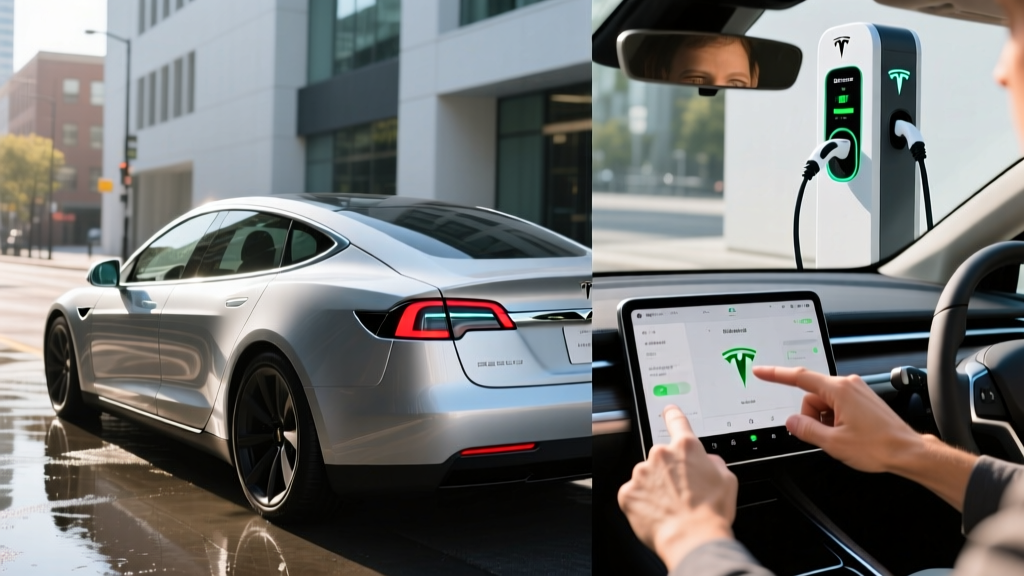
Preconditioning tip: Always navigate to a Supercharger using the car's built-in navigation before arriving. This triggers battery preconditioning — warming the pack to optimal temperature for maximum charge acceptance. Skipping this step in cold weather can add 10–15 minutes to your charging session.
Lease Pricing, MSRP & Federal Tax Credit Eligibility
The keyword on many luxury EV shoppers' minds: what does a Tesla Model S lease actually cost in 2026? Lease pricing fluctuates based on money factor, residual value, mileage allowance, and regional incentives, but here's the framework for understanding what you'll pay.
| Trim | Base MSRP | As-Tested (typical) | Est. Monthly Lease* |
|---|---|---|---|
| Long Range AWD | $74,990 | $79,990–$84,990 | $899–$1,099/mo (36 mo, 10K mi/yr) |
| Plaid | $89,990 | $96,990–$105,000 | $1,149–$1,399/mo (36 mo, 10K mi/yr) |
*Lease estimates based on typical money factors and residuals for luxury EVs in early 2026. Actual offers vary by region, credit tier, and Tesla's direct leasing terms. Tesla does not always publish standard lease rates — third-party leasing banks often handle luxury EV leases.
- MSRP Cap: Sedans must be ≤$55,000 MSRP. The Model S starts at $74,990 — it exceeds the cap and does NOT qualify for the $7,500 federal purchase credit.
- Income Cap: $150K single / $300K joint filers (moot due to MSRP cap)
- Battery Sourcing: Critical minerals and component sourcing rules apply (per IRS §30D guidelines)
- Lease Loophole (§25D commercial credit): If you lease through Tesla or a partner bank, the leasing entity may claim the $7,500 commercial clean vehicle credit and pass savings to you as a reduced money factor or capitalized cost reduction. This is NOT guaranteed — ask the dealer specifically about lease credit pass-through.
This is the single biggest financial consideration: buying a Model S outright means paying full MSRP with no federal purchase credit. Leasing may be the smarter path if the leasing company passes through the commercial credit, effectively reducing your total lease cost by up to $7,500 spread across 36 months (~$208/mo savings). Confirm this explicitly before signing.
Performance, Interior & Technology
The Model S Long Range hits 0–60 mph in 3.1 seconds with 670 horsepower from its dual-motor AWD setup. That's supercar territory from just a few years ago, delivered silently and with instant torque. The Plaid trim's tri-motor configuration produces 1,020 hp and a claimed 1.99-second 0–60 time (with rollout subtracted), making it one of the quickest production cars ever built.
Interior dimensions and cargo:
- Front legroom: 42.7 inches
- Rear legroom: 35.4 inches
- Cargo (rear trunk): 28.0 cu ft
- Frunk (front trunk): 3.1 cu ft
- Total cargo: 31.1 cu ft — more than most luxury sedans, rivaling some compact SUVs
The 17-inch center touchscreen remains the cabin's centerpiece, running Tesla's proprietary infotainment OS with integrated navigation, streaming, and gaming (the yoke steering wheel and rear-seat screen are included). Build quality on recent Model S units has improved significantly over 2021–2022 production, though panel gaps still trail German competitors like the Mercedes EQS and BMW i7.
Driver assistance — SAE Level 2 only:
Tesla Autopilot and Full Self-Driving (Supervised) are Level 2 driver-assistance systems. The driver must remain fully engaged, hands on wheel, eyes on road at all times. These are NOT self-driving systems. No production Tesla achieves Level 3 or higher. (NHTSA AV safety reference)
Autopilot (standard) includes Traffic-Aware Cruise Control and Autosteer. FSD (Supervised), a $8,000 add-on or $99/mo subscription, adds automatic lane changes, Navigate on Autopilot, and traffic light/stop sign recognition. Real-world FSD performance varies enormously by geography and road type — it excels on well-marked highways but requires constant vigilance in construction zones and complex urban intersections.
Warranty, Ownership Costs & Long-Term Battery Health
Tesla covers the Model S with:
- Basic Vehicle Limited Warranty: 4 years / 50,000 miles
- Battery & Drive Unit Warranty: 8 years / 150,000 miles (Long Range); 8 years / 150,000 miles (Plaid) — with a minimum 70% capacity retention threshold over the warranty period
The 150,000-mile battery warranty is generous and reflects Tesla's confidence in its NMC pack longevity. Real-world degradation data from Tesla's fleet reports and third-party analyses (including Tessie and Recurrent Auto datasets) suggest Model S/X packs retain approximately 88–92% capacity at 100,000 miles under normal use. Heavy Supercharging and frequent 100% charges accelerate degradation slightly, but the thermal management system is robust.
Out-of-warranty battery replacement cost: If you plan to own the car beyond 8 years or 150,000 miles, budget $15,000–$22,000 for a full pack replacement at a Tesla Service Center. Refurbished packs may be available for less.
Insurance: Model S insurance premiums run 30–50% higher than comparable gas-powered luxury sedans due to repair costs and specialized body shop requirements. Expect $2,800–$4,200 annually depending on your driving record and state. Tesla Insurance is available in select states and can be competitive, but shop multiple quotes.
Who the Model S Is For — And Who Should Look Elsewhere
- You want 400+ miles of EPA range with access to the most reliable DC fast-charging network (Superchargers)
- Performance matters — 670 hp base, 1,020 hp Plaid
- You value over-the-air updates and a tech-forward cabin
- You need sedan practicality with 31+ cu ft of total cargo
- Leasing allows you to capture the §25D commercial credit pass-through
- You need the $7,500 federal purchase credit (MSRP cap disqualifies the Model S for buyers)
- You prioritize interior luxury and material quality (BMW i7, Mercedes EQS are more opulent)
- You need Level 3 hands-off driving (Mercedes Drive Pilot in select markets)
- Your budget caps below $70K (consider Model 3, Hyundai Ioniq 6, or BMW i5)
- You need third-row seating or SUV cargo volume (Model X, Rivian R1S)
Pros, Cons & Competitor Comparison
- 402-mile EPA range — among the longest of any production EV
- 250 kW Supercharger access with 20,000+ stations globally
- Class-leading performance (0–60 in 3.1s base, 1.99s Plaid)
- Spacious cargo with frunk + trunk (31.1 cu ft total)
- Continuous OTA software updates
- 8-yr/150,000-mi battery warranty
- Exceeds $55K MSRP cap — no §30D federal purchase credit for buyers
- Interior quality still trails German luxury competitors
- FSD (Supervised) is Level 2 only, not autonomous — $8K add-on
- Insurance premiums 30–50% above gas sedan equivalents
- Yoke steering wheel has a steep learning curve (no round wheel option)
- No Apple CarPlay or Android Auto integration
Key competitors at a glance:
- Lucid Air Grand Touring: 516-mile EPA range, $109K MSRP — more range, higher price
- BMW i5 eDrive40: 295-mile range, ~$67K — less range but qualifies for §30D credit
- Mercedes EQS 450+: 352-mile range, ~$105K — more luxurious interior, less efficient
- Porsche Taycan 4S: 246-mile range, ~$100K — sharper handling, much less range
Frequently Asked Questions
What is the real-world range of the 2026 Tesla Model S?
The EPA rates the Long Range AWD at 402 miles. In real-world highway driving at 70–75 mph, expect 320–360 miles. In freezing winter conditions with cabin heating, plan for 280–310 miles. These numbers assume a healthy battery with normal degradation.
How fast does the Model S charge at home and on the road?
At home on a Tesla Wall Connector (11.5 kW, 48A), you'll add 34–41 miles of range per hour — a full overnight charge covers daily driving. On DC fast charging, the Model S peaks at 250 kW on V3/V4 Superchargers, achieving a 10–80% charge in approximately 25–30 minutes. Charging slows significantly above 80% to protect battery health.
Does the Tesla Model S qualify for the federal EV tax credit?
For outright purchases: No. The IRS §30D credit caps sedan MSRP at $55,000, and the Model S starts at $74,990. For leases: Possibly. The leasing company may claim the §25D commercial clean vehicle credit ($7,500) and pass savings to you as a reduced lease cost. Confirm this with the dealer before signing — it is not automatic.
How much does a Tesla Model S lease cost per month?
Based on early 2026 market data, expect approximately $899–$1,099/month for the Long Range AWD and $1,149–$1,399/month for the Plaid on a 36-month lease with 10,000 miles per year. Actual pricing depends on money factor, residual value, down payment, and whether the commercial tax credit is passed through.
Is the Model S worth it versus the Lucid Air or BMW i5?
If range is paramount and budget is flexible, the Lucid Air Grand Touring offers 516 EPA miles. If you want the federal purchase credit and a more traditional luxury experience, the BMW i5 eDrive40 qualifies under the $55K MSRP cap. The Model S wins on Supercharger network access, raw performance, and cargo versatility — but loses on purchase credit eligibility and interior refinement.
What is the battery warranty and replacement cost?
Tesla covers the Model S battery and drive unit for 8 years or 150,000 miles, whichever comes first, with a minimum 70% capacity retention guarantee. Out-of-warranty replacement runs $15,000–$22,000 at a Tesla Service Center. Real-world data shows most Model S packs retain 88–92% capacity at 100,000 miles.
Does the Model S have Apple CarPlay or Android Auto?
No. Tesla uses its proprietary infotainment system exclusively. The 17-inch touchscreen supports built-in navigation, Spotify, Netflix, YouTube, and a web browser, but smartphone mirroring is not available. This is a dealbreaker for some buyers who prefer their phone's interface.