The Tesla Model S in 2026: Flagship Ambition, Real-World Friction
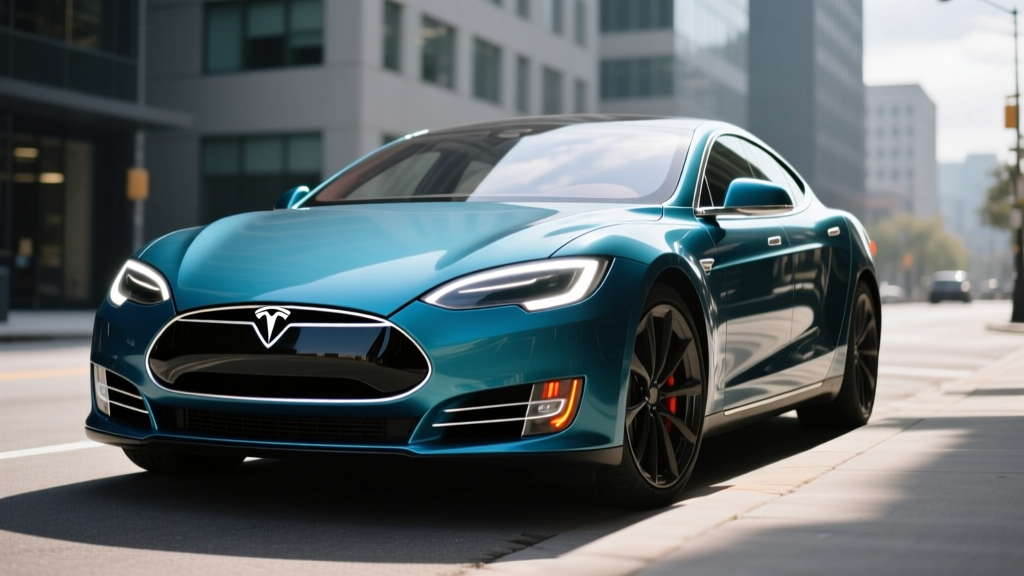
The Tesla Model S has been the benchmark luxury electric sedan since 2012, and its 2026 iteration carries a refreshed interior, a 405-mile EPA range on the Long Range trim, and access to the largest fast-charging network in North America. But over a decade of production also means a well-documented trail of owner complaints, service delays, and build-quality inconsistencies that prospective buyers need to weigh against the spec sheet.
This profile examines the 2026 Tesla Model S through the lens of actual ownership — the Tesla Model S issues that surface in forums, NHTSA databases, and service centers, alongside the hard numbers on range, charging, pricing, and federal tax-credit eligibility. If you are cross-shopping the Model S against the Lucid Air, Mercedes EQS, or BMW i7, this is the data you need before signing a delivery agreement.
Range, Efficiency, and the Real-World Gap
The 2026 Tesla Model S Long Range carries an EPA-estimated 405 miles on a full charge, powered by a ~100 kWh (usable) NMC (nickel-manganese-cobalt) battery pack. The tri-motor Plaid variant drops to 359 miles EPA due to higher mass and performance-oriented powertrain tuning. Efficiency for the Long Range sits at 120 MPGe combined, or roughly 28 kWh/100 mi — competitive for a 4,500+ lb luxury sedan but trailing the Lucid Air Grand Touring's 131 MPGe.
EPA 405 mi (Long Range) / 359 mi (Plaid). Expect 320–350 mi at sustained 75 mph highway speeds in mild weather. In sub-freezing temperatures (20°F and below), plan for 260–290 mi before needing a charger — a 25–30% reduction driven by cabin heating and increased battery resistance. The heat pump standard on current Model S trims helps, but physics still wins in deep cold.
| Spec | Long Range | Plaid |
|---|---|---|
| EPA Range | 405 mi | 359 mi |
| Battery (usable) | ~100 kWh, NMC | ~100 kWh, NMC |
| Drivetrain | Dual-Motor AWD | Tri-Motor AWD |
| Horsepower | 670 hp | 1,020 hp |
| 0–60 mph | 3.1 sec | 1.99 sec |
| Top Speed | 155 mph | 200 mph |
| MPGe (combined) | 120 MPGe | 116 MPGe |
| Cargo Volume | 28 cu ft (rear + frunk) | 28 cu ft (rear + frunk) |
| Rear Legroom | 35.4 in | 35.4 in |
| Base MSRP | $79,990 | $94,990 |
Charging Speed: DC Fast and Level 2 at Home
The 2026 Model S supports a peak DC fast-charge rate of 250 kW on V3 Superchargers and compatible CCS/NACS stations. Tesla quotes a 10–80% charge in approximately 30 minutes. In practice, the charge curve peaks near 250 kW only between roughly 10–30% state of charge, then tapers progressively — holding around 150 kW through 50% and dropping below 80 kW past 70%. Preconditioning the battery via onboard navigation routing to a Supercharger is essential to hitting peak rates; arriving cold can cut your peak kW nearly in half.
| Level | Power | Speed / Time |
|---|---|---|
| Level 1 (120V) | ~1.4 kW | ~3–4 mi/hr |
| Level 2 (240V, 48A) | 11.5 kW | ~34 mi/hr |
| DC Fast (V3 Supercharger) | Peak 250 kW | 10–80% in ~30 min |
| DC Fast (CCS adapter, 350 kW station) | Peak 250 kW (vehicle-limited) | Similar curve to V3 |
Home charging on a 48-amp Level 2 circuit adds roughly 34 miles of range per hour, meaning a full overnight session (8–10 hours) easily replenishes a daily commute. Installation of a NEMA 14-50 outlet or hardwired Wall Connector typically runs $800–$2,000 depending on panel proximity and whether your electrical panel needs a 200-amp upgrade — a variable worth confirming with a licensed electrician before delivery day.
Common Tesla Model S Issues: What Owners Report
With production spanning more than a decade, the Model S has accumulated a substantial record of reported problems. The most frequent Tesla Model S issues cluster around a few systems:
Build Quality and Panel Alignment
Uneven panel gaps, paint imperfections, and interior trim rattles remain the most cited complaints across model years. While Tesla's Fremont factory has improved since the 2021 refresh, delivery-day inspections still turn up misaligned doors, trunk seal gaps, and wind noise above 65 mph. Multiple owners recommend a thorough pre-delivery walkthrough and documenting any issues before signing.
Touchscreen and MCU Reliability
The 17-inch center touchscreen controls virtually every vehicle function — climate, mirrors, glovebox, drive modes — with minimal physical buttons. When the MCU (media control unit) glitches or the screen delaminates (a known issue on pre-2021 units), the impact is severe. Current-generation MCUs are more robust, but screen yellowing and edge delamination have appeared in NHTSA complaints for 2021–2024 units. Tesla extended warranty coverage for certain MCU failures, but out-of-warranty screen replacement runs $1,500–$2,500.
Suspension and Air-Spring Failures
The adaptive air suspension delivers a comfortable ride when functioning, but air-strut failures are a documented pattern, typically surfacing between 50,000–80,000 miles. Replacement cost per corner runs $1,200–$1,800 at a Tesla service center. Some owners have migrated to aftermarket coilover conversions to eliminate the failure point entirely.
Drive Unit and Half-Shaft Wear
Early Model S drive units had high failure rates; the current generation is considerably more durable. However, high-torque Plaid models have generated reports of half-shaft wear and vibration under hard acceleration, particularly in units with over 30,000 miles. Tesla service typically replaces these under warranty when detected early.
12V Battery and Phantom Drain
Tesla transitioned to a lithium-ion 12V auxiliary battery in late 2021, reducing the chronic 12V failures that plagued earlier Model S vehicles. However, software-related phantom drain (the car consuming 1–3% SoC per day while parked) remains a topic in owner forums, particularly when Sentry Mode and third-party data apps are active.
Service Center Wait Times
Perhaps the most consistent frustration is not a mechanical defect but a logistics one: Tesla service centers in major metros routinely quote 2–4 week wait times for non-critical repairs. Mobile service handles many software and minor hardware fixes, but suspension, drive unit, and body work require a center visit.
Pricing, Trims, and Federal Tax Credit Eligibility
The 2026 Model S lineup is straightforward: Long Range at $79,990 and Plaid at $94,990 (before destination fees of ~$1,390). Options like Ultra Red paint ($2,500), 21-inch Arachnid wheels ($4,500), and Full Self-Driving (Supervised) capability ($8,000) push a well-equipped Long Range past $95,000 and a loaded Plaid beyond $110,000.
- MSRP Cap: Sedans must be under $55,000 MSRP to qualify. The Model S exceeds this cap on every trim — it does NOT qualify for the $7,500 new-vehicle federal tax credit.
- Buyer Income Cap: Even if MSRP qualified, AGI limits apply ($150K single / $300K joint).
- Battery Sourcing: Critical-mineral and battery-component requirements must be met (moot for Model S due to MSRP cap).
- Point-of-Sale Transfer: Available for qualifying vehicles — again, not applicable here.
Source: IRS §30D Clean Vehicle Credit. Consult a tax professional for your specific situation.
The absence of the federal credit is a meaningful cost factor. Buyers in states with separate EV rebates (California's CVRP, Colorado's state credit) may recover a portion, but most state programs also impose MSRP caps. Check your state energy office for current eligibility.
| Trim | Base MSRP | Federal Credit | Effective Price |
|---|---|---|---|
| Long Range | $79,990 | $0 (MSRP cap exceeded) | $79,990 + dest. |
| Plaid | $94,990 | $0 (MSRP cap exceeded) | $94,990 + dest. |
Warranty Coverage and Battery Longevity
Tesla covers the 2026 Model S with a 4-year/50,000-mile basic vehicle warranty and an 8-year/150,000-mile battery and drive unit warranty. The battery warranty guarantees retention of at least 70% of original capacity during the coverage period. In practice, NMC packs in the Model S have shown approximately 10–12% degradation at 100,000 miles based on fleet data, meaning most owners will remain well above the 70% threshold.
Out-of-warranty battery replacement for a 100 kWh Model S pack currently ranges from $13,000 to $18,000 at Tesla service centers — a figure that has declined as cell costs drop but remains a significant long-term ownership variable. Remanufactured packs are sometimes available at a lower cost.
Tech, Driver Assistance, and Interior
The Model S interior centers on a 17-inch OLED touchscreen with a tilting motor, a 12.3-inch digital instrument cluster, and a rear-seat 8-inch display for climate and entertainment controls. The yoke steering wheel remains standard (a conventional round wheel is available as a no-cost option). Wireless phone charging, ventilated front seats, and a 22-speaker audio system are included on all trims.
On the driver-assistance front, Tesla's Autopilot (adaptive cruise + lane centering) is standard. Full Self-Driving (Supervised), the $8,000 upgrade, adds automated lane changes, traffic-light recognition, and city-street navigation.
Both Autopilot and FSD (Supervised) are SAE Level 2 driver-assistance systems. The driver must remain fully engaged, hands on the wheel (or providing torque input), and eyes on the road at all times. These systems do not make the vehicle self-driving. Tesla's naming convention has drawn scrutiny from NHTSA and consumer advocates — treat FSD as an advanced cruise-and-steering aid, not an autonomous system.
Notable tech drawback: Tesla removed ultrasonic sensors (USS) in 2022, relying on its camera-only Tesla Vision system for parking proximity alerts. Many owners report that Tesla Vision's distance estimation is less reliable than the previous USS, particularly for low obstacles and tight garage parking. This remains a persistent complaint in owner communities.
Competitor Check: Model S vs. Lucid Air vs. Mercedes EQS
The Model S no longer competes alone in the luxury EV sedan segment. Key rivals offer distinct trade-offs:
| Attribute | Tesla Model S LR | Lucid Air Grand Touring | Mercedes EQS 580 |
|---|---|---|---|
| EPA Range | 405 mi | 512 mi | 371 mi |
| Battery | ~100 kWh NMC | 112 kWh NMC | 108.4 kWh NMC |
| Peak DC Charge | 250 kW | 300+ kW | 200 kW |
| 0–60 mph | 3.1 sec | 3.0 sec | 4.1 sec |
| Base MSRP | $79,990 | $125,600 | $105,550 |
| Rear Legroom | 35.4 in | 36.4 in | 41.5 in |
| Federal Credit | No (MSRP cap) | No (MSRP cap) | No (MSRP cap) |
The Lucid Air wins on range and charging speed but costs 50% more. The EQS delivers a substantially more luxurious rear seat and a quieter cabin but trails on range and performance. The Model S occupies the middle ground: the best Supercharger network access, strong performance per dollar, and the most mature software ecosystem — but with the interior finish and rear-seat comfort of a segment below its price point.
- 405-mile EPA range is practical for road trips
- Supercharger network remains the most reliable in North America
- OTA updates continuously add features
- Class-leading acceleration (Plaid) and strong Long Range performance
- Spacious hatchback cargo area (28 cu ft) with usable frunk
- No federal tax credit (MSRP exceeds $55K sedan cap)
- Build quality inconsistent vs. German rivals at this price
- Tesla Vision parking lacks ultrasonic sensor precision
- Service center wait times can stretch weeks
- Air suspension failures common past 50K miles
- Rear seat comfort trails Lucid Air and EQS
Who Should Buy the 2026 Tesla Model S?
- You want a 400+ mile EV sedan under $85K with Supercharger access for cross-country road trips
- You value OTA software updates and an extensive third-party accessory/app ecosystem
- You need hatchback cargo flexibility (28 cu ft) that traditional luxury sedans lack
- Sub-2-second 0–60 performance is a priority and you accept the 46-mile range penalty
- You want tri-motor torque vectoring for track or canyon driving
- Maximum range is your top priority (Lucid Air Grand Touring: 512 mi)
- Rear-seat luxury and ride isolation matter most (Mercedes EQS, BMW i7)
- You need the $7,500 federal tax credit — no luxury sedan in this price range qualifies
Frequently Asked Questions
What is the real-world range of the 2026 Tesla Model S?
The EPA rates the Long Range at 405 miles and the Plaid at 359 miles. Real-world highway driving at 75 mph in moderate temperatures yields roughly 320–350 miles. In cold weather (below 32°F), expect 260–300 miles due to battery resistance and cabin heating demand. Preconditioning and seat heaters help recover some efficiency.
How fast does the Model S charge at home and on the road?
On a 48-amp Level 2 home charger, the Model S adds about 34 miles of range per hour (11.5 kW). At a V3 Supercharger, it peaks at 250 kW and charges from 10–80% in roughly 30 minutes, though the curve tapers significantly above 60% SoC. Battery preconditioning is essential for peak rates.
Does the 2026 Tesla Model S qualify for the federal EV tax credit?
No. Under IRS §30D rules, sedans must have an MSRP under $55,000 to qualify for the $7,500 new clean-vehicle credit. The Model S starts at $79,990, well above the cap. Some state-level incentives may still apply — check your state energy office and consult a tax professional. (IRS source)
Is the Tesla Model S worth buying over the Lucid Air or Mercedes EQS?
It depends on priorities. The Model S offers the best combination of range, performance, charging infrastructure, and price in the segment — but the Lucid Air delivers superior range (512 mi) and the EQS offers a more refined luxury experience. If Supercharger network access and software ecosystem matter most, the Model S wins. If interior quality and rear-seat comfort are paramount, test-drive the EQS and Lucid before committing.
What are the most common Tesla Model S issues?
The most frequently reported issues include panel-gap inconsistencies, touchscreen delamination (mainly pre-2021 units), air-suspension failures (50K–80K miles), Tesla Vision parking limitations after ultrasonic sensor removal, and extended service-center wait times. Current-generation drive units and 12V lithium batteries have reduced historical failure patterns in those areas.
How long will the Model S battery last?
Tesla's NMC pack typically shows 10–12% degradation at 100,000 miles based on fleet data, retaining well above the 70% warranty threshold. The battery and drive unit are covered for 8 years/150,000 miles. Out-of-warranty replacement runs $13,000–$18,000. Regular charging between 20–80% SoC (daily) and limiting 100% charges to road trips can help preserve long-term capacity.
What does the Model S warranty cover?
Tesla provides a 4-year/50,000-mile basic vehicle limited warranty and an 8-year/150,000-mile battery and drive unit warranty with a 70% capacity retention guarantee. Wear items (tires, brake pads, wiper blades, 12V battery) are excluded. Extended service agreements are available through Tesla at delivery.