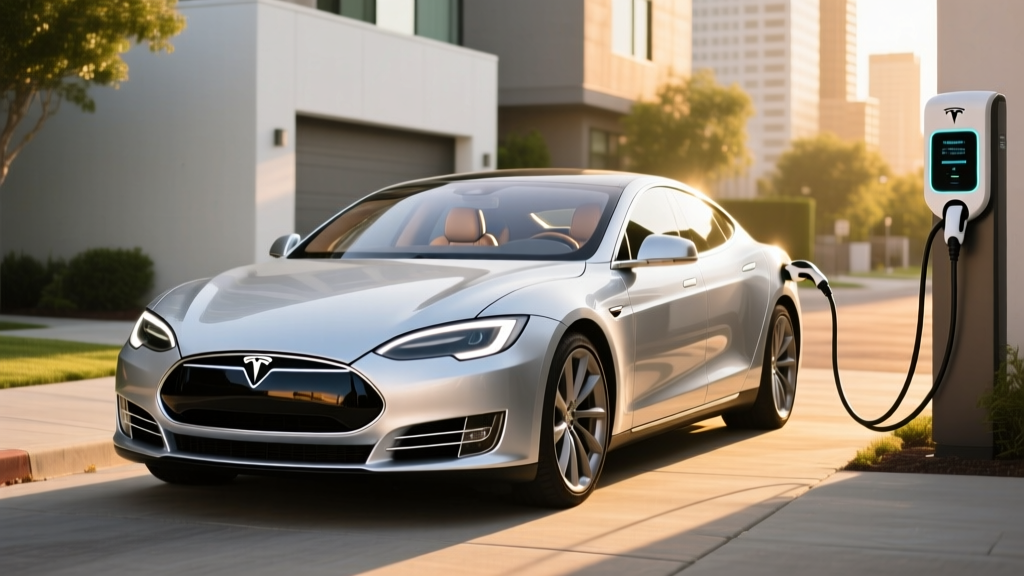
The Tesla Model S has long been the benchmark luxury electric sedan, but a niche question keeps surfacing among tax-savvy EV buyers: does the Tesla Model S GVWR exceed 6,000 lbs, and what does that mean for federal tax incentives? This review unpacks the 2026 Model S lineup — Long Range and Plaid — with a close look at curb weight, Gross Vehicle Weight Rating, real-world range, charging performance, and the evolving federal tax credit landscape under IRS §30D.
2026 Tesla Model S: Quick Verdict
The 2026 Model S remains a performance flagship with up to 402 miles of EPA range, blistering acceleration, and access to Tesla's Supercharger network. However, the GVWR question has real financial implications. The Model S Long Range tips the scales with a GVWR above 6,000 lbs, which historically opened a heavier-vehicle tax loophole — but under current §30D rules enacted by the Inflation Reduction Act, the sedan MSRP cap ($55,000) effectively excludes the Model S from the new-vehicle credit regardless of weight. Read on for the full breakdown.
| Spec | Long Range | Plaid |
|---|---|---|
| EPA Range | 402 mi | 396 mi |
| Battery (usable) | ~95 kWh (NMC) | ~95 kWh (NMC) |
| Drivetrain | Dual-Motor AWD | Tri-Motor AWD |
| Horsepower | 670 hp | 1,020 hp |
| 0-60 mph | 3.1 sec | 1.99 sec |
| Peak DC Charge Rate | 250 kW | 250 kW |
| 10-80% DCFC Time | ~30 min | ~30 min |
| Level 2 Charge Rate | 11.5 kW (~44 mi/hr) | 11.5 kW (~44 mi/hr) |
| Efficiency | 120 MPGe (28 kWh/100mi) | 116 MPGe (29 kWh/100mi) |
| Curb Weight | 4,561 lbs | 4,766 lbs |
| GVWR | ~6,030 lbs | ~6,030 lbs |
| Cargo Volume | 28 cu ft (rear) + frunk | 28 cu ft (rear) + frunk |
| Base MSRP | $74,990 | $89,990 |
GVWR Over 6,000 lbs: What It Means for Tax Credits
The Tesla Model S carries a Gross Vehicle Weight Rating (GVWR) of approximately 6,030 lbs across both trims, placing it just over the 6,000-lb threshold that historically mattered for the "heavy vehicle" business-use tax deduction (IRC §179 and bonus depreciation). However, this classification does not override the current federal EV tax credit rules under IRS §30D.
§30D New Clean Vehicle Credit — Requirements (2026)
- Vehicle type: Sedan MSRP cap is $55,000; SUVs/pickups/vans cap is $80,000
- Classification matters: IRS uses the vehicle's tax classification (sedan vs. SUV), not GVWR alone
- Buyer income caps: AGI ≤ $150K single / $225K head of household / $300K joint
- Battery sourcing: Critical minerals and battery component requirements phase in annually
- Assembly: Final assembly must be in North America
- Maximum credit: Up to $7,500 (split $3,750 minerals + $3,750 components)
The Model S is classified as a sedan by the IRS for §30D purposes. With a base MSRP of $74,990, it exceeds the $55,000 sedan cap. The GVWR being over 6,000 lbs does not reclassify it as an SUV under the credit's definitions. As a result, the 2026 Model S does not qualify for the §30D new-vehicle federal tax credit.
The 6,000-lb GVWR threshold still matters for business buyers: vehicles rated over 6,000 lbs can qualify for §179 expensing and bonus depreciation under separate IRC provisions. Consult a tax professional for your specific situation — this is not tax advice.
Real-World Range: EPA vs. What You'll Actually Get
Range Reality Check — Model S Long Range
EPA Estimate: 402 miles
Real-World Highway (70-75 mph, mild weather): ~320-340 miles
Real-World Highway (cold weather, 30°F or below): ~260-290 miles
City / mixed driving (moderate temps): ~370-395 miles
Tesla's efficiency engineering is strong — the Model S achieves 120 MPGe combined, translating to just 28 kWh per 100 miles. But EPA range tests include significant city and low-speed driving where regenerative braking recovers energy. Sustained highway driving at 75+ mph increases aerodynamic drag substantially, cutting real range by 15-20%. In freezing temperatures, the battery's internal resistance rises and cabin heating draws additional power, compounding the loss to 25-35% below the EPA sticker.
The Plaid's tri-motor setup and wider rear tires reduce efficiency slightly (116 MPGe, 396 mi EPA), with real-world highway figures approximately 10-15 miles lower than the Long Range in equivalent conditions.
Charging Performance: Supercharger Speeds and Home Setup
| Charging Level | Power (kW) | Miles Added per Hour | Notes |
|---|---|---|---|
| Level 1 (120V) | ~1.4 kW | ~3-4 mi/hr | Emergency/top-up only |
| Level 2 (240V, 48A) | 11.5 kW | ~44 mi/hr | Full charge in ~10 hours |
| DC Fast (V3 Supercharger) | Peak 250 kW | ~200 mi in 15 min | 10-80% in ~30 min |
| DC Fast (V4 Supercharger) | Peak 250 kW* | ~200 mi in 15 min | *Model S limited to 250 kW |
The Model S peaks at 250 kW on V3 and V4 Superchargers using the native NACS connector. The charge curve is aggressive through 50% State of Charge, then tapers progressively — expect roughly 150 kW sustained from 50-70%, dropping below 100 kW past 80%. This is why Tesla recommends charging to 80% on road trips; the last 20% can add 20+ minutes.
For home Level 2 charging, the Model S onboard charger accepts up to 11.5 kW (48 amps on a 60-amp circuit). A full 0-100% charge takes approximately 10 hours — plan to charge overnight. Installation of a NACS Wall Connector on a dedicated 60A circuit typically runs $500-$1,500 depending on panel proximity and local permitting. If your electrical panel is maxed out at 100A, a panel upgrade to 200A can add $1,500-$3,000.
One notable limitation: the Model S does not support 800V architecture, meaning it cannot match the 350 kW peak charge rates of rivals like the Lucid Air or Porsche Taycan on compatible chargers.
Performance and Driving Dynamics
The Model S Long Range delivers 670 horsepower from its dual-motor AWD powertrain, reaching 0-60 mph in 3.1 seconds. That's supercar territory from just a few years ago, and it's achieved with zero turbo lag and instant torque delivery. Highway passing power is effortless at any speed.
The Plaid escalates to 1,020 hp via a tri-motor setup (one front, two rear), with a claimed 1.99-second 0-60 time on a prepped surface. In real-world conditions on typical asphalt, expect 2.3-2.5 seconds — still violently quick. The Plaid includes track-oriented cooling, carbon-sleeve rotors, and a yoke steering option.
Both trims feature adaptive air suspension with automatic ride-height adjustment, providing a compliant highway ride while lowering at speed for aerodynamic efficiency. The cabin remains remarkably quiet at 80 mph, with minimal wind and road noise intrusion.
Interior, Tech, and Daily Usability
The Model S interior centers on a 17-inch landscape touchscreen that handles virtually all vehicle functions — climate, media, navigation, vehicle settings, and even gaming. A secondary 8-inch rear touchscreen provides rear-passenger climate and entertainment control. The instrument cluster is a compact 12.3-inch display behind the yoke or conventional steering wheel.
Passenger space is generous for a sedan: 42.7 inches of front legroom and 35.4 inches rear. Three adults can sit across the rear bench for shorter trips, though the sloping roofline limits headroom for taller passengers. The 28 cu ft rear cargo area (with 60/40 split-folding seats) plus a usable front trunk (frunk) make the Model S surprisingly practical for a performance sedan.
Autopilot comes standard with traffic-aware cruise control and lane-centering. Full Self-Driving (Supervised) is a $8,000 option (or $99/month subscription) adding automated lane changes, traffic-light recognition, and navigation-guided driving.
SAE Automation Level: Level 2
Both Autopilot and FSD (Supervised) are SAE Level 2 driver-assistance systems. The driver must remain fully attentive, keep hands on the wheel, and be prepared to take over instantly. These are not self-driving systems. Only Level 4 services like Waymo operate without a human driver engaged.
⚠ FSD Limitations
FSD (Supervised) does not eliminate the need for driver attention. It can make errors at complex intersections, construction zones, and in heavy rain or snow. Tesla's own documentation requires continuous driver supervision. NHTSA continues to investigate Autopilot/FSD incident data.
Pricing, Trims, and Ownership Costs
| Trim | Base MSRP | §30D Credit | Effective Price |
|---|---|---|---|
| Long Range | $74,990 | $0 (exceeds $55K sedan cap) | $74,990 |
| Plaid | $89,990 | $0 (exceeds $55K sedan cap) | $89,990 |
| + FSD Option | +$8,000 | — | — |
With destination fees, paint upgrades ($1,500-$2,500), and wheels, a well-equipped Long Range typically lands between $78,000-$83,000 before any state incentives. The Plaid easily clears $95,000 as-tested with options.
Battery and powertrain warranty: Tesla covers the Model S battery and drive unit for 8 years or 150,000 miles, whichever comes first, with a minimum 70% capacity retention guarantee. The vehicle limited warranty is 4 years / 50,000 miles.
Running costs remain a key advantage. At the national average electricity rate of ~$0.16/kWh, the Long Range costs approximately $4.48 per 100 miles to charge at home — roughly one-third the fuel cost of a comparable BMW 5 Series or Mercedes E-Class on premium gasoline. Supercharger costs vary by location but average $0.25-$0.35/kWh, still cheaper than gas per mile.
✅ Pros
- Class-leading EPA range (402 mi) among luxury sedans
- Access to Tesla Supercharger network (17,000+ stalls in North America)
- Over-the-air updates continuously add features
- Outstanding cargo versatility (frunk + hatchback + fold-flat seats)
- Strong resale value relative to luxury EV peers
- GVWR over 6,000 lbs enables §179 business deduction
❌ Cons
- No federal §30D tax credit (MSRP exceeds sedan cap)
- 250 kW peak charge rate trails 800V rivals (Lucid Air: 300+ kW)
- FSD subscription is expensive and still Level 2
- Minimal physical buttons — all climate/media via touchscreen
- Insurance premiums run 20-40% higher than comparable ICE sedans
- Panel gap and interior fit consistency still lag German competitors
Who Should Buy the 2026 Tesla Model S?
Decision Framework
Choose the Model S Long Range if: You prioritize maximum range for frequent road trips, want Supercharger network access, need practical cargo space in a sedan, and value continuous OTA feature updates.
Choose the Model S Plaid if: You want the fastest-accelerating production sedan available, plan occasional track use, and budget is secondary to performance.
Look elsewhere if: You need the federal $7,500 tax credit (consider the Tesla Model 3 or Model Y), prefer 800V ultra-fast charging (Lucid Air, Porsche Taycan), or want traditional luxury interior craftsmanship (Mercedes EQS, BMW i7).
Frequently Asked Questions
What is the Tesla Model S GVWR?
The 2026 Tesla Model S has a Gross Vehicle Weight Rating (GVWR) of approximately 6,030 lbs for both Long Range and Plaid trims. This places it just above the 6,000-lb threshold relevant for certain business tax deductions under IRC §179, though this does not affect §30D EV tax credit eligibility.
Does the Tesla Model S qualify for the federal EV tax credit?
No. Under current IRS §30D rules, the Model S is classified as a sedan with a $55,000 MSRP cap. With base pricing starting at $74,990, it exceeds this cap and does not qualify for the up-to-$7,500 new clean vehicle credit, regardless of its GVWR.
What is the real-world range of the Model S?
The EPA rates the Long Range at 402 miles and the Plaid at 396 miles. In real-world highway driving at 70-75 mph, expect 320-340 miles in mild weather and 260-290 miles in freezing temperatures. City and mixed driving yield figures closer to the EPA sticker.
How fast does the Model S charge?
On a V3 or V4 Supercharger, the Model S peaks at 250 kW and charges from 10-80% in approximately 30 minutes. At home on a Level 2 Wall Connector (11.5 kW), a full charge takes about 10 hours, adding roughly 44 miles of range per hour.
Is the Model S worth buying over the Lucid Air or BMW i7?
The Model S wins on Supercharger network access, range efficiency, and OTA feature evolution. The Lucid Air offers faster 800V charging (300+ kW) and more rear-seat space. The BMW i7 delivers superior interior materials and ride refinement. Your priority — charging infrastructure, luxury, or tech — determines the best fit.
What battery chemistry does the Model S use?
The 2026 Model S uses NMC (nickel-manganese-cobalt) lithium-ion cells in a ~95 kWh usable pack. NMC offers higher energy density than LFP, which is necessary to achieve 400+ miles of range. Tesla recommends charging NMC batteries to 80% for daily use and 100% only before long trips to minimize long-term degradation.
How much does it cost to insure a Model S?
Insurance premiums for the Model S typically run 20-40% higher than comparable internal-combustion luxury sedans due to repair costs, parts pricing, and performance classification. Expect annual premiums of $3,000-$5,000+ depending on your location, driving record, and coverage level. Always get quotes before purchasing.
Sources: fueleconomy.gov (EPA range and efficiency data), irs.gov (§30D credit rules), Tesla official specifications. Tax credit eligibility depends on individual circumstances — consult a tax professional. Specs and pricing reflect 2026 model year and are subject to change.