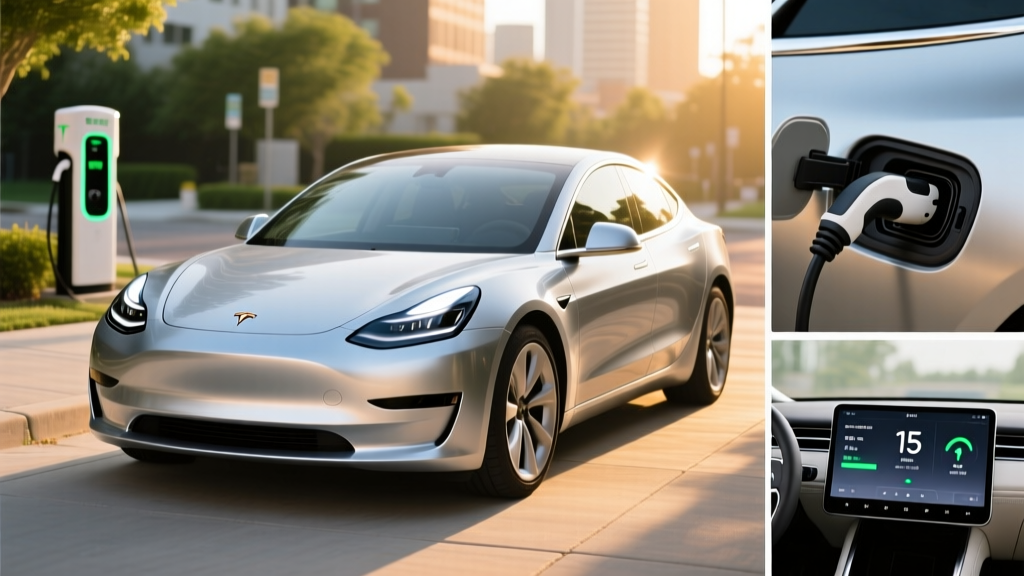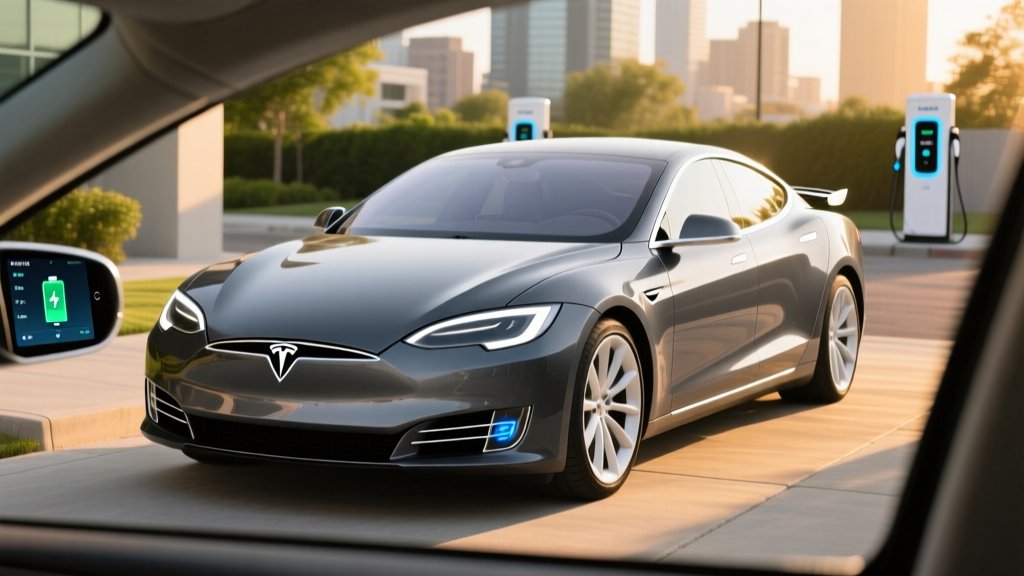
The Tesla Model S has been the benchmark luxury electric sedan for over a decade, and the 2026 model year continues to refine the formula. If you've been searching for a Tesla Model S grey — whether in Stealth Grey, Quicksilver, or the classic Midnight Silver Metallic — you're looking at one of the longest-range, quickest-accelerating sedans on the market. But beyond the paint code, the real questions are about range reality, charging speed, and whether a six-figure EV still makes financial sense in 2026.
This review breaks down every spec that matters to an actual buyer: EPA versus real-world range, DC fast-charge curves, home charging logistics, federal tax credit eligibility under current IRS §30D rules, and how the Model S stacks up against the Lucid Air, Mercedes EQS, and BMW i7.
2026 Tesla Model S: Key Specifications at a Glance
| Spec | Model S Long Range | Model S Plaid |
|---|---|---|
| Base MSRP | $79,990 | $94,990 |
| EPA Range | 402 miles | 359 miles |
| Battery (usable) | ~100 kWh (NMC) | ~100 kWh (NMC) |
| Drivetrain | Dual Motor AWD | Tri-Motor AWD |
| Horsepower | 670 hp | 1,020 hp |
| 0–60 mph | 3.1 seconds | 1.99 seconds |
| Top Speed | 155 mph | 200 mph |
| Max DC Fast Charge | 250 kW | 250 kW |
| 10–80% DC Time | ~30 minutes | ~30 minutes |
| Level 2 Charge Rate | 11.5 kW (~44 mi/hr) | 11.5 kW (~44 mi/hr) |
| MPGe (combined) | 120 MPGe | 116 MPGe |
| kWh/100 mi | 28 kWh | 29 kWh |
| Cargo (rear + frunk) | 28.0 cu ft + 3.1 cu ft | 28.0 cu ft + 3.1 cu ft |
| Rear Legroom | 35.4 inches | 35.4 inches |
| Battery Warranty | 8 yr / 150,000 mi | 8 yr / 150,000 mi |
| Basic Warranty | 4 yr / 50,000 mi | 4 yr / 50,000 mi |
Real-World Range: What the EPA Number Doesn't Tell You
Real-World Highway (70–80 mph): Expect ~310–340 miles in mild weather; ~260–290 miles in cold conditions (below 32°F)
Real-World City/Commuting: ~360–390 miles with regenerative braking
Worst-Case (cold + highway + hills): ~240–260 miles
The Model S Long Range's 402-mile EPA figure remains among the highest of any production EV sold in the US. According to fueleconomy.gov, the Long Range achieves 120 MPGe combined. But as with every EV, that sticker number assumes a mix of city and highway driving at moderate temperatures.
In sustained highway driving at 75 mph in 65–80°F weather, independent testing and owner data consistently show the Model S Long Range delivering roughly 310–340 miles before reaching a low state of charge. Push speeds to 85 mph or encounter headwinds and elevation changes, and that drops further. Cold weather is the equalizer: at 20°F, lithium-ion cells face higher internal resistance, cabin heating draws significant power (the Model S uses a heat pump, which helps but doesn't eliminate the penalty), and expect a 25–35% range reduction. That 402-mile sticker becomes roughly 260–290 miles on a cold winter highway run.
The Plaid variant, with its tri-motor setup and higher energy draw, sees a steeper real-world drop-off. Its 359-mile EPA figure translates to roughly 270–300 miles in warm highway conditions, and closer to 230–250 miles in freezing weather.
Practical takeaway: If your longest regular drive is under 280 miles one-way, the Long Range covers it comfortably in most conditions with a buffer. If you regularly drive 350+ miles in cold climates, plan one Supercharger stop.
Charging Speed: Supercharger Network and Home Level 2
| Charging Level | Power | Miles Added per Hour | Notes |
|---|---|---|---|
| Level 1 (120V) | ~1.4 kW | ~4–5 mi/hr | Emergency/trickle only |
| Level 2 (240V, 48A) | 11.5 kW | ~44 mi/hr | Full overnight charge in ~9 hours |
| DC Fast (Tesla Supercharger V3/V4) | Peak 250 kW | ~200 mi in 15 min | 10–80% in ~30 min; tapers above 80% |
| DC Fast (CCS adapter, non-Tesla) | Up to 250 kW | Varies by station | Requires Tesla CCS adapter (included) |
The Model S peaks at 250 kW on Tesla V3 and V4 Superchargers. In practice, the charge curve means you'll see peak speeds between roughly 10–30% state of charge, after which the rate progressively tapers. A 10–80% session typically takes about 30 minutes. Above 80%, charging slows dramatically to protect the NMC battery chemistry — going from 80–100% can add another 25–35 minutes.
Preconditioning matters. Navigate to a Supercharger using the car's built-in navigation, and the battery thermal management system will warm or cool the pack to optimal temperature before arrival. Skip this step (for example, by driving to a charger without using nav) and you may see peak rates limited to 150–180 kW until the pack warms up, especially in cold weather.
At home on a Wall Connector (240V, 48 amps), the Model S charges at 11.5 kW, adding roughly 44 miles of range per hour. A full 0–100% charge takes approximately 9 hours — easily accomplished overnight. If your home electrical panel supports only a 40-amp circuit (common in older homes), expect 9.6 kW and roughly 37 miles per hour. A panel upgrade to support a 60-amp dedicated circuit typically costs $500–$2,000 depending on your home's existing infrastructure.
Tesla now includes a CCS adapter with new vehicles, so the Model S can also use Electrify America, EVgo, and other CCS-equipped public networks. Reliability on non-Tesla networks remains inconsistent compared to the Supercharger network, which continues to lead in uptime and plug-and-charge simplicity.
Performance: From Commuter Comfort to Supercar Territory
The Model S Long Range's dual-motor all-wheel-drive powertrain produces 670 horsepower and achieves a 3.1-second 0–60 mph time. That's quicker than most sports cars, delivered with the instant torque characteristic of electric drivetrains. The acceleration is effortless rather than violent — a surge that builds without drama, accompanied by minimal cabin noise.
The Plaid's tri-motor configuration (one front, two rear) delivers 1,020 horsepower and a claimed 1.99-second 0–60 time on a prepped surface with rollout subtracted. In real-world conditions on typical pavement, expect 2.2–2.5 seconds — still absurdly quick and firmly in hypercar territory.
Both variants feature adaptive air suspension that adjusts ride height based on speed and terrain. The ride quality has improved substantially since the 2021 refresh, with better damping and a more compliant feel over broken pavement. The yoke steering remains optional; a conventional round wheel is standard and, for most drivers, preferable in daily use.
Drivetrain note: There is no rear-wheel-drive Model S. Every variant is all-wheel drive, which aids traction in rain and snow and contributes to the car's confident highway demeanor.
Pricing, Trims, and Federal Tax Credit Eligibility
| Trim | MSRP | Federal §30D Credit | Effective Price |
|---|---|---|---|
| Model S Long Range | $79,990 | Not eligible (MSRP exceeds $55,000 sedan cap) | $79,990 |
| Model S Plaid | $94,990 | Not eligible (MSRP exceeds $55,000 sedan cap) | $94,990 |
Under current IRS §30D rules, the federal EV tax credit for new clean vehicles has an MSRP cap of $55,000 for sedans (and $80,000 for SUVs, vans, and trucks). Because the Model S is classified as a sedan and starts at $79,990, it does not qualify for the up-to-$7,500 federal tax credit — regardless of buyer income or battery sourcing.
Additional §30D requirements that would apply if the MSRP cap were met include:
- Buyer adjusted gross income must not exceed $150,000 (single) / $300,000 (joint filing)
- Battery critical minerals and component sourcing thresholds (phased annually)
- Vehicle must undergo final assembly in North America (the Model S is assembled in Fremont, CA)
- Point-of-sale transfer option available at participating dealers
State incentives vary. Some states offer their own rebates or tax credits for EVs regardless of MSRP. Check your state's energy or environmental agency for current programs. These are separate from the federal credit and have their own eligibility rules.
The Model S is also ineligible for the used-EV credit (§25E, capped at $25,000 MSRP) when purchased new. If buying a used Model S, the used-credit rules apply — but the $25,000 MSRP cap for the used credit effectively excludes nearly all Model S vehicles from that program as well.
Interior, Tech, and Daily Livability
The Model S interior centers on a 17-inch landscape touchscreen running Tesla's proprietary infotainment system. The UI is responsive and feature-rich, integrating navigation, media, climate, vehicle settings, and a full web browser. Wireless phone charging, USB-C ports (front and rear), and a 22-speaker audio system are standard. A rear-seat 8-inch screen handles climate and media controls for passengers.
Autopilot and FSD (Supervised): Every Model S ships with basic Autopilot (traffic-aware cruise control and lane centering). Full Self-Driving (Supervised) is an optional $8,000 upgrade (or $99/month subscription). FSD adds automatic lane changes, navigate-on-autopilot, traffic light and stop sign recognition, and city street driving capabilities.
Cargo and passenger space: The Model S offers 28.0 cubic feet of rear cargo space (with seats up) via its liftback design, plus a 3.1-cubic-foot front trunk (frunk). Rear legroom measures 35.4 inches — adequate for adults but tighter than a Mercedes EQS or BMW i7. The panoramic glass roof creates an airy cabin but offers no retractable shade, which can lead to heat buildup in summer.
Notable drawbacks: The minimalist interior means no physical buttons for climate or media — everything routes through the touchscreen, which some drivers find distracting. Build quality has improved since early production years but still occasionally falls short of German luxury rivals in panel gaps and material consistency. There is no Apple CarPlay or Android Auto integration; Tesla's native system is the only option.
Model S vs. Key Competitors: Is It Worth Buying?
| Attribute | Tesla Model S LR | Lucid Air Pure | Mercedes EQS 450+ | BMW i7 xDrive60 |
|---|---|---|---|---|
| MSRP | $79,990 | $69,900 | $104,400 | $105,700 |
| EPA Range | 402 mi | 419 mi | 390 mi | 318 mi |
| 0–60 mph | 3.1 sec | 5.2 sec | 5.9 sec | 4.5 sec |
| Max DC Charge | 250 kW | 200 kW | 200 kW | 195 kW |
| Supercharger Access | Native | Adapter required | Adapter required | Adapter required |
| Rear Legroom | 35.4 in | 37.4 in | 41.7 in | 40.3 in |
Choose the Lucid Air if: Maximum range and interior space matter more than raw performance, and you're willing to trade some charging speed for efficiency (the Air is the most energy-efficient luxury sedan in its class).
Choose the Mercedes EQS if: Ride comfort, cabin quietness, and traditional luxury materials are top priorities, and budget is less of a constraint.
Choose the BMW i7 if: You want a full-size luxury sedan experience with the most rear-seat room in this segment and don't need maximum range.
Battery Chemistry, Degradation, and Long-Term Ownership
The Model S uses NMC (nickel manganese cobalt) battery chemistry in a roughly 100 kWh usable pack. NMC offers high energy density — critical for achieving 400+ miles in a sedan-sized vehicle — but has slightly different care requirements than LFP (lithium iron phosphate) chemistry found in some lower-cost EVs.
NMC best practices: Tesla recommends daily charging to 80–90% for NMC packs, reserving 100% charges for road trips. Long-term data from high-mileage Model S owners shows battery degradation of approximately 10–15% over the first 150,000 miles, with the curve flattening significantly after the initial break-in period.
The battery and drive unit warranty covers 8 years or 150,000 miles (whichever comes first) with a minimum 70% capacity retention threshold. If the battery drops below 70% state of health within the warranty period, Tesla will repair or replace it. Out-of-warranty battery replacement costs have historically ranged from $12,000 to $20,000 depending on the pack configuration and labor, though prices continue to decline as battery costs fall industry-wide.
Who Should Buy the Tesla Model S?
- Class-leading 402-mile EPA range (Long Range)
- Supercar-level acceleration in both trims
- Native Tesla Supercharger network access — the most reliable DC fast-charging network in the US
- Over-the-air updates continuously add features
- Liftback cargo practicality (28.0 cu ft)
- Strong resale value relative to luxury EV competitors
- No federal tax credit due to $55K sedan MSRP cap
- Rear seat room trails German competitors
- No Apple CarPlay or Android Auto
- Touchscreen-only climate/media controls
- 250 kW peak charge rate trails some newer 800V architectures (Hyundai/Kia at 350 kW)
- Glass roof lacks a retractable shade
The Model S is best for: Performance-oriented drivers who want a daily-drivable luxury sedan with genuine long-distance capability. If you take regular road trips and value the Supercharger network's reliability, the Model S remains one of the most capable EVs for cross-country travel. The Long Range variant suits commuters and road-trippers who don't need Plaid-level performance; the Plaid is for those who want hypercar acceleration in a four-door package.
The Model S is not ideal for: Buyers who prioritize rear-seat luxury and legroom (the EQS and i7 are significantly roomier), those who want Apple CarPlay, or budget-conscious shoppers who need the federal tax credit to make the math work. At $79,990+ with no §30D credit, this is a premium purchase for buyers who can absorb the full cost.
Frequently Asked Questions
What is the real-world range of the Tesla Model S?
The Long Range achieves an EPA-estimated 402 miles, but real-world highway driving in mild weather yields roughly 310–340 miles. In cold weather (below 32°F), expect 260–290 miles. City driving with regenerative braking can approach the EPA figure at 360–390 miles.
How fast does the Tesla Model S charge?
On a Tesla V3/V4 Supercharger, the Model S peaks at 250 kW and charges from 10–80% in approximately 30 minutes. At home on a Level 2 Wall Connector (240V, 48A), it charges at 11.5 kW, adding about 44 miles of range per hour for a full overnight charge in roughly 9 hours.
Does the Tesla Model S qualify for the federal EV tax credit?
No. Under IRS §30D rules, the federal tax credit for new clean vehicles caps sedan eligibility at $55,000 MSRP. The Model S starts at $79,990, making it ineligible regardless of buyer income or battery sourcing. State-level incentives may still apply — check your local programs.
Is the Tesla Model S worth buying over the Lucid Air or Mercedes EQS?
It depends on priorities. The Model S offers the best acceleration, native Supercharger access, and strong range. The Lucid Air provides more range (419 mi) and rear-seat room at a lower price. The Mercedes EQS delivers superior ride comfort and luxury materials at a higher cost. For road-trip convenience and performance, the Model S still leads.
What color grey options are available for the Model S?
As of the 2026 model year, Tesla offers Stealth Grey (a dark, near-charcoal grey) and Quicksilver (a bright, metallic silver-grey) as premium paint options. Midnight Silver Metallic has been rotated in and out of availability in recent years. Grey paint typically adds $1,500–$2,500 to the MSRP depending on the specific color and model year.
How long will the Model S battery last?
Tesla warranties the battery for 8 years or 150,000 miles with a 70% minimum capacity retention. Real-world data from high-mileage owners suggests 10–15% degradation over 150,000 miles, with many packs lasting well beyond 200,000 miles. Following the 80–90% daily charge recommendation for NMC chemistry helps maximize longevity.
Can I charge a Model S at non-Tesla charging stations?
Yes. Tesla includes a CCS adapter with new Model S vehicles, enabling charging at Electrify America, EVgo, and other CCS-equipped networks. The native NACS (Tesla) connector works at all Supercharger locations. CHAdeMO stations are not compatible without a third-party adapter.
Sources: fueleconomy.gov (EPA range and efficiency data), IRS §30D Clean Vehicle Credit rules, Tesla Model S specifications.