Quick Verdict: The Tesla Model S Front Fascia Signals a Refined Flagship
The 2026 Tesla Model S remains the brand's flagship sedan, and its front-end design — from the sleek, grille-less fascia to the matrix LED headlights — continues to define the template that nearly every luxury EV sedan has followed. But beyond the Tesla Model S front styling, buyers searching for this car care about what's underneath: a 100 kWh battery, up to 405 miles of EPA range, and a dual-motor all-wheel-drive powertrain that still embarrasses sports cars at stoplights. This review covers every number that matters.
EPA Estimated Range: 405 miles (Long Range AWD, 19" wheels)
Real-World Expectation: Expect 340–370 miles on mixed highway driving at 70–75 mph. In cold weather (below 32°F), plan for 280–320 miles due to battery heating demands and cabin HVAC load. The Model S heat pump mitigates some loss, but physics still applies.
Range, Battery, and Efficiency: The Numbers Behind 405 Miles
The 2026 Model S Long Range uses a 100 kWh usable battery pack built on NMC (nickel-manganese-cobalt) chemistry. Tesla has not transitioned the Model S to LFP (lithium iron phosphate) — the energy density of NMC remains essential for hitting 400+ mile targets in a sedan form factor. LFP's heavier weight per kWh suits the Model 3 Standard Range, not a 4,500-lb flagship.
| Spec | Model S Long Range | Model S Plaid |
|---|---|---|
| Battery (usable) | ~100 kWh | ~100 kWh |
| Chemistry | NMC | NMC |
| EPA Range | 405 mi | 396 mi |
| MPGe (combined) | 120 MPGe | 116 MPGe |
| Efficiency | 28 kWh/100 mi | 29 kWh/100 mi |
| Drivetrain | Dual-Motor AWD | Tri-Motor AWD |
| Horsepower | 670 hp | 1,020 hp |
| 0–60 mph | 3.1 sec | 1.99 sec |
| Top Speed | 155 mph | 200 mph |
Efficiency of 28 kWh per 100 miles is impressive for a 4,561-lb sedan with 670 horsepower. For context, the Lucid Air Grand Touring achieves roughly 24 kWh/100 mi but costs significantly more. The Model S balances performance and efficiency better than nearly any EV in its class.
Charging Speed: DC Fast Charging and Home Level 2
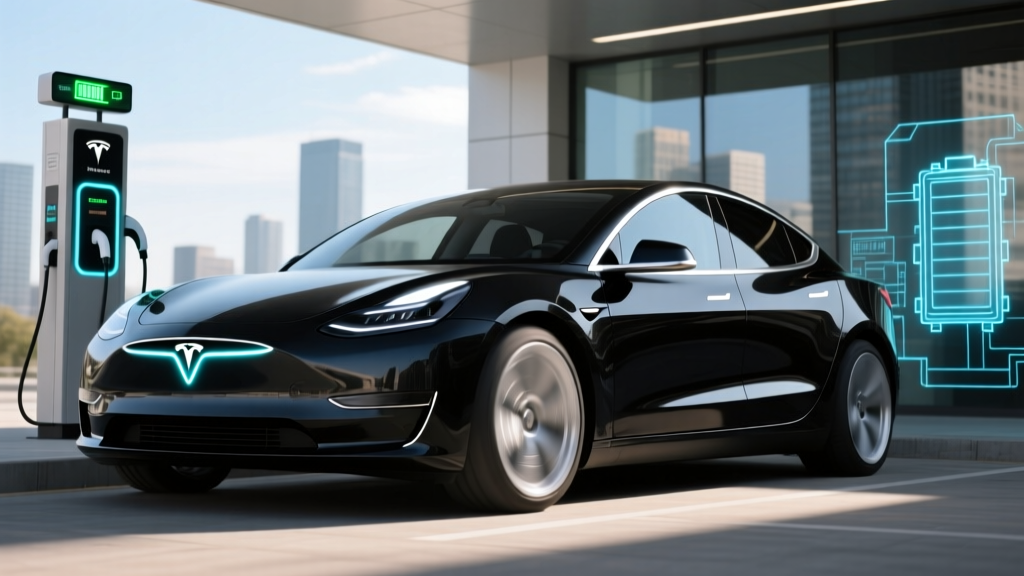
Tesla's Supercharger network remains the gold standard for public DC fast charging, and the 2026 Model S takes full advantage. The Long Range peaks at 250 kW on V3 Superchargers, while the Plaid can sustain slightly higher rates under optimal conditions.
| Charging Level | Power / Rate | Speed | Notes |
|---|---|---|---|
| Level 1 (120V) | 1.4 kW | ~3–4 mi/hr | Emergency / trickle only |
| Level 2 (240V, 48A) | 11.5 kW | ~34–40 mi/hr | Home Wall Connector; full charge ~10 hrs |
| DC Fast (V3 Supercharger) | 250 kW peak | 10–80% in ~25 min | Tapers significantly above 80% SoC |
| DC Fast (CCS adapter) | Up to 250 kW | Similar to Supercharger | Requires Tesla CCS adapter (included) |
Charging curve reality: The Model S holds near-peak 250 kW from roughly 10% to 35% SoC, then tapers progressively. From 50–80%, expect 100–130 kW. The 10–80% time of ~25 minutes assumes battery preconditioning (automatic when navigating to a Supercharger). Without preconditioning in cold weather, add 5–10 minutes to that estimate.
The Tesla Model S Front End: Design and Aerodynamics
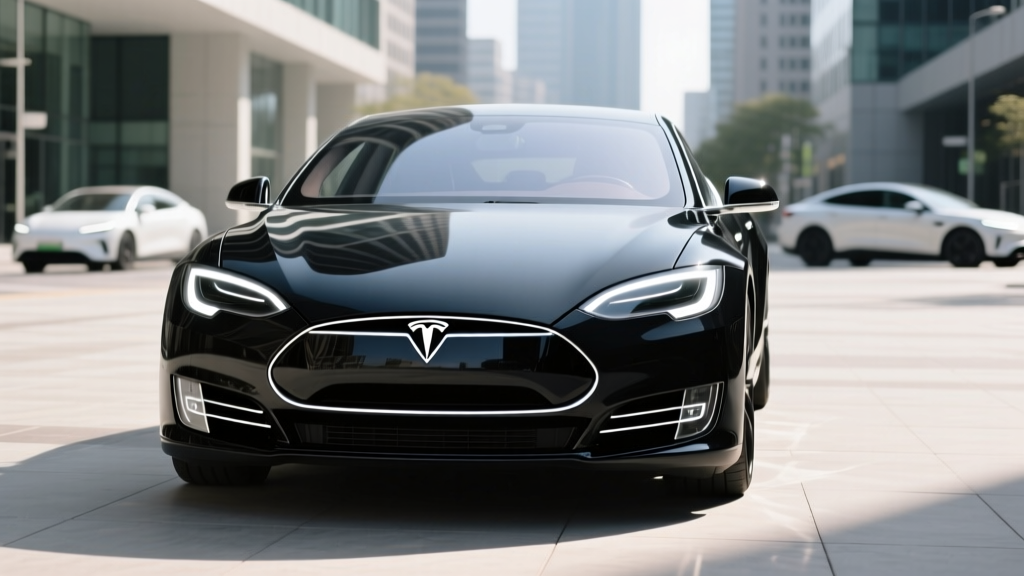
The Tesla Model S front fascia has evolved through several revisions since 2012, and the 2026 version carries the refresh introduced in 2021. The absence of a traditional grille — a hallmark of the EV era — gives the front a clean, unbroken surface that reduces drag. Tesla quotes a drag coefficient of Cd 0.208, among the lowest of any production sedan, and that number is partly why the Model S extracts 405 miles from a 100 kWh pack.
The matrix LED headlights (standard on all trims) feature adaptive high beams that mask out oncoming traffic while keeping the rest of the road fully illuminated. The front bumper integrates air curtains that channel airflow around the front wheels, reducing turbulence. Below the surface, the front trunk (frunk) provides 2.5 cubic feet of storage — enough for a charging cable kit and a small bag.
Interior Space, Cargo, and Technology
The Model S seats five adults, though the rear middle seat is best suited for shorter trips. Rear legroom measures 35.4 inches, competitive with the Mercedes EQS (36.5 in) but tighter than the Lucid Air (37.2 in). The rear-seat entertainment screen (8" touchscreen) is standard on Plaid and available on Long Range.
| Dimension | Measurement |
|---|---|
| Front headroom | 38.8 in |
| Front legroom | 42.7 in |
| Rear headroom | 38.1 in |
| Rear legroom | 35.4 in |
| Cargo (rear seats up) | 28.0 cu ft |
| Cargo (rear seats folded) | 64.9 cu ft |
| Frunk | 2.5 cu ft |
The 17-inch center touchscreen runs Tesla's latest software with wireless Apple CarPlay and Android Auto (added in late 2024). The yoke steering wheel remains standard — love it or not, Tesla is committed to it. A round steering wheel is now available as a no-cost option. Autopilot is standard; Full Self-Driving (Supervised) is a $8,000 add-on. Per NHTSA's SAE framework, both are Level 2 driver-assist systems — the driver must remain engaged at all times.
Pricing, Trims, and Federal Tax Credit Eligibility
| Trim | Base MSRP | As-Tested (typical) | Federal §30D Credit |
|---|---|---|---|
| Long Range AWD | $74,990 | $78,000–$82,000 | Not eligible (MSRP cap exceeded*) |
| Plaid Tri-Motor AWD | $89,990 | $95,000–$102,000 | Not eligible (MSRP cap exceeded*) |
*Federal tax credit reality: Under IRS §30D rules, new EV sedans must have an MSRP at or below $55,000 to qualify for the federal credit. The Model S — at $74,990 and above — does not meet this cap in any trim. Additionally, buyer income limits ($300,000 joint / $150,000 single MAGI) and battery critical-mineral sourcing requirements apply to eligible vehicles. The Model S buyer will pay full MSRP and should explore state-level incentives (which vary by jurisdiction — check your state energy office).
Warranty and Long-Term Ownership
Tesla covers the Model S with a 4-year / 50,000-mile basic vehicle warranty and an 8-year / 150,000-mile battery and drive unit warranty. Tesla guarantees the battery will retain at least 70% of its original capacity during the warranty period. Based on aggregated fleet data from sources like fueleconomy.gov, NMC packs in the Model S typically show 5–8% degradation at 100,000 miles when charged primarily to 80–90% daily SoC.
Out-of-warranty battery replacement for the Model S has historically ranged from $13,000 to $20,000 depending on the pack revision. Tesla's service network is expanding, but wait times for major repairs can stretch to several weeks in some regions.
- 405-mile EPA range — longest of any Tesla sedan
- 670 hp dual-motor AWD; 0–60 in 3.1 seconds
- Access to Tesla Supercharger network (35,000+ stalls globally)
- Best-in-class drag coefficient (0.208 Cd)
- Over-the-air updates continuously add features
- 28 cu ft cargo with hatchback practicality
- No federal tax credit (MSRP exceeds $55K sedan cap)
- Yoke steering polarizing; round wheel now optional
- Rear legroom trails Lucid Air and Mercedes EQS
- Build quality inconsistency still reported by some owners
- FSD (Supervised) at $8,000 remains Level 2 — not autonomous
- Insurance premiums 15–25% above segment average
Who Should Buy the 2026 Tesla Model S?
The Model S suits executive commuters and road-trip enthusiasts who want flagship EV performance without the six-figure price of a Lucid Air Sapphire or Porsche Taycan Turbo S. The 405-mile range handles any US corridor with a single charge, and Supercharger access makes cross-country travel genuinely practical. Families may prefer the Model X for third-row seating and easier rear access, while budget-conscious buyers should look at the Model 3 Long Range ($47,740, eligible for partial credit).
If you're drawn to the Tesla Model S front-end design and the engineering beneath it, the Long Range trim is the value pick — it sacrifices 1.1 seconds in the 0–60 sprint versus the Plaid but gains 9 miles of range and saves $15,000.
Frequently Asked Questions
What is the real-world range of the Tesla Model S?
The EPA rates the 2026 Model S Long Range at 405 miles. In real-world highway driving at 70–75 mph, expect 340–370 miles. Cold weather (below freezing) reduces this to roughly 280–320 miles due to battery conditioning and cabin heating demands.
How fast does the Model S charge at home and on the road?
At home on a Level 2 Tesla Wall Connector (11.5 kW / 48A), the Model S gains roughly 34–40 miles of range per hour, fully recharging in about 10 hours. On a V3 Supercharger at 250 kW peak, 10–80% takes approximately 25 minutes with battery preconditioning active.
Does the 2026 Tesla Model S qualify for the federal EV tax credit?
No. Under current IRS §30D rules, new sedans must have an MSRP of $55,000 or less to qualify. The Model S starts at $74,990, well above the cap. Buyer income limits and battery sourcing requirements also apply to eligible vehicles. Consult a tax professional for your specific situation.
Is the Model S worth buying versus the Lucid Air or Mercedes EQS?
The Model S wins on charging infrastructure (Supercharger access), efficiency (28 kWh/100 mi), and value (starting $15K+ below the Air Grand Touring). The Lucid Air offers more rear legroom and slightly better efficiency. The EQS provides a more traditional luxury interior and dealer service experience. Choose the Model S if Supercharger access and performance-per-dollar matter most.
What is the Tesla Model S front trunk (frunk) capacity?
The Model S frunk provides 2.5 cubic feet of storage — enough for a mobile connector kit, a small duffel, or groceries. It's smaller than the Model 3 frunk (3.1 cu ft) due to the larger HVAC and powertrain components in the flagship platform.