Quick Verdict: Is the Tesla Model S Still the Luxury EV Benchmark?
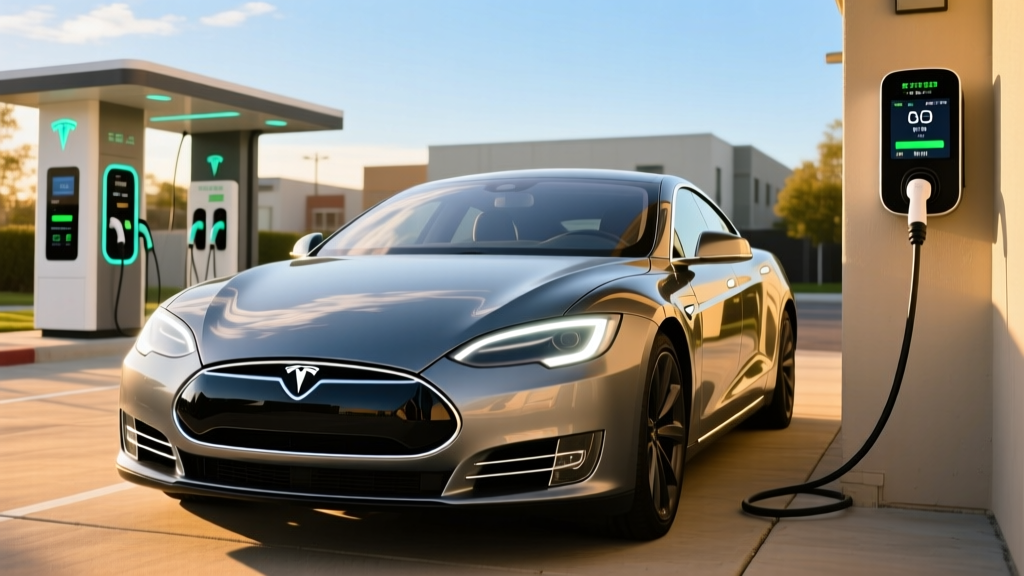
The 2026 Tesla Model S remains the flagship sedan of the EV world — a 405-mile EPA range, sub-2-second Plaid acceleration, and access to the largest fast-charging network on the planet. But after living with one for a full year, the picture is more nuanced than the spec sheet suggests. Real-world highway range drops meaningfully, the yoke steering divides opinion, and the price tag puts it well into Porsche Taycan territory. For the right buyer — a tech-forward commuter who road-trips regularly — it's still hard to beat. For everyone else, the math demands a closer look.
| Spec | Long Range (Dual Motor) | Plaid (Tri-Motor) |
|---|---|---|
| EPA Range | 405 miles | 396 miles |
| Battery (usable) | ~100 kWh (NMC) | ~100 kWh (NMC) |
| 0-60 mph | 3.1 sec | 1.99 sec |
| Horsepower | 670 hp | 1,020 hp |
| Drivetrain | Dual-Motor AWD | Tri-Motor AWD |
| Peak DC Fast Charge | 250 kW | 250 kW |
| 10-80% DC Time | ~30 min | ~30 min |
| Level 2 (11.5 kW) | ~44 mi/hr | ~44 mi/hr |
| EPA MPGe | 120 MPGe combined | 116 MPGe combined |
| Base MSRP | $84,990 | $99,990 |
| Federal Tax Credit | Not eligible (MSRP cap) | Not eligible (MSRP cap) |
Real-World Range vs. the EPA Sticker
The EPA rates the 2026 Model S Long Range at 405 miles — among the highest of any production EV. But anyone who's owned an EV knows that sticker number assumes a specific test cycle that doesn't perfectly mirror real driving.
Real-World Range Expectations:
- City / moderate conditions: 370-395 miles (regen braking recovers energy)
- Highway (70-75 mph, summer): 310-340 miles
- Highway (70-75 mph, winter 30°F): 250-290 miles
- Mixed driving (year-round average): 330-360 miles
Source: Owner-reported data, fueleconomy.gov
The 100 kWh (usable) NMC battery pack provides ample buffer, but highway driving at sustained speeds is where any EV loses efficiency to aerodynamic drag. Cold weather compounds this: the battery's internal resistance rises, and cabin heating draws additional power. Tesla's heat pump system mitigates some of this loss — it's noticeably more efficient in winter than older resistive-heater EVs — but expect a 20-30% range reduction in sub-freezing highway driving.
For a typical commute of 40 miles round-trip, even the worst-case winter range leaves a comfortable 5x buffer. The real test is road trips, where the Model S's Supercharger access becomes its defining advantage.
Charging: Supercharger Network Dominance
Charging speed is where the Model S's age shows — in a good way and a limiting way. The V3 Supercharger network delivers up to 250 kW peak, which was class-leading when introduced but is now matched or exceeded by Hyundai/Kia's 800V architecture (up to 350 kW on compatible chargers).
| Charging Level | Power | Speed | Notes |
|---|---|---|---|
| Level 1 (120V) | ~1.4 kW | ~5 mi/hr | Emergency/trickle only |
| Level 2 (240V, 48A) | 11.5 kW | ~44 mi/hr | Full charge overnight (~9 hrs) |
| DC Fast (V3 Supercharger) | 250 kW peak | ~200 mi in 15 min | 10-80% in ~30 min |
| DC Fast (V4 Supercharger) | 250 kW peak* | ~200 mi in 15 min | *Car limited to 250 kW |
The charge curve is the detail most spec sheets hide. The Model S peaks at 250 kW only at low states of charge (roughly 10-25%), then tapers progressively. From 50-80%, you're averaging closer to 100-120 kW. This means the last 30% of the charge takes nearly as long as the first 50%. On road trips, the optimal strategy is to charge in short bursts (15-20 minutes) and keep the battery between 10-60% rather than waiting for a full 80%.
For home charging, a Wall Connector on a 60A circuit delivers 11.5 kW — enough to replenish a full day's driving in about an hour. Installation typically runs $800-$2,000 depending on panel proximity and local permitting. A full 0-100% charge at home takes roughly 9 hours, easily manageable overnight.
The NACS connector on the Model S is now the industry standard, with Ford, GM, Rivian, and others adopting it through 2025-2026. This means Supercharger access — already the most reliable public network — is becoming more crowded. In my experience, popular corridor chargers (I-5, I-95) now see occasional 2-3 stall waits during holiday travel.
Performance and Driving Dynamics
The Model S Long Range delivers 670 horsepower through dual motors, reaching 60 mph in 3.1 seconds. That's supercar territory from just a few years ago, delivered silently and with zero drama. The tri-motor Plaid variant pushes to 1,020 hp and a claimed 1.99-second 0-60 — a figure that requires a prepared surface and launch-control procedure to achieve.
But straight-line speed is only part of the story. The Model S's adaptive air suspension provides a compliant highway ride and can raise for rough driveways or lower for efficiency at speed. Handling is competent but not sports-sedan sharp — the car's 4,561-pound curb weight is felt in transitions. Compared to a Porsche Taycan or BMW i5 M60, the Model S prioritizes comfort over corner-carving precision.
The yoke steering wheel (now standard, with a round wheel available at no cost) remains the car's most polarizing feature. For highway cruising, it's fine. For low-speed maneuvering and three-point turns, the lack of a full rotation requires genuine adaptation. After a year, most owners adjust — but a meaningful minority swap to the round wheel.
Interior, Tech, and Daily Livability
The Model S cabin is minimalist by design — a 17-inch center touchscreen handles nearly all vehicle functions, from climate to glovebox release. A rear 8-inch screen serves passengers. Build quality has improved markedly since the 2021 refresh: panel gaps are tighter, materials are genuine (real wood, aluminum, leatherette), and the cabin is quiet at speed thanks to acoustic glass.
Space and practicality:
- Front legroom: 42.7 inches
- Rear legroom: 35.4 inches (tight for tall adults on long trips)
- Cargo (rear trunk): 26.3 cu ft
- Frunk (front trunk): 3.1 cu ft
- Total cargo: 29.4 cu ft — more than most sedans, less than a hatchback
The rear seat is the Model S's weakest practicality point. Headroom is limited by the sloping roofline, and the seat cushion is flat. Children and shorter adults are fine; six-foot passengers on long drives will want more thigh support. The trunk is deep and wide, and the 60/40 folding rear seats accommodate longer items.
Standout tech:
- 17-inch infotainment with Netflix/YouTube/Steam gaming while parked
- Over-the-air updates that add features (recent: improved FSD v13, cabin camera updates)
- Sentry Mode dashcam recording (requires USB drive)
- HEPA air filtration with Bioweapon Defense Mode
- Phone-as-key with automatic walk-up unlock
Notable drawbacks:
- No physical buttons for climate or volume — everything is on-screen
- Turn signals on yoke require muscle-memory retraining
- Rear visibility is compromised by the sloping rear glass
- No Apple CarPlay or Android Auto (Tesla's OS only)
Autopilot, FSD, and Driver Assistance
Every Model S ships with Basic Autopilot: adaptive cruise control and lane-centering that works well on divided highways. The optional Full Self-Driving (Supervised) package — currently $8,000 or $99/month — adds automated lane changes, traffic-light recognition, and city-street navigation.
SAE Automation Level: Level 2
Despite the "Full Self-Driving" name, Tesla's FSD (Supervised) is an SAE Level 2 driver-assistance system. The driver must remain attentive, keep hands on the yoke/wheel, and be prepared to take over at any moment. It is not autonomous driving. Level 4 driverless operation (no human required) is currently offered only by services like Waymo in geofenced areas.
In real-world use, FSD v13 handles most suburban and highway scenarios competently but makes occasional puzzling decisions — unnecessary lane changes, overly cautious stops at empty intersections. It's a useful fatigue-reducer on long trips, not a replacement for an alert driver. The camera-only vision system (no LiDAR or radar) struggles in heavy rain and direct sun glare more than sensor-fused competitors.
Pricing, Tax Credits, and Total Cost
The 2026 Model S lineup is straightforward:
| Trim | Base MSRP | As-Tested* | §30D Federal Credit |
|---|---|---|---|
| Long Range | $84,990 | $89,490 | $0 (exceeds $55K sedan MSRP cap) |
| Plaid | $99,990 | $104,490 | $0 (exceeds $55K sedan MSRP cap) |
*As-tested includes destination fee + common options (FSD, premium paint)
The critical pricing detail: the Model S does not qualify for the $7,500 federal EV tax credit under IRS §30D. The law caps eligible sedans at $55,000 MSRP, and the Model S starts at nearly $85,000. This is not a sourcing or income issue — it's a price-cap disqualification. Buyers should not expect any federal purchase incentive for this vehicle.
Some states offer their own rebates or reduced registration fees for EVs, but these vary by jurisdiction. Check your state's energy office or DMV for current programs.
Five-year ownership cost estimate (Long Range, 15K miles/year):
- Electricity (home + Supercharger mix, $0.15/kWh avg): ~$4,200
- Insurance (national avg for Model S): ~$14,000
- Maintenance (tires, cabin filter, wiper fluid): ~$1,800
- Depreciation (est. 45% over 5 years): ~$38,000
- Total estimated 5-year cost: ~$58,000 (excluding purchase price)
Compared to a BMW 5 Series or Mercedes E-Class, the Model S saves roughly $6,000-8,000 in fuel and maintenance over five years but carries higher insurance premiums and steeper depreciation. The total cost of ownership is roughly comparable — you're choosing based on driving experience and tech, not pure economics.
Warranty and Battery Longevity
Tesla's warranty coverage for the Model S:
- Basic vehicle: 4 years / 50,000 miles
- Battery & drive unit: 8 years / 150,000 miles (Long Range & Plaid)
- Battery capacity guarantee: Minimum 70% retention over warranty period
The 100 kWh NMC battery is liquid-cooled with sophisticated thermal management. Based on fleet data from earlier Model S vehicles, degradation typically follows a curve: roughly 5-8% loss in the first 50,000 miles, then a much slower linear decline. Most Model S batteries should retain 85-90% capacity at 100,000 miles under normal use.
Replacement cost out of warranty is significant — Tesla has quoted $15,000-$22,000 for a full battery pack replacement, though refurbished packs may be available at lower cost. For most owners, the 8-year warranty provides adequate coverage, and the battery will outlast the car's economic life.
Pros
- 405-mile EPA range eliminates daily charging for most owners
- Supercharger network remains the most reliable and extensive DC fast-charging system
- Sub-3.1-second 0-60 (Long Range) with practical daily usability
- Over-the-air updates continuously add features
- Strong cargo space with frunk + deep trunk
- HEPA air filtration is genuinely useful in wildfire/smoke regions
Cons
- No federal tax credit (MSRP exceeds $55K sedan cap)
- 250 kW peak charging is now outpaced by 800V competitors
- Rear seat comfort is below luxury-sedan expectations
- Yoke steering has a steep learning curve
- No Apple CarPlay or Android Auto
- Insurance premiums run 20-40% above comparable ICE sedans
Who Should Buy the 2026 Model S?
The Model S is best suited for:
- Tech-forward commuters who want cutting-edge software and OTA improvements
- Frequent road-trippers who value Supercharger reliability over absolute charging speed
- Performance seekers who want supercar acceleration with four doors and a trunk
- Existing Tesla owners already invested in the ecosystem (home charger, FSD subscription)
Look elsewhere if:
- You need genuine rear-seat comfort for adult passengers (consider the Mercedes EQS or BMW i7)
- You want the fastest possible DC charging (Hyundai Ioniq 6 or Porsche Taycan on 800V chargers)
- Tax credit eligibility is a priority (no EV sedan above $55K qualifies)
- You prefer physical buttons and traditional luxury aesthetics
Frequently Asked Questions
Does the Tesla Model S qualify for the federal EV tax credit in 2026?
No. Under IRS §30D rules, sedans must have an MSRP at or below $55,000 to qualify. The Model S starts at $84,990, well above this cap. Income limits and battery-sourcing rules are irrelevant here — the price alone disqualifies it.
What is the real-world highway range of the Model S Long Range?
Expect 310-340 miles at 70-75 mph in moderate temperatures (60-80°F). In winter highway driving (30°F or below), plan for 250-290 miles. The 405-mile EPA rating reflects a mixed city/highway cycle; sustained highway speeds consume more energy due to aerodynamic drag.
How fast does the Model S charge at home?
On a Level 2 Tesla Wall Connector (48A, 11.5 kW), the Model S gains approximately 44 miles of range per hour. A full 0-100% charge takes about 9 hours. Most owners charge overnight and wake to a full battery every morning.
Is the Model S Plaid worth the $15,000 premium over Long Range?
For most buyers, no. The Long Range's 3.1-second 0-60 is already extraordinary, and you gain 9 miles of EPA range plus slightly better efficiency. The Plaid's 1.99-second time is a party trick you'll use twice; the Long Range is the smarter daily driver. The Plaid makes sense only for track enthusiasts or those who want the halo-car experience.
How does the Model S compare to the Porsche Taycan and Lucid Air?
The Lucid Air Grand Touring offers more range (516 miles EPA) and comparable luxury at a similar price. The Porsche Taycan charges faster (270 kW on 800V chargers) and handles better but offers less range (283-318 miles depending on trim). The Model S wins on Supercharger network access and software; the Taycan wins on driving dynamics; the Lucid wins on efficiency and rear-seat space.
What does Model S maintenance cost compared to a gas sedan?
Minimal. There's no oil, no transmission fluid, no spark plugs, no timing belt. You'll replace tires (every 20,000-30,000 miles given the car's weight and torque), cabin air filters (every 2 years), and wiper fluid. Budget roughly $300-500/year for scheduled maintenance — about 70% less than a comparable BMW or Mercedes.
Is FSD (Supervised) worth buying?
At $8,000 upfront or $99/month, FSD is a personal preference. For daily highway commuters, Basic Autopilot (included) handles adaptive cruise and lane-centering adequately. FSD adds city-street capability that's impressive but still requires constant supervision. If you drive in complex urban environments daily, the subscription is worth trying for a month. For highway-only use, skip it.