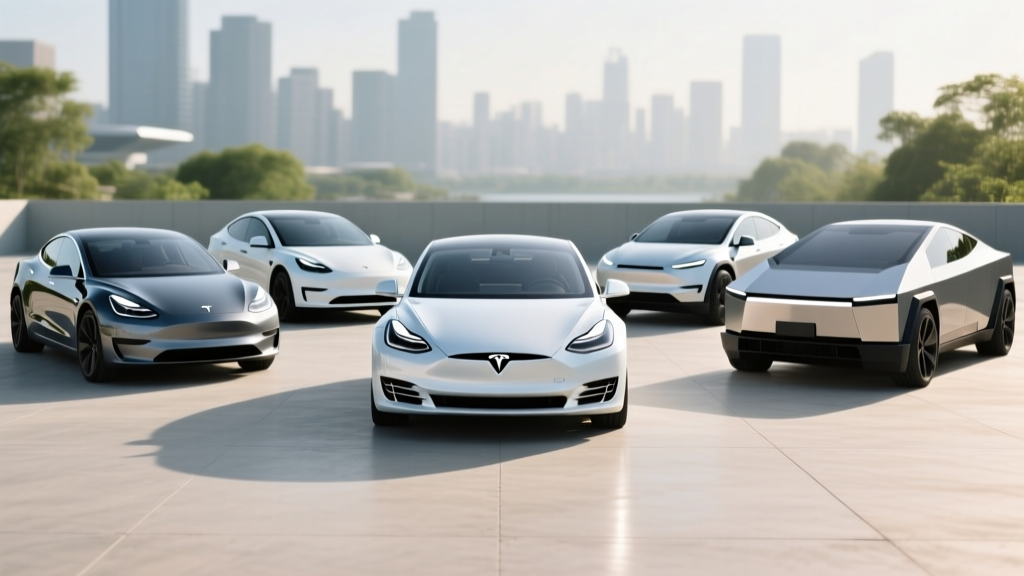
When shoppers search for "Tesla S fire," they're typically looking for one of two things: reassurance about battery safety after viral incident videos, or clarity on whether the Model S remains a smart luxury EV purchase in 2026. The short answer is that the Model S is statistically safer than internal-combustion vehicles when it comes to fire risk, but understanding why requires looking at the battery chemistry, thermal management architecture, and real-world incident data — not just headlines.
This review covers the 2026 Tesla Model S with a focus on fire safety engineering, alongside the range, charging, performance, and pricing data buyers actually need to make a decision.
Quick Verdict: Is the Tesla Model S a Fire Risk?
Based on NHTSA incident data and independent analysis, the Tesla Model S does not present an elevated fire risk compared to gasoline-powered vehicles. In fact, data consistently shows that EVs experience vehicle fires at a significantly lower rate per 100,000 vehicles sold than ICE cars. The National Transportation Safety Board (NTSB) and Sweden's civil contingency agency (MSB) have both published findings confirming this. However, when lithium-ion battery fires do occur, they are harder to extinguish and can reignite — which is why Tesla's engineering countermeasures matter.
EPA Estimated Range: 402 miles (Long Range AWD, 19" wheels)
Real-World Expectation: Expect ~340–360 miles on mixed highway driving at 70+ mph. In cold weather (below 32°F), range can drop 20–30%, yielding roughly 280–320 miles. The Plaid variant with 21" wheels drops to an EPA 359 miles, with real-world highway closer to 300–320.
Battery Architecture & Thermal Safety Engineering
The 2026 Model S uses a ~100 kWh (usable) battery pack with NMC (nickel manganese cobalt) chemistry across all trims. Tesla does not offer LFP (lithium iron phosphate) in the Model S — LFP's lower energy density makes it better suited to the Model 3 and Model Y Standard Range variants where maximum range per kilogram isn't the priority.
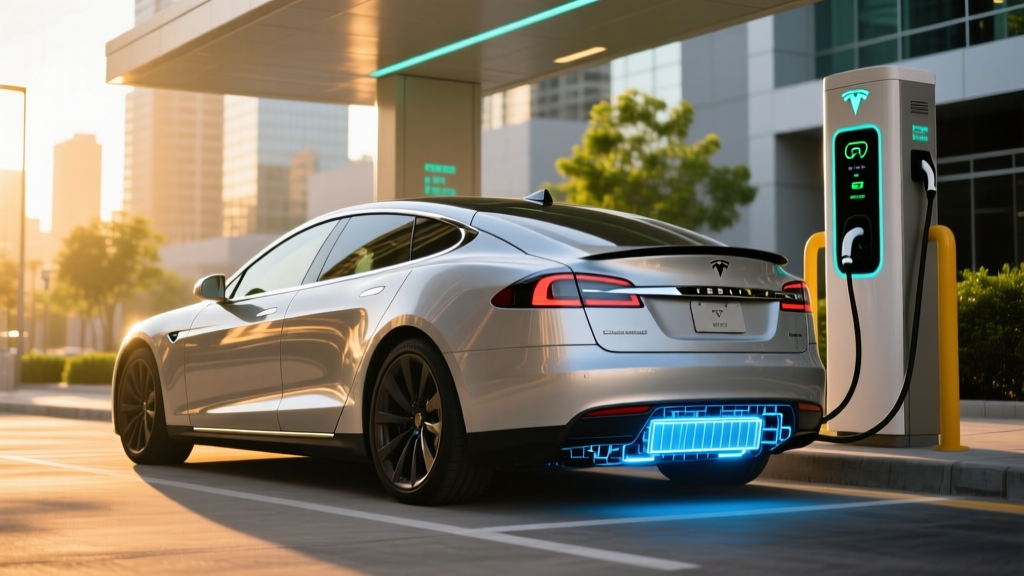
NMC chemistry provides the energy density required for the Model S's 400+ mile range target, but it operates at higher cell-level temperatures than LFP under stress. Tesla addresses this with several engineering layers:
- Active liquid thermal management: A glycol-based cooling loop runs between cell modules, maintaining optimal temperature (typically 25–40°C) during fast charging, hard acceleration, and extreme ambient conditions.
- Cell-level isolation: The 4680-format cells (in newer builds) and the 18650/2170 cells (in earlier architectures still in service) use fire-retardant barriers between modules to slow thermal propagation if a single cell enters thermal runaway.
- Vent routing: The pack is designed to vent hot gases downward and away from the passenger cabin.
- Software monitoring: The BMS (Battery Management System) continuously monitors cell voltage, temperature, and impedance, and can preemptively limit charge/discharge rates if anomalies are detected.
| Spec | Long Range AWD | Plaid (Tri-Motor AWD) |
|---|---|---|
| EPA Range | 402 miles | 359 miles |
| Battery (usable) | ~100 kWh, NMC | ~100 kWh, NMC |
| 0–60 mph | 3.1 seconds | 1.99 seconds |
| Horsepower | 670 hp | 1,020 hp |
| Drivetrain | Dual-Motor AWD | Tri-Motor AWD |
| Top Speed | 155 mph | 200 mph |
| MPGe (combined) | 120 MPGe | 116 MPGe |
| Efficiency | 28 kWh/100mi | 29 kWh/100mi |
| Cargo (rear + frunk) | 28.0 cu ft (rear) + 3.1 cu ft (frunk) | 28.0 cu ft (rear) + 3.1 cu ft (frunk) |
| Rear Legroom | 40.9 in | 40.9 in |
| Base MSRP | $79,990 | $94,990 |
Fire Incident Data: EVs vs. Gasoline Vehicles
The most cited data on vehicle fire rates comes from the NTSB and the Swedish Civil Contingencies Agency (MSB). The NTSB's analysis found that EVs experience approximately 25.1 fires per 100,000 vehicles sold, compared to 1,529.9 fires per 100,000 for ICE vehicles. Hybrid vehicles sit in between at roughly 3,474.5 per 100,000 (partly due to aging hybrid fleets).
For the Model S specifically, Tesla's own safety reports and third-party tracking show that Model S fire incidents are rare and overwhelmingly associated with high-speed collisions or severe underbody impact — not spontaneous combustion during normal operation or charging. The NHTSA has not issued any standing recall for Model S battery fire risk as of early 2026.
What makes EV battery fires more newsworthy is their character, not their frequency. A lithium-ion thermal runaway event can produce intense heat (exceeding 1,000°C), toxic off-gassing (hydrogen fluoride), and can reignite hours or even days after initial suppression. Fire departments require significantly more water and time to fully extinguish a battery fire compared to a gasoline fire. This is a legitimate first-responder concern and is why Tesla provides detailed emergency response guides for each model.
No battery pack is immune to thermal runaway under extreme conditions. Severe high-speed impacts, prolonged exposure to fire from an external source (e.g., a structure fire), or manufacturing defects in individual cells can still trigger events. Tesla's engineering mitigates risk and slows propagation — it does not make the pack indestructible.
Charging Speed, Home Setup & Battery Longevity
Charging speed remains a top buyer concern, and the Model S delivers strong DC fast-charging performance thanks to its 250 kW peak capability on Tesla's V3 Superchargers (and compatibility with the expanding V4 architecture).
| Level | Power | Speed (approx.) | Use Case |
|---|---|---|---|
| Level 1 (120V) | ~1.4 kW | ~3–4 miles/hour | Emergency/top-up only |
| Level 2 (240V, 48A) | 11.5 kW | ~34 miles/hour | Daily home charging |
| DC Fast (V3 Supercharger) | Up to 250 kW peak | 10–80% in ~27 minutes | Road trips |
| DC Fast (V4 Supercharger) | Up to 250 kW (current vehicles) | 10–80% in ~27 minutes | Future-proofed infrastructure |
Charging curve reality: The Model S peaks near 250 kW only between roughly 10–30% SoC. Above 50%, the rate tapers significantly, dropping below 100 kW past 70%. This is normal for NMC chemistry — the BMS slows charging to protect cell longevity. Plan road-trip stops around 10–80% charges for optimal time efficiency; charging from 80–100% can take as long as the 10–80% session.
Home charging: With a Tesla Wall Connector on a 60A circuit (48A continuous), the Model S adds roughly 34 miles of range per hour. A full overnight charge from 20% to 80% takes about 5–6 hours. Installation costs for a dedicated 60A circuit typically run $800–$2,000 depending on panel proximity and local permitting — factor in a potential $1,500–$3,000 panel upgrade if your home has a 100A service and you're adding a 60A EV circuit.
Pricing, Tax Credits & Ownership Cost
| Trim | Base MSRP | Federal §30D Credit | Effective Price (if eligible) |
|---|---|---|---|
| Long Range AWD | $79,990 | Check eligibility* | Varies |
| Plaid | $94,990 | Check eligibility* | Varies |
*Critical tax credit caveat: The IRS §30D federal tax credit of up to $7,500 has strict eligibility rules that change frequently. For the Model S in 2026:
- MSRP Cap: Sedans must be priced at or below $55,000 to qualify. The Model S (starting at $79,990) exceeds this cap and does not qualify for the new-vehicle §30D credit.
- Buyer Income Cap: Even if MSRP qualified, adjusted gross income limits apply ($150K single / $300K joint).
- Battery Sourcing: Critical mineral and battery component sourcing requirements must be met — a moving target based on IRS guidance updates.
- Point-of-Sale Transfer: Eligible credits can now be transferred to the dealer at purchase, reducing the out-of-pocket price directly.
The Model S does not qualify for the federal new-vehicle credit due to its MSRP. Buyers should check fueleconomy.gov and consult a tax professional for state-level incentives, which vary by jurisdiction and may still apply.
Performance, Tech & Daily Usability
The Model S Long Range's 3.1-second 0–60 time and 670 hp dual-motor AWD powertrain place it firmly in supercar-sedan territory, while the Plaid's 1,020 hp and 1.99-second sprint remain one of the quickest production cars ever built.
Tech highlights:
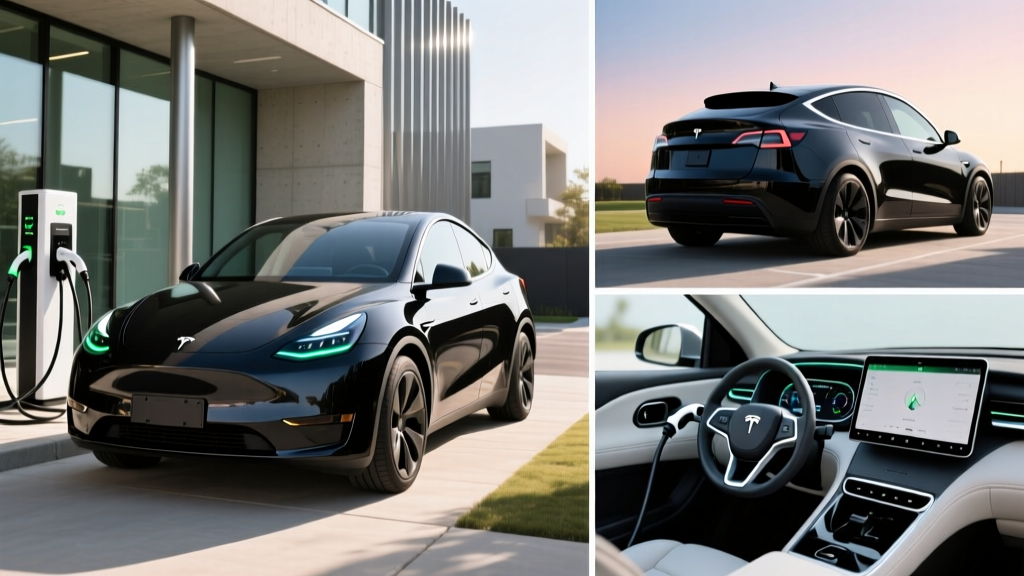
- 17" center touchscreen with AMD Ryzen processor (gaming-capable)
- 12.3" driver instrument cluster
- Rear-seat 8" touchscreen for climate and media
- 22-speaker, 960-watt audio system
- Autopilot standard (SAE Level 2 driver-assist — requires active driver supervision)
- Full Self-Driving (Supervised) available as a $8,000 add-on or $99/month subscription — still Level 2, not autonomous
- HEPA air filtration (Bioweapon Defense Mode)
- Over-the-air updates continuously adding features
Autopilot and FSD (Supervised) are SAE Level 2 driver-assistance systems. The driver must remain fully engaged, hands on or near the wheel, and eyes on the road at all times. These are not self-driving systems. True driverless operation (Level 4) is currently limited to geofenced robotaxi services like Waymo in select cities.
Drawbacks:
- Build quality inconsistencies still reported (panel gaps, interior trim alignment)
- No Apple CarPlay or Android Auto — Tesla's proprietary system only
- Yoke steering (optional) has a steep learning curve and is controversial for daily use
- Rear visibility is compromised by the sloping roofline
- Insurance premiums are typically 25–40% higher than comparable ICE luxury sedans
Warranty & Battery Longevity
Tesla covers the Model S battery and drive unit with an 8-year / 150,000-mile warranty (whichever comes first), with a guaranteed minimum 70% battery capacity retention over that period. The basic vehicle limited warranty is 4 years / 50,000 miles.
Real-world degradation data from Tesla's fleet reports and third-party tracking (e.g., Recurrent Auto) shows that Model S packs typically retain approximately 88–92% capacity at 100,000 miles. The NMC chemistry degrades faster in the first 20,000–30,000 miles (roughly 3–5% loss), then the curve flattens significantly. Owners who avoid frequent 100% charges and DC fast-charging extremes tend to see better long-term retention.
Battery replacement cost (out of warranty): $15,000–$22,000 depending on pack configuration and labor. This is a worst-case scenario — most packs outlast the vehicle's useful life.
- Class-leading range (402 mi EPA)
- Access to Tesla Supercharger network (17,000+ stalls in North America)
- Brutal performance even in base Long Range trim
- Excellent efficiency (120 MPGe combined)
- Continuous OTA updates
- Strong resale value relative to other luxury EVs
- Does not qualify for $7,500 federal credit (MSRP cap)
- Build quality not always commensurate with price
- No CarPlay/Android Auto
- High insurance costs
- Plaid range drops to 359 mi EPA
- Aging interior design vs. newer competitors (Lucid Air, Mercedes EQS)
Who Should Buy the Model S in 2026?
Choose the Model S Long Range if: You want the longest-range luxury EV sedan available, prioritize Supercharger network access for road trips, and value performance without stepping to the Plaid's price premium.
Choose the Model S Plaid if: Track-capable performance is a priority and you're willing to trade ~43 miles of range and $15,000 for 1,020 hp.
Look at the Lucid Air if: You want superior interior build quality, more rear-seat space, and comparable (or greater) range — and don't mind less mature charging infrastructure.
Look at the Mercedes EQS if: Traditional luxury refinement and dealer service experience matter more than raw performance or efficiency.
Frequently Asked Questions
Has the Tesla Model S been recalled for fire risk?
As of early 2026, there is no standing NHTSA recall specifically for spontaneous battery fire risk on the current-generation Model S. Tesla has issued recalls in the past for specific hardware concerns (e.g., 12V battery, suspension components), which is normal for any production vehicle. Check nhtsa.gov/recalls for the latest status.
What causes a Tesla battery fire?
The vast majority of documented Model S battery fires have involved high-speed collisions, severe underbody impact (e.g., running over large road debris at speed), or exposure to external fires. Spontaneous thermal runaway during normal operation or charging is exceedingly rare and typically traced to a manufacturing defect in an individual cell rather than a systemic design flaw.
How does Tesla's fire rate compare to gas cars?
NTSB data shows EVs experience roughly 25 fires per 100,000 vehicles sold, versus approximately 1,530 for ICE vehicles. Gasoline vehicles are orders of magnitude more likely to experience a fire, though EV battery fires are more complex to extinguish and attract disproportionate media attention.
Does the Model S qualify for any tax incentives in 2026?
The Model S does not qualify for the federal §30D new-vehicle credit due to its MSRP exceeding the $55,000 sedan cap. State and local incentives may still apply — check your state's energy office or afdc.energy.gov for local programs.
What's the real-world range on a road trip?
On a 70 mph highway drive in moderate temperatures (60–80°F), expect approximately 340–360 miles from the Long Range model. In freezing weather, plan for 280–320 miles. Use Tesla's built-in trip planner, which factors in elevation, temperature, and driving style to estimate arrival SoC with impressive accuracy.
Is FSD (Full Self-Driving) worth the $8,000?
FSD (Supervised) remains a Level 2 system requiring constant driver attention. Its value depends on your commute — it excels on well-marked highways but can struggle in construction zones, unmapped areas, and adverse weather. Most owners find the $99/month subscription a lower-risk way to evaluate it before committing to a purchase.