Is the Tesla Model S Discontinued? The Short Answer
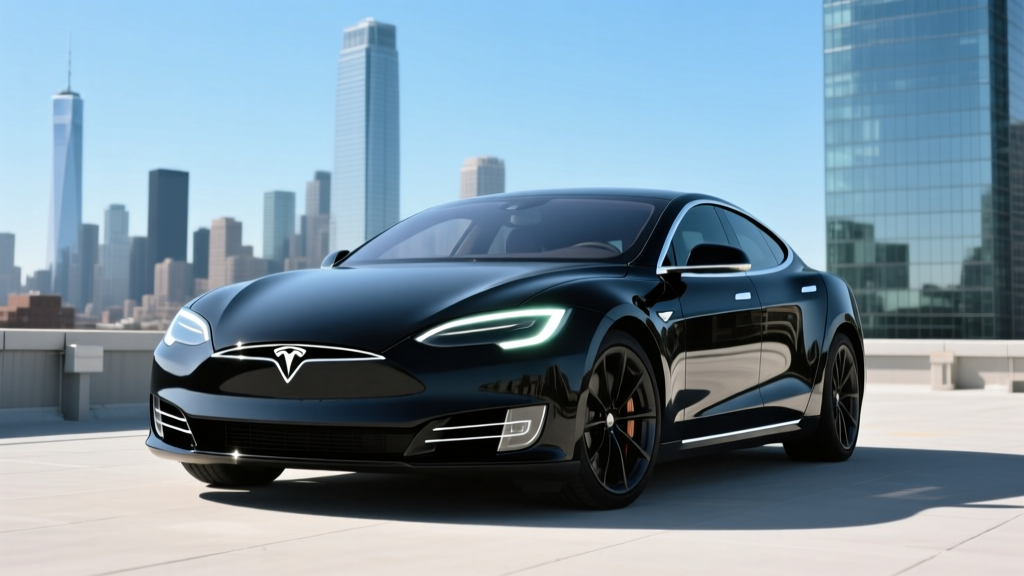
No, the Tesla Model S is not discontinued as of early 2026. Tesla continues to sell the Model S in the United States in two trims: the dual-motor Long Range and the tri-motor Plaid. However, production volumes have dropped dramatically compared to the sedan's 2015–2018 peak, and Tesla has shifted the bulk of its manufacturing capacity toward the Model Y, Cybertruck, and next-generation platforms. The Model S now occupies a low-volume, halo-car role in Tesla's lineup — still available to order, still updated incrementally, but no longer the brand's volume flagship.
If you've seen rumors about the Model S being axed, they stem from Tesla's Fremont factory retooling cycles and Elon Musk's occasional comments about the natural lifecycle of legacy platforms. For now, though, the order page remains open, deliveries are ongoing, and the 2026 Model S carries meaningful updates to its battery management and infotainment stack.
2026 Tesla Model S: Spec Snapshot
| Spec | Model S Long Range | Model S Plaid |
|---|---|---|
| EPA Range | 402 mi | 359 mi |
| Battery (usable) | ~100 kWh, NMC | ~100 kWh, NMC |
| Drivetrain | Dual-Motor AWD | Tri-Motor AWD |
| Horsepower | 670 hp | 1,020 hp |
| 0–60 mph | 3.1 sec | 1.99 sec |
| Peak DC Fast Charge | 250 kW | 250 kW |
| 10–80% DC Time | ~30 min | ~30 min |
| Level 2 Home Charge | 11.5 kW (~41 mi/hr) | 11.5 kW (~41 mi/hr) |
| MPGe (combined) | 120 MPGe | 116 MPGe |
| Base MSRP | $74,990 | $89,990 |
| Battery Warranty | 8 yr / 150,000 mi | 8 yr / 150,000 mi |
Sources: fueleconomy.gov, Tesla Model S order page.
Real-World Range: What the EPA Sticker Doesn't Tell You
Real-World Highway (70–80 mph): Expect ~320–350 miles in mild weather; ~260–290 miles in sub-freezing temperatures.
Real-World City / Commuter: Closer to EPA or slightly above, thanks to aggressive regenerative braking and lower average speeds.
The Model S Long Range's 402-mile EPA figure remains one of the highest of any production EV sold in the U.S. But as with every electric vehicle, that number assumes a mix of city and highway driving at moderate temperatures. On a 75-mph interstate run in 40°F weather, plan on losing roughly 25–30% of your sticker range. The Model S does include a heat pump as standard equipment, which helps mitigate cold-weather cabin-heating losses compared to older resistive-heater EVs, but physics still wins at highway speed in winter.
The Plaid's lower 359-mile rating reflects its stickier, higher-rolling-resistance tires and tri-motor drivetrain losses. In practice, Plaid owners doing spirited driving will see 280–310 miles on a full charge in fair conditions.
Charging Speed: 250 kW Peak, but Mind the Curve
| Charging Level | Power / Rate | Miles Added | Typical Use |
|---|---|---|---|
| Level 1 (120V) | ~1.4 kW | ~5 mi/hr | Emergency / trickle |
| Level 2 (240V, 48A) | 11.5 kW | ~41 mi/hr | Home overnight |
| DC Fast (Supercharger V3/V4) | Peak 250 kW | ~200 mi in 15 min | Road trips |
The Model S peaks at 250 kW on Tesla's V3 and V4 Superchargers. That peak is not sustained — it holds roughly from 10% to 30% State of Charge (SoC), then tapers progressively. The 10–80% session takes approximately 30 minutes under ideal thermal conditions. Preconditioning the battery (which the car does automatically when you navigate to a Supercharger) is essential to hitting peak rates; without it, cold-soaked batteries may peak below 150 kW.
One notable limitation: the Model S does not support 350 kW charging like some competitors on 800V architectures (the Hyundai Ioniq 5, Porsche Taycan, and Lucid Air all accept higher peak rates). Tesla's ~400V pack architecture caps the sedan at 250 kW. For road trippers, the difference is roughly 5–8 extra minutes per stop compared to a 350-kW-capable vehicle.
At home on a Wall Connector at 11.5 kW, a full 0–100% charge takes roughly 9–10 hours. Most owners charging from 20% to 80% overnight will wake up fully replenished.
Performance, Drivetrain & Efficiency
The dual-motor Long Range delivers 670 horsepower and a 3.1-second 0–60 mph time — figures that would have defined a supercar a decade ago. The tri-motor Plaid pushes 1,020 hp and a claimed 1.99-second 0–60, though independent testing on prepped surfaces typically yields 2.1–2.3 seconds. Either way, the Plaid remains one of the quickest production cars on Earth.
Efficiency for the Long Range comes in at roughly 120 MPGe combined (about 28 kWh/100 mi) per EPA data. That's respectable for a 4,500+ lb luxury sedan, though smaller EVs and the Lucid Air (which achieves up to 146 MPGe) edge it out. The Plaid's heavier drivetrain and wider tires drop efficiency to ~116 MPGe (~30 kWh/100 mi).
Pricing, Trims & Federal Tax Credit Eligibility
| Trim | Base MSRP | Est. As-Tested* | §30D Federal Credit |
|---|---|---|---|
| Model S Long Range | $74,990 | $79,000–$83,000 | Not eligible (MSRP cap) |
| Model S Plaid | $89,990 | $94,000–$98,000 | Not eligible (MSRP cap) |
*As-tested includes common options like FSD capability, premium wheels, and destination fee.
Here's the critical point for buyers researching incentives: the 2026 Tesla Model S does not qualify for the $7,500 federal EV tax credit under IRS §30D. The reason is the MSRP cap. Under current IRS rules, sedans must have an MSRP at or below $55,000 to be eligible. Both Model S trims far exceed that threshold. (The $80,000 cap applies only to SUVs, vans, and pickups — and Tesla classifies the Model S as a sedan.)
Additionally, buyer income caps apply to any §30D claim: modified adjusted gross income must not exceed $150,000 (single), $225,000 (head of household), or $300,000 (joint). Even if the MSRP qualified, high-income buyers would be excluded. Point-of-sale transfer of the credit is available for eligible vehicles, but again, the Model S does not meet the MSRP requirement.
Some states offer their own rebates or tax credits that may apply regardless of MSRP — check your state's energy or DMV website for details, as these vary widely by jurisdiction.
Interior, Cargo & Daily Livability
The Model S seats five adults. Rear legroom measures 35.4 inches — adequate for adults on shorter trips but tighter than a Mercedes EQS or Lucid Air for six-foot passengers on long hauls. The cabin materials have improved significantly since the 2021 refresh, with ventilated front seats, a 17-inch center touchscreen, and a rear-seat entertainment display.
Cargo space is a genuine strength. The rear trunk provides 28.0 cubic feet, and the front trunk (frunk) adds 5.3 cubic feet, for a combined 33.3 cubic feet — more than many compact SUVs. With the rear seats folded, total volume reaches approximately 79.3 cubic feet. This makes the Model S one of the most practical luxury sedans for gear-heavy road trips or weekly Costco runs.
Tech, Driver Assistance & Warranty
The Model S runs Tesla's latest infotainment OS on a responsive 17-inch landscape touchscreen with a secondary 8-inch rear display. Wireless phone mirroring is absent — Tesla uses its own app ecosystem — but native navigation, streaming, and gaming (including AAA titles via the built-in GPU) are well integrated.
Autopilot comes standard and includes adaptive cruise control and lane-keeping. The $8,000 FSD (Supervised) option adds city-street navigation, traffic-light recognition, and more assertive lane changes, but remains a supervised system that requires constant driver attention. NHTSA continues to monitor Tesla's Autopilot/FSD safety data, and buyers should understand the system's limitations before purchasing.
Tesla's battery and drive-unit warranty covers 8 years or 150,000 miles (whichever comes first), with a minimum 70% capacity retention threshold. This is competitive with Lucid's 8-year/100,000-mile warranty and slightly better on mileage. The vehicle limited warranty is 4 years / 50,000 miles.
Model S vs. Key Competitors: Is It Worth Buying?
Pros
- 402-mi EPA range (Long Range) — among the longest of any EV
- Access to Tesla Supercharger network (17,000+ U.S. stalls)
- Class-leading cargo volume (33.3 cu ft combined)
- Tri-motor Plaid offers absurd 1,020-hp performance
- OTA software updates keep the car current
- Heat pump standard for cold-weather efficiency
Cons
- No federal tax credit eligibility (MSRP exceeds $55K sedan cap)
- 250 kW peak charge rate trails 800V competitors (Lucid, Porsche, Hyundai)
- Rear-seat legroom tighter than EQS and Lucid Air
- No Apple CarPlay / Android Auto
- Panel gaps and build consistency still lag German rivals
- Low production volume may affect long-term parts availability
Choose the Model S Long Range if: You want maximum range from a proven platform, need real cargo space for road trips, and value the Supercharger network's reliability for cross-country driving.
Choose the Lucid Air instead if: You prioritize rear-seat comfort, 800V+ charging speeds (up to 300 kW), and a more luxurious interior — and don't mind a smaller (though growing) charging network.
Choose the Mercedes EQS if: Build quality, ride comfort, and dealer service infrastructure matter more than peak range or performance.
Choose the Model S Plaid if: You want sub-2-second acceleration bragging rights and don't need the last 50 miles of range.
Frequently Asked Questions
Is Tesla replacing the Model S with a new sedan?
Tesla has not announced a direct Model S successor. The company's public roadmap focuses on a next-generation compact platform (often referred to as the $25,000 model). The Model S and Model X are expected to continue in low-volume production through at least 2027, but no major redesign has been confirmed.
What is the real-world range of the 2026 Model S?
Expect 320–350 highway miles in mild conditions for the Long Range, and roughly 260–290 miles in freezing weather. City driving with regenerative braking can match or slightly exceed the 402-mile EPA sticker.
How fast does the Model S charge at home and on the road?
At home on a 240V Level 2 Wall Connector, the Model S charges at 11.5 kW, adding roughly 41 miles per hour. On a V3/V4 Supercharger, it peaks at 250 kW and charges from 10–80% in approximately 30 minutes.
Does the Tesla Model S qualify for the $7,500 federal EV tax credit?
No. Under IRS §30D rules, the sedan MSRP cap is $55,000. Both Model S trims exceed this limit. State-level incentives may still apply depending on your jurisdiction.
Is the Model S worth buying over the Lucid Air or Mercedes EQS?
It depends on priorities. The Model S wins on Supercharger network access, cargo space, and proven long-range efficiency. The Lucid Air wins on charging speed, rear-seat room, and luxury. The EQS wins on build quality and ride refinement.
How long will the Model S battery last?
Tesla warranties the battery for 8 years or 150,000 miles with at least 70% capacity retention. Real-world data from high-mileage owners suggests NMC packs in the Model S retain roughly 85–90% capacity at 100,000 miles when charged primarily to 80–90% on Level 2. Replacement cost, if needed out of warranty, has historically ranged from $12,000 to $20,000 depending on pack size and labor.