Is the Tesla Model S Actually Being Discontinued?
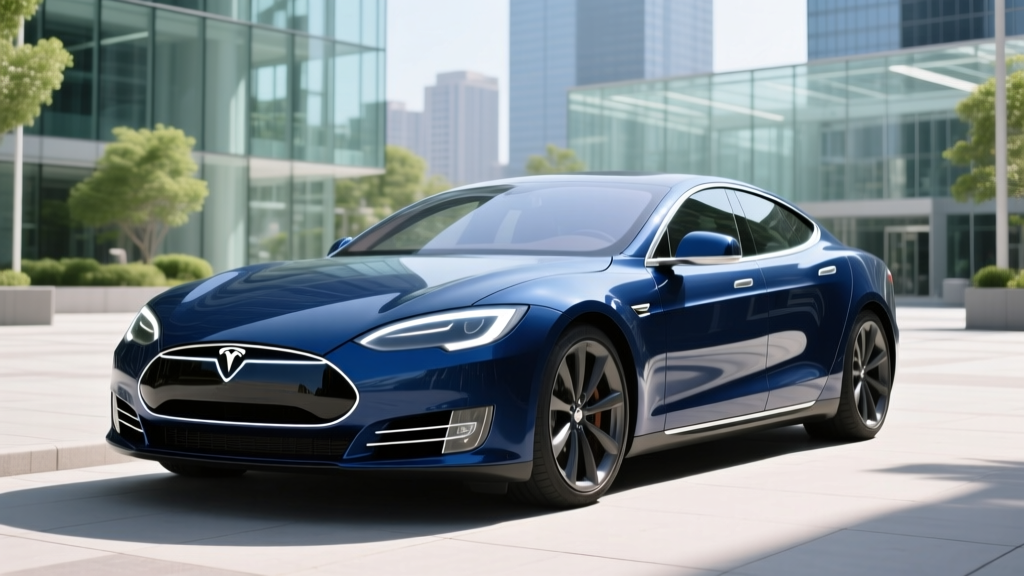
Rumors about the Tesla Model S being discontinued surface regularly, and as of early 2026, Tesla has not issued a formal end-of-production announcement for the sedan that launched the modern EV era. However, the signals are hard to ignore: Tesla has progressively consolidated its lineup around the Model Y, Cybertruck, and next-generation platforms, while the Model S and Model X occupy a shrinking share of the company's production capacity at Fremont. Elon Musk has repeatedly hinted that the S/X platform is approaching its natural lifecycle end, though no firm date has been set.
For buyers, the question isn't whether the Model S will eventually exit — it's whether it still makes sense to purchase one while it's available. The 2025-2026 Model S remains one of the most capable luxury electric sedans on the market, with class-leading range, access to the Supercharger network, and performance that embarrasses six-figure supercars. But it also carries a premium price, an aging interior architecture relative to newer rivals, and growing uncertainty about long-term parts and service support as Tesla shifts engineering resources elsewhere.
Below, we break down the 2026 Model S with exact numbers — range, charging, pricing, tax credit status, and real-world ownership factors — so you can decide if this is the right time to buy or the right time to look elsewhere.
2026 Tesla Model S: Core Specifications at a Glance
| Specification | Model S Long Range | Model S Plaid |
|---|---|---|
| EPA Range | 402 miles | 396 miles |
| Battery Capacity (usable) | ~100 kWh (NMC) | ~100 kWh (NMC) |
| Drivetrain | Dual-Motor AWD | Tri-Motor AWD |
| Horsepower | 670 hp | 1,020 hp |
| 0-60 mph | 3.1 seconds | 1.99 seconds |
| Top Speed | 155 mph | 200 mph |
| Max DC Fast Charge | 250 kW | 250 kW |
| 10-80% DC Charge Time | ~30 minutes | ~30 minutes |
| Level 2 Charge Rate | 11.5 kW (~44 mi/hr) | 11.5 kW (~44 mi/hr) |
| MPGe (combined) | 120 MPGe | 116 MPGe |
| Efficiency | 28 kWh/100 mi | 29 kWh/100 mi |
| Cargo Volume | 28 cu ft (rear) + ~5 cu ft (frunk) | 28 cu ft (rear) + ~5 cu ft (frunk) |
| Rear Legroom | 35.4 inches | 35.4 inches |
| Base MSRP | $74,990 | $89,990 |
| Battery Warranty | 8 years / 150,000 miles | 8 years / 150,000 miles |
Source: fueleconomy.gov and Tesla's official specification pages. Figures reflect 2025-2026 model year data and are subject to change.
Real-World Range: What the EPA Number Doesn't Tell You
Real-World Expectation: ~310-340 miles highway at 70-75 mph; ~260-290 miles in freezing temperatures (below 32°F); ~350-380 miles mixed city/suburban driving.
The Model S Long Range's 402-mile EPA rating remains one of the highest of any production EV sold in the United States. But as with every electric vehicle, the sticker number represents a blended cycle that doesn't fully capture highway or cold-weather reality.
In sustained highway driving at 70-75 mph, expect to use roughly 300-320 Wh/mi, which translates to about 310-340 real miles on a full charge. This is still exceptional — few EVs come close — but it's a meaningful gap from the 402-mile figure. In freezing weather, battery chemistry and cabin heating demands can reduce range by 25-35%, bringing usable range down to approximately 260-290 miles. The Model S does include a heat pump (standard since the 2021 refresh), which significantly mitigates cold-weather losses compared to older resistive-heating EVs.
City and suburban drivers who benefit heavily from regenerative braking will see results much closer to the EPA number — often 370+ miles in moderate climates. The Plaid's tri-motor setup and higher performance tuning reduce efficiency slightly (29 kWh/100 mi vs. 28), but the difference in real-world range is marginal in daily use.
Charging Speed: 250 kW Peak, but Mind the Curve
The 2026 Model S charges at up to 250 kW on Tesla's V3 Superchargers using the native NACS connector. Here's what that actually means in practice:
| Charging Level | Power / Rate | Miles Added Per Hour | Notes |
|---|---|---|---|
| Level 1 (120V) | ~1.4 kW | ~5-6 mi/hr | Emergency/trickle only |
| Level 2 (240V, 48A) | 11.5 kW | ~44 mi/hr | Full charge in ~9 hours |
| DC Fast (V3 Supercharger) | Up to 250 kW | ~200 mi in 15 min (peak) | 10-80% in ~30 min |
| DC Fast (CCS adapter) | Up to ~150-170 kW | Varies | Via Tesla CCS adapter; depends on station |
The critical detail for road-trip planning: the Model S does not sustain 250 kW across the entire charging session. Peak charge rate is available roughly between 10-30% State of Charge (SoC). Above 50%, the curve tapers significantly — dropping to approximately 100-120 kW by 60% and further to 40-50 kW above 80%. This is why Tesla and the industry quote 10-80% times rather than 0-100%.
Preconditioning is essential. If you navigate to a Supercharger using the car's built-in navigation, the battery thermal management system will begin warming the pack en route, enabling faster charge acceptance on arrival. Skipping preconditioning — especially in cold weather — can add 10-15 minutes to your charging session.
For home charging, a Wall Connector on a 60-amp circuit delivers the full 11.5 kW (48A), adding roughly 44 miles of range per hour. Most owners find this sufficient for daily needs — plug in overnight, wake up to a full charge. A licensed electrician should verify your panel can support a dedicated 60A circuit; older homes may require a panel upgrade.
Pricing, Trims, and Federal Tax Credit Eligibility
The 2026 Tesla Model S is offered in two trims:
- Model S Long Range: $74,990 MSRP (plus destination and any applicable fees)
- Model S Plaid: $89,990 MSRP
Options such as premium paint colors ($1,500-$2,500), 21-inch Arachnid wheels ($4,500), and Full Self-Driving (Supervised) capability ($8,000) can push the as-tested price well above $95,000 for a fully loaded Plaid.
| Cost Factor | Model S Long Range | Model S Plaid |
|---|---|---|
| Base MSRP | $74,990 | $89,990 |
| Federal §30D Tax Credit | $0 (MSRP exceeds $55,000 sedan cap) | $0 (MSRP exceeds $55,000 sedan cap) |
| Estimated Out-of-Pocket (before state incentives) | ~$74,990 | ~$89,990 |
Federal tax credit status: The Model S does not qualify for the IRS §30D Clean Vehicle Credit. Under current law, the credit is capped at vehicles with an MSRP of $55,000 or less for sedans. Both Model S trims exceed this threshold significantly. Additionally, the §30D credit imposes buyer income caps ($150,000 single / $300,000 joint AGI) and battery critical-mineral sourcing requirements — but the MSRP cap alone disqualifies the Model S regardless of buyer income. For the latest rules, consult IRS.gov §30D guidance.
Some state-level incentives may still apply (for example, certain state rebates or HOV lane access programs), but these vary by jurisdiction. Check your state's energy or DMV website for current programs.
Performance, Tech, and Interior: The Model S Experience in 2026
The Model S Plaid's 1.99-second 0-60 mph time remains one of the quickest production car launches ever recorded, tri-motor torque vectoring providing relentless acceleration well past 100 mph. The Long Range variant's 3.1-second run is hardly slow — it outpaces most sports sedans at twice the price. Both variants feature standard dual-motor or tri-motor all-wheel drive with sophisticated traction management.
The 17-inch landscape touchscreen continues to anchor the minimalist interior, running Tesla's proprietary infotainment system with Netflix, YouTube, and gaming capabilities while parked. A secondary 8-inch rear touchscreen provides rear-passenger climate and entertainment controls. The yoke steering wheel remains standard (a conventional round wheel is available as a no-cost option). Wireless phone charging, HEPA air filtration (Bioweapon Defense Mode), and a 22-speaker audio system round out the feature set.
Driver assistance: The Model S ships with Tesla's Basic Autopilot (adaptive cruise, lane centering). Full Self-Driving (Supervised) is an $8,000 add-on that enables automated lane changes, traffic light/stop sign recognition, and city-street navigation.
Notable drawbacks: The Model S platform dates to 2012, with a major refresh in 2021. While the powertrain is thoroughly modern, certain interior build-quality elements — panel gaps, material finishes — lag behind newer luxury competitors like the Lucid Air, Mercedes EQS, and BMW i7. Rear-seat space (35.4 inches of legroom) is adequate but not class-leading for a sedan in this price bracket. The absence of a physical instrument cluster and the reliance on touchscreen controls for nearly all vehicle functions remains polarizing.
Pros, Cons, and Who the Model S Suits Best
Pros
- Class-leading 402-mile EPA range (Long Range)
- Access to Tesla Supercharger network (17,000+ stalls in North America)
- Plaid's 1.99s 0-60 is supercar territory
- Over-the-air updates continue to add features
- Strong 8-year/150,000-mile battery warranty
- Excellent efficiency: 28 kWh/100 mi
Cons
- No federal tax credit (exceeds $55K sedan MSRP cap)
- Aging platform; interior quality below newer luxury rivals
- Discontinuation risk may affect long-term resale and parts
- 250 kW max charge rate trails 350 kW-capable competitors
- Rear-seat room is modest for the price class
- FSD (Supervised) is Level 2, not autonomous — despite the name
Who this EV suits best:
- Road-trip enthusiasts who want maximum range and access to the most reliable DC fast-charging network in North America.
- Performance seekers who value Plaid-level acceleration and don't want to compromise on practicality (4-door sedan with a usable frunk and 28 cu ft of cargo space).
- Tesla ecosystem loyalists already invested in Powerwall, Solar Roof, or existing Supercharger routines.
Who should look elsewhere:
- Tax-credit seekers: The Model S offers zero federal incentive. The Tesla Model 3, or competitors like the Hyundai Ioniq 6 or BMW i4, may qualify for up to $7,500.
- Luxury sedan buyers prioritizing interior refinement: The Lucid Air, Mercedes EQS, and Genesis Electrified G80 offer more premium cabins.
- Buyers worried about depreciation risk: If discontinuation is announced, early-adopter resale values could soften. Buying certified pre-owned or leasing may mitigate this.
Competitor Comparison: Model S vs. the Field
| Attribute | Tesla Model S LR | Lucid Air Pure | Mercedes EQS 450+ | BMW i7 xDrive60 |
|---|---|---|---|---|
| EPA Range | 402 mi | 419 mi | 390 mi | 318 mi |
| Base MSRP | $74,990 | $69,900 | $104,400 | $119,300 |
| Max DC Charge | 250 kW | 200 kW | 200 kW | 195 kW |
| 0-60 mph | 3.1 sec | 5.2 sec | 5.9 sec | 4.5 sec |
| Federal Tax Credit | No | No (exceeds MSRP cap) | No | No |
| Charging Network | Supercharger (NACS) | Supercharger (via adapter) | CCS networks | CCS networks |
The Lucid Air Pure undercuts the Model S on price while exceeding it on range — a formidable rival. The Mercedes and BMW compete on luxury and build quality but trail on range and charging infrastructure. The Model S's enduring advantage is the Supercharger network and proven long-distance reliability, though this moat is narrowing as other automakers gain NACS access.
Battery Longevity and Warranty Coverage
Tesla warranties the Model S battery and drive unit for 8 years or 150,000 miles, whichever comes first, with a minimum 70% capacity retention threshold. The NMC (nickel manganese cobalt) chemistry used in the Model S's ~100 kWh pack offers high energy density but is somewhat more susceptible to long-term degradation than LFP chemistry — though Tesla's thermal management system and software-managed charge buffers have proven effective in practice.
Real-world data from high-mileage Model S owners suggests approximately 10-15% degradation over the first 100,000 miles, with the curve flattening significantly after the initial break-in period. For a 402-mile EPA vehicle, a 12% loss still leaves ~354 miles of range — more than sufficient for most use cases.
Battery replacement costs, should the pack fall outside warranty coverage, are estimated between $15,000-$22,000 depending on the service center and whether a remanufactured pack is used. This is a significant sum, though it's worth noting that catastrophic battery failures remain rare in Tesla's fleet.
Frequently Asked Questions
Is the Tesla Model S discontinued as of 2026?
No. As of early 2026, Tesla continues to sell and produce the Model S in both Long Range and Plaid trims. However, Tesla executives have signaled that the S/X platform will eventually be retired without a direct successor, and production volume has declined relative to Model Y and Cybertruck. No official discontinuation date has been announced.
What is the real-world range of the Model S?
Expect approximately 310-340 miles in highway driving at 70-75 mph, and 260-290 miles in sub-freezing temperatures. City and suburban drivers can often achieve 350-380 miles. The EPA rates the Long Range at 402 miles and the Plaid at 396 miles.
How fast does the Model S charge at home and on the road?
On a Level 2 home charger (240V, 48A), the Model S charges at 11.5 kW, adding about 44 miles of range per hour — a full charge takes roughly 9 hours. On a V3 Supercharger, it peaks at 250 kW and charges from 10-80% in approximately 30 minutes, though the charge curve tapers significantly above 50% SoC.
Does the Model S qualify for the federal EV tax credit?
No. Under IRS §30D rules, the Clean Vehicle Credit for sedans is limited to vehicles with an MSRP of $55,000 or less. The Model S Long Range starts at $74,990 and the Plaid at $89,990 — both well above the cap. Additional income and battery-sourcing requirements also apply to the credit. See IRS.gov for current eligibility details.
Is the Model S worth buying vs. the Lucid Air or Mercedes EQS?
It depends on your priorities. The Model S wins on Supercharger network access, performance-per-dollar (especially Plaid), and proven long-range road-trip capability. The Lucid Air Pure offers more range at a lower price. The Mercedes EQS and BMW i7 deliver superior interior luxury and ride quality. If charging infrastructure and raw performance matter most, the Model S still holds an edge. If interior refinement or tax-credit eligibility is paramount, look at the competition.
What happens to parts and service if Tesla discontinues the Model S?
Federal law requires automakers to supply parts for a minimum period after discontinuation (typically 10+ years, varying by state). Tesla also has a track record of supporting older vehicles — the original 2012 Model S still receives OTA updates. That said, body panels, trim pieces, and model-specific components may become harder to source over time, and wait times for service could increase as Tesla prioritizes higher-volume models.
Should I buy or lease the Model S given discontinuation uncertainty?
Leasing can be a smart strategy if you're concerned about resale value in a post-discontinuation scenario — it transfers depreciation risk to the lessor. If you plan to keep the car for 8+ years and value the warranty coverage window, buying remains viable. Either way, the Model S's core capabilities (range, performance, charging access) remain excellent regardless of the platform's future.