Quick Verdict: The Tesla Model S Blue in 2026
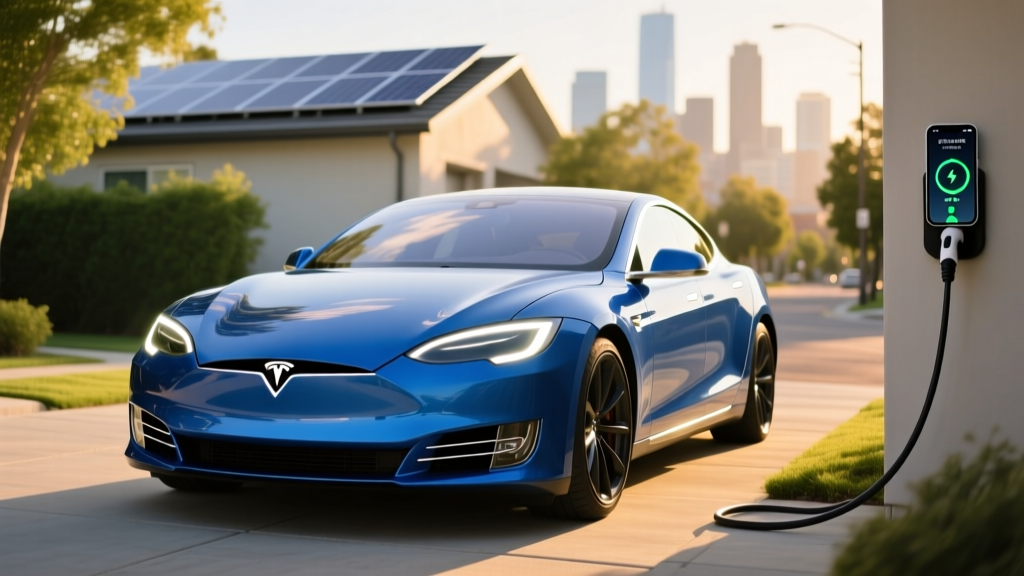
The Tesla Model S remains the benchmark luxury electric sedan, and the Deep Blue Metallic finish (a $1,500 premium paint option) gives it a presence that photographs well and hides road grime better than Tesla's signature white. For 2026, the Model S Long Range continues with a 402-mile EPA estimate, a 100 kWh (usable) battery pack, and access to Tesla's 17,000+ Supercharger network — still the most reliable DC fast-charging ecosystem in North America. The Plaid variant trades some range for 1,020 horsepower and a 2.1-second 0-60 time that no production sedan has matched.
But the Model S faces stiffer competition than ever. The Lucid Air Sapphire, Porsche Taycan, and BMW i7 all bring compelling alternatives. This review breaks down the exact numbers — range, charging curves, real-world efficiency, total cost — so you can decide whether the Model S Blue is still the sedan to beat.
Range, Battery & Real-World Efficiency
| Specification | Model S Long Range | Model S Plaid |
|---|---|---|
| EPA Range | 402 miles | 359 miles |
| Battery (usable) | ~100 kWh, NMC | ~100 kWh, NMC |
| MPGe (combined) | 120 MPGe | 116 MPGe |
| Efficiency | 28 kWh/100 mi | 29 kWh/100 mi |
| Drivetrain | Dual-Motor AWD | Tri-Motor AWD |
| 0-60 mph | 3.1 seconds | 1.99 seconds (with rollout) |
| Horsepower | 670 hp | 1,020 hp |
| Top Speed | 155 mph | 200 mph |
The Model S uses an NMC (nickel manganese cobalt) battery chemistry, which offers higher energy density than LFP (lithium iron phosphate) — critical for achieving 400+ miles in a sedan form factor. The trade-off is that NMC cells are more sensitive to sustained high-state-of-charge storage. Tesla recommends daily charging to 80–90% for NMC packs and 100% only for long trips. This differs from LFP-equipped vehicles (like the Model 3 RWD), where Tesla recommends regular 100% charges.
Charging Speed: DC Fast, Level 2 & Home Setup
Charging speed is where the Model S benefits from Tesla's vertically integrated ecosystem. The 2026 Model S supports peak DC fast-charging at up to 250 kW on V3 Superchargers and can also access NACS-native chargers across the expanding network.
| Charging Level | Power / Rate | Speed | Notes |
|---|---|---|---|
| Level 1 (120V) | ~1.4 kW | ~3-4 mi/hr | Emergency/trickle only |
| Level 2 (240V, 48A) | 11.5 kW | ~34-40 mi/hr | Home Wall Connector; full charge in ~9-10 hrs |
| Level 2 (240V, 32A) | 7.7 kW | ~23-26 mi/hr | Mobile Connector on 240V outlet |
| DC Fast (V3 Supercharger) | Peak 250 kW | 10-80% in ~27 min | Peak rate sustained to ~50% SoC, then tapers |
| DC Fast (V4 Supercharger) | Peak 250 kW* | 10-80% in ~25 min | *Model S limited to 250 kW; V4 supports higher for future architectures |
Charging curve reality: The 250 kW peak is not sustained across the entire session. The Model S typically holds above 200 kW from roughly 10% to 45% state of charge, then tapers to ~150 kW through 65%, and drops further to under 100 kW above 80%. A 10-80% session takes approximately 25-30 minutes at a V3 Supercharger. Charging from 80-100% adds another 20+ minutes — plan accordingly on road trips and charge to 80% unless you need the full battery.
Preconditioning matters: Navigate to a Supercharger using the car's built-in navigation and the Model S will automatically precondition the battery to optimal temperature for fast charging. Without preconditioning (e.g., arriving at a non-navigated charger in cold weather), peak charge rates can drop by 30-50% for the first several minutes. Always route through the car's nav for the fastest DC sessions.
Pricing, Trims & Federal Tax Credit Eligibility
The 2026 Tesla Model S is available in two trims. Deep Blue Metallic adds $1,500 to the base price.
| Trim | Base MSRP | With Blue Paint | Federal §30D Credit | Effective Price |
|---|---|---|---|---|
| Long Range | $79,990 | $81,490 | See eligibility below | Varies |
| Plaid | $94,990 | $96,490 | See eligibility below | Varies |
- MSRP Cap: Sedans must be under $55,000 MSRP. The Model S at $79,990+ exceeds this cap, making it ineligible for the new-vehicle §30D credit. (SUVs/trucks have a higher $80,000 cap, but the Model S is classified as a sedan.)
- Buyer Income Limits: Even if MSRP qualified, AGI caps apply: $150K single / $225K head of household / $300K joint filers.
- Battery Sourcing: Critical mineral and battery component sourcing requirements continue to tighten annually through 2030.
- Point-of-Sale Transfer: For eligible vehicles, buyers can transfer the credit to the dealer for an instant price reduction — but this is moot if the vehicle fails the MSRP cap.
Bottom line on incentives: The Model S does not qualify for the federal new-vehicle tax credit due to its MSRP. Some states offer additional incentives that are not MSRP-capped (check your state's energy office or AFDC incentive database). If you're cross-shopping, note that the Tesla Model 3 and some competitors' lower trims may still qualify.
Performance & Driving Dynamics
The Model S Long Range delivers 670 horsepower from its dual-motor all-wheel-drive powertrain, achieving 0-60 mph in 3.1 seconds — quicker than most sports cars and all but the most exotic sedans. The Plaid's tri-motor setup (one front, two rear) produces 1,020 hp and a claimed 1.99-second 0-60 (with 1-foot rollout subtracted, per drag-racing convention; expect ~2.1 seconds in real-world rollout starts).
Adaptive air suspension is standard on both trims, offering adjustable ride height and automatic lowering at highway speeds for improved aerodynamics and range. The steering is quick and precise, though feedback remains somewhat synthetic compared to a Porsche Taycan's hydraulic-assist system. The Model S rides comfortably over rough pavement in its default "Medium" suspension setting; switch to "Low" and "Sport" for canyon carving.
Regenerative braking offers two modes: Standard (strong regen enabling one-pedal driving in most situations) and Low (coasting feel closer to a conventional car). Tesla removed the "creep" and "roll" stop mode customization in recent software updates, standardizing on "Hold" mode which brings the car to a complete stop with regen alone.
Interior, Cargo & Technology
The Model S interior centers on a 17-inch landscape-oriented touchscreen running Tesla's proprietary infotainment OS. The display handles navigation, media, climate, vehicle settings, and a full app suite including Netflix, YouTube, and Arcade (with a wireless controller). A 12.3-inch digital instrument cluster sits behind the yoke or round steering wheel (both included at no extra charge since 2024).
Notable tech features:
- Autopilot (standard): SAE Level 2 driver assistance with Traffic-Aware Cruise Control and Autosteer (lane centering). Driver must remain engaged at all times.
- Full Self-Driving Supervised ($8,000 option): Adds Navigate on Autopilot, Auto Lane Change, Autopark, Summon, and Traffic Light/Stop Sign Control. Still SAE Level 2 — not autonomous driving.
- 22-speaker audio system with immersive sound processing
- HEPA air filtration with Bioweapon Defense Mode
- Over-the-air updates continuously adding features and refinements
- 8 rear-seat touchscreen for climate and media control
Tesla's Autopilot and Full Self-Driving (Supervised) are SAE Level 2 driver-assistance systems. You must keep your hands on the wheel and eyes on the road at all times. The car does not handle all driving scenarios — construction zones, faded lane markings, adverse weather, and complex intersections require immediate driver takeover. True Level 4 autonomous driving (no driver needed) is currently only available in geofenced robotaxi services like Waymo.
| Dimension | Measurement |
|---|---|
| Cargo (rear trunk) | 28.0 cu ft |
| Cargo (front trunk / frunk) | 5.3 cu ft |
| Total cargo | 33.3 cu ft |
| Rear legroom | 35.4 inches |
| Front headroom | 38.8 inches |
| Seating capacity | 5 passengers |
The Model S's hatchback/liftback design gives it a practical advantage over traditional sedans like the BMW i7 or Mercedes EQS — the wide-opening rear hatch accommodates bulky items that wouldn't fit through a conventional trunk opening. The 28 cu ft rear cargo area exceeds most luxury SUVs, and folding the 60/40 rear seats opens up substantial space for long cargo.
Drawbacks: Panel gap consistency has improved but still lags German competitors. The yoke steering wheel remains polarizing and can be impractical for low-speed maneuvering (Tesla has not implemented the variable-ratio steering that would make it intuitive). Rear-seat comfort is good but not class-leading — the Lucid Air and BMW i7 offer more spacious, more luxuriously trimmed rear accommodations.
Warranty & Battery Longevity
| Coverage | Terms |
|---|---|
| Basic Vehicle | 4 years / 50,000 miles |
| Battery & Drive Unit | 8 years / 150,000 miles (Long Range) 8 years / 150,000 miles (Plaid) |
| Battery Capacity Guarantee | Minimum 70% retention over warranty period |
Tesla's 8-year/150,000-mile battery and drive unit warranty is competitive within the luxury EV segment. The 70% capacity retention threshold is standard — if your battery degrades below 70% of its original capacity within the warranty period, Tesla will repair or replace it. Based on crowdsourced fleet data, Model S batteries typically retain 85-90% capacity after 100,000 miles, with the degradation curve flattening significantly after the initial 20,000-30,000 mile break-in period.
NMC chemistry degrades faster if routinely charged to 100% and stored at high SoC in hot climates. For maximum longevity: charge to 80-90% daily, avoid leaving the car at 100% for extended periods, and use scheduled departure charging to minimize time spent at full charge. According to fueleconomy.gov, modern EV batteries are designed to last the life of the vehicle under normal use patterns.
Pros, Cons & Who Should Buy
Pros
- 402-mile EPA range — among the longest of any production EV
- Access to Tesla Supercharger network (17,000+ stalls in North America, highest reliability)
- Hatchback/liftback practicality with 33.3 cu ft total cargo
- Class-leading performance: 3.1s (LR) and 1.99s (Plaid) 0-60 times
- Continuous OTA updates add features years after purchase
- Strong resale value relative to luxury EV competitors
- Standard adaptive air suspension
Cons
- $79,990+ MSRP exceeds federal §30D tax credit cap for sedans
- 250 kW peak DC charging — slower than Lucid Air's 300+ kW capability
- Yoke steering is impractical for some drivers; variable ratio absent
- Panel fit and interior material quality below Mercedes/BMW standards
- Rear seat less spacious than Lucid Air or BMW i7
- No Apple CarPlay or Android Auto (Tesla-only infotainment)
- FSD Supervised adds $8,000 and remains Level 2, not autonomous
- Road-trip enthusiasts who value Supercharger network reliability and 400+ mile range for cross-country drives with minimal planning friction.
- Performance seekers who want supercar-rivaling acceleration in a practical 5-passenger sedan — especially Plaid buyers who want the fastest production sedan ever made.
- Tech-forward buyers who prefer Tesla's software ecosystem, OTA updates, and integrated experience over traditional luxury brand interfaces.
- Commuters with home charging who can take advantage of 34-40 mi/hr Level 2 charging to start every morning with a full "tank."
- You need the most luxurious rear seat → BMW i7 or Mercedes EQS
- You want the absolute fastest DC charging → Lucid Air (300+ kW peak)
- Tax credit eligibility is a priority → Tesla Model 3, Hyundai Ioniq 6, or other sub-$55K sedans
- You prefer Apple CarPlay/Android Auto → virtually any competitor
Frequently Asked Questions
What is the real-world range of the Tesla Model S?
The EPA rates the 2026 Model S Long Range at 402 miles and the Plaid at 359 miles. In real-world highway driving at 70-75 mph, expect approximately 320-350 miles (Long Range) and 280-310 miles (Plaid) in moderate temperatures. Cold weather below freezing reduces range by 20-30%, so plan for 260-290 miles in winter highway conditions.
How fast does the Model S charge at home and on the road?
At home with a Tesla Wall Connector (240V, 48A), the Model S charges at 11.5 kW, adding roughly 34-40 miles of range per hour — a full overnight charge from near-empty takes about 9-10 hours. On DC fast charging, the Model S peaks at 250 kW on V3/V4 Superchargers, achieving a 10-80% charge in approximately 25-30 minutes. The charge rate tapers significantly above 80%.
Does the Tesla Model S qualify for the federal EV tax credit?
No. Under current IRS §30D rules, the federal new-vehicle tax credit caps sedan MSRP at $55,000. The Model S starts at $79,990, well above this threshold. It does not qualify for the $7,500 credit regardless of buyer income. Some state-level incentives may still apply — check the AFDC state incentive database for your area.
Is the Model S worth buying vs. the Lucid Air or Porsche Taycan?
It depends on your priorities. The Model S wins on Supercharger network access, range (402 mi vs. Taycan's ~246-283 mi), and cargo practicality (hatchback design). The Lucid Air Grand Touring offers comparable range (516 mi EPA) and faster DC charging (300+ kW peak) but lacks Tesla's charging network. The Porsche Taycan excels in driving dynamics, build quality, and 800V charging architecture (10-80% in ~22 min at 270 kW) but sacrifices significant range. For road-trip reliability and overall value, the Model S still holds an edge; for luxury feel and driving engagement, the Taycan leads.
What's the difference between Autopilot and Full Self-Driving?
Autopilot (standard) includes Traffic-Aware Cruise Control and Autosteer (lane centering) — it's a highway-focused SAE Level 2 system. Full Self-Driving Supervised ($8,000) adds Navigate on Autopilot (automatic highway interchanges), Auto Lane Change, Autopark, Smart Summon, and Traffic Light/Stop Sign Control. Both are Level 2 systems requiring constant driver supervision. Neither makes the car self-driving.
How long will the Model S battery last?
Tesla warrants the battery for 8 years/150,000 miles with a minimum 70% capacity retention guarantee. Fleet data suggests Model S batteries typically retain 85-90% capacity at 100,000 miles. With proper care (daily charging to 80-90%, avoiding prolonged 100% storage), the battery should outlast 200,000+ miles before approaching the 70% threshold. Out-of-warranty battery replacement currently costs approximately $13,000-$20,000 depending on pack configuration.
How much does it cost to charge a Model S?
At home on average US electricity rates (~$0.17/kWh), fully charging the ~100 kWh battery costs roughly $17. At Tesla Superchargers (averaging $0.28-$0.36/kWh nationally), a 10-80% session costs approximately $20-$25. Per mile, home charging runs about $0.05-0.06/mile and Supercharging about $0.08-0.10/mile — compared to $0.12-0.16/mile for a comparable gas-powered luxury sedan at $3.50/gallon and 25 MPG.
Specifications sourced from Tesla's official Model S configurator and fueleconomy.gov. Pricing, tax credit rules, and features are current as of the 2026 model year and subject to change. Verify all details with Tesla and a qualified tax professional before purchasing.