Quick Verdict: A Bridge for Truck Buyers Not Ready to Go Full EV
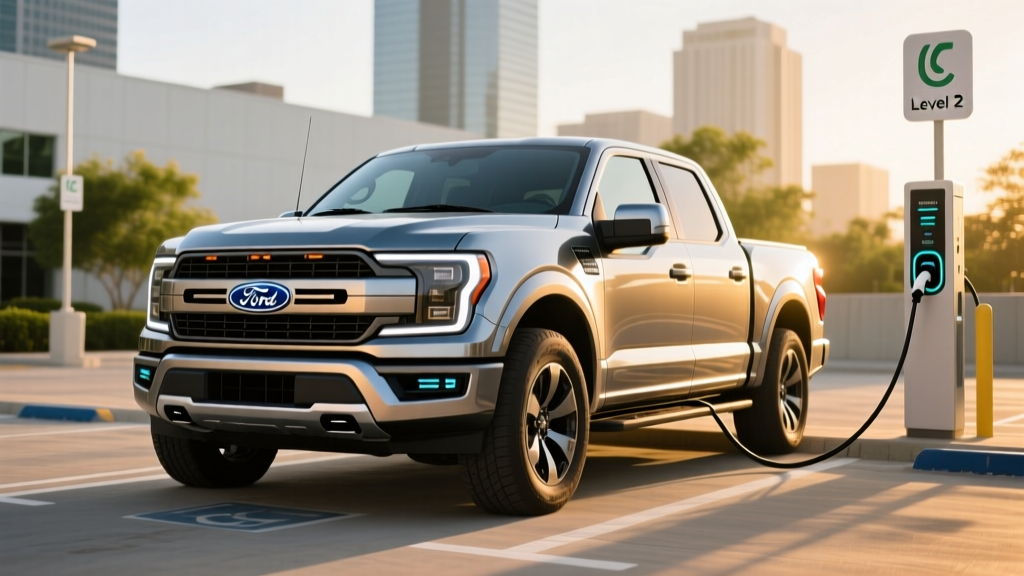
The 2026 Ford F-150 EREV (Extended-Range Electric Vehicle) isn't a pure battery-electric truck, and it isn't a traditional hybrid. It's a series-hybrid architecture where an onboard 1.5-liter turbocharged generator charges the battery but never directly drives the wheels. The result: 70 miles of EPA-estimated electric-only range for daily commutes, plus a gasoline generator that extends total range past 500 miles for towing and road trips. For buyers who want electric daily driving without range anxiety on job sites or trailers, the F-150 EREV powertrain occupies a unique middle ground between the F-150 Hybrid and the all-electric F-150 Lightning.
F-150 EREV Powertrain: Battery, Motor & Generator Specs
Unlike a conventional PHEV where the engine can drive the wheels directly, the F-150 EREV uses a pure series-hybrid layout. The wheels are always driven by electric motors; the gasoline engine exists solely as a generator to recharge the battery or supply power to the motors when the battery depletes.
| Spec | Value |
|---|---|
| Battery Capacity | 38.3 kWh usable (NMC lithium-ion) |
| Electric-Only Range (EPA) | 70 miles |
| Total Range (EPA) | 510 miles |
| Generator | 1.5L turbocharged inline-3, 115 kW output |
| Drive Motors | Dual-motor eAWD (front + rear) |
| Combined Horsepower | 412 hp |
| Combined Torque | 590 lb-ft |
| 0-60 mph | 5.8 seconds |
| Max Tow Rating | 7,500 lbs |
| Max Payload | 1,800 lbs |
| Drivetrain | eAWD (dual-motor) |
| MPGe (Electric Mode) | 85 MPGe combined |
| Fuel Economy (Generator Active) | 23 mpg combined |
The NMC (nickel manganese cobalt) battery chemistry was chosen for its energy density — critical when packaging 38.3 kWh into a truck frame alongside a generator and fuel tank. Unlike the F-150 Lightning's larger pack, this smaller battery prioritizes daily commuting range over long-distance electric driving. Ford has not published an LFP option for the EREV variant.
Charging Speed: DC Fast Charge and Home Level 2
The F-150 EREV supports both DC fast charging and Level 2 AC charging, though at lower peak rates than the full-electric Lightning since the battery is roughly one-third the size.
| Charging Level | Power | Speed | Time |
|---|---|---|---|
| Level 1 (120V household) | 1.4 kW | ~4 mi/hr | ~18 hours (0-100%) |
| Level 2 (240V, 32A) | 7.7 kW | ~23 mi/hr | ~3.5 hours (0-100%) |
| Level 2 (240V, 48A) | 11.5 kW | ~34 mi/hr | ~2.5 hours (0-100%) |
| DC Fast Charge | 120 kW peak | N/A | ~22 min (10-80%) |
At a DC fast charger, the 38.3 kWh battery can accept up to 120 kW peak. However, as with all EVs, the charge curve tapers significantly above 80% state of charge to protect battery health. The 10-80% time of approximately 22 minutes is competitive for a pack this size, but you won't find 10-minute fill-ups here — the physics of a smaller battery at moderate C-rates means sustained rates average closer to 65-75 kW through the bulk of the session.
For home charging, a 48-amp Level 2 wall connector (requiring a 60-amp circuit) replenishes the full battery in roughly 2.5 hours. Given the 70-mile electric range, most owners who charge nightly will rarely need DC fast charging for daily use. The generator handles longer trips.
Pricing, Trims & Federal Tax Credit Eligibility
The 2026 F-150 EREV is available across three trims, positioning it between the F-150 Hybrid and the Lightning in both price and capability.
| Trim | MSRP | Est. After §30D Credit |
|---|---|---|
| XLT EREV | $58,995 | $51,495* |
| Lariat EREV | $65,495 | $57,995* |
| Platinum EREV | $73,995 | $66,495* |
*Estimated price assumes full $7,500 federal tax credit. Actual eligibility depends on multiple factors — see checklist below.
Federal §30D Tax Credit Eligibility Checklist
- Vehicle MSRP cap: Trucks/vans must be under $80,000 MSRP. All F-150 EREV trims currently qualify.
- Buyer income cap: Modified AGI must not exceed $150,000 (single), $225,000 (head of household), or $300,000 (joint). Check IRS §30D guidelines for current-year thresholds.
- Battery sourcing: A percentage of critical minerals and battery components must be sourced from the US or FTA-partner countries. Ford has confirmed the EREV battery meets 2026 sourcing requirements, but verify at point of sale.
- Point-of-sale transfer: Eligible buyers can transfer the credit to the dealer at purchase for an immediate price reduction rather than waiting to claim it on their tax return.
- VIN registration: The dealer must report the sale and VIN to the IRS within 3 days. Confirm this step is completed.
Rules change frequently. Always confirm current-year eligibility with your tax professional and the IRS clean vehicle credit page before purchase.
Interior, Cargo & Technology
The F-150 EREV shares its SuperCrew cab configuration with the rest of the F-150 lineup, preserving the practicality truck buyers demand.
- Rear legroom: 43.6 inches (SuperCrew)
- Bed length options: 5.5 ft or 6.5 ft
- Bed volume: 52.8 cu ft (5.5 ft bed) / 62.3 cu ft (6.5 ft bed)
- Pro Power Onboard: 7.2 kW max output (240V + 120V outlets in bed and cabin) — enough to run power tools, a welder, or tailgate appliances
- Infotainment: 12-inch touchscreen (standard), available 15.5-inch portrait screen with SYNC 4A
- Driver Assist: Ford BlueCruise hands-free highway driving (SAE Level 2 — driver must remain attentive and eyes on road)
The 7.2 kW Pro Power Onboard is a standout feature unique to the EREV and Lightning variants. Because the EREV carries both a battery and a generator, it can deliver sustained high-wattage output for job-site use — running compressors, saws, and lights for hours without idling a traditional engine.
Real-World Driving: What It's Like to Live With
On a typical weekday, the F-150 EREV operates as a pure electric truck. With 70 miles of range, a 30-mile round-trip commute stays entirely within battery power, and the generator never fires. Plug in at home each night, and you could go weeks without visiting a gas station. Energy cost for those electric miles? Roughly $0.04-$0.06 per mile at the national average of $0.16/kWh — compared to $0.18-$0.22/mile for a gas F-150 at $3.50/gallon.
Hook up a 6,000-lb trailer, and the story changes. The generator runs continuously, and fuel economy drops to approximately 14-16 mpg combined — comparable to a conventional F-150 EcoBoost under similar loads. The EREV doesn't eliminate fuel costs for heavy towing; it eliminates range anxiety. You won't need to plan DC fast-charger stops with a trailer in tow.
Cold-weather performance favors the EREV over a pure BEV. Below freezing, a battery-electric truck can lose 25-35% of its range. The EREV loses electric-only range too, but the generator compensates for longer trips, and waste heat from the engine can warm the cabin without draining the battery — a practical advantage in northern climates.
Pros
- 70 electric miles covers most daily commutes with zero gas
- 510+ mile total range eliminates road-trip and towing range anxiety
- 7.2 kW Pro Power Onboard for job-site and tailgate use
- Full SuperCrew cab and bed utility — no compromise vs gas F-150
- Generator provides cabin heat in cold weather without battery drain
- Eligible for up to $7,500 federal tax credit (verify eligibility)
Cons
- 7,500-lb tow rating trails the F-150 Hybrid (up to 12,700 lbs)
- 120 kW DC peak charge rate is slower than Lightning's 230 kW
- Complex powertrain: two systems (electric + generator) to maintain long-term
- Gas generator requires oil changes, spark plugs — maintenance a BEV avoids
- Starting MSRP of ~$59K is steep; well-equipped Platinum tops $74K
- Generator noise noticeable under heavy acceleration or low-battery towing
Warranty Coverage
Ford backs the F-150 EREV with competitive warranty terms, though buyers should pay close attention to the high-voltage battery coverage:
- Bumper-to-Bumper: 3 years / 36,000 miles
- Powertrain (including generator): 5 years / 60,000 miles
- High-Voltage Battery: 8 years / 100,000 miles (covers capacity loss below 70% of original)
- Electric Drive Components: 8 years / 100,000 miles
The 70% capacity retention threshold is industry-standard. Given the smaller 38.3 kWh pack and moderate daily cycling, most owners should retain well above 70% capacity through the warranty period. Ford's F-150 EREV spec page details full warranty terms.
F-150 EREV vs. Competitors: Which Truck Fits Your Use Case?
The EREV doesn't have a direct rival — no other full-size truck currently uses a series-hybrid architecture. But buyers cross-shop it against three alternatives:
| Spec | F-150 EREV | F-150 Lightning | F-150 PowerBoost Hybrid |
|---|---|---|---|
| Electric-Only Range | 70 mi | 230-320 mi | 0 mi (no EV mode) |
| Total Range | 510 mi | 230-320 mi | ~570 mi |
| Max Tow | 7,500 lbs | 10,000 lbs | 12,700 lbs |
| MPGe / MPG | 85 MPGe / 23 mpg | 70-78 MPGe | 22-25 mpg |
| Starting MSRP | $58,995 | $54,995 | $52,495 |
| Home Charging (0-100%) | ~2.5 hrs | ~8-10 hrs | N/A |
| Pro Power Onboard | 7.2 kW | 9.6 kW | 2.0 kW (optional 7.2 kW) |
Which F-150 Powertrain Is Right for You?
- Choose the EREV if: You commute under 70 miles daily, want electric operating costs most days, but regularly tow or drive long distances where charging infrastructure is uncertain.
- Choose the Lightning if: You have reliable home charging, rarely tow over 8,000 lbs, and want zero tailpipe emissions with the lowest per-mile energy cost.
- Choose the PowerBoost Hybrid if: You need maximum towing capacity (12,700 lbs), drive very high annual miles, and don't have home charging access for a plug-in vehicle.
Frequently Asked Questions
What is the real-world range of the F-150 EREV?
The EPA rates it at 70 miles electric-only and 510 miles total. In real-world driving at highway speeds (70 mph), expect 55-60 electric miles before the generator activates. Cold weather reduces electric range by 20-25%. Total range remains stable because the generator compensates.
How fast does the F-150 EREV charge?
On a DC fast charger, it peaks at 120 kW and reaches 10-80% in about 22 minutes. At home on a 48-amp Level 2 charger (11.5 kW), a full charge takes roughly 2.5 hours. A standard 120V outlet adds about 4 miles of range per hour.
How much does the F-150 EREV cost after tax credits?
The XLT EREV starts at $58,995 MSRP. If you qualify for the full $7,500 federal §30D credit, the effective price drops to approximately $51,495. Eligibility depends on your income, the vehicle's battery sourcing compliance, and MSRP caps. The credit can be transferred at point of sale for an immediate discount.
Does the F-150 EREV qualify for the federal EV tax credit?
Yes — as a plug-in vehicle with a battery over 7 kWh, the F-150 EREV qualifies under §30D, provided the buyer meets income limits ($150K single / $300K joint), the MSRP is under $80,000 (all trims qualify), and battery sourcing requirements are met. Verify current-year rules at fueleconomy.gov and with your tax professional.
Is the EREV better than the F-150 Lightning?
It depends on your use case. The Lightning offers 230-320 miles of pure electric range and lower per-mile cost but requires charging stops on long trips and loses range in cold weather and under tow. The EREV sacrifices electric range for unlimited total range via its generator, making it better for towing-heavy or rural buyers without reliable public charging.
Can the F-150 EREV power my home during an outage?
The 7.2 kW Pro Power Onboard system can power tools and appliances through bed-mounted outlets, but Ford does not currently offer a vehicle-to-home (V2H) integration system for the EREV as it does for the Lightning with the Ford Charge Station Pro and Home Integration System.