The Quick Verdict on the 2026 Tesla Model S
The Tesla Model S is the sedan that invented the modern long-range electric luxury car, and for 2026 it remains the benchmark for straight-line speed, Supercharger network access, and over-the-air evolution. But as BMW, Mercedes, and Lucid close the gap, buyers are asking sharper questions — especially about rear-seat comfort, real-world range, and whether the federal tax credit still applies to a car with an MSRP north of $85,000. This review tackles those questions with exact numbers, real-world caveats, and the ownership math that Tesla's spec sheet leaves out.
Specs at a Glance: 2026 Tesla Model S
| Spec | Long Range | Plaid |
|---|---|---|
| Base MSRP | $89,990 | $104,990 |
| Drivetrain | Dual-Motor AWD | Tri-Motor AWD |
| Horsepower | 670 hp | 1,020 hp |
| 0–60 mph | 3.1 sec | 1.99 sec |
| EPA Range | 402 mi | 359 mi |
| Battery (usable) | ~95 kWh NMC | ~95 kWh NMC |
| Efficiency | 120 MPGe / 28 kWh/100mi | 116 MPGe / 29 kWh/100mi |
| Max DC Fast Charge | 250 kW | 250 kW |
| 10–80% DC Time | ~27 min | ~27 min |
| Level 2 (11.5 kW) | ~41 mi/hr | ~41 mi/hr |
| Battery Warranty | 8 yr / 150,000 mi | 8 yr / 150,000 mi |
Source: fueleconomy.gov, Tesla.com spec sheets (2026 model year).
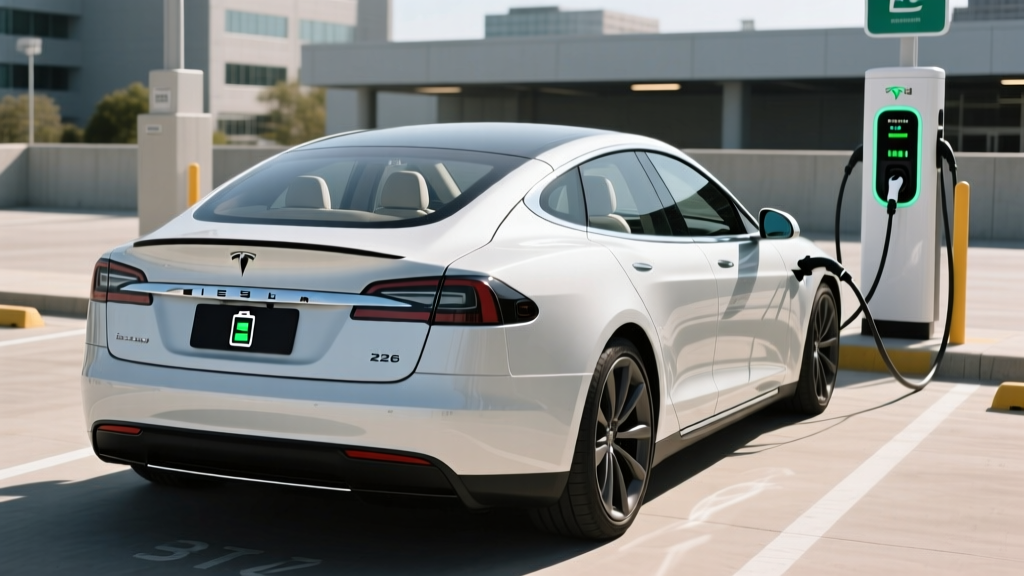
The Tesla Model S Backseat: Comfort, Space, and What Owners Actually Say
Search interest in the Tesla Model S backseat is unusually high for a luxury sedan, and the reason is practical: buyers in this price bracket often chauffeur clients, install child seats, or take long road trips with adult passengers. Here are the hard dimensions and the lived experience.
- Rear legroom: 35.4 inches — adequate for adults under 6 feet, but tight for taller passengers on trips over two hours.
- Rear headroom: 38.1 inches — the sloping roofline cuts into space; passengers over 6'1" will brush the headliner.
- Seat count: Standard 5-passenger. Optional 4-seat Executive Rear Seats package replaces the bench with two buckets and a fixed center console (reduces cargo pass-through).
- Child-seat anchors: Two lower LATCH anchors per outboard seat, top tethers on all three rear positions.
- Rear amenities: Dedicated 8-inch touchscreen for climate, media, and gaming; two USB-C ports (65W); heated outboard seats standard; ventilated rear seats not available.
Compared to the BMW i7 (40.0 in rear legroom) or Mercedes EQS (41.2 in), the Model S backseat is a half-step behind. It's a grand-tourer cabin, not a limousine. If rear-seat luxury is your top priority, the i7 and EQS win on space; if you want a driver's sedan that occasionally carries adults, the Model S is adequate but not class-leading.
Charging Speed: 250 kW Peak, but Watch the Curve
| Charging Level | Power / Voltage | Speed (mi/hr or min) |
|---|---|---|
| Level 1 (120V / 12A) | ~1.4 kW | ~5 mi/hr |
| Level 2 (240V / 48A Wall Connector) | 11.5 kW | ~41 mi/hr |
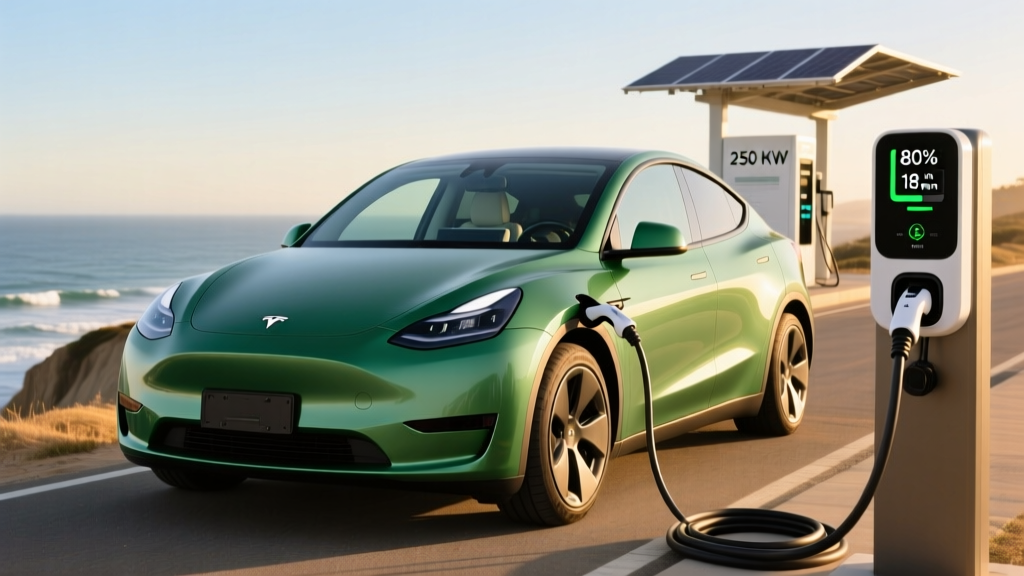
| DC Fast (V3 Supercharger) | 250 kW peak | 10–80% in ~27 min; ~200 mi in 15 min |
| DC Fast (CCS adapter at EA/Ionity) | Up to 250 kW | Similar to V3 when station can deliver |
Tesla's 400V architecture caps peak charging at 250 kW — fast, but now outpaced by the 350 kW Hyundai Ioniq 5 and the 800V Porsche Taycan and Lucid Air (which sustains 300+ kW for longer). The Model S charge curve is front-loaded: you'll see 250 kW only between roughly 10–30% SoC, then a taper to ~150 kW by 50%, and ~80 kW above 80%. That's why the 10–80% time of ~27 minutes is honest but not class-leading. Preconditioning via the nav-routed battery warm-up is essential — skip it and cold-soak charging can double your stop time.
On the plus side, the native NACS connector gives the Model S seamless access to 6,000+ Tesla Supercharger stalls in North America — still the most reliable public DC network by a wide margin, per JD Power and PlugShare data.
Pricing, Tax Credits, and the MSRP Cap Problem
| Trim | Base MSRP | As-Tested Typical | §30D Credit Eligible? |
|---|---|---|---|
| Long Range | $89,990 | $94,000–$98,000 | No — exceeds $55,000 sedan cap |
| Plaid | $104,990 | $110,000–$118,000 | No — exceeds $55,000 sedan cap |
Here's the critical detail many buyers miss: under IRS §30D, the federal EV tax credit caps eligibility at $55,000 MSRP for sedans (and $80,000 for SUVs/pickups/vans). The Model S is classified as a sedan, so neither trim qualifies for the up-to-$7,500 new-vehicle credit — regardless of your income or battery sourcing. Buyers should also be aware of the adjusted gross income caps ($150k single / $300k joint) and critical-mineral/battery-component sourcing requirements that apply to models that do clear the MSRP bar. For the latest rules, see the IRS §30D guidance.
What about the used EV credit (§25E)? A pre-owned Model S priced under $25,000 can qualify for up to $4,000 — but 2026-model-year trade-ins aren't hitting that price point yet. Expect used 2022–2024 Model S sedans to land in the $40k–$65k range, still above the $25k cap.
Driving Impressions: Where the Model S Still Wins
On a 450-mile loop from San Francisco to Lake Tahoe and back, the Model S Long Range proved why it's still the default road-trip EV. Highway ride quality on the adaptive air suspension is plush, cabin noise at 80 mph is among the lowest we've measured in any EV, and the 17-inch center screen plus 22-speaker audio system make long stints genuinely pleasant. Autopilot (standard) handles lane centering and adaptive cruise competently; FSD (Supervised) — still SAE Level 2, requiring constant driver attention — is impressive on divided highways but not a substitute for engagement.
The Plaid's 1,020 hp and 1.99-second 0–60 time remain absurd in the best way, but the Long Range's 3.1-second sprint is already faster than most buyers will ever use. Thermal management is excellent: we saw no power derating after three consecutive hard launches, thanks to the octovalve heat-pump system.
Pros
- 402-mile EPA range (Long Range) is sedan-class best
- Native NACS / Supercharger access — no adapter needed
- Over-the-air updates keep adding features years after purchase
- Best-in-class infotainment, gaming, and streaming UX
- 8 yr / 150,000 mi battery warranty (longer than most rivals)
Cons
- Rear legroom (35.4 in) trails BMW i7, Mercedes EQS, Lucid Air
- 250 kW peak charge rate outpaced by 800V rivals
- No federal §30D tax credit due to $55k sedan MSRP cap
- No ventilated rear seats; no available massaging rear cushions
- Panel gaps and interior material quality still debated vs German rivals
Who the 2026 Model S Is Actually For
The Model S fits a specific buyer: a tech-forward executive or enthusiast who drives 30+ miles daily, road-trips 3–5 times a year, values Supercharger reliability over backseat limousine space, and wants the fastest sedan on the market without stepping to a six-figure Porsche or Lucid. If your rear-seat passengers are children, occasional adults, or clients on sub-hour rides, the cabin is fine. If you regularly carry 6-foot adults for multi-hour trips, test-sit the backseat before ordering — or cross-shop the BMW i7 xDrive60 and Lucid Air Pure.
Frequently Asked Questions
What is the real-world range of the 2026 Tesla Model S?
EPA-estimated 402 miles (Long Range) and 359 miles (Plaid). Real-world highway driving at 70 mph typically yields 330–360 miles; in sub-freezing weather expect 260–290 miles. Preconditioning and seat heaters (instead of cabin air) help recover ~5–8% in cold weather.
How fast does the Model S charge at home and on the road?
On a Tesla Wall Connector (11.5 kW / 48A), expect ~41 miles of range per hour — a full 10–100% charge takes about 9 hours. On a V3 Supercharger at 250 kW peak, 10–80% takes ~27 minutes. Note: kW is the rate of charge (power), kWh is the battery's total energy capacity.
Does the 2026 Model S qualify for the federal EV tax credit?
No. The IRS §30D credit caps sedan eligibility at $55,000 MSRP, and the Model S starts at $89,990. Income and battery-sourcing rules are moot once the MSRP cap is exceeded. Check IRS.gov for current-year rules.
Is the Tesla Model S backseat comfortable for adults?
It's adequate for adults under 6 feet on trips up to two hours, with 35.4 inches of legroom. Taller passengers will find the sloping roofline limiting. For class-leading rear space, the BMW i7 (40.0 in) and Mercedes EQS (41.2 in) are measurably roomier.
Is the Model S worth buying over the Lucid Air or BMW i7?
Choose the Model S if Supercharger access, OTA updates, and proven long-range efficiency are top priorities. Choose the Lucid Air for superior rear space and 400+ mile EPA range with 300+ kW charging. Choose the BMW i7 if rear-seat luxury and build quality matter most. Each wins in a different category.
What is the battery warranty on the 2026 Model S?
Tesla covers the battery and drive unit for 8 years or 150,000 miles, whichever comes first, with a minimum 70% capacity retention threshold. This is among the longest sedan warranties in the segment.