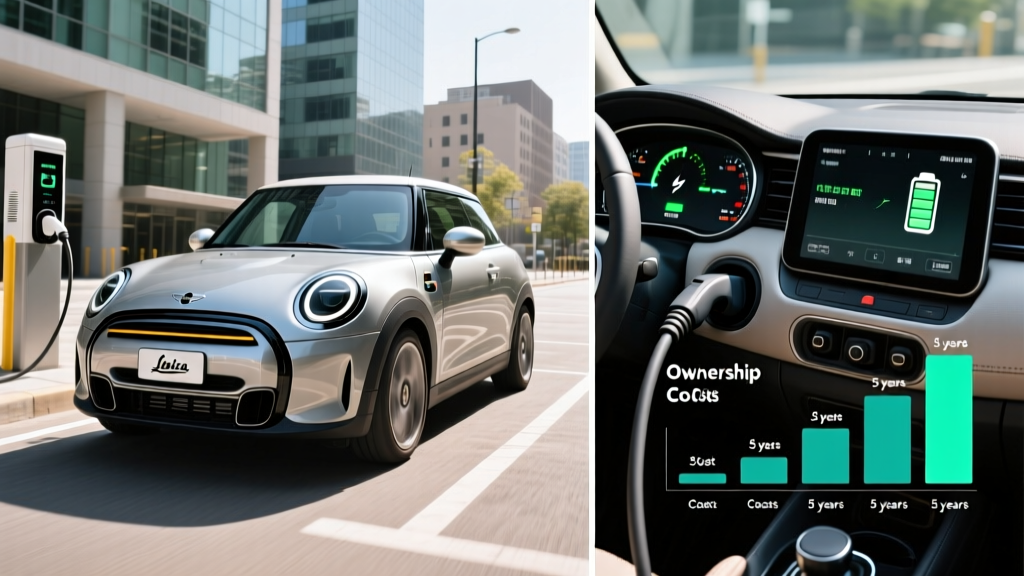
The 2024 Mini Cooper SE occupies a rare niche: a premium subcompact electric hatchback that prioritizes driving character over maximum range. Built on the previous-generation Mini Hardtop 2 Door platform, it pairs a 32.6 kWh battery with a 181-horsepower electric motor for a city-friendly EV that starts at $30,900 before incentives. For 2024, Mini kept the formula largely unchanged from its 2022 refresh — the same iconic styling, the same usable battery, and the same honest limitation: an EPA-estimated 114 miles of range.
If you are shopping for this car from a 2026 vantage point, you are likely looking at remaining new old-stock inventory or the used market, since the next-generation Mini Cooper Electric (with a significantly larger battery and over 200 miles of WLTP range) has since replaced it in global markets. This review covers the 2024 model year specifically — the final iteration of the first-gen Cooper SE — with real-world data, charging analysis, and a frank assessment of who should (and should not) buy it.
Range and Efficiency: The 114-Mile Reality
Real-World Expectation: 95–110 miles highway; 110–125 miles city; expect 20–30% loss in freezing temperatures (70–90 miles in harsh winter conditions)
The EPA rates the 2024 Mini Cooper SE at 114 miles of combined range, with an efficiency rating of 110 MPGe combined (city 119 MPGe / highway 100 MPGe). That translates to roughly 30 kWh per 100 miles of driving, which is respectable for a car of this size but not class-leading.
The usable battery capacity is 28.9 kWh out of a gross 32.6 kWh pack. Mini uses a 3.7 kWh buffer to protect long-term battery health — a conservative approach that limits available range but helps mitigate degradation over time. The battery chemistry is NMC (nickel manganese cobalt), which offers good energy density for the compact packaging but does not match the cycle-life longevity of LFP (lithium iron phosphate) chemistries found in some competitors like the base Tesla Model 3.
In real-world driving, range varies significantly by conditions. City driving with frequent regenerative braking opportunities can push the SE toward 120–125 miles, especially in mild weather. Highway driving at 70+ mph drops that figure to roughly 95–105 miles. Cold weather is the Cooper SE's Achilles' heel — the car lacks a heat pump (relying instead on resistive heating), which means winter range can fall to 70–90 miles on frigid days. If your commute is 40 miles round-trip in Minnesota January, you will be charging nightly.
| Specification | Value |
|---|---|
| EPA Range | 114 miles |
| Battery (Gross / Usable) | 32.6 kWh / 28.9 kWh (NMC) |
| Efficiency | 110 MPGe combined (30 kWh/100 mi) |
| Motor Output | 181 hp / 199 lb-ft torque |
| Drivetrain | Front-wheel drive (single motor) |
| 0–60 mph | 6.9 seconds |
| Top Speed | 93 mph (electronically limited) |
| Max DC Fast Charge | 50 kW (CCS1) |
| 10–80% DC Time | ~36 minutes |
| Level 2 AC Charge Rate | 7.4 kW (~25 mi/hr) |
| Base MSRP (Classic) | $30,900 |
| Battery Warranty | 8 years / 100,000 miles |
| Cargo Volume (rear seats up) | 8.7 cu ft |
| Cargo Volume (rear seats folded) | 32.4 cu ft |
Charging Speed: Functional but Modest
The 2024 Cooper SE supports DC fast charging at a maximum of 50 kW via a CCS1 connector. That peak rate holds roughly from 10% to 50% state of charge before tapering. Mini quotes a 10–80% charge time of approximately 36 minutes at a 50 kW station. In practice, if you arrive at a 150 kW or 350 kW Electrify America or EVgo station, the car will still only pull 50 kW — the limitation is the vehicle's onboard hardware, not the charger.
For comparison, a Hyundai Kona Electric (also discontinued in EV form for 2024 but available used) peaks at 77 kW, and a Chevrolet Bolt EV peaks at 55 kW. The Cooper SE's 50 kW ceiling means road-trip charging stops are longer than in most modern EVs, and the 114-mile range means you will stop more often. This car is not built for cross-country travel.
| Level | Power | Charge Time | Range Added |
|---|---|---|---|
| Level 1 (120V household) | ~1.4 kW | ~22 hours (0–100%) | ~4 mi/hr |
| Level 2 (240V, 7.4 kW) | 7.4 kW | ~4.5 hours (0–100%) | ~25 mi/hr |
| DC Fast Charge (50 kW peak) | 50 kW | ~36 min (10–80%) | ~60 mi in 30 min |
Home charging on a Level 2 (240V) circuit at 7.4 kW will fully replenish the battery in about 4.5 hours — easily overnight. This is where the Cooper SE makes the most sense: plug in when you get home, wake up to a full charge every morning, and rarely think about public charging. The onboard AC charger is single-phase at 7.4 kW, which is standard for this segment.
One practical note: the Cooper SE does not support preconditioning the battery for faster DC charging the way a Tesla or Hyundai Ioniq 5 does. In cold weather, your actual DC charge rate may start well below 50 kW until the pack warms up through driving, adding several minutes to fast-charge stops.
Performance and Driving Dynamics
The electric motor produces 181 horsepower and 199 lb-ft of torque, sent exclusively to the front wheels. The 0–60 mph time is 6.9 seconds — brisk for a subcompact and noticeably quicker off the line than the gas-powered Mini Cooper S (which does the same sprint in about 6.7 seconds but with turbo lag). Instant torque delivery makes the SE feel even quicker in city traffic than the numbers suggest.
Where the Cooper SE genuinely shines is handling. The battery pack sits low in the chassis, giving the car a low center of gravity and near 50/50 weight distribution. The electric power steering is quick and communicative by EV standards, and the ride is firm but controlled — classic Mini go-kart feel translated to electric propulsion. The regenerative braking is adjustable via a toggle (two levels), with the stronger setting enabling near one-pedal driving in city traffic.
The trade-off is highway composure. The short wheelbase and firm suspension make the SE feel busy over expansion joints at 75 mph, and the 93 mph top-speed limiter (a BMW Group battery-protection measure) means you will not be setting records on the Autobahn. Road noise is noticeable at highway speeds — a characteristic shared with the gas Mini Hardtop.
Interior, Cargo, and Technology
The 2024 Cooper SE uses the previous-generation Mini interior, which means a mix of charming design and tight packaging. The 8.8-inch circular touchscreen dominates the center stack, running Mini's Operating System 7 with wireless Apple CarPlay and Android Auto. A 5.0-inch digital instrument cluster behind the wheel displays speed, range, and energy flow. The circular LED ambient lighting ring around the central display is a signature touch that changes color based on driving mode and charge status.
Space is the compromise. Front legroom is adequate at 41.4 inches, but rear legroom is a cramped 30.9 inches — fine for children or short trips, tight for adults on longer rides. Cargo volume behind the rear seats is just 8.7 cubic feet, roughly equivalent to a large duffel bag and a couple of grocery bags. Fold the rear seats (50/50 split) and you get 32.4 cubic feet, which handles a week's worth of luggage for two people or a moderate IKEA run.
Driver-assistance technology is basic by 2026 standards. The Cooper SE includes forward collision warning with automatic emergency braking, lane departure warning, and a rearview camera. Active cruise control and parking assist are available on higher trims. There is no Level 2 lane-centering system (like GM's Super Cruise or Tesla's Autopilot) — this is a driver-engaged car in every sense, which aligns with Mini's brand philosophy but means you will not find advanced ADAS here.
Pricing, Trims, and Federal Tax Credit Eligibility
The 2024 Mini Cooper SE was offered in three trims:
- Classic: $30,900 MSRP — 16-inch wheels, LED headlights, 8.8-inch touchscreen, heated front seats
- Signature: $33,900 MSRP — adds panoramic moonroof, leatherette upholstery, ambient lighting, keyless entry
- Iconic: $36,900 MSRP — adds navigation, Harman Kardon audio, head-up display, park assist, premium leather
Destination charge added $995. A fully loaded Iconic trim with options could approach $40,000 before incentives.
| Trim | MSRP | Federal Credit (§30D) | Effective Price |
|---|---|---|---|
| Classic | $30,900 | Up to $7,500* | ~$23,400* |
| Signature | $33,900 | Up to $7,500* | ~$26,400* |
| Iconic | $36,900 | Up to $7,500* | ~$29,400* |
*Federal tax credit eligibility under IRS §30D is subject to multiple requirements: buyer adjusted gross income must not exceed $150,000 (single) / $300,000 (joint); vehicle MSRP must not exceed $55,000 (cars); and critical mineral and battery component sourcing thresholds must be met. The 2024 Cooper SE's battery is assembled in the Netherlands with components that may not satisfy all 2024 sourcing requirements. Consult a tax professional and check the DOE/IRS qualified vehicle list before assuming full credit eligibility. Point-of-sale transfer is available for qualifying purchases.
Warranty and Battery Longevity
Mini (parent company BMW) backs the 2024 Cooper SE with:
- Basic warranty: 4 years / 50,000 miles
- Powertrain warranty: 4 years / 50,000 miles
- Battery warranty: 8 years / 100,000 miles (capacity retention above 70%)
- Complimentary maintenance: 3 years / 36,000 miles
The battery warranty is industry-standard, matching the federal minimum mandated for EVs. The 70% capacity retention threshold means Mini will replace or repair the battery if it degrades below 70% of original capacity within the warranty period. Real-world data from early 2020–2022 Cooper SE owners suggests degradation of roughly 5–8% over the first three years of typical use, which is within expectations for an NMC pack of this size. The relatively small battery means fewer full charge cycles are needed for daily driving, which may help long-term longevity.
One concern for used buyers: if the battery ever needs out-of-warranty replacement, costs are estimated at $8,000–$12,000 based on BMW i3 precedent (a similarly sized pack). This is a meaningful percentage of the vehicle's value.
How It Compares: Cooper SE vs. the Competition
The Cooper SE's closest competitors in the used and remaining-new market include the Chevrolet Bolt EV (discontinued after 2023, but abundant on the used market), the Nissan Leaf, and the Hyundai Kona Electric. Here is how they stack up:
| Model | EPA Range | DC Fast Charge | 0–60 mph | Starting MSRP (when new) |
|---|---|---|---|---|
| 2024 Mini Cooper SE | 114 mi | 50 kW | 6.9 sec | $30,900 |
| 2023 Chevrolet Bolt EV | 259 mi | 55 kW | 6.5 sec | $26,500 |
| 2024 Nissan Leaf (SV Plus) | 212 mi | 50 kW (CHAdeMO) | 6.9 sec | $36,190 |
| 2023 Hyundai Kona Electric | 258 mi | 77 kW | 6.4 sec | $34,000 |
The Bolt EV is the obvious range-and-value winner, offering more than double the Cooper SE's range for less money. The Kona Electric similarly outperforms on range and charging speed. The Leaf offers more range but uses the aging CHAdeMO connector (increasingly unsupported at new DC fast-charge stations). None of these competitors, however, match the Mini's interior materials, design appeal, or driving dynamics.
Pros, Cons, and Who Should Buy
- Engaging, go-kart handling with instant electric torque
- Premium interior materials and distinctive design
- Compact footprint ideal for tight urban parking
- Low operating costs with home charging (~$0.04–$0.06/mile)
- Wireless Apple CarPlay / Android Auto standard
- Strong residual value from Mini brand cachet
- 114-mile EPA range is the shortest of any current/recent EV
- 50 kW DC fast charging is slow for road trips
- No heat pump — significant cold-weather range loss
- Cramped rear seats and small cargo area
- Basic driver-assistance tech compared to rivals
- Battery sourcing may limit federal tax credit to partial amount
- Your daily commute is under 50 miles round-trip and you have reliable home charging
- You prioritize driving fun and premium design over maximum range
- You live in a mild climate where cold-weather range loss is minimal
- This is a second car in the household, not the primary road-trip vehicle
- You value compact dimensions for urban parking and narrow streets
- You regularly drive more than 80 miles in a single day
- You need rear-seat space for adults or substantial cargo
- You live in a cold climate and cannot afford 30% winter range loss
- Road trips are a regular part of your lifestyle
- You want advanced Level 2 driver-assist features
Frequently Asked Questions
What is the real-world range of the 2024 Mini Cooper SE?
The EPA rates it at 114 miles combined. In real-world driving, expect 110–125 miles in city conditions with regenerative braking, 95–110 miles on the highway, and as low as 70–90 miles in freezing temperatures due to the lack of a heat pump and resistive cabin heating.
How fast does the 2024 Mini Cooper SE charge?
On a DC fast charger, it peaks at 50 kW, reaching 10–80% in approximately 36 minutes. On a Level 2 home charger (240V, 7.4 kW), a full charge takes about 4.5 hours, adding roughly 25 miles of range per hour. Level 1 (120V) charging adds about 4 miles per hour and takes roughly 22 hours for a full charge.
How much does the 2024 Mini Cooper SE cost after tax credits?
The base Classic trim started at $30,900 MSRP. If you qualify for the full $7,500 federal tax credit under IRS §30D — which requires meeting income caps ($150K single / $300K joint), MSRP caps ($55K for cars), and battery sourcing requirements — the effective price drops to approximately $23,400. However, battery component and critical mineral sourcing rules may reduce the credit to $3,750 or eliminate it entirely depending on the specific vehicle's supply chain. Always verify on the fueleconomy.gov qualified vehicle list and consult a tax professional.
Does the 2024 Mini Cooper SE qualify for the federal EV tax credit?
It may qualify for a partial or full credit under §30D, but eligibility is not guaranteed. The vehicle meets the MSRP cap ($30,900–$36,900, well under the $55,000 car limit) and most buyers will meet income requirements. The uncertainty lies in battery sourcing: the Cooper SE's battery is assembled in Europe, and depending on the specific manufacturing date and supply chain, it may not satisfy the critical minerals or battery component thresholds that were phased in during 2023–2024. Check the IRS qualified vehicle list for the specific VIN before purchasing.
Is the 2024 Mini Cooper SE worth buying vs. competitors?
It depends entirely on your priorities. If range and value are paramount, the Chevrolet Bolt EV (259 miles, lower price) or Hyundai Kona Electric (258 miles, faster charging) are objectively better EVs. If you want a premium, fun-to-drive city car with iconic styling and do not need more than 100 miles of daily range, the Cooper SE offers something no competitor matches: genuine driving engagement in an electric package. It is a lifestyle choice more than a spec-sheet winner.
What are the biggest pros and cons?
The biggest pro is the driving experience — the low center of gravity, instant torque, and sharp steering make it the most engaging EV in its size class. The biggest con is range: 114 miles is limiting even for a city car, and the 50 kW DC fast-charging speed makes road trips impractical. Secondary concerns include the lack of a heat pump (severe cold-weather range loss), tight rear seats, and uncertain federal tax credit eligibility due to battery sourcing.
Is the 2024 Mini Cooper SE still available new in 2026?
Most 2024 Cooper SE inventory has been sold, though some dealers may have remaining new old-stock units. The model has been succeeded by the next-generation Mini Cooper Electric (J01 platform) with a larger battery and significantly more range. If you are specifically seeking the 2024 model, expect to shop the used market or contact Mini dealers about leftover inventory. Pricing on used examples typically ranges from $18,000–$26,000 depending on mileage and condition.