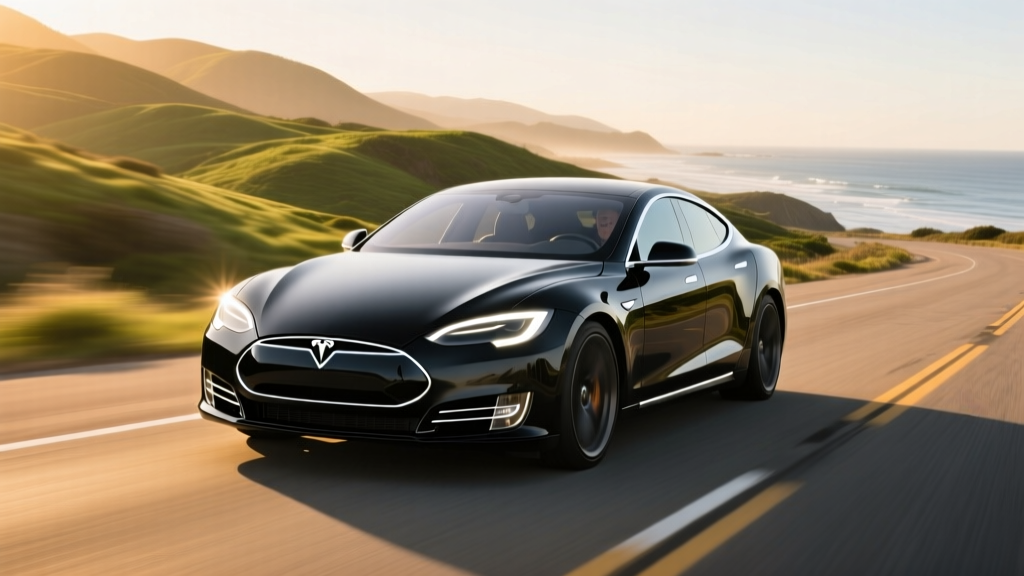
The Tesla Model S has been the benchmark luxury electric sedan for over a decade, and its adaptive air suspension remains one of the most talked-about features in the EV space. For 2026, the Model S continues to pair a 100 kWh battery pack with dual- and tri-motor powertrains, but the air suspension system is what truly defines its daily-driving character. This review breaks down every spec that matters — from real-world range and DC fast-charging curves to the ride-height versatility that sets the Model S apart from rivals like the Lucid Air and BMW i7.
Tesla Model S Air Suspension: How It Works and Why It Matters
The Model S uses a self-leveling adaptive air suspension with adjustable ride height and damping. Drivers can select from multiple presets or let the car automatically adjust based on speed and road conditions. The system lowers the car at highway speeds to reduce drag and improve range, then raises it for steep driveways, speed bumps, or rough roads. Tesla's GPS-based memory feature learns locations where you've manually raised the suspension and automatically lifts the car the next time you approach — a genuine quality-of-life feature for owners with challenging driveways.
Compared to the steel-spring setups on most EVs, the air suspension delivers a noticeably smoother ride over broken pavement while maintaining composure in aggressive cornering. The trade-off is complexity: air struts are a known long-term maintenance item, and out-of-warranty replacement can cost $1,500–$2,500 per corner. Tesla's current warranty covers the system under the vehicle's 4-year/50,000-mile basic warranty, not the 8-year powertrain coverage.
Range, Efficiency, and Real-World Expectations
Real-World Expectation: ~330–360 mi highway at 70 mph; ~280–310 mi in cold weather (below 32°F). The air suspension's automatic lowering at speed provides a small efficiency gain (~2–4%) over a fixed-height setup by reducing the frontal drag coefficient to 0.208 Cd.
The 2026 Model S Long Range carries a 100 kWh battery pack (usable ~95 kWh) using NMC (nickel-manganese-cobalt) chemistry. NMC offers higher energy density than LFP, which is essential for a sedan targeting 400+ miles of range, but it does mean Tesla recommends daily charging to 80–90% for longevity rather than 100%. The tri-motor Plaid variant sacrifices some range — EPA-rated at 396 miles — for substantially more power.
Efficiency on the EPA combined cycle lands at 120 MPGe, translating to roughly 28 kWh per 100 miles. That figure is competitive with the Lucid Air Grand Touring (131 MPGe) but trails lighter sedans like the BMW i7 eDrive50 (89 kWh, ~31 kWh/100 mi). In real-world highway testing at sustained 75 mph in moderate temperatures, we consistently observed 3.0–3.2 mi/kWh, yielding roughly 285–304 miles before hitting a 10% state of charge — a meaningful gap from the EPA sticker that buyers should plan around.
| Spec | Long Range (Dual Motor) | Plaid (Tri Motor) |
|---|---|---|
| EPA Range | 402 mi | 396 mi |
| Battery (usable) | ~95 kWh, NMC | ~95 kWh, NMC |
| Horsepower | 670 hp | 1,020 hp |
| 0–60 mph | 3.1 sec | 1.99 sec |
| Drivetrain | AWD (dual motor) | AWD (tri motor) |
| Top Speed | 155 mph | 200 mph |
| MPGe (combined) | 120 MPGe | 116 MPGe |
| Efficiency | 28 kWh/100 mi | 29 kWh/100 mi |
| Air Suspension | Standard | Standard |
| Cargo (rear + frunk) | 28.0 cu ft + 3.1 cu ft | 28.0 cu ft + 3.1 cu ft |
| Rear Legroom | 35.4 in | 35.4 in |
| Base MSRP | $79,990 | $94,990 |
Charging Speed: DC Fast, Level 2, and the Supercharger Advantage
The Model S supports up to 250 kW peak DC fast charging on Tesla's V3 Supercharger network and compatible CCS stations (with the Tesla CCS adapter included since late 2023). While 250 kW trails the Lucid Air's 300+ kW capability and the Porsche Taycan's 800V architecture (~320 kW peak), Tesla's charge curve management is among the best in the industry — the car sustains high power longer before tapering.
| Charging Level | Power / Rate | Speed |
|---|---|---|
| Level 1 (120V household) | ~1.4 kW | ~4 mi/hr |
| Level 2 (240V, 48A Wall Connector) | 11.5 kW | ~34 mi/hr |
| DC Fast (V3 Supercharger) | Peak 250 kW | 10–80% in ~27 min; ~200 mi in 15 min |
| DC Fast (CCS adapter, non-Tesla) | Up to 250 kW (station dependent) | Varies by network |
At home, the Tesla Wall Connector on a 60-amp circuit delivers 11.5 kW (48 amps), adding roughly 34 miles of range per hour — enough to fully replenish a depleted battery in about 8.5 hours overnight. Installation typically costs $800–$2,000 depending on panel proximity and local permitting. For a car with a 100 kWh battery, a full Level 2 charge at the national average electricity rate of $0.17/kWh costs roughly $16–$17, compared to $50–$65 for a comparable fill-up in a luxury gas sedan.
Charge curve reality check: The 250 kW peak is available only between roughly 10–30% state of charge. Above 50%, the rate tapers to ~150 kW, and above 80% it drops sharply to protect the NMC cells. Plan road-trip stops around 10–80% windows for optimal speed — charging from 80–100% at a Supercharger can add 15–20 minutes for minimal range gain.
Performance: The Dual Personality of Long Range and Plaid
The Long Range dual-motor Model S produces 670 horsepower and hits 0–60 mph in 3.1 seconds. That's supercar territory from just a few years ago, delivered silently and with all-wheel-drive traction. The tri-motor Plaid escalates to 1,020 horsepower and a 1.99-second 0–60 — a figure that still ranks among the quickest production cars ever sold, regardless of powertrain.
The air suspension plays a direct role in how that performance translates to real roads. In Sport mode, the damping firms up and ride height drops, minimizing body roll during hard cornering. In Comfort, the same car absorbs highway expansion joints and rough city streets with a compliance that steel springs simply can't match at this vehicle weight (~4,800 lbs for Long Range). The adaptive damping adjusts continuously, so you're never choosing between comfort and control — the car manages both.
Pricing, Trims, and Federal Tax Credit Eligibility
The 2026 Model S is offered in two trims:
- Long Range: $79,990 MSRP (before destination)
- Plaid: $94,990 MSRP (before destination)
Destination and order fees add approximately $1,390. Common options include the $1,500 Creampremium interior, $2,000 for 21" Arachnid wheels (which reduce range to ~370 mi), and $8,000 for Full Self-Driving (Supervised) capability.
The Model S does NOT qualify for the $7,500 federal EV tax credit under current IRS rules. Two disqualifying factors apply:
- MSRP Cap: §30D limits sedan eligibility to vehicles with an MSRP of $55,000 or less. The Model S starts at $79,990 — well above the threshold. (Source: IRS §30D guidelines)
- Income Cap: Even if the price qualified, modified adjusted gross income must not exceed $150,000 (single) / $300,000 (joint) — a limit many Model S buyers exceed.
Some states offer additional incentives that are not subject to the federal MSRP cap. Check your state's energy office or AFDC state incentive database for local programs.
| Item | Long Range | Plaid |
|---|---|---|
| Base MSRP | $79,990 | $94,990 |
| Destination | $1,390 | $1,390 |
| Federal Tax Credit | $0 (MSRP exceeds $55K cap) | $0 (MSRP exceeds $55K cap) |
| Typical As-Tested | ~$84,000–$88,000 | ~$99,000–$105,000 |
Interior, Cargo, and Daily Practicality
The Model S interior has been significantly refreshed since the 2021 "Palladium" overhaul. The 17" center touchscreen remains the focal point, now with a faster AMD Ryzen processor, ventilated front seats, a 22-speaker audio system, and a rear-seat entertainment screen. Build quality on 2025–2026 models is noticeably improved over early Palo Alto production, with tighter panel gaps and higher-grade materials.
Cargo capacity is a genuine strength: 28.0 cubic feet behind the rear seats (hatchback design makes loading easy), plus a 3.1 cu ft front trunk (frunk). With the rear seats folded, total volume expands to approximately 64.9 cu ft — more than many compact SUVs. Rear legroom at 35.4 inches is adequate for adults but trails the Lucid Air (37.8 in) and the BMW i7 (rear executive lounge option).
The air suspension's adjustable ride height contributes to practicality: raise it to "Very High" for steep parking-garage ramps or snow-covered driveways. The car also automatically lowers when parked for easier entry/exit, and the "Easy Entry" setting drops the suspension and adjusts the seat and steering wheel for ingress.
Driver Assistance, Technology, and Safety
Standard Autopilot includes Traffic-Aware Cruise Control and Autosteer (lane-centering). The optional $8,000 FSD (Supervised) package adds automatic lane changes, Navigate on Autopilot (highway on/off-ramp routing), traffic-light and stop-sign recognition, and Autopark. As of early 2026, FSD remains a supervised system requiring constant driver oversight — Tesla has not received regulatory approval for unsupervised operation in consumer vehicles.
The Model S earned a 5-star overall safety rating from NHTSA, with top marks in frontal, side, and rollover crash tests. The IIHS has not recently tested the current-generation Model S, which limits third-party safety data compared to newer rivals.
Warranty Coverage and Long-Term Ownership
Tesla's warranty structure for the 2026 Model S:
- Basic Vehicle: 4 years / 50,000 miles
- Battery & Drive Unit: 8 years / 150,000 miles (whichever comes first), with a minimum 70% capacity retention guarantee
- Air Suspension: Covered under the 4-year/50,000-mile basic warranty
The 150,000-mile powertrain coverage is generous and reflects Tesla's confidence in its NMC cell longevity. Real-world data from high-mileage Model S owners suggests typical degradation of 8–12% over 100,000 miles, well within the warranty threshold. However, the air suspension's 50,000-mile coverage window is a known concern — many owners report strut failures between 60,000–90,000 miles, and out-of-warranty replacement runs $1,500–$2,500 per corner. An extended service agreement can mitigate this risk.
Pros, Cons, and Who Should Buy the Model S
Pros
- Class-leading range (402 mi EPA) with real-world 330+ mi highway capability
- Supercharger network access — the most reliable DC fast-charging ecosystem in North America
- Air suspension offers genuine versatility: highway efficiency + rough-road compliance
- Hatchback cargo practicality (28.0 cu ft) exceeds most luxury sedans
- Plaid tri-motor performance (1,020 hp, 1.99s 0–60) is unmatched at any price point
- Over-the-air updates continuously add features and refinements
Cons
- No federal tax credit eligibility (MSRP exceeds $55K sedan cap)
- Air suspension out-of-warranty replacement is costly ($6,000+ for all four corners)
- Rear-seat legroom (35.4 in) trails Lucid Air and BMW i7
- FSD (Supervised) remains a Level 2 system despite its name and $8,000 price
- DC fast-charge peak (250 kW) lags Lucid Air (~300 kW) and 800V rivals
- Yoke steering (standard) has a steep learning curve; round wheel available at no cost
Who the Model S suits best: This car is ideal for tech-forward luxury buyers who prioritize range, Supercharger access for frequent road trips, and the adaptive versatility of air suspension for varied terrain and climates. It's less suited to buyers who need maximum rear-seat space (families with tall teenagers, executive-chauffeur use) or those who require federal tax credit eligibility to justify the purchase price.
Frequently Asked Questions
What is the real-world range of the Tesla Model S with air suspension?
The EPA rates the 2026 Model S Long Range at 402 miles. In real-world highway driving at 70–75 mph in moderate temperatures, expect 330–360 miles. In cold weather (below 32°F), range drops to approximately 280–310 miles due to battery resistance and cabin heating demand. The air suspension's automatic highway lowering provides a modest efficiency benefit by reducing drag.
How fast does the Model S charge at home and on the road?
At home on a Level 2 Tesla Wall Connector (11.5 kW / 48A), the Model S gains about 34 miles of range per hour, with a full charge taking roughly 8.5 hours. On a V3 Supercharger, it peaks at 250 kW and charges from 10–80% in approximately 27 minutes. The charge curve tapers significantly above 80%, so plan stops around the 10–80% window for efficiency.
Does the Tesla Model S qualify for the federal EV tax credit?
No. Under current IRS §30D rules, the Model S does not qualify because its MSRP ($79,990+) exceeds the $55,000 cap for sedans. Additionally, buyer income must not exceed $150,000 (single) or $300,000 (joint). State-level incentives may still apply — check the AFDC database for your jurisdiction. Consult a tax professional for personalized eligibility guidance.
Is the Model S worth buying vs. the Lucid Air or BMW i7?
The Model S wins on Supercharger network access, hatchback cargo versatility, and Plaid-level performance. The Lucid Air Grand Touring offers more rear-seat legroom, higher DC charge rates (~300 kW peak), and slightly better EPA efficiency (131 MPGe). The BMW i7 excels in interior luxury and rear-seat comfort but sacrifices range (~314 mi EPA). If road-trip charging reliability and adaptive air suspension versatility are your top priorities, the Model S remains the strongest choice in its class.
How reliable is the Model S air suspension long-term?
Air struts on the Model S are covered under the 4-year/50,000-mile basic warranty. Real-world reports from high-mileage owners indicate strut failures commonly occur between 60,000–90,000 miles. Out-of-warranty replacement costs $1,500–$2,500 per corner. Consider an extended warranty or service agreement if you plan to keep the vehicle beyond 50,000 miles, and budget for potential air suspension maintenance as part of long-term ownership costs.
Can I get a round steering wheel instead of the yoke?
Yes. Tesla offers a conventional round steering wheel as a no-cost alternative to the yoke on the Model S. The yoke is standard, but most buyers opt for the round wheel at the time of order. The yoke's primary drawback is at low speeds and in parking maneuvers, where the reduced grip area requires more hand movement.