The Short Answer: BYD Pricing in 2026
If you've been searching how much is a BYD car, the answer depends heavily on where you live. As of early 2026, BYD (Build Your Dreams) does not sell passenger vehicles in the United States. The Chinese automaker — the world's largest plug-in electric vehicle manufacturer by volume — has no official US retail presence for cars, crossovers, or SUVs due to a combination of steep tariffs, geopolitical trade barriers, and the company's own strategic prioritization of other markets.
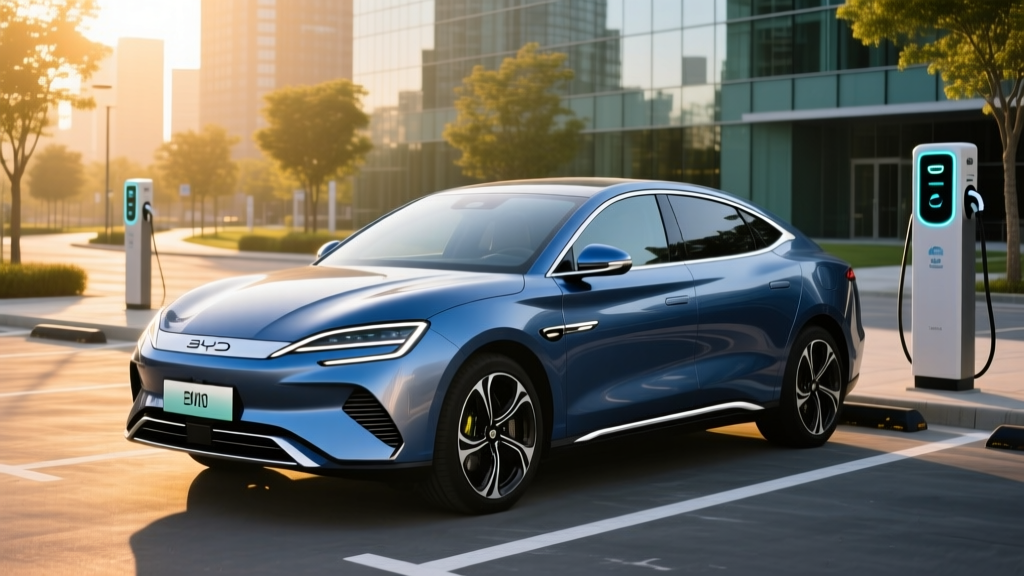
Globally, however, BYD offers some of the most aggressively priced EVs on the market. A BYD Dolphin starts around the equivalent of $17,000 USD in China, while the popular BYD Atto 3 (known as the Yuan Plus in some markets) lists from roughly $28,000–$35,000 USD in Europe, Australia, and Southeast Asia, depending on local taxes and trim. The flagship BYD Seal sedan undercuts the Tesla Model 3 in most markets outside North America, starting near $38,000–$45,000 USD equivalent.
For US-based EV shoppers, the practical question isn't what a BYD costs in Shanghai or Berlin — it's whether you'll ever be able to buy one domestically, and what comparable alternatives cost right now. This guide breaks it all down.
Why BYD Doesn't Sell Cars in the US (Yet)
Several factors keep BYD passenger vehicles out of American driveways:
- Section 301 tariffs: The US imposes a 100% tariff on Chinese-made EVs as of 2024, effectively doubling the import price and eliminating BYD's core pricing advantage. This tariff, expanded under the Biden administration and maintained into 2026, applies to battery electric vehicles manufactured in China regardless of brand.
- No US dealer network: BYD has not established a retail dealership or direct-sales infrastructure in the US for passenger vehicles. The company does operate a US presence for electric buses and commercial trucks (headquartered in Lancaster, California), but this division is entirely separate from consumer cars.
- Strategic focus elsewhere: BYD has prioritized rapid expansion in Europe, Southeast Asia, Latin America, the Middle East, and Australia — markets where Chinese EVs face lower tariff barriers and where the company can build local factories (notably in Thailand, Brazil, Hungary, and Indonesia).
- Federal tax credit ineligibility: Even if BYD vehicles were imported, they would not qualify for the IRS §30D Clean Vehicle Credit due to battery-sourcing and critical-mineral requirements that effectively exclude Chinese-manufactured battery supply chains.
What BYD Models Cost Globally (2026 Pricing)
Below is a snapshot of BYD's key global models and their approximate pricing in major markets. All figures are converted to USD equivalents and reflect base MSRP before local incentives.
| Model | Body Style | Battery (kWh) | Range (WLTP) | China Price (USD equiv.) | Europe Price (USD equiv.) | Australia Price (USD equiv.) |
|---|---|---|---|---|---|---|
| BYD Dolphin | Hatchback | 44.9 / 60.5 | 340–427 km | ~$14,000–$18,000 | ~$30,000–$36,000 | ~$27,000–$33,000 |
| BYD Atto 3 (Yuan Plus) | Compact SUV | 49.9 / 60.5 | 345–420 km | ~$17,000–$21,000 | ~$35,000–$42,000 | ~$30,000–$37,000 |
| BYD Seal | Sedan | 61.4 / 82.5 | 520–650 km | ~$24,000–$32,000 | ~$42,000–$52,000 | ~$38,000–$47,000 |
| BYD Han | Full-size sedan | 85.4 | ~521 km | ~$28,000–$36,000 | ~$55,000–$65,000 | ~$50,000–$58,000 |
| BYD Tang | 3-row SUV | 108.8 | ~400 km | ~$32,000–$40,000 | ~$58,000–$68,000 | Not available |
| BYD Seagull | Subcompact | 30.1 / 38.9 | 305–405 km | ~$10,000–$13,000 | Not yet launched | Not yet launched |
Key takeaway: BYD's pricing advantage is most dramatic in China, where domestic subsidies, local supply chains, and intense competition drive prices far below Western equivalents. In Europe and Australia, tariffs, shipping, and dealer markups narrow the gap — but BYD still typically undercuts comparable Tesla, Volkswagen, and Hyundai models by 10–20%.
BYD Battery Tech: Blade LFP Explained
Every BYD passenger EV uses the company's proprietary Blade Battery, a lithium iron phosphate (LFP) cell in a unique structural pack design. This is a significant differentiator:
| Attribute | BYD Blade (LFP) | Typical NMC (Tesla, Hyundai, VW) |
|---|---|---|
| Chemistry | Lithium Iron Phosphate | Nickel Manganese Cobalt |
| Energy density | Lower (~140–160 Wh/kg cell) | Higher (~200–260 Wh/kg cell) |
| Thermal stability | Excellent — passes nail penetration test without fire | Good but requires more active thermal management |
| Cycle life | 3,000–5,000+ cycles to 80% SoH | 1,000–2,000 cycles to 80% SoH |
| Cold-weather performance | More range loss in freezing temps (~30–40%) | Moderate cold loss (~20–30%) |
| Cobalt/nickel | None — lower ethical/supply-chain risk | Contains cobalt and nickel |
| Cost per kWh | Lower | Higher |
The Blade Battery's structural integration — where cells double as load-bearing pack elements — reduces weight and part count. BYD claims the pack can withstand nail penetration, crushing, and overcharge scenarios without thermal runaway, a meaningful safety advantage for buyers concerned about battery fires.
The trade-off is energy density: LFP packs are heavier for a given capacity, which is why BYD vehicles tend to be slightly less efficient (more kWh per 100 miles) than NMC-equipped rivals at similar range targets. Cold-weather range loss is also more pronounced with LFP chemistry — something buyers in northern climates should factor in.
Charging Speed: Where BYD Falls Short
BYD's charging performance is adequate but not class-leading. Here's what to expect across the lineup:
| Model | Max DC Fast Charge (kW) | 10–80% Time | Level 2 AC Rate (kW) | Level 2 Miles/Hr (est.) |
|---|---|---|---|---|
| BYD Dolphin | 88 kW | ~29 min | 7–11 kW | ~25–40 mi/hr |
| BYD Atto 3 | 88 kW | ~29 min | 7–11 kW | ~25–40 mi/hr |
| BYD Seal (RWD) | 150 kW | ~26 min | 7–11 kW | ~28–42 mi/hr |
| BYD Seal (AWD) | 150 kW | ~26 min | 7–11 kW | ~28–42 mi/hr |
| BYD Han | 120 kW | ~30 min | 7 kW | ~25–35 mi/hr |
Compared to the Hyundai Ioniq 5 (peak 240 kW, 10–80% in ~18 minutes on a 350 kW charger) or the Tesla Model 3 Highland (peak 250 kW, ~15–18 minutes), BYD's charging speeds are a generation behind. The 88 kW peak on the Dolphin and Atto 3 means a typical DC fast-charging stop takes noticeably longer — a real consideration for road-trip-heavy drivers.
On the connector front, BYD vehicles sold in Europe and Australia use CCS2, while Chinese-market models use GB/T. If BYD ever entered the US market, it would need to adopt NACS (Tesla's connector) or CCS1 to access American charging networks — another integration hurdle.
US Alternatives: What You Can Actually Buy
Since BYD isn't an option for American buyers, here's how the closest US-market competitors stack up against the BYD models you might have been eyeing:
| Spec | BYD Seal (Global) | Tesla Model 3 (US) | Hyundai Ioniq 6 (US) | Chevrolet Equinox EV (US) |
|---|---|---|---|---|
| Base MSRP | ~$42,000 (EU) | $38,990 | $37,500 | $33,600 |
| EPA Range | N/A (WLTP ~400 mi) | 341 mi (Long Range) | 361 mi (SE LR) | 319 mi (3LT) |
| Battery | 82.5 kWh LFP | 75 kWh (est.) NMC/LFP | 77.4 kWh NMC | 85 kWh NMC |
| Peak DC Charge | 150 kW | 250 kW | 240 kW | 150 kW |
| 0–60 mph | 5.9s (RWD) / 3.8s (AWD) | 5.8s (LR RWD) / 4.2s (Perf) | 6.1s (SE) / 5.1s (LR AWD) | ~8.0s |
| Federal Tax Credit | Not eligible | Up to $7,500* | Up to $7,500* | Up to $7,500* |
*Federal §30D credit eligibility depends on MSRP caps ($55,000 for sedans, $80,000 for SUVs/trucks), buyer income limits ($150K single / $300K joint AGI), and battery-sourcing/critical-mineral requirements. Verify current eligibility at IRS.gov or via the point-of-sale transfer at a participating dealer. Credit amounts vary — not every vehicle or buyer qualifies for the full $7,500.
When you factor in the federal tax credit, US-available EVs like the Equinox EV and Ioniq 6 can match or beat BYD's effective pricing in Europe and Australia — while offering faster charging, EPA-certified range, full access to American charging networks, and domestic warranty support.
Could BYD Come to the US?
BYD executives have publicly stated that the US market is "on the radar" but not an immediate priority. The company's expansion playbook — building local factories to avoid tariffs — could theoretically work in the US if trade policy shifted. BYD has already committed to plants in Mexico, Brazil, Hungary, Thailand, Indonesia, and Turkey.
A Mexican factory could theoretically supply the US under USMCA trade rules, but the 2024–2026 policy environment has specifically targeted Chinese EV manufacturers attempting to route vehicles through neighboring countries. Any BYD US entry before 2028 appears unlikely under current conditions.
For now, US buyers interested in the value proposition that BYD represents globally should look at the Chevrolet Equinox EV, Hyundai Kona Electric, Nissan Leaf, and Tesla Model 3 as the closest domestic equivalents in terms of price-to-range ratio.
Frequently Asked Questions
How much is a BYD car in US dollars?
BYD's global lineup ranges from roughly $10,000 USD (Seagull in China) to $65,000+ USD (Han/Tang in Europe). The popular Atto 3 compact SUV costs approximately $28,000–$37,000 depending on market, while the Seal sedan runs $38,000–$52,000. However, none of these vehicles are available for purchase in the United States.
Can I buy a BYD in the United States in 2026?
No. BYD does not sell passenger vehicles in the US. A 100% tariff on Chinese-made EVs, the absence of a dealer network, and federal tax credit ineligibility make US market entry impractical under current trade policy. BYD does sell electric buses and commercial trucks in the US through its Lancaster, California facility.
Why are BYD cars so cheap compared to Tesla?
BYD vertically integrates its entire supply chain — it manufactures its own batteries (the Blade LFP cell), semiconductors, motors, and even owns shipping vessels. This eliminates supplier margins at every stage. Combined with China's lower labor costs and government subsidies for the domestic EV industry, BYD can price vehicles 20–40% below Western competitors in its home market. The gap narrows in export markets due to shipping, tariffs, and dealer margins.
Is BYD's Blade Battery better than Tesla's battery?
It depends on the metric. BYD's LFP Blade Battery excels in thermal safety (passing nail penetration tests without fire), cycle longevity (3,000–5,000+ cycles), and cost. Tesla's NMC and LFP packs (sourced from CATL and Panasonic) offer higher energy density and better cold-weather performance. Both are durable, but they optimize for different priorities. Tesla has also moved toward LFP in standard-range models, narrowing the chemistry gap.
What US EV is closest to a BYD in price and specs?
The Chevrolet Equinox EV (starting ~$33,600, 319-mile EPA range) and the Hyundai Kona Electric (starting ~$32,975, 261-mile EPA range) come closest to matching BYD's global value proposition. After the federal tax credit (where eligible), effective prices can drop below $26,000 — competitive with BYD's European pricing for equivalent models, and with the advantage of local warranty service, EPA certification, and full US charging-network access.
Does BYD qualify for the US federal EV tax credit?
Even if BYD sold vehicles in the US, they would almost certainly not qualify for the §30D Clean Vehicle Credit. The credit requires that battery components and critical minerals be sourced from the US or free-trade-agreement partners — a requirement designed in part to reduce reliance on Chinese battery supply chains. BYD's vertically integrated Chinese supply chain would not meet these thresholds.