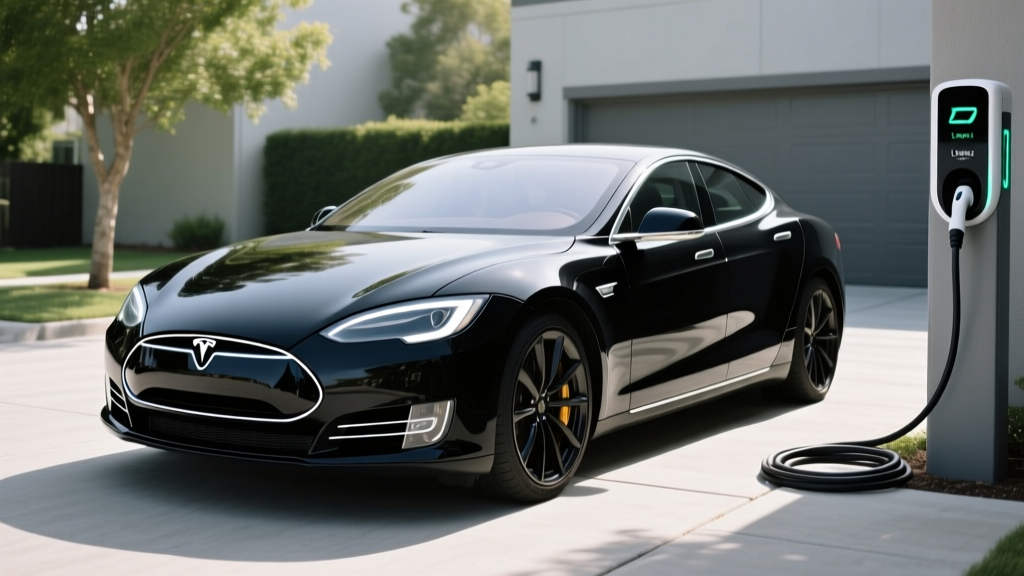
The Tesla Model S 85 in 2026: A Pioneer Worth Owning?
When Tesla launched the Model S with an 85 kWh battery pack in 2012, it didn't just enter the EV market — it created the template for every long-range electric sedan that followed. By 2026, the original Tesla Model S 85 has transitioned fully into the used-EV market, but it remains a compelling proposition for buyers who want premium electric motoring at a fraction of the cost of a new Model S Long Range or Plaid.
This review examines what it's actually like to own and drive a Tesla Model S 85 today — covering real-world range after years of battery degradation, charging infrastructure compatibility, maintenance realities, and whether this car still delivers on the promises that made it legendary. If you're shopping the used EV market, the Model S 85 deserves serious consideration, but only if you understand exactly what you're signing up for.
Real-World Range Reality Check
EPA Original Rating (2012–2016): 265 miles (later revised to 259 miles for 2015+ models)
Real-World Expectation in 2026: Expect 180–220 miles on a full charge depending on battery State of Health (SoH). A well-maintained 85 kWh pack with 85–90% capacity retention will deliver roughly 210–225 miles in mixed driving. Highway-only driving at 75 mph drops this to 170–190 miles. Cold-weather operation (below 32°F) can reduce range an additional 20–30%, bringing winter highway range as low as 130–150 miles without preconditioning.
Specs That Defined an Era
| Specification | Tesla Model S 85 (2012–2016) |
|---|---|
| Battery Capacity | 85 kWh (NMC — Nickel Manganese Cobalt) |
| EPA Range (Original) | 265 miles (2012–2014); 259 miles (2015–2016) |
| Drivetrain | Rear-Wheel Drive (RWD); Dual-Motor AWD available from late 2014 |
| Horsepower | 362 hp (RWD); up to 518 hp (P85D Dual-Motor) |
| 0–60 mph | 5.4 sec (RWD 85); 3.2 sec (P85D with Ludicrous) |
| DC Fast Charge (Max) | ~120 kW peak (Supercharger V1/V2) |
| Level 2 Charge Rate | Up to 10 kW (40A onboard charger); optional Dual Chargers = 20 kW |
| Efficiency (EPA Combined) | 89 MPGe (~38 kWh/100 mi) |
| Cargo Volume | 26.3 cu ft (rear trunk); 5.3 cu ft (frunk) |
| Battery Warranty (Original) | 8 years / unlimited miles (85 kWh packs) |
| Original MSRP (Base) | $79,900 (2012 launch); ~$75,000–$95,000 depending on year/options |
Battery Health: The Single Most Important Factor
The 85 kWh battery pack in the Model S uses NMC (Nickel Manganese Cobalt) chemistry, which offers high energy density but is more susceptible to long-term degradation than the LFP (Lithium Iron Phosphate) packs Tesla later adopted for Standard Range vehicles. Understanding what this means for a 2026 buyer is critical.
Typical Degradation Curve
Based on aggregated fleet data from sources like Teslanomics and owner forums, the 85 kWh pack typically follows this degradation pattern:
- Year 1–2: ~5% capacity loss (rapid initial drop)
- Year 3–5: Gradual linear decline, reaching ~8–12% total loss
- Year 6–10: Continued slow degradation; many packs sit at 80–88% SoH
- Year 10–14 (2026 territory): Packs range from 75–90% SoH depending on charging habits and climate
A Model S 85 with 75% SoH delivers roughly 190–200 miles of original EPA range on a full charge. That's still usable for commuting and moderate road trips, but it's a meaningful reduction from the 265-mile sticker. Always request a battery health report before purchasing — Tesla service centers can pull this data, and third-party tools like Tessie or Teslamate can read SoH via the vehicle's API.
Warranty Considerations
Tesla's original 8-year/unlimited-mile battery warranty on the 85 kWh pack guaranteed the battery would retain at least 70% of its original capacity. For 2012–2014 models, that warranty window has now closed. For 2015–2016 models, coverage may still be active through 2024–2025 at the latest. If the battery drops below 70% SoH while under warranty, Tesla replaces it — but once that window closes, you're on the hook for a replacement costing $12,000–$20,000 depending on whether you get a remanufactured or new pack.
Charging in the Modern Supercharger Network
One of the biggest ownership advantages of the Model S 85 in 2026 is access to Tesla's Supercharger network, which now includes V3 (250 kW) and V4 stalls across the country. However, the Model S 85 cannot take advantage of those peak speeds due to its older battery architecture and charge-rate limitations.
| Charging Method | Power (kW) | Miles Added Per Hour | Notes |
|---|---|---|---|
| Level 1 (120V outlet) | ~1.4 kW | ~3–4 mi/hr | Emergency/trickle only |
| Level 2 (240V, 40A single charger) | 10 kW | ~29 mi/hr | Standard onboard charger |
| Level 2 (240V, Dual Chargers) | 20 kW | ~58 mi/hr | Optional; requires HPWC or 80A circuit |
| DC Fast Charge (Supercharger V1/V2) | ~120 kW peak | ~250–300 mi/hr (peak) | 10–80% in ~45–55 min |
| DC Fast Charge (Supercharger V3/V4) | ~120 kW (capped by car) | Same as V2 | Car cannot exceed its max charge rate |
| CHAdeMO Adapter (if equipped) | ~50 kW | ~100 mi/hr | Rare; legacy adapter needed |
Charging Curve Reality
The Model S 85 peaks at approximately 120 kW at a low State of Charge (around 10–20%), but the charge curve tapers significantly. By 50% SoC, you're typically seeing 60–80 kW, and above 80%, the rate drops to under 30 kW as the battery management system protects cell longevity. A realistic 10–80% session at a V2 Supercharger takes 45–55 minutes. Plan road-trip stops accordingly — this is noticeably slower than modern EVs like the Hyundai Ioniq 5 (18 min, 10–80%) or the current Model S Long Range (~25 min).
For home charging, the single onboard charger (10 kW) adds roughly 29 miles of range per hour, meaning a full charge from 20% takes about 7–8 hours. The optional Dual Charger setup doubles this, but it requires a high-amperage wall connector and a 100A dedicated circuit — an electrical upgrade that can cost $1,500–$3,000 depending on your panel capacity.
Performance and Driving Experience
Even by 2026 standards, the Model S 85 delivers a driving experience that feels modern and premium. The RWD 85 model produces 362 horsepower and hits 0–60 mph in 5.4 seconds — quick by any measure, and the instant torque delivery makes it feel even faster in real-world driving. The P85D, with its dual-motor all-wheel-drive setup and Ludicrous mode upgrade, drops that to 3.2 seconds and adds a level of straight-line performance that still impresses.
The air suspension (standard on early models, optional later) provides a compliant ride, and the low center of gravity from the floor-mounted battery pack gives the Model S confident handling. The steering is precise, if not especially communicative, and the regenerative braking is strong enough for one-pedal driving in most conditions.
Where the Model S 85 shows its age is in the cabin. The 17-inch touchscreen was revolutionary in 2012, but the hardware (especially MCU1 in 2012–2018 vehicles) is sluggish by today's standards. Tesla offered an MCU2 upgrade (Intel Atom processor) and later an MCU3 (AMD Ryzen) retrofit for older Model S vehicles — if the car you're looking at has had this upgrade, it dramatically improves infotainment responsiveness, enables modern features like Netflix/YouTube streaming, and supports the latest Autopilot visualization.
Driver Assistance: Autopilot and FSD
SAE Level 2 — Driver Assistance, Not Self-Driving. Tesla's Autopilot and Full Self-Driving (Supervised) are SAE Level 2 systems. The driver must remain fully engaged, with hands on the wheel and eyes on the road, at all times. These systems assist with steering, acceleration, and braking on highways, but they do not make the vehicle autonomous. Only Level 4 robotaxi services like Waymo operate without a driver.
Early Model S 85 vehicles (2012–2014) were built before Tesla's Hardware 1 Autopilot suite. Models from late 2014 onward include the forward-facing camera, radar, and ultrasonic sensors needed for basic Autopilot (lane-keeping, adaptive cruise). Hardware 2 (introduced October 2016) and later support FSD features, but most 85 kWh cars predate this. If advanced driver assistance matters to you, prioritize a 2015–2016 model with AP1 hardware at minimum, and understand that FSD (Supervised) functionality may be limited or unavailable on these older vehicles without expensive hardware retrofits.
Used Market Pricing and Tax Credit Eligibility
The Tesla Model S 85 now trades exclusively on the used market. Pricing in early 2026 varies widely based on mileage, condition, battery SoH, and hardware configuration:
| Model/Year | Typical Used Price (2026) | Federal Used EV Credit (§25E) | Effective Price After Credit |
|---|---|---|---|
| 2012–2013 Model S 85 (RWD) | $14,000–$20,000 | Up to $4,000 (30% of sale price, capped at $4,000) | $10,000–$16,000 |
| 2014–2015 Model S 85 (RWD) | $18,000–$26,000 | Up to $4,000 | $14,000–$22,000 |
| 2015–2016 Model S 85D (AWD) | $22,000–$32,000 | Up to $4,000 | $18,000–$28,000 |
| 2015–2016 P85D | $26,000–$38,000 | Up to $4,000 | $22,000–$34,000 |
Federal Tax Credit Rules for Used EVs (IRS §25E)
The Tesla Model S 85 does not qualify for the new-vehicle §30D credit (it's no longer sold new). However, it may qualify for the §25E Used Clean Vehicle Credit, which provides up to $4,000 (30% of the sale price, capped at $4,000) on qualifying pre-owned EVs. Per IRS guidelines, eligibility requires:
- Sale price: $25,000 or less (from a licensed dealer)
- Buyer income caps: $75,000 single / $112,500 head of household / $150,000 joint (modified AGI)
- Vehicle age: At least 2 model years old (all 85 kWh models qualify)
- First transfer: The credit applies only once per vehicle since August 16, 2022 — verify the car hasn't already been claimed
- Dealer sale required: Private-party sales do not qualify; the vehicle must be purchased through a licensed dealer
Important: Many Model S 85 vehicles sell for under $25,000 in 2026, meaning the full $4,000 credit is achievable if your income falls within the caps. Always confirm eligibility with a tax professional before purchase.
Interior, Cargo, and Daily Practicality
The Model S 85 remains one of the most spacious electric sedans ever built. The rear trunk offers 26.3 cubic feet of cargo space — larger than most midsize SUVs — thanks to the hatchback design. The front trunk (frunk) adds another 5.3 cubic feet, useful for groceries or a charging cable kit. With the rear seats folded, total cargo volume expands to approximately 58 cubic feet.
Passenger space is generous: front legroom measures 42.7 inches, and rear legroom is 35.4 inches — adequate for adults on long trips, though the sloping roofline limits rear headroom for taller passengers. The optional rear-facing third-row jump seats (available on 2012–2016 models) added two small child seats, pushing seating capacity to seven, though these were only practical for children under about 5 feet tall.
Build quality on early Model S vehicles is a known weak point. Panel gaps, door handle failures, window seal leaks, and interior rattles are well-documented in owner communities. Tesla improved build quality incrementally through the production run, so a 2015–2016 model will generally be better assembled than a 2012–2013 car. Budget $1,000–$3,000 for cosmetic and minor mechanical refreshes in your first year of ownership.
Pros, Cons, and the Verdict
Pros
- Supercharger network access — the most reliable DC fast-charging ecosystem in North America
- Over-the-air updates continue to add features to older vehicles
- Spacious hatchback cargo area (26.3 cu ft trunk + frunk)
- Air suspension provides excellent ride quality when functional
- Strong performance even in base RWD trim (5.4 sec 0–60)
- Used prices now in affordable territory, especially with §25E credit
- Large, active owner community for DIY maintenance and knowledge sharing
Cons
- Battery degradation means 180–220 real-world miles, not the original 265
- Out-of-warranty battery replacement costs $12,000–$20,000
- MCU1 infotainment hardware is slow without a paid retrofit
- Build quality on 2012–2014 models is inconsistent
- Door handles, air suspension, and drive units are known failure points
- DC fast-charge speed (~120 kW peak) is slow by 2026 standards
- Limited Autopilot hardware; FSD largely unavailable on early builds
- Insurance costs can be elevated for older Tesla vehicles
Who Should Buy the Tesla Model S 85?
Choose the Model S 85 if:
- You want a premium, spacious electric sedan for under $25,000 (after credit)
- Your daily commute is under 80 miles round-trip, leaving comfortable range margin
- You value Supercharger access for occasional road trips
- You're comfortable with the risk of out-of-warranty repairs and have a maintenance budget
- You can charge at home (Level 2) and don't rely solely on public charging
Look elsewhere if:
- You need 300+ miles of range for frequent long-distance driving
- You want the latest driver-assistance technology (FSD, Highway Assist)
- You're risk-averse about potential $15,000+ battery replacement costs
- You want modern fast-charging speeds (10–80% in under 25 minutes)
- Build quality and a rattle-free interior are top priorities
Competitor Comparison: What Else Can You Get?
At the $15,000–$30,000 used-EV price point in 2026, the Model S 85 competes with several alternatives:
- Used Tesla Model 3 Long Range (2018–2020): ~310 EPA miles, faster charging, more modern interior, but smaller and less cargo space. Often $20,000–$30,000.
- Used Chevrolet Bolt EV (2017–2023): ~238–259 EPA miles, very affordable ($10,000–$18,000), but much slower DC charging (55 kW) and a smaller vehicle overall.
- Used Nissan Leaf Plus (2019–2023): ~212–226 EPA miles, CHAdeMO charging (less infrastructure), passive battery cooling limits longevity in hot climates.
- Used BMW i3 (2014–2021): Unique carbon-fiber construction, but only 72–153 miles of range depending on battery size. More of a city car.
The Model S 85 wins on interior space, highway comfort, and Supercharger access. It loses on charging speed, modern tech, and long-term reliability predictability compared to a newer Model 3.
Frequently Asked Questions
What is the real-world range of a Tesla Model S 85 in 2026?
Expect 180–220 miles on a full charge depending on battery health, driving style, and climate. A well-maintained pack at 85% SoH delivers about 210 miles in mixed driving. Highway-only driving at 75 mph drops this to 170–190 miles, and cold weather (below freezing) can reduce range another 20–30%.
How fast does the Model S 85 charge at home and on the road?
At home on a 240V Level 2 charger with the standard single onboard charger, the Model S 85 charges at up to 10 kW, adding about 29 miles of range per hour. A full charge from 20% takes roughly 7–8 hours. On DC fast charging (Supercharger), it peaks at ~120 kW and takes 45–55 minutes to go from 10% to 80%.
Does the Tesla Model S 85 qualify for any federal tax credit?
It does not qualify for the new-vehicle §30D credit (no longer sold new). However, it may qualify for the §25E Used Clean Vehicle Credit — up to $4,000 — if purchased from a licensed dealer for $25,000 or less, and the buyer meets income caps ($75K single / $150K joint). Consult a tax professional and review IRS §25E guidelines.
How much does a battery replacement cost if the pack fails?
Out-of-warranty battery replacements for the Model S 85 typically range from $12,000 to $20,000, depending on whether you use a Tesla remanufactured pack or a third-party replacement. Some independent EV shops offer refurbished packs for $8,000–$12,000. Given the vehicle's used value, a battery failure can approach or exceed the car's worth — making a pre-purchase battery health check essential.
Is the Tesla Model S 85 a good used EV buy compared to a Model 3?
It depends on your priorities. The Model S 85 offers more interior space, a smoother ride (air suspension), and hatchback practicality. The used Model 3 Long Range offers more range (~310 miles EPA), faster charging, more modern hardware (MCU, Autopilot), and generally better reliability. If space and comfort are paramount, the Model S 85 wins. If you want the most modern, efficient EV experience, the Model 3 is the stronger pick.
Can the Model S 85 use Tesla's newest Superchargers?
Yes — the Model S 85 is compatible with all Tesla Supercharger generations (V1 through V4). However, it cannot take advantage of V3/V4 peak speeds (250–350 kW) because the car's battery management system caps charging at approximately 120 kW. You'll still charge at the car's maximum rate, but sessions will take longer than they would in a newer Tesla.
What are the most common maintenance issues?
The most frequently reported issues include: air suspension failures ($2,000–$4,000 per corner to replace), door handle motor failures ($500–$1,200 each), drive unit (motor) replacements (covered under some extended warranties, $4,000–$7,000 out of pocket), MCU1 screen delamination or failure (upgrade to MCU2/3 costs $1,500–$2,500), and 12V battery replacements (every 3–5 years, $300–$500). Budget $2,000–$4,000 annually for maintenance and unexpected repairs.
Final Word
The Tesla Model S 85 remains a remarkable electric vehicle — one that proved EVs could be desirable, practical, and fast all at once. In 2026, it's an accessible entry point into premium EV ownership, provided you go in with eyes open about battery degradation, charging speeds that lag behind modern competitors, and the real possibility of expensive out-of-warranty repairs. If you find a well-maintained example with strong battery health, the §25E used-EV credit can push the effective price into genuine bargain territory. Just keep that maintenance reserve fund ready.