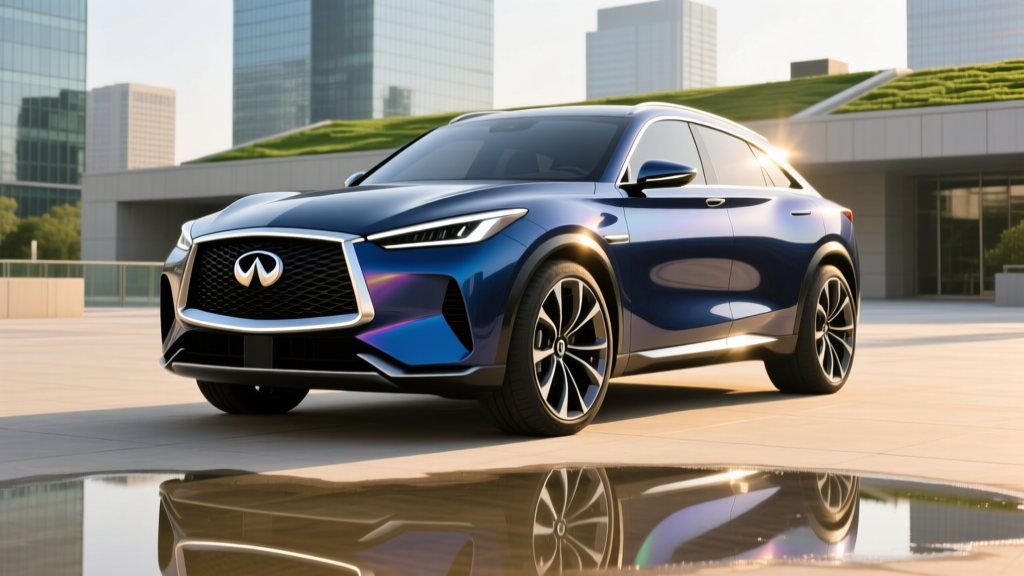
Quick Answer: As of early 2026, Infiniti has not yet launched a dedicated battery-electric SUV in the U.S. market. The brand's electrified lineup currently centers on the QX60 hybrid and the upcoming QX85e plug-in hybrid (announced, expected late 2026). Infiniti's parent company Nissan has confirmed a next-generation EV SUV built on an updated CMF-EV platform, but final U.S. specs, pricing, and availability remain preliminary. If you need a luxury electric SUV today, competitors like the Genesis Electrified GV70, BMW iX, and Cadillac Lyriq are available now with confirmed EPA ranges of 236–324 miles and base MSRPs from $52,000–$87,000.
Infiniti's Electrification Roadmap: Where Things Stand in 2026
Infiniti has been slower to enter the fully electric SUV segment than rivals like Genesis, BMW, and Cadillac. The brand's Ambition 2030 plan commits to a mostly electrified lineup by the end of the decade, but execution has lagged behind announcements. Here is what is confirmed versus what remains speculative:
- QX60 (current): Mild-hybrid V6 only — no plug-in or full EV variant available.
- QX85e (announced): Plug-in hybrid SUV expected for late 2026/early 2027. Estimated 30–40 miles of electric-only range based on Nissan's e-Power PHEV architecture. Final EPA figures pending.
- Dedicated EV SUV (preliminary): Nissan has confirmed an Infiniti-badged EV SUV on an updated CMF-EV platform (the same architecture underpinning the Ariya). Targeted for the 2027–2028 model year. No U.S. pricing, range, or trim details have been published as of this writing.
If you are researching an "Infiniti EV SUV" with the intent to purchase in 2026, the honest reality is that no such vehicle is currently orderable. Your options are to wait for the QX85e PHEV, anticipate the full EV model arriving later, or consider a competitor.
What an Infiniti EV SUV Would Need to Compete
Based on Nissan's Ariya platform capabilities and competitive benchmarking against the luxury electric SUV segment, here is what a future Infiniti EV SUV would likely need to deliver to be viable:
| Spec Category | Competitive Benchmark (2026) | Likely Infiniti Target |
|---|---|---|
| EPA Range | 280–324 mi (Lyriq, iX xDrive50) | ~300 mi (estimated) |
| Battery Capacity | 87–111 kWh usable | ~90–100 kWh (NMC, estimated) |
| Peak DC Fast Charge | 150–200 kW | ~175 kW (CMF-EV platform limit, estimated) |
| 10–80% Charge Time | 20–35 min | ~30 min (estimated) |
| 0–60 mph | 4.5–6.5 sec | ~5.0 sec (AWD, estimated) |
| Base MSRP | $52,000–$72,000 | ~$58,000–$65,000 (estimated) |
These figures are projections based on the Ariya's known architecture and segment positioning. The Ariya itself delivers 304 miles EPA with its 87 kWh battery and peaks at roughly 130 kW on DC fast charging — a rate that has drawn criticism for being slower than competitors. An Infiniti variant would need a meaningful charge-speed improvement to justify a luxury price premium.
EV vs Gas vs Hybrid: Cost Comparison for Luxury SUV Buyers
If you are cross-shopping an eventual Infiniti EV SUV against the current QX60 or a competitor, here is how the economics stack up across a five-year ownership window:
| Cost Factor | Infiniti QX60 (Gas, AWD) | BMW iX xDrive50 (EV) | Genesis Electrified GV70 (EV) |
|---|---|---|---|
| Base MSRP | $53,200 | $87,250 | $66,450 |
| Fed. Tax Credit (§30D) | $0 | Up to $7,500* | Up to $7,500* |
| Fuel/Energy (5 yr / 75k mi) | ~$11,250 (gas @ $3.50/gal, 22 MPG) | ~$3,750 (electric @ $0.15/kWh, 2.8 mi/kWh) | ~$4,050 (electric @ $0.15/kWh, 2.6 mi/kWh) |
| Maintenance (5 yr) | ~$3,500 | ~$1,800 | ~$1,800 |
| Insurance (5 yr avg) | ~$9,500 | ~$12,500 | ~$11,000 |
| Est. 5-Year Total Cost | ~$77,450 | ~$97,800 | ~$75,800 |
* §30D credit eligibility depends on MSRP caps ($80,000 for SUVs), buyer income limits ($300k MFJ / $150k single), and battery critical-mineral sourcing requirements. Verify current-year rules at IRS.gov. Point-of-sale transfer available at participating dealers.
The data makes clear that EVs save substantially on fuel and maintenance, but higher purchase prices and insurance premiums offset some of those gains. The Genesis Electrified GV70 lands closest to the QX60's total cost when you factor in the tax credit, while the iX remains a premium-tier outlier. An eventual Infiniti EV SUV priced around $60,000 with full credit eligibility would be highly competitive on total cost.
Real-World Ownership Considerations Before You Commit
Whether you wait for an Infiniti EV or buy a competitor now, these practical factors determine whether electric ownership works for your situation:
Home Charging Access
Level 2 home charging (240V, 32–48 amps / 7.7–11.5 kW) adds roughly 25–35 miles of range per hour and is the backbone of convenient EV ownership. If you have a garage or dedicated parking space with access to a 240V circuit, expect a full Level 2 installation to cost $800–$2,500 depending on panel capacity and wiring distance. Homes with older 100-amp panels may require a $2,000–$4,000 panel upgrade — a hidden cost that surprises many first-time buyers. Without home charging, you will rely on public DC fast chargers and Level 2 destination chargers, which adds time, cost ($0.30–$0.50/kWh typical for public DC), and unpredictability to your routine.
Climate and Range Loss
Cold weather reduces EV range by 15–30% depending on severity and whether the vehicle uses a heat pump. If an Infiniti EV SUV targets 300 miles EPA, expect roughly 220–255 miles in sustained sub-freezing highway driving. This is not a dealbreaker for most drivers — the average American drives 37 miles per day — but it matters for road trips and cold-climate commuters with longer routes.
Driving Patterns
Highway driving at 75+ mph reduces range by roughly 10–15% compared to the EPA combined cycle due to aerodynamic drag. An EPA-rated 300-mile SUV may deliver 255–270 miles on a flat, 70-mph highway run in moderate temperatures. If your typical use is city and suburban driving with regenerative braking opportunities, your real-world range will often match or slightly exceed the EPA sticker.
Charging Speed Reality
Peak DC fast-charge rates (measured in kW) are not sustained throughout the session. A vehicle rated at 175 kW peak typically sustains that rate only between roughly 10–40% state of charge, then tapers to 100 kW by 60% and below 50 kW above 80%. This is why the 10–80% time is a more honest metric than peak kW. Plan for 30–40 minutes at a fast charger for a meaningful road-trip top-up.
Common Misconceptions About Luxury EV SUVs
| Myth | Fact |
|---|---|
| "EV batteries need replacing every few years." | Modern NMC and LFP batteries are warrantied for 8 years / 100,000 miles at a minimum 70% capacity retention threshold (fueleconomy.gov). Real-world degradation data shows most EVs retain 85–92% capacity after 100,000 miles. |
| "All EVs qualify for the $7,500 tax credit." | §30D has strict MSRP caps ($80,000 for SUVs, $55,000 for sedans), buyer income limits, and critical-mineral/battery-component sourcing requirements that disqualify many models. Check fueleconomy.gov's credit list before assuming eligibility. |
| "Level 2 driver assist means the car drives itself." | Systems like Nissan's ProPILOT Assist are SAE Level 2 — the driver must remain fully engaged with hands on the wheel and eyes on the road. No consumer vehicle sold in the U.S. is SAE Level 4 (fully driverless). |
| "EVs are cheaper in every way." | EVs save on fuel and maintenance but typically cost more upfront, carry higher insurance premiums (15–25% above gas equivalents), and may require home electrical upgrades. Total cost of ownership depends on your specific situation. |
| "Public charging is as fast as a gas stop." | Even at a 200 kW DC fast charger, a 10–80% session takes 20–35 minutes. Gas refueling takes 5 minutes. Plan road trips around charging stops, not the other way around. |
What First-Time EV Buyers Should Know
If you are considering your first electric vehicle — whether an Infiniti when one arrives or a competitor today — these fundamentals will shape your ownership experience:
- kW vs. kWh: kW (kilowatts) measures power — how fast energy flows into the battery during charging. kWh (kilowatt-hours) measures energy — the battery's total capacity, like a gas tank's gallons. A 90 kWh battery charged at 150 kW (peak) will not fill in 36 minutes because the charge rate tapers as the battery fills.
- MPGe is not miles per gallon: MPGe (miles per gallon equivalent) converts electricity consumption to a gasoline-equivalent number for comparison. A more useful metric is miles per kWh — for example, 2.8 mi/kWh means you get 2.8 miles of driving from one kWh of electricity. Multiply by your local electricity rate to find your true per-mile cost.
- Preconditioning matters: Cold batteries charge slowly. Most EVs let you precondition (warm) the battery while plugged in or en route to a fast charger. Skipping preconditioning in winter can double your 10–80% charge time.
- The 80% rule: Charging above 80% is dramatically slower due to battery-protection tapering. On road trips, plan multiple 10–80% stops rather than one 10–100% session — you will arrive sooner.
- NACS vs. CCS: As of 2026, most automakers (including Nissan/Infiniti) are transitioning to the NACS (Tesla-style) charging connector. If you buy a CCS-equipped EV, adapters are available for Tesla Supercharger access, but native NACS vehicles have broader plug-and-charge compatibility.
Decision Framework: Should You Wait or Buy Now?
Wait for an Infiniti EV SUV if:
- You are a current Infiniti/Nissan loyalist who values dealer relationships and brand-specific service networks.
- Your current vehicle is reliable and you can comfortably wait until 2027–2028 for the dedicated EV model.
- You want to see final EPA range, pricing, and §30D tax credit eligibility before committing.
- You are interested in the QX85e PHEV as a bridge solution and it aligns with your timeline.
Buy a competitor EV now if:
- You need a luxury electric SUV within the next 6 months.
- You want confirmed EPA range data, real-world charging performance, and established reliability track records.
- You want to lock in current §30D tax credit eligibility before sourcing rules tighten further.
- You are open to Genesis (Electrified GV70, ~$66K, 236 mi EPA), BMW (iX, ~$87K, 324 mi EPA), or Cadillac (Lyriq, ~$52K, 314 mi EPA) as alternatives.
Consider a PHEV instead if:
- You lack reliable home charging access and cannot install a Level 2 charger.
- Your daily commute is under 35 miles (covering most PHEV electric-only ranges) but you take frequent long road trips where charging infrastructure is sparse.
- You want EV-like daily driving without range anxiety — the QX85e PHEV, when available, may serve this role.
Frequently Asked Questions
Does Infiniti currently sell a fully electric SUV?
No. As of early 2026, Infiniti does not offer a battery-electric SUV in the U.S. The brand's electrified options are limited to the QX60 (mild hybrid only) and the announced QX85e plug-in hybrid expected in late 2026/early 2027. A dedicated EV SUV is planned for the 2027–2028 timeframe but has no confirmed specs or pricing.
How much would an Infiniti EV SUV likely cost?
Based on the Nissan Ariya's pricing ($43,000–$60,000) and the luxury brand premium Infiniti commands, a reasonable estimate is $58,000–$70,000 depending on trim and battery size. Whether it qualifies for the §30D federal tax credit will depend on battery sourcing and MSRP cap compliance at launch.
Will an Infiniti EV SUV use NACS or CCS charging?
Nissan has confirmed it will adopt the NACS connector for future EVs in North America. A next-generation Infiniti EV SUV arriving in 2027–2028 would likely ship with native NACS, providing direct access to Tesla Superchargers and the growing NACS-equipped public charging network.
Is a plug-in hybrid (PHEV) a better choice than a full EV?
It depends on your situation. A PHEV like the upcoming QX85e offers 30–40 miles of electric-only range for daily commuting with a gas engine for longer trips — ideal if you lack home charging or frequently drive in areas with sparse charging infrastructure. A full EV offers lower per-mile energy costs, less maintenance, and zero tailpipe emissions, but requires reliable charging access. For most homeowners with Level 2 charging, a full EV delivers a better long-term ownership experience.
What is the real-world range loss in cold weather?
Expect 15–30% range reduction in sustained sub-freezing temperatures, depending on whether the vehicle uses a heat pump (more efficient) or resistive cabin heating. A 300-mile EPA-rated SUV might deliver 220–255 miles in 20°F highway driving. Preconditioning the battery and cabin while plugged in mitigates some of this loss.
How do I check if an EV qualifies for the federal tax credit?
Visit fueleconomy.gov for the current list of eligible vehicles, then verify your personal eligibility: modified adjusted gross income must not exceed $300,000 (married filing jointly) or $150,000 (single), the vehicle's MSRP must be under $80,000 for SUVs, and the battery must meet critical-mineral and component sourcing thresholds. Consult a tax professional for your specific situation. The credit can be transferred to the dealer at point of sale for an immediate price reduction.