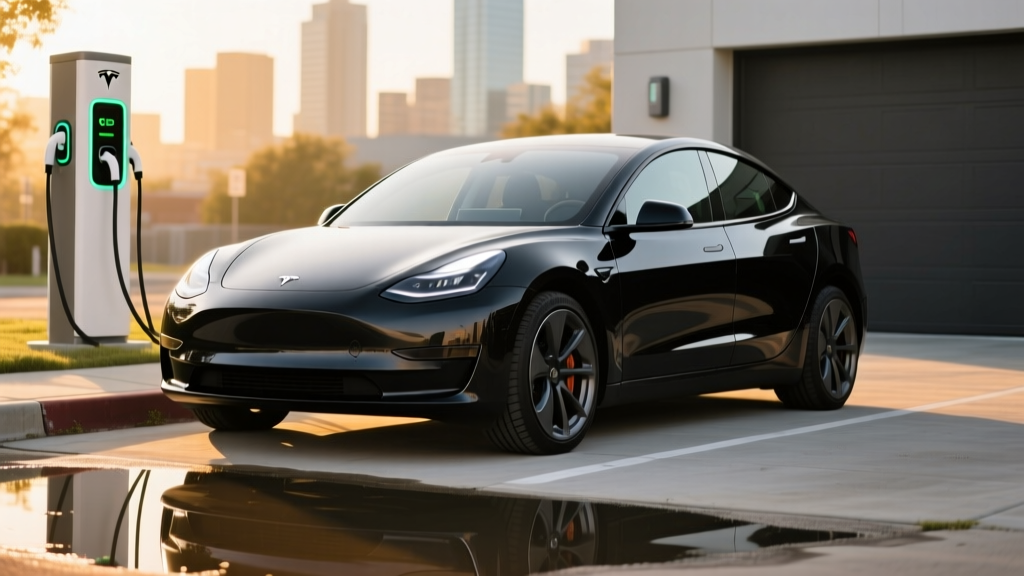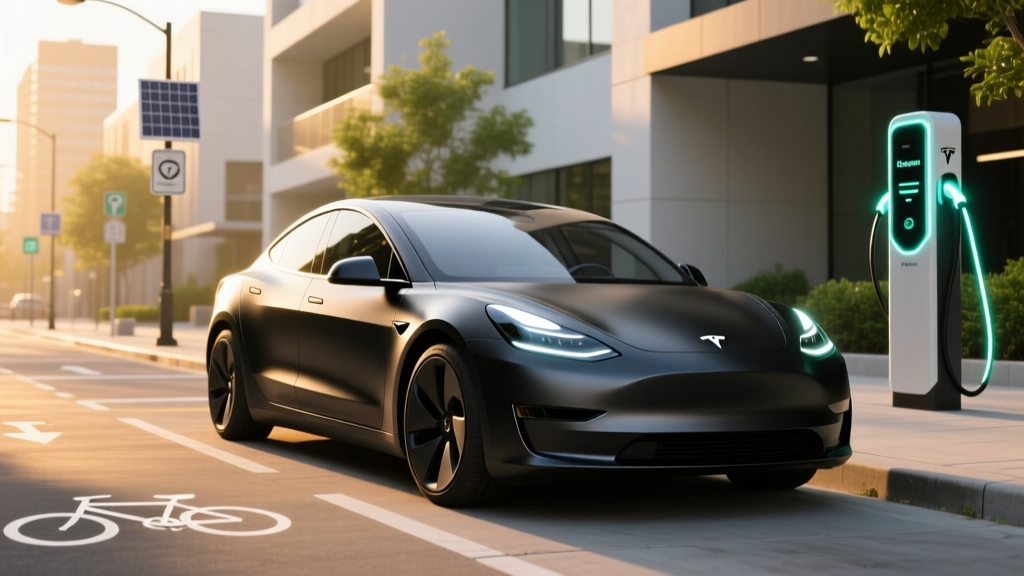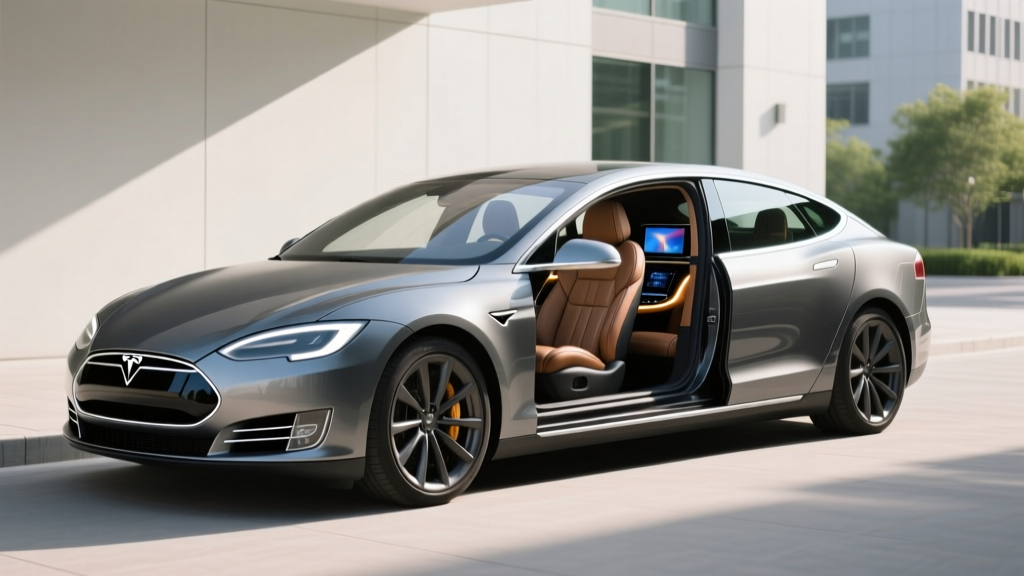
The Tesla Model S has long been the benchmark luxury electric sedan, but adding a third row transforms it into something far more niche: a 7-passenger EV that competes with three-row SUVs while wearing a sedan's body. For 2026, Tesla continues to offer the rear-facing third-row seat as a $4,000 option on the Long Range trim, making the Model S one of the very few sedans on the market — electric or otherwise — that can legally carry seven occupants. But does the math work in practice?
After analyzing EPA data, real-world driving logs, and ownership reports, here's the full picture of what the 7-passenger Model S delivers, where it falls short, and who should actually consider it.
Range, Battery, and Real-World Efficiency
The 2026 Tesla Model S Long Range pairs a ~100 kWh usable battery pack (NMC lithium-ion chemistry) with a dual-motor all-wheel-drive system. The EPA rates it at 402 miles of combined range — one of the highest figures of any production EV sold in the United States, per fueleconomy.gov.
EPA sticker: 402 miles (combined)
Highway driving (70-80 mph): Expect ~320–340 miles. The Model S's sleek aerodynamics (0.208 Cd) help, but sustained high-speed driving still cuts into the pack.
Cold weather (below 32°F / 0°C): Range can drop 20–30%, putting realistic winter range around 280–320 miles. The heat pump and battery preconditioning mitigate this somewhat, but physics wins.
City / stop-and-go: You'll see the highest efficiency here, often exceeding the EPA combined figure thanks to regenerative braking.
Efficiency is rated at 124 MPGe combined (27 kWh/100 mi). That's respectable for a 4,500+ lb luxury sedan, though the lighter Lucid Air Grand Touring edges it out at 131 MPGe. With seven passengers and cargo, expect efficiency to dip toward 30–32 kWh/100 mi in mixed driving.
| Spec | Value |
|---|---|
| EPA Range | 402 miles |
| Battery (usable) | ~100 kWh, NMC |
| Drivetrain | Dual-motor AWD |
| Horsepower | 670 hp |
| 0–60 mph | 3.1 seconds |
| MPGe (combined) | 124 MPGe (27 kWh/100 mi) |
| Seating | 5 standard / 7 optional (rear-facing 3rd row) |
| Cargo (behind 2nd row) | 26.3 cu ft |
| Frunk | 3.1 cu ft |
| Base MSRP | $79,990 |
| 7-Seat Option | +$4,000 |
| Battery Warranty | 8 yr / 150,000 mi |
Charging Speed: DC Fast, Level 2, and the Supercharger Advantage
The Model S Long Range supports up to 250 kW peak DC fast charging on Tesla's V3 Supercharger network. Here's what that actually means in practice — because peak kW is not sustained kW, and the charge curve matters.
| Level | Power | Speed / Notes |
|---|---|---|
| DC Fast (V3 Supercharger) | Up to 250 kW peak | 10–80% in ~27 min; tapers significantly above 60% SoC |
| DC Fast (V4 Supercharger) | Up to 250 kW (CCS via adapter) | Same curve; V4 cabinet delivers higher sustained power in some conditions |
| Level 2 (Tesla Wall Connector) | 11.5 kW (48A) | ~41 miles of range per hour; full charge in ~10 hours |
| Level 2 (Public J1772 / NACS) | 6.6–19.2 kW | Varies by station; NACS native, J1772 requires adapter |
| Level 1 (120V household) | ~1.4 kW | ~5 miles per hour — emergency/trickle only |
Real-world charging insight: The Model S hits its 250 kW peak only between roughly 10–30% state of charge. By 50%, you're closer to 150 kW, and above 80% the rate drops sharply to protect the NMC cells. On a road trip, plan your stops around 10–80% cycles for the fastest throughput. Tesla's navigation will automatically precondition the battery when you route to a Supercharger — this is critical in cold weather, where arriving at a charger without preconditioning can halve your charge speed.
The Model S uses the NACS (North American Charging Standard) connector natively. With Tesla's Supercharger network now open to other brands via the Magic Dock adapter, the Model S still enjoys the most seamless plug-and-charge experience in the US. For home charging, Tesla's Gen 2 Wall Connector at 48 amps is the sweet spot — plan on a 60A circuit and budget $800–$2,000 for professional installation depending on your panel's proximity to the garage.
Performance and Driving Dynamics
The Long Range powertrain produces 670 horsepower and delivers a 0–60 mph time of 3.1 seconds. That's supercar territory from a 7-passenger sedan — something no three-row SUV from Rivian, Kia, or Hyundai can match. The Plaid trim (1,020 hp, 1.99-second 0–60) drops the third-row option entirely, so if you need seven seats, the Long Range is your only choice.
Driving dynamics remain a strong suit. The dual-motor AWD system provides excellent traction in rain and light snow, and the adaptive air suspension adjusts ride height for highway efficiency or rough roads. Steering is precise, body roll is well-controlled for the weight, and the cabin is quiet at speed. The tradeoff: at 4,561 lbs (curb weight without passengers), you feel the mass during hard braking and direction changes. This is a grand tourer, not a sports sedan, when fully loaded.
Third-Row Reality: Space, Comfort, and Practicality
Here's where the 7-passenger Model S diverges sharply from the marketing promise. The third row consists of two rear-facing jump seats designed for children — Tesla officially recommends them for occupants under a certain height and weight (typically children up to approximately 5'0" and 77 lbs).
What works:
- Two children can sit in the third row with adequate headroom (the glass roof helps) and reasonable legroom for short-to-medium trips.
- Rear-facing orientation provides a natural crumple zone in frontal collisions, and Tesla includes seat belts and side-curtain airbag coverage for the third row.
- The second row folds flat, and with the third row stowed, you get a full 26.3 cu ft of cargo space behind the second row.
What doesn't work:
- Adults will not fit comfortably — this is not a minivan or large SUV third row. Knee-to-seatback clearance is tight, and the rear-facing position can cause motion sickness on winding roads.
- With the third row in use, cargo space behind it shrinks to essentially nothing — you're relying on the 3.1 cu ft frunk for any additional storage.
- Access requires folding the second row forward, which is a two-step process and less convenient than a minivan's sliding doors or an SUV's walk-in mechanism.
- Rear climate control vents are limited for the third row, which matters on hot or cold days.
Choose this if: You need occasional 6th/7th seating for small children (school runs, short family trips), prioritize driving performance and range above all else, and already have or plan to install home Level 2 charging.
Look elsewhere if: You regularly carry teenagers or adults in the third row, need substantial cargo space with all seats occupied, or want easy third-row access. Consider the Rivian R1S, Kia EV9, or Tesla Model X instead.
Pricing, Trims, and Federal Tax Credit Eligibility
The 2026 Model S Long Range starts at $79,990 (MSRP, before destination). Adding the 7-seat option brings the base to $83,990. Typical as-tested configurations with Full Self-Driving (Supervised), premium paint, and 21-inch wheels push the price to $90,000–$95,000.
| Item | Amount |
|---|---|
| Long Range base MSRP | $79,990 |
| 7-Seat Option | +$4,000 |
| Destination Fee | $1,390 |
| Federal §30D Tax Credit | $0 (exceeds MSRP cap) |
| Estimated Total (7-seat, base) | $85,380 |
Federal tax credit reality: The Model S does not qualify for the $7,500 IRS §30D new clean vehicle credit. The reason is straightforward: §30D caps eligible sedans at an $55,000 MSRP (per irs.gov). At nearly $80,000 base, the Model S is well above this threshold. No amount of trim selection or option removal changes this — it's a structural exclusion based on vehicle class and price.
Buyers should also be aware that §30D imposes adjusted gross income caps ($300,000 joint / $150,000 single for new vehicle credits) and battery critical-mineral sourcing requirements. Even if the Model S were under the MSRP cap, these rules would apply. For luxury EV buyers in this price range, the federal credit is simply not a factor — though some state-level incentives (check your local DMV or energy office) may still apply regardless of MSRP.
Tech, Driver Assistance, and Safety
The Model S interior centers on a 17-inch touchscreen running Tesla's latest software, a 12.3-inch digital instrument cluster, and a yoke-style or round steering wheel (buyer's choice). The infotainment system is fast, supports streaming, gaming, and over-the-air updates, and requires no phone projection — Tesla's native system handles navigation, media, and vehicle controls directly.
Driver assistance: Every Model S includes Tesla's Basic Autopilot (lane centering, adaptive cruise control, automatic emergency braking). The optional Full Self-Driving (Supervised) package ($8,000 one-time or $99/month) adds automatic lane changes, traffic light/stop sign recognition, and Navigate on Autopilot for highway on/off-ramp management.
Both Basic Autopilot and FSD (Supervised) are SAE Level 2 driver-assistance systems. The driver must remain fully attentive, keep hands on the wheel (or demonstrate attentiveness via the cabin camera), and is legally responsible for the vehicle at all times. This is not self-driving. Tesla's "Supervised" naming is intentional — you are the supervisor. True driverless (Level 4) operation is currently limited to geofenced robotaxi services like Waymo.
Safety: The Model S earns a 5-star overall rating from NHTSA and Top Safety Pick+ status from IIHS (when equipped with acceptable headlights). The third-row seats include 3-point belts and are covered by side-curtain airbags.
Pros and Cons at a Glance
- 402-mile EPA range — best-in-class for a 7-seat vehicle
- 670 hp / 3.1-second 0–60 with seven aboard
- Access to Tesla Supercharger network (17,000+ stalls in North America)
- Strong safety ratings (NHTSA 5-star, IIHS TSP+)
- Over-the-air updates keep the car current
- 8-year / 150,000-mile battery warranty
- Third row fits only small children — rear-facing, limited access
- Near-zero cargo space with third row deployed
- No federal tax credit (MSRP well above §30D sedan cap)
- $85,000+ starting price with 7-seat option
- FSD (Supervised) remains Level 2 despite the name and cost
- Insurance costs above segment average
Competitor Comparison: What Else Seats 7 (or Close)?
The 7-passenger Model S occupies a nearly unique position — a sedan with a third row. The closest alternatives are all SUVs or minivans:
- Tesla Model X (7-seat): True three-row SUV with forward-facing third row, more cargo room, falcon-wing doors. Starts at ~$84,990. Also ineligible for §30D (SUV MSRP cap is $80,000 — borderline depending on trim/options). Better for regular third-row use.
- Kia EV9 (7-seat): Starts around $56,000, qualifies for the $7,500 credit (select trims), genuine three-row SUV with adult-usable third row. Less range (~304 mi) and performance, but far more practical for families.
- Rivian R1S (7-seat): Premium electric SUV, starts ~$79,900. Forward-facing third row, off-road capable, but shorter range and higher price.
- Minivans (Toyota Sienna Hybrid, Chrysler Pacifica PHEV): Not fully electric (Sienna is HEV, Pacifica PHEV has 32 mi electric range), but unmatched third-row comfort and cargo versatility at lower prices.
Is the 7-Passenger Model S Worth Buying?
The honest answer depends entirely on how you'll use the third row. If your need for a seventh seat is occasional — carpools, visiting grandparents, short school runs with small children — and you value the 402-mile range, Supercharger access, and sedan driving dynamics, the Model S 7-passenger is genuinely one-of-a-kind. Nothing else combines this range, this performance, and seven seats in a single vehicle.
But if you're regularly hauling a full family with cargo, the third row's limitations become daily frustrations. The rear-facing jump seats, near-zero cargo with all rows up, and awkward access make it a compromise that a three-row SUV like the Model X, EV9, or R1S handles far more gracefully. At $85,000+ without a federal tax credit, you're paying a premium for a solution that only works part-time.
Bottom line: The 7-passenger Model S is a brilliant EV with a niche feature bolted on. Buy it for the range, the performance, and the charging network. Treat the third row as a bonus for small kids — not a primary seating solution.
Frequently Asked Questions
What is the real-world range of the 7-passenger Tesla Model S?
The EPA rates the 2026 Model S Long Range at 402 miles combined. In real-world highway driving at 70–80 mph, expect 320–340 miles. In cold weather (below freezing), range can drop to 280–320 miles. With a full load of 7 passengers and cargo, plan for the lower end of these estimates.
How fast does the Model S charge at home and on the road?
On a Tesla V3 Supercharger, the Model S peaks at 250 kW and charges from 10–80% in approximately 27 minutes (with battery preconditioning). At home on a Level 2 Tesla Wall Connector (11.5 kW / 48A), you'll add about 41 miles of range per hour, or a full charge overnight in roughly 10 hours.
Does the Tesla Model S qualify for the federal EV tax credit?
No. The IRS §30D new clean vehicle credit caps eligible sedans at $55,000 MSRP. The Model S starts at $79,990 — well above the threshold. It does not qualify for any portion of the $7,500 federal credit regardless of buyer income or battery sourcing. State incentives may still apply; check your local energy office.
How much does the 7-passenger Model S cost?
The 2026 Model S Long Range with the 7-seat option starts at $85,380 including destination ($79,990 base + $4,000 seat option + $1,390 destination). Adding FSD (Supervised), premium paint, and larger wheels typically brings as-tested pricing to $90,000–$95,000.
Can adults fit in the Model S third row?
Not comfortably. The third-row seats are rear-facing jump seats designed for children (approximately under 5'0" tall). Adults will find knee room extremely limited, and the rear-facing orientation can cause discomfort on longer drives. For regular adult third-row use, consider the Model X or a three-row SUV.
Is the Model S 7-passenger worth it vs. the Model X?
If you need the third row regularly, the Model X is the better choice — it offers a forward-facing third row with more headroom, better cargo access, and easier entry. If you only need occasional child seating and prioritize range (402 vs. ~348 miles) and driving dynamics, the Model S 7-seat makes sense. The price gap is narrow, so the decision comes down to third-row usage frequency.
What is the battery warranty on the Model S?
Tesla covers the Model S battery and drive unit for 8 years or 150,000 miles, whichever comes first, with a minimum 70% capacity retention threshold. This is among the more generous warranties in the luxury EV segment.