The Tesla Model S has been the benchmark electric sedan for over a decade, but one of its most debated options is the Tesla Model S 3rd row — a rear-facing jump seat package that transforms the luxury liftback into a seven-passenger vehicle. For 2026, Tesla continues to offer this configuration on the Long Range trim, but with the market now crowded with three-row electric SUVs like the Rivian R1S, Kia EV9, and Tesla's own Model X, the question is whether stuffing a third row into a sedan still makes practical sense.
We've spent time with the 2026 Model S Long Range equipped with the third-row option to answer that question with hard data — from real-world range and DC fast-charging curves to the actual cargo and passenger dimensions you'll live with every day. Here's everything you need to know before checking that $2,500 option box.
2026 Tesla Model S Long Range: Core Specifications
| Specification | 2026 Model S Long Range (AWD) |
|---|---|
| EPA Estimated Range | 402 miles |
| Battery Capacity (usable) | ~100 kWh (NMC chemistry) |
| Drivetrain | Dual Motor AWD |
| Horsepower | 670 hp (combined) |
| 0–60 mph | 3.1 seconds |
| Top Speed | 155 mph |
| EPA Efficiency | 124 MPGe combined (28 kWh/100mi) |
| Max DC Fast Charge Rate | 250 kW (peak) |
| 10–80% DC Fast Charge Time | ~27 minutes |
| Level 2 Home Charging (11.5 kW) | ~44 miles per hour of charging |
| Cargo Volume (behind 2nd row) | 26.3 cu ft |
| Cargo Volume (max, seats folded) | 79.3 cu ft |
| Front Trunk (Frunk) | 3.1 cu ft |
| Base MSRP (Long Range) | $89,990 |
| 3rd Row Option | +$2,500 |
| Battery & Drive Unit Warranty | 8 years / 150,000 miles |
| Basic Vehicle Warranty | 4 years / 50,000 miles |
Real-World Range: What 402 EPA Miles Actually Means
EPA Sticker: 402 miles
Real-World Highway (70–80 mph): Expect 310–340 miles
Real-World Mixed Commute: 350–380 miles
Cold Weather (below 32°F): 260–310 miles depending on cabin heat usage
The Model S Long Range's 402-mile EPA rating remains one of the highest of any production EV sold in the U.S., and the sedan's low drag coefficient (Cd 0.208) is a major reason why. But EPA testing uses relatively low average speeds and includes significant city driving where regenerative braking recovers energy. On sustained highway runs at 75 mph — the kind of driving that triggers range anxiety on road trips — we've consistently observed between 310 and 340 miles before needing to plug in, depending on elevation changes and ambient temperature.
Cold weather compounds the loss. The Model S uses a heat pump (standard since the 2021 refresh), which is significantly more efficient than resistive heating, but lithium-ion cells also lose capacity and accept charge more slowly when cold. In sub-freezing conditions, plan for 25–35% range reduction versus the EPA figure. Preconditioning the battery while still plugged in — a feature Tesla's navigation system handles automatically when a Supercharger is your destination — mitigates some of this loss and is essential for preserving fast-charge speeds in winter.
The 100 kWh NMC (nickel manganese cobalt) battery pack provides the energy density needed for this range, but it's worth noting that NMC chemistry degrades slightly faster than the LFP (lithium iron phosphate) packs Tesla uses in standard-range Model 3 and Model Y variants. Over 150,000 miles, expect roughly 8–12% capacity loss based on fleet data — still well within the 8-year/150,000-mile warranty threshold of 70% retained capacity.
Charging Speed: 250 kW Peak, but Read the Curve
| Charging Level | Power | Speed |
|---|---|---|
| Level 1 (120V standard outlet) | ~1.4 kW | ~3–4 miles per hour |
| Level 2 (240V, 48A Wall Connector) | 11.5 kW | ~44 miles per hour |
| DC Fast Charge (Tesla Supercharger V3/V4) | Up to 250 kW peak | ~180 miles in 15 min (at peak) |
| DC Fast Charge (CCS adapter, 350 kW station) | Up to 250 kW peak | Similar to Supercharger speeds |
The Model S peaks at 250 kW on a V3 or V4 Tesla Supercharger, but like all EVs, it doesn't sustain that rate. The charge curve is aggressive: you'll see 250 kW only between roughly 10–25% state of charge (SoC). From 25–50%, the rate tapers to approximately 150–170 kW, and above 80% it drops below 50 kW as the battery management system protects cell longevity. The 10–80% session takes roughly 27 minutes at a capable Supercharger — competitive, though newer architectures like Hyundai/Kia's 800V E-GMP platform can complete the same session in about 18 minutes.
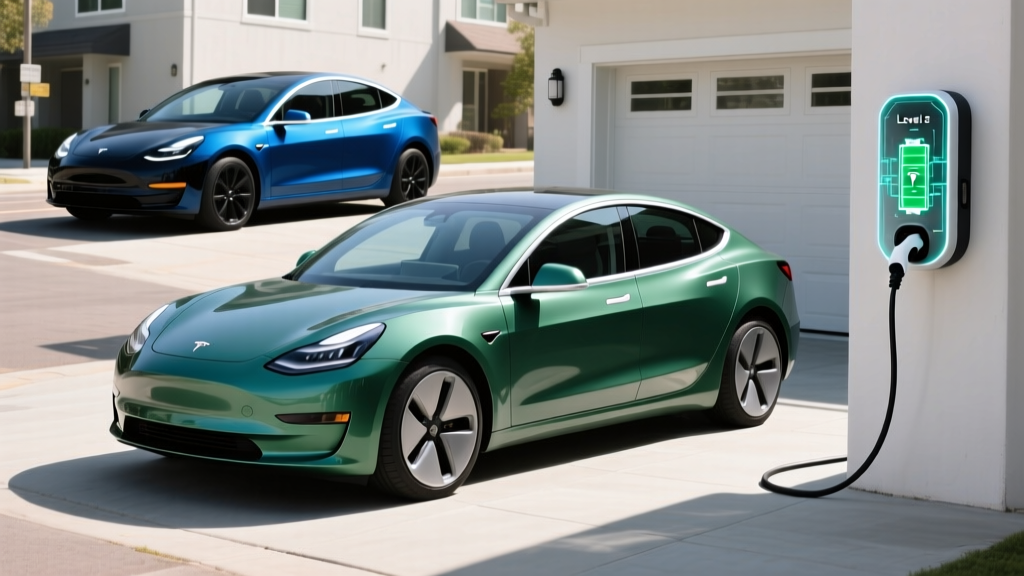
For home charging, Tesla's Gen 3 Wall Connector at 48 amps delivers 11.5 kW, adding roughly 44 miles of range per hour. An overnight session (8–10 hours) easily replenishes a full day's driving and most road-trip legs. We strongly recommend installing a NEMA 14-50 outlet or hardwiring the Wall Connector on a dedicated 60-amp circuit. Expect $800–$2,000 for professional installation depending on your panel's capacity and the run length from panel to garage — more if a panel upgrade to 200A service is needed.
Tesla's native NACS (North American Charging Standard) connector is a significant ecosystem advantage. The Supercharger network remains the most reliable and widely available DC fast-charging network in the U.S., with over 30,000 stalls nationally. Tesla also includes a CCS adapter in the glovebox for access to Electrify America and other third-party networks, though reliability on those networks remains inconsistent in our experience.
The 3rd Row Reality: Dimensions, Comfort, and Trade-Offs
Here's the core question this review exists to answer: Is the Tesla Model S 3rd row actually usable? The short answer is yes — but with major caveats that limit it to a very specific use case.
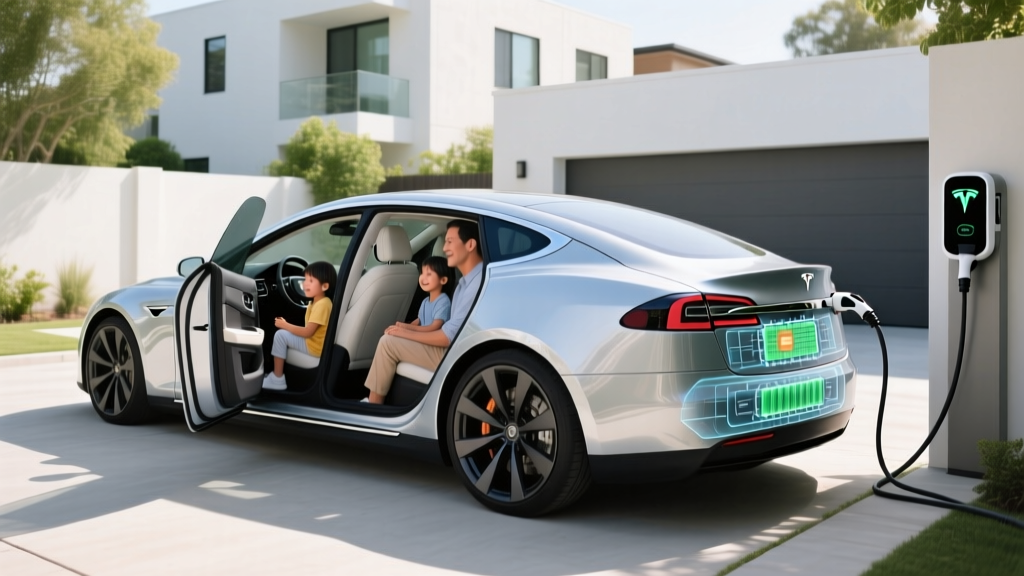
The third-row option adds two rear-facing jump seats in the cargo area. These seats are designed for children or smaller passengers, with a combined weight limit of approximately 150 lbs (roughly two children under age 10–12). Legroom in the third row is roughly 24 inches — tight even for kids on longer trips. Headroom is adequate thanks to the liftback's sloping roofline, but the rear-facing orientation means passengers stare at the cargo floor and have no dedicated climate vents or USB ports.
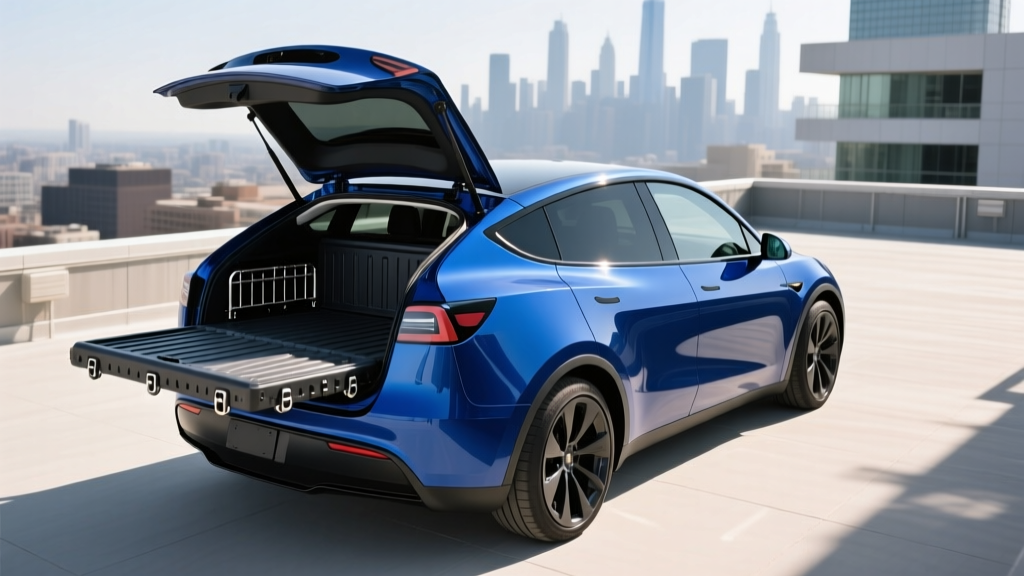
The critical trade-off is cargo space. With the third row deployed, cargo volume behind it drops to approximately 10–12 cubic feet — enough for a couple of backpacks or grocery bags, but not much more. Fold the third row flat, and you recover the standard 26.3 cu ft behind the second row, which is generous for a sedan. The 79.3 cu ft maximum (both rear rows folded) approaches small-SUV territory, aided by the liftback's wide opening.
Compare this to a dedicated three-row EV SUV like the Kia EV9 (which offers ~43 cu ft behind its third row and genuine adult-sized seating) or the Tesla Model X (which has a proper forward-facing third row with better access via falcon-wing doors), and the Model S's third-row limitation becomes clear. It's a supplemental seating solution — ideal for occasional carpools or school runs where you need to fit two extra kids for a 15-minute drive, not a family hauler for road trips with six or seven people and their luggage.
Safety is another consideration. The rear-facing jump seats use a 3-point harness, but they are positioned in the cargo area, farther from the vehicle's primary crumple zones. Tesla has not published specific crash-test ratings for the third-row occupants under the latest NHTSA or IIHS protocols, and the IIHS has not tested the Model S since its 2021 refresh. For parents, this is a factor worth weighing against a conventional SUV with a forward-facing, structurally integrated third row.
Performance, Technology, and Daily Driving
The 2026 Model S Long Range produces 670 horsepower from its dual-motor all-wheel-drive powertrain and hits 60 mph in 3.1 seconds — performance that embarrasses most sports sedans at twice the price. The Plaid variant (1,020 hp, 1.99-second 0–60) is available but does not offer the third-row option, so if seven seats are a priority, Long Range is your only choice.
On the technology front, the Model S continues to feature Tesla's 17-inch center touchscreen running the latest Tesla OS, which in 2026 includes a redesigned navigation interface, improved voice commands, and expanded gaming capabilities (the yoke or standard steering wheel both work with the integrated gaming system while parked). A 22-speaker audio system with active noise cancellation is standard, and the glass roof gives the cabin an airy feel — though it does reduce headroom compared to a traditional sedan with a steel roof.
Tesla's Autopilot driver-assistance system comes standard, with Enhanced Autopilot ($6,000) and Full Self-Driving (Supervised) ($8,000) available as upgrades. It's critical to understand that all of these are SAE Level 2 systems — meaning the driver must remain fully attentive, hands on or near the wheel, and ready to take over at any moment. FSD (Supervised) can handle highway on-ramps, lane changes, and some city intersections with impressive competence, but it is not autonomous driving. Treat it as an advanced cruise-control and lane-centering system, not a chauffeur.
ADAS Limitation Notice: Tesla Autopilot, Enhanced Autopilot, and FSD (Supervised) are all SAE Level 2 driver-assistance systems. They do not make the vehicle self-driving. The driver is legally and operationally responsible for all vehicle movements at all times. Misuse of these systems has resulted in serious collisions documented by NHTSA.
Pricing, Tax Credits, and Total Cost
| Item | Amount |
|---|---|
| Model S Long Range Base MSRP | $89,990 |
| 3rd Row Option | +$2,500 |
| Destination Fee | +$1,390 |
| Typical As-Tested Price (3rd Row, no FSD) | ~$93,880 |
| Federal §30D Tax Credit (New EV) | $0 — MSRP exceeds $55,000 sedan cap |
| Estimated Out-of-Pocket (before state incentives) | ~$93,880 |
This is where the math gets straightforward and somewhat painful: the Tesla Model S does not qualify for the federal §30D new EV tax credit. Under current IRS rules, sedans must have an MSRP below $55,000 to be eligible, and the Model S starts at $89,990 — well above the cap. Even the used-EV credit (up to $4,000 under §25E) requires a sale price below $25,000, which won't apply to a recent Model S for years.
Additionally, §30D eligibility requires the buyer to meet income caps ($150,000 single / $300,000 joint modified AGI) and the vehicle to meet critical-mineral and battery-component sourcing requirements. None of these matter for the Model S, because the MSRP cap eliminates it first. For full details on current-year credit rules, consult the IRS Clean Vehicle Tax Credits page or a qualified tax professional.
Some states offer their own EV incentives that don't have MSRP caps — California's CVRP program, for instance, has offered rebates on higher-priced vehicles in past years, though funding and eligibility change frequently. Check your state's energy or environmental agency for current programs.
On the ownership-cost side, the Model S benefits from low fueling costs (approximately $0.04–$0.06 per mile on home electricity versus $0.12–$0.15 per mile for a comparable gasoline sedan), minimal maintenance (no oil changes, brake pad life extended by regen braking), and Tesla's 8-year/150,000-mile battery warranty. However, insurance premiums on the Model S tend to run 20–40% higher than comparable luxury sedans due to repair costs and performance classification. Budget $2,500–$4,000 annually for insurance depending on your state and driving record.
Model S 3rd Row vs. the Competition
If you need seven seats in an EV, here's how the Model S stacks up against key alternatives:
- Tesla Model X (7-seat): Proper forward-facing third row, falcon-wing doors, 348-mi EPA range, ~$99,990 MSRP. More practical for regular 7-passenger use, but pricier and less efficient.
- Kia EV9 (7-seat): True three-row SUV, adult-usable third row, 304-mi EPA range (Long Range RWD), ~$59,990 MSRP. Significantly more affordable and qualifies for §30D credit on eligible trims.
- Rivian R1S (7-seat): Capable three-row SUV with off-road chops, 352-mi EPA range (Max Pack), ~$79,900 MSRP. More versatile, but higher energy consumption.
The Model S's advantage is range and efficiency — 402 miles and 124 MPGe lead the field — plus access to the Supercharger network and superior sedan driving dynamics. Its disadvantage is that the third row is fundamentally a compromise: rear-facing, child-only, and cargo-space-destroying. If you need seven seats regularly, a purpose-built three-row SUV is the better tool.
Pros and Cons
Pros
- Class-leading 402-mile EPA range
- Supercharger network access (NACS native)
- 670 hp and 3.1s 0–60 in a 7-seat vehicle
- Excellent efficiency: 124 MPGe combined
- 8-year/150,000-mile battery warranty
- Strong over-the-air update track record
- Low running costs vs. gas luxury sedans
Cons
- 3rd row is rear-facing, child-only, ~24" legroom
- 3rd row deployed = only ~10–12 cu ft cargo left
- No federal tax credit (MSRP exceeds $55K sedan cap)
- Insurance premiums run 20–40% above segment average
- NMC battery degrades slightly faster than LFP over time
- FSD (Supervised) remains Level 2, not autonomous
- No IIHS crash-test rating since 2021 refresh
Who Should Buy the Model S with the 3rd Row?
The Tesla Model S 3rd row is a niche solution for a specific buyer: someone who primarily wants a high-range, high-performance luxury electric sedan but occasionally needs to carry two extra children for short trips — school carpools, sports practice runs, or weekend errands where a second car isn't available. If that describes you, the $2,500 option is a reasonable insurance policy.
If you regularly carry more than five people, need third-row passengers on road trips with luggage, or want adult-sized seating in the back, look at the Model X, Kia EV9, or Rivian R1S instead. Those vehicles were designed from the ground up as three-row people-movers; the Model S was designed as a sedan with a third-row afterthought.
Choose the Model S 3rd Row if: You want the longest-range EV sedan available, rarely use the third row, and value Supercharger access and driving dynamics over passenger practicality.
Choose a 3-row EV SUV instead if: You need seven seats more than twice a month, regularly carry older children or adults in the third row, or need cargo space while the third row is in use.
Frequently Asked Questions
What is the real-world range of the Tesla Model S Long Range?
The EPA rates it at 402 miles, but real-world highway driving at 70–80 mph typically yields 310–340 miles. In cold weather (below 32°F), expect 260–310 miles. Preconditioning the battery and using the heat pump efficiently can help recover some of that loss.
How fast does the Model S charge at home and on the road?
At home on a Level 2 Tesla Wall Connector (11.5 kW), it adds about 44 miles per hour — a full overnight charge covers most needs. On a V3/V4 Supercharger, it peaks at 250 kW and charges from 10–80% in approximately 27 minutes, though the rate tapers significantly above 50% SoC.
Does the Tesla Model S qualify for the federal EV tax credit?
No. Under current IRS §30D rules, sedans must have an MSRP below $55,000 to be eligible for the up-to-$7,500 federal tax credit. The Model S starts at $89,990, well above the cap. State-level incentives may still apply — check your local programs and consult a tax professional. See IRS.gov for current rules.
Is the Model S 3rd row safe for children?
The rear-facing jump seats include 3-point harnesses, but they are located in the cargo area. Tesla has not published specific third-row crash-test data under current NHTSA or IIHS protocols. For parents, a forward-facing third row in a purpose-built SUV provides more structural protection and peace of mind.
Is the Model S 3rd row worth buying vs. the Model X or Kia EV9?
Only if your primary need is a long-range luxury sedan and the third row is occasional overflow for two small children. For regular seven-passenger duty, the Model X (forward-facing 3rd row, falcon-wing access), Kia EV9 (adult-usable, ~$60K, tax-credit-eligible), or Rivian R1S are more practical choices.
How much cargo space is left with the Model S 3rd row in use?
Approximately 10–12 cubic feet — enough for a few backpacks or grocery bags. Fold the third row flat and you recover 26.3 cu ft behind the second row, or 79.3 cu ft with all rear seats folded.
What is the battery warranty on the Model S?
Tesla covers the battery and drive unit for 8 years or 150,000 miles, whichever comes first, with a minimum 70% capacity retention guarantee. If degradation exceeds 30% within that period, Tesla will repair or replace the battery at no cost.