The 'Tesla Bed Model Y' Explained: What Buyers Actually Want
Search interest in a Tesla bed Model Y has surged, driven by a mix of curiosity, aftermarket conversion kits, and persistent rumors that Tesla might release a unibody pickup variant of its best-selling crossover. Let's be precise: as of 2026, Tesla does not manufacture a Model Y with an integrated truck bed. The Model Y remains a five-seat (optionally seven-seat) compact electric crossover SUV with a hatchback cargo area.
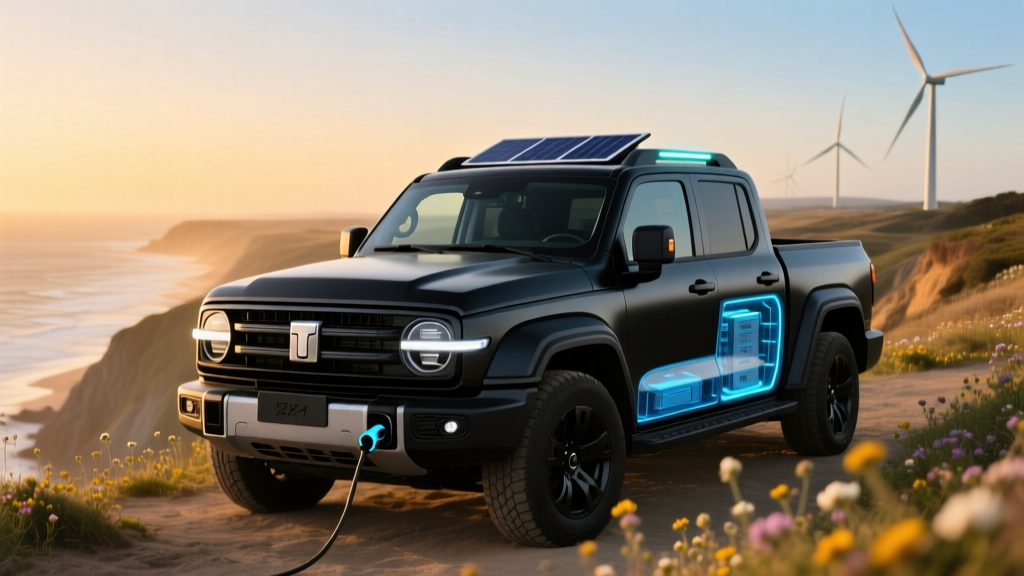
However, the concept of a "bed" Model Y has real-world relevance for two reasons. First, a growing aftermarket industry offers bed-conversion kits that replace the rear cargo hatch and roof section with a small pickup-style bed. Second, Tesla's Cybertruck occupies the electric-truck segment, leaving buyers who want Model Y efficiency and pricing but need occasional cargo hauling searching for alternatives. This review covers the 2026 Tesla Model Y as it actually exists — and addresses the bed-conversion question head-on.
2026 Tesla Model Y: Core Specifications at a Glance
| Spec | Long Range AWD | Performance |
|---|---|---|
| EPA Range | 320 miles | 293 miles |
| Battery (usable) | ~75 kWh (NMC) | ~75 kWh (NMC) |
| Drivetrain | Dual-Motor AWD | Dual-Motor AWD |
| Horsepower | 384 hp | 456 hp |
| 0–60 mph | 4.8 sec | 3.5 sec |
| Peak DC Charge Rate | 250 kW | 250 kW |
| 10–80% DC Fast Charge | ~25 min | ~25 min |
| Level 2 Home Charging | 11.5 kW (~37 mi/hr) | 11.5 kW (~37 mi/hr) |
| Efficiency | 122 MPGe / 28 kWh/100mi | 111 MPGe / 30 kWh/100mi |
| Cargo Volume (rear seats up) | 30.2 cu ft | 30.2 cu ft |
| Cargo Volume (rear seats folded) | 72.0 cu ft | 72.0 cu ft |
| Base MSRP (2026) | $44,990 | $51,490 |
| Battery/Powertrain Warranty | 8 yr / 120,000 mi | 8 yr / 120,000 mi |
Source: fueleconomy.gov and Tesla specifications. Always verify current model-year data at purchase.
Real-World Range: Beyond the EPA Sticker
Real-world expectations: In mixed city/highway driving at moderate temperatures, expect 270–300 miles on a full charge. Sustained highway driving at 75+ mph reduces range to roughly 250–275 miles. In cold weather (below 30°F), range can drop 15–25%, bringing realistic range to 220–260 miles depending on cabin heating use and whether the battery was preconditioned.
The Model Y's NMC (nickel manganese cobalt) battery pack provides strong energy density, but like all lithium-ion chemistries, it is sensitive to temperature extremes. Tesla's heat pump — standard on all 2026 Model Y trims — significantly reduces cold-weather HVAC energy draw compared to resistive heating, but the physics of cold electrolyte still apply. Preconditioning the battery while plugged in (using the Tesla app's scheduled departure feature) can recover 10–20 miles of range in winter conditions.
For context, the Model Y Long Range's efficiency of 28 kWh per 100 miles is among the best in its class, rivaling the Hyundai Ioniq 5 and outperforming heavier competitors like the Ford Mustang Mach-E Extended Range.
Charging Speed: DC Fast Charge and Home Level 2
The 2026 Model Y supports a peak DC fast-charge rate of 250 kW on V3 Superchargers and compatible CCS/NACS stations. Here's what that means in practice:
| Charging Level | Power | Speed (miles added) | Notes |
|---|---|---|---|
| Level 1 (120V outlet) | ~1.4 kW | ~4 mi/hr | Emergency/trickle only |
| Level 2 (240V, 48A) | 11.5 kW | ~37 mi/hr | Full charge in ~7–8 hours |
| DC Fast (V3 Supercharger) | Up to 250 kW peak | ~162 mi in 15 min | 10–80% in ~25 min; tapers above 80% |
| DC Fast (V4 Supercharger) | Up to 250 kW | Similar to V3 | Newer stalls; CCS adapter may be needed for non-Tesla networks |
A critical note on the charge curve: the 250 kW peak rate is not sustained across the entire session. The Model Y typically holds peak power from roughly 10% to 40% State of Charge (SoC), then progressively tapers. Charging from 80% to 100% on DC fast charge is slow — Tesla recommends charging to 100% only on Level 2 at home before a road trip, and limiting routine DC fast charging to 80% to preserve battery longevity.
The 2026 Model Y uses the NACS (North American Charging Standard) connector natively. Tesla's Supercharger network remains the most reliable and extensive DC fast-charging network in the US, with over 25,000 stalls nationally. For non-Tesla networks (Electrify America, EVgo), a NACS-to-CCS adapter may be required depending on station hardware.
Can You Get a Truck Bed on the Model Y? Aftermarket Conversions
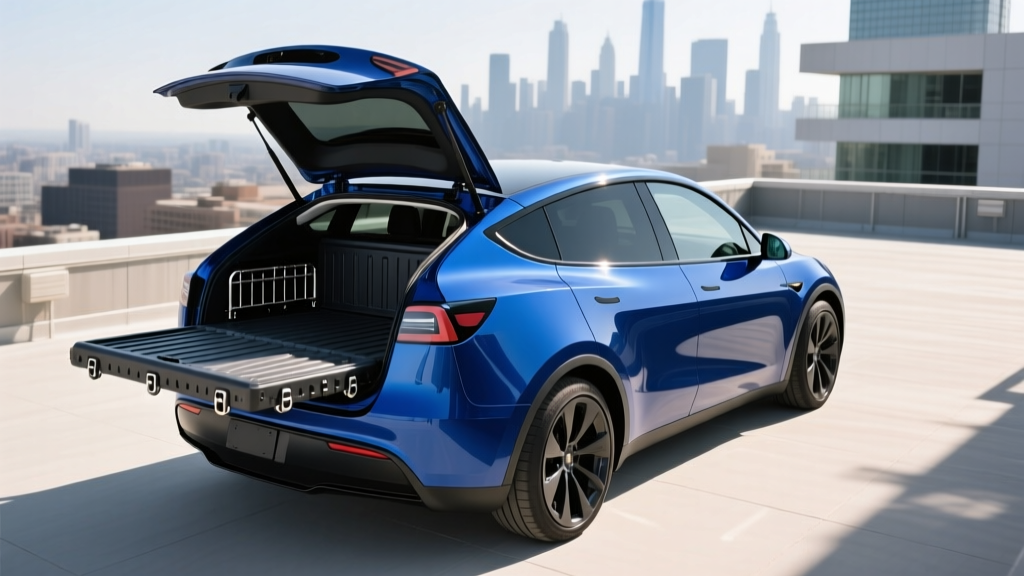
Several aftermarket companies — including EVO Cargo, Campervan North America, and smaller fabricators — offer conversion kits that modify the Model Y's rear hatch area into a shallow pickup-style bed. These typically involve:
- Removing the rear glass hatch and upper rear body panel
- Installing a fiberglass or aluminum bed liner with low side walls
- Retaining the rear seat structure (though rear-seat usability is often compromised)
- Adding a tonneau cover or rack system
Practical limitations of bed conversions:
- Bed length: Typically 4–5 feet — suitable for plywood sheets, bikes, or camping gear, but not full 8-foot lumber or large furniture.
- Payload: The Model Y's structural design is optimized for a closed cargo area. Heavy concentrated loads in a converted bed may exceed rear subframe design limits.
- Warranty: Any structural modification will void Tesla's vehicle limited warranty and potentially the battery/powertrain warranty. Tesla Service Centers will likely refuse to service modified vehicles.
- Insurance: Most insurers will not cover aftermarket structural modifications, and any accident involving a modified vehicle could create liability issues.
- Cost: Professional bed conversions typically run $5,000–$12,000 depending on materials and features — a significant addition to the vehicle's purchase price.
Bottom line: If you need a truck bed regularly, the Cybertruck (starting at $60,140 for the AWD model, with a 6-foot bed and 2,500-lb payload capacity) is Tesla's purpose-built solution. If you need occasional cargo hauling, a roof rack, hitch-mounted cargo carrier, or the Model Y's 72 cu ft of flat-floored cargo space with the seats folded will serve most needs without risking your warranty.
Pricing, Tax Credits, and Total Cost
| Trim | Base MSRP | Est. Federal Credit (§30D) | Effective Price* |
|---|---|---|---|
| Long Range AWD | $44,990 | Up to $7,500 | ~$37,490 |
| Performance AWD | $51,490 | Up to $7,500 | ~$43,990 |
*Effective price assumes full §30D credit eligibility. Actual credit varies based on battery sourcing, buyer income, and MSRP caps. See IRS guidance below.
The federal EV tax credit under IRS §30D provides up to $7,500 for qualifying new EVs. For the 2026 Model Y, eligibility depends on three key requirements:
- MSRP Cap: The Model Y qualifies as an SUV (MSRP cap of $80,000) — both trims are well under this limit.
- Buyer Income Cap: Modified adjusted gross income must not exceed $150,000 (single), $225,000 (head of household), or $300,000 (joint filers).
- Battery Sourcing: The $7,500 credit splits into two halves — $3,750 for critical minerals and $3,750 for battery component sourcing. Tesla's supply chain sourcing determines how much of the full credit applies in any given model year. As of early 2026, the Model Y qualifies for the full $7,500, but verify current sourcing compliance on fueleconomy.gov before purchasing.
- Point-of-Sale Transfer: Since 2024, buyers can transfer the credit to the dealer at purchase, reducing the out-of-pocket price immediately rather than waiting to claim it on their tax return.
For the latest eligibility details, consult IRS.gov's clean vehicle credits page or speak with a tax professional.
Performance, Tech, and Daily Ownership
The 2026 Model Y continues to offer Tesla's hallmark instant torque and responsive handling. The Long Range AWD's 4.8-second 0–60 mph time is brisk for a family crossover, while the Performance trim's 3.5-second sprint rivals sports sedans. Both trims feature Tesla's dual-motor all-wheel-drive system with independent front and rear motors for precise traction control.
Standout technology:
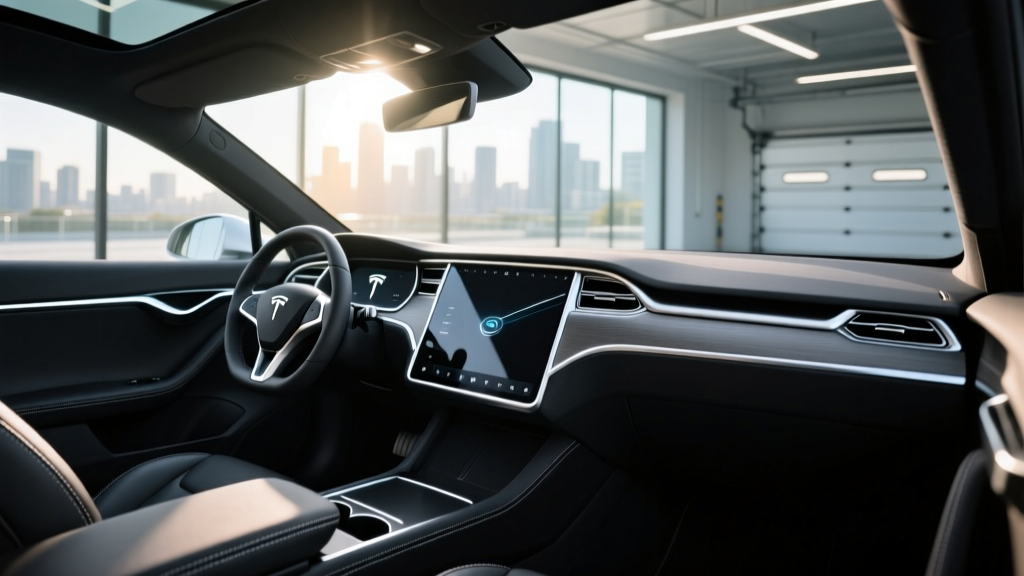
- 15.4-inch touchscreen with Tesla's proprietary infotainment OS — no Apple CarPlay or Android Auto, but native navigation, Spotify, Netflix (while parked), and over-the-air updates.
- Autopilot (standard): SAE Level 2 driver-assist with adaptive cruise, lane centering, and automatic emergency braking. Requires continuous driver supervision.
- Full Self-Driving (Supervised) ($8,000 option or $99/month): Enhanced Level 2 system with city-street navigation, traffic-light recognition, and automatic lane changes. Despite the name, the driver must remain fully engaged — this is not autonomous driving.
- Sentry Mode: 360-degree camera recording when parked, with motion-triggered alerts.
- Frunk (front trunk): 4.1 cu ft of additional cargo space under the hood.
Both Autopilot and FSD (Supervised) require the driver to maintain hands-on-wheel awareness and full attention. Tesla's camera-based driver monitoring system will issue warnings and gradually disengage the system if attention lapses are detected. Only Level 4 systems (e.g., Waymo robotaxis) operate without a human driver.
Notable drawbacks:
- No Apple CarPlay or Android Auto — Tesla's walled-garden infotainment is a dealbreaker for some buyers.
- Minimalist interior lacks physical buttons for climate, mirrors, and glovebox — all controlled via the touchscreen.
- Panel-gap quality, while improved from earlier years, still trails legacy automakers at this price point.
- No spare tire — Tesla provides a tire-repair kit and roadside assistance.
- Rear-seat headroom is tighter than competitors like the Hyundai Ioniq 5 due to the sloping roofline.
Pros and Cons: The 2026 Model Y Verdict
Pros
- Class-leading efficiency (28 kWh/100mi)
- Access to Tesla Supercharger network — most reliable DC fast-charging in the US
- Spacious 72 cu ft cargo area with seats folded
- Strong 0–60 performance in both trims
- Over-the-air updates continuously add features
- Competitive pricing after federal tax credit
Cons
- No truck-bed variant exists — bed conversions void warranty
- Infotainment lacks CarPlay/Android Auto
- FSD (Supervised) costs $8,000 extra and remains Level 2
- Real-world highway range falls ~15% below EPA estimate
- Rear visibility is limited due to thick C-pillars and no rear wiper
- Insurance premiums tend to be higher than non-Tesla competitors
Who Should Buy the 2026 Model Y — and Who Shouldn't
Choose the Model Y if:
- You prioritize charging-network reliability and want access to 25,000+ Superchargers.
- You need a family-sized EV with strong range (270+ real-world miles) and a flat cargo floor for gear, strollers, or camping equipment.
- You want quick DC fast charging (10–80% in ~25 min) for road trips.
- You value OTA software updates and a tech-forward cabin.
Look elsewhere if:
- You need a true truck bed — consider the Cybertruck (6-ft bed, 2,500-lb payload) or the Rivian R1T.
- You want Apple CarPlay/Android Auto — the Hyundai Ioniq 5 or Kia EV6 offer both, plus 800V charging architecture.
- You tow frequently — the Model Y's 3,500-lb tow rating is adequate for small trailers but trails the Ford Mach-E (3,500 lb) and significantly trails body-on-frame trucks.
- You need three-row seating with genuine adult-sized third-row space — the Model Y's optional third row is best for small children only.
Frequently Asked Questions
Does Tesla make a Model Y with a truck bed?
No. As of 2026, Tesla does not offer any Model Y variant with an integrated truck bed. The Model Y is a crossover SUV with a hatchback cargo area. Aftermarket bed conversions exist but void the factory warranty and are not recommended for structural and insurance reasons.
What is the real-world range of the 2026 Model Y?
The EPA rates the Long Range AWD at 320 miles. In real-world mixed driving, expect 270–300 miles. Highway-only driving at 75 mph yields roughly 250–275 miles. Cold weather (below 30°F) can reduce range by 15–25%, bringing winter range to approximately 220–260 miles.
How fast does the Model Y charge at home and on the road?
On a Level 2 home charger (240V, 48A), the Model Y charges at 11.5 kW, adding approximately 37 miles of range per hour — a full charge takes about 7–8 hours. On a V3 Supercharger (250 kW peak DC), the Model Y charges from 10% to 80% in approximately 25 minutes, adding up to 162 miles in 15 minutes.
Does the 2026 Model Y qualify for the $7,500 federal EV tax credit?
The Model Y qualifies under the MSRP cap ($80,000 for SUVs) for both trims. Full $7,500 credit eligibility depends on the buyer's income (under $150K single / $300K joint), battery critical-mineral sourcing, and battery-component manufacturing requirements. As of early 2026, the Model Y qualifies for the full credit, but verify current status on fueleconomy.gov before purchasing. The credit can be transferred to the dealer at point of sale.
Is the Model Y worth buying over the Hyundai Ioniq 5 or Kia EV6?
The Model Y wins on Supercharger network access, cargo volume (72 vs. 59 cu ft), and software ecosystem. The Ioniq 5 and EV6 win on 800V charging architecture (10–80% in ~18 min on 350 kW chargers), Apple CarPlay/Android Auto support, and physical-button ergonomics. If charging speed and infotainment flexibility are priorities, the Korean competitors are compelling. If cargo space and network reliability matter most, the Model Y retains its edge.
What is the Model Y's battery chemistry and warranty?
The 2026 Model Y Long Range and Performance use an NMC (nickel manganese cobalt) lithium-ion battery with approximately 75 kWh of usable capacity. Tesla covers the battery and drive unit with an 8-year / 120,000-mile warranty, guaranteeing a minimum of 70% capacity retention over that period.
Can I tow with the Model Y?
Yes. The 2026 Model Y has a maximum tow rating of 3,500 pounds when equipped with the factory tow hitch. This is sufficient for small utility trailers, bike racks, or a light camping trailer, but not for boats or large campers. Towing will reduce range by approximately 30–50% depending on trailer weight and aerodynamics.