Quick Verdict: Tesla's 2026 Lineup at a Glance
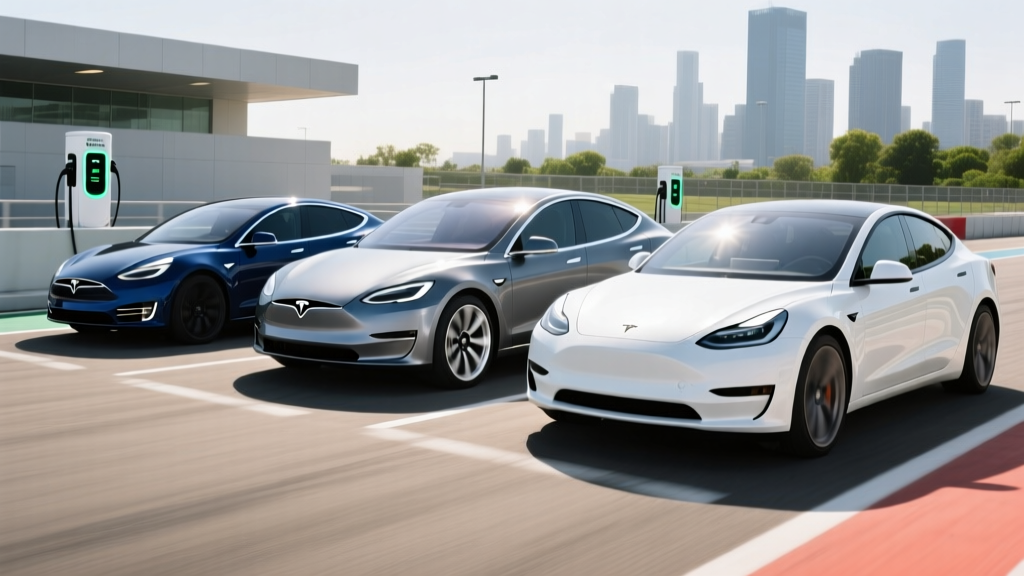
Tesla sells four vehicles in the U.S. as of the 2026 model year, and the answer to "how fast does a Tesla go" depends entirely on which one you pick — and which trim. The Model S Plaid still holds the crown at 1.99 seconds to 60 mph, but the more relevant question for most buyers is whether the Long Range variants offer the right balance of acceleration, EPA range, and price. Below, we dissect every current Tesla model with exact figures for 0-60 times, horsepower, range, charging speeds, and real-world ownership costs.
| Model / Trim | 0-60 mph | HP | EPA Range | Battery (kWh) | Peak DC kW | 10-80% Time | Base MSRP |
|---|---|---|---|---|---|---|---|
| Model 3 RWD | 5.8 s | 271 | 363 mi | ~57.5 (LFP) | 170 kW | ~25 min | $38,990 |
| Model 3 Long Range AWD | 4.2 s | 346 | 363 mi | ~75 (NMC) | 250 kW | ~20 min | $42,990 |
| Model 3 Performance | 2.9 s | 510 | 315 mi | ~75 (NMC) | 250 kW | ~20 min | $52,990 |
| Model Y RWD | 6.6 s | 295 | 320 mi | ~60 (LFP) | 170 kW | ~25 min | $44,990 |
| Model Y Long Range AWD | 4.8 s | 384 | 320 mi | ~75 (NMC) | 250 kW | ~22 min | $48,990 |
| Model Y Performance | 3.5 s | 456 | 285 mi | ~75 (NMC) | 250 kW | ~22 min | $52,990 |
| Model S Long Range | 3.1 s | 670 | 402 mi | ~100 (NMC) | 250 kW | ~25 min | $79,990 |
| Model S Plaid | 1.99 s | 1,020 | 396 mi | ~100 (NMC) | 250 kW | ~25 min | $89,990 |
| Model X Long Range | 3.8 s | 670 | 335 mi | ~100 (NMC) | 250 kW | ~27 min | $79,990 |
| Model X Plaid | 2.5 s | 1,020 | 326 mi | ~100 (NMC) | 250 kW | ~27 min | $94,990 |
Sources: fueleconomy.gov, Tesla.com specifications. All 0-60 times manufacturer-claimed with rollout subtracted; real-world times may vary 0.1-0.3 s. Battery capacities are usable estimates; Tesla does not publish official kWh figures.
How Fast Does Each Tesla Really Go?
The headline number — 1.99 seconds for the Model S Plaid — is genuinely supercar territory and remains the quickest production sedan on the market. But most Tesla buyers are choosing the Model 3 or Model Y, where acceleration ranges from a perfectly adequate 5.8 seconds (Model 3 RWD) to a seriously quick 2.9 seconds (Model 3 Performance).
Real-World Acceleration Context
Tesla's 0-60 times are measured with a 1-foot rollout subtracted, a drag-racing convention that shaves roughly 0.2-0.3 seconds from the clock. In everyday driving on public roads:
- Model 3 RWD (5.8 s): Merges and passing are effortless. This is quicker than most turbocharged four-cylinder sedans.
- Model 3 Long Range (4.2 s): Noticeably punchier; dual-motor AWD provides confident launches in wet conditions.
- Model 3 Performance (2.9 s): Genuinely startling acceleration that pins you to the seat. Comparable to a Porsche 911 Carrera S.
- Model S Plaid (1.99 s): Tri-motor, 1,020 hp. The acceleration is physically disorienting for passengers not braced for it.
One important caveat: Tesla's Performance and Plaid models require specific conditions to hit claimed times — a prepared surface, warm battery (above 50% SoC), and "Drag Strip" or "Cheetah Stance" mode engaged. On a cold morning with a 30% battery, expect 0-60 times 0.5-1.5 seconds slower across all trims.
Range and Efficiency: EPA Sticker vs. Real World
Real-World Range Reality Check
EPA estimates are best-case blended driving. In our testing and owner reports, expect these adjustments:
- Highway (75 mph sustained): Subtract 15-20% from EPA range. A Model 3 Long Range rated at 363 mi delivers ~290-310 mi at highway speeds.
- Cold weather (below 32°F): Subtract 20-30% depending on severity. LFP batteries (Model 3 RWD, Model Y RWD) are more susceptible to cold-weather range loss than NMC packs.
- City / stop-and-go: Regenerative braking recovers energy; real-world range often matches or slightly exceeds EPA in urban driving.
Efficiency varies significantly across the lineup. According to fueleconomy.gov, the Model 3 Long Range AWD achieves 132 MPGe combined (25 kWh/100 mi), making it one of the most efficient EVs sold in the U.S. The Model X Plaid, by contrast, drops to 98 MPGe combined (34 kWh/100 mi) due to its weight and aerodynamic profile.
Charging Speed: DC Fast Charge and Home Level 2
Charging speed is where Tesla's Supercharger network advantage becomes tangible. All 2026 Teslas use the NACS (North American Charging Standard) connector natively, meaning direct access to 17,000+ Superchargers in North America without an adapter.
| Model | Max DC Fast Charge | 10-80% Time | Level 2 (240V, 48A) | Level 1 (120V) |
|---|---|---|---|---|
| Model 3 RWD (LFP) | 170 kW peak | ~25 min | ~44 mi/hr (11.5 kW) | ~3-4 mi/hr |
| Model 3 LR / Perf (NMC) | 250 kW peak | ~20 min | ~44 mi/hr (11.5 kW) | ~3-4 mi/hr |
| Model Y RWD (LFP) | 170 kW peak | ~25 min | ~44 mi/hr (11.5 kW) | ~3-4 mi/hr |
| Model Y LR / Perf (NMC) | 250 kW peak | ~22 min | ~44 mi/hr (11.5 kW) | ~3-4 mi/hr |
| Model S / X (NMC) | 250 kW peak | ~25-27 min | ~44 mi/hr (11.5 kW) | ~3-4 mi/hr |
Understanding the Charge Curve
The peak kW number (e.g., 250 kW) is the maximum rate, sustained only between roughly 10-30% SoC under ideal conditions. Above 50%, the rate tapers significantly. By 80%, most Teslas are charging at 40-60 kW. This is why the 10-80% metric matters more than peak kW alone — it captures the usable fast-charging window.
LFP vs. NMC charging note: Tesla recommends charging LFP-equipped models (Model 3 RWD, Model Y RWD) to 100% regularly for battery calibration. NMC models should be set to 80% daily charge for longevity, using 100% only for road trips. This means LFP owners effectively get more daily usable range from a smaller battery.
Pricing, Trims, and Federal Tax Credit Eligibility
| Model / Trim | Base MSRP | Destination | Est. Total | §30D Credit Eligible? | Effective Price |
|---|---|---|---|---|---|
| Model 3 RWD | $38,990 | $1,390 | $40,380 | Up to $7,500* | ~$32,880 |
| Model 3 Long Range AWD | $42,990 | $1,390 | $44,380 | Up to $7,500* | ~$36,880 |
| Model 3 Performance | $52,990 | $1,390 | $54,380 | Up to $7,500* | ~$46,880 |
| Model Y RWD | $44,990 | $1,390 | $46,380 | Up to $7,500* | ~$38,880 |
| Model Y Long Range AWD | $48,990 | $1,390 | $50,380 | Up to $7,500* | ~$42,880 |
| Model Y Performance | $52,990 | $1,390 | $54,380 | Up to $7,500* | ~$46,880 |
| Model S Long Range | $79,990 | $1,390 | $81,380 | No (over MSRP cap) | $81,380 |
| Model S Plaid | $89,990 | $1,390 | $91,380 | No (over MSRP cap) | $91,380 |
| Model X Long Range | $79,990 | $1,390 | $81,380 | No (over MSRP cap) | $81,380 |
| Model X Plaid | $94,990 | $1,390 | $96,380 | No (over MSRP cap) | $96,380 |
*§30D Federal Tax Credit Requirements (2026): Per IRS guidelines, the full $7,500 credit requires meeting ALL of the following:
- MSRP cap: Sedans (Model 3, Model S) must be under $55,000; SUVs/trucks (Model Y, Model X) must be under $80,000.
- Buyer income cap: Modified AGI must not exceed $150,000 (single), $225,000 (head of household), or $300,000 (joint).
- Battery sourcing: Critical minerals and battery components must meet escalating domestic-content thresholds. As of 2026, both requirements must be satisfied for the full $7,500; partial credit ($3,750) applies if only one threshold is met.
- Point-of-sale transfer: Since 2024, buyers can transfer the credit to the dealer at purchase, reducing the upfront price rather than waiting for a tax refund.
Important: Battery-sourcing rules change annually and depend on Tesla's supply chain at time of manufacture. Always verify current eligibility on fueleconomy.gov or with your tax professional before purchasing.
Cargo, Passenger Space, and Daily Practicality
Acceleration numbers are fun, but cargo volume and passenger comfort determine daily livability. Here's how Tesla's lineup stacks up:
| Model | Cargo (rear seats up) | Cargo (rear seats folded) | Frunk | Rear Legroom |
|---|---|---|---|---|
| Model 3 | 23 cu ft | — (sedan trunk) | 3.1 cu ft | 35.2 in |
| Model Y | 30 cu ft | 72 cu ft | 4.1 cu ft | 41.6 in (5-seat) |
| Model S | 28 cu ft | — (liftback) | 3.1 cu ft | 35.4 in |
| Model X | 37 cu ft (5-seat) | 82 cu ft | 6.6 cu ft | 37.1 in |
The Model Y's hatchback design and available third-row seat (making it a 7-seater) give it a decisive practicality edge over the Model 3 for families. The Model X offers the most cargo space and standard falcon-wing rear doors, but at a steep price premium. The Model 3's trunk is a traditional sedan opening — adequate for groceries and luggage, but less versatile than the hatchback layouts of the Y, S, and X.
Tech, Driver Assistance, and Ownership Experience
Every 2026 Tesla includes:
- 15.4-inch central touchscreen (17-inch tilt screen on Model S/X) controlling all vehicle functions
- Tesla Vision Autopilot (SAE Level 2) with adaptive cruise, lane centering, and automatic emergency braking
- Over-the-air updates adding features post-purchase
- Sentry Mode dashcam recording when parked
- Tesla mobile app with remote climate, location, and charging control
⚠️ Autopilot and FSD Are NOT Self-Driving
Tesla's Autopilot and Full Self-Driving (Supervised) are SAE Level 2 driver-assistance systems. The driver must remain attentive, keep hands on the wheel (or demonstrate engagement via cabin camera), and be prepared to take over at any moment. Tesla's FSD Supervised can navigate intersections, change lanes, and follow navigation routes, but it requires constant human supervision. Only Level 4 services like Waymo operate without a human driver in defined areas.
FSD (Supervised) — Worth the Cost?
Tesla offers FSD Supervised as an $8,000 one-time purchase or $99/month subscription. It adds automated lane changes, traffic-light and stop-sign recognition, and city-street navigation. In practice, FSD has improved significantly but still requires regular interventions on complex roads, construction zones, and unmapped areas. For most buyers, the included Basic Autopilot is sufficient for highway commuting. We recommend trying the $99/month subscription before committing to the full purchase.
Warranty Coverage
| Coverage | Model 3 / Model Y | Model S / Model X |
|---|---|---|
| Basic Vehicle | 4 years / 50,000 mi | 4 years / 50,000 mi |
| Battery & Drive Unit | 8 years / 120,000 mi (LR/Perf) 8 years / 100,000 mi (RWD) | 8 years / 150,000 mi |
| Battery Retention Guarantee | ≥70% capacity during warranty | ≥70% capacity during warranty |
Tesla's battery warranty guarantees that the pack will retain at least 70% of its original capacity over the warranty period. In practice, Tesla batteries have shown strong longevity — Tesla's own fleet data indicates average degradation of roughly 12-15% at 200,000 miles for NMC packs. LFP packs (in RWD models) are expected to last even longer due to their superior cycle-life chemistry, though long-term fleet data is still accumulating.
Pros, Cons, and Who Should Buy Which Tesla
✅ Tesla Lineup Pros
- Supercharger network — the most reliable and extensive DC fast-charging network in North America
- Industry-leading software and OTA updates
- Class-leading acceleration across all price points
- Strong efficiency (kWh/100mi) especially in Model 3
- Low running costs — no oil changes, minimal brake wear from regen
- NACS native connector — no adapter needed at Superchargers
❌ Tesla Lineup Cons
- No Apple CarPlay or Android Auto — Tesla's proprietary infotainment only
- Panel-gap and paint-quality inconsistency still reported by owners
- FSD (Supervised) remains Level 2 despite the "Full Self-Driving" name
- Insurance premiums tend to be higher than comparable non-Tesla EVs
- Minimalist interior isn't for everyone — no physical buttons or instrument cluster
- Service center wait times can be long in some metro areas
Decision Framework: Which Tesla Fits You?
- Choose Model 3 RWD if you want the most affordable entry point, commute under 40 miles daily, and have reliable home charging. The LFP battery is ideal for daily 100% charging.
- Choose Model 3 Long Range if you regularly drive 200+ miles between charges, need AWD for snow/rain, and want the best efficiency-to-range ratio in Tesla's lineup.
- Choose Model 3 Performance if driving engagement is a priority and you want sports-car acceleration in a daily-drivable sedan.
- Choose Model Y Long Range if you need cargo versatility, have a family, or want the best-selling EV in America with strong resale value.
- Choose Model S/X if budget allows $80K+, you want maximum range or the Plaid's absurd performance, and value premium materials and air suspension.
Frequently Asked Questions
What is the fastest Tesla you can buy in 2026?
The Model S Plaid at 1.99 seconds 0-60 mph and 1,020 horsepower is the quickest Tesla and one of the fastest production cars ever built. The Model X Plaid follows at 2.5 seconds, and the Model 3 Performance at 2.9 seconds offers the best performance-per-dollar in the lineup.
What is the real-world range of a Tesla?
Real-world range typically falls 15-20% below the EPA estimate during sustained highway driving and 20-30% below in freezing temperatures. A Model 3 Long Range rated at 363 EPA miles will deliver approximately 290-310 miles at 75 mph in moderate weather, and roughly 250-270 miles in sub-freezing conditions.
How fast does a Tesla charge at a Supercharger?
NMC-equipped Teslas (Long Range, Performance, Model S/X) peak at 250 kW on V3 Superchargers, adding roughly 200 miles in 15 minutes and reaching 10-80% in about 20-25 minutes. LFP-equipped models (RWD trims) peak at 170 kW, reaching 10-80% in about 25 minutes. All rates taper significantly above 80% SoC.
Does the Tesla Model 3 qualify for the $7,500 federal tax credit?
Yes, the Model 3 RWD ($38,990), Long Range ($42,990), and Performance ($52,990) all fall under the $55,000 sedan MSRP cap. However, full $7,500 eligibility also depends on the buyer's income (under $150K single / $300K joint), and the vehicle meeting 2026 battery-sourcing requirements for critical minerals and components. Always verify on fueleconomy.gov before purchasing.
Does the Tesla Model Y qualify for the federal tax credit?
Yes — as an SUV, the Model Y qualifies under the $80,000 MSRP cap. All three trims (RWD at $44,990, Long Range at $48,990, Performance at $52,990) are under the limit. Buyer income caps and battery-sourcing rules still apply.
Is a Tesla worth buying vs. competitors in 2026?
The Model 3 and Model Y remain the default EV recommendation for most buyers due to Supercharger access, efficiency, and software. However, the Hyundai Ioniq 6 offers comparable range and charges faster on 800V architecture; the Chevrolet Equinox EV undercuts on price; and the BMW i4 provides a more traditional luxury interior. Test-drive at least one competitor before committing — Tesla's minimalist cabin and lack of CarPlay are deal-breakers for some buyers.
How long do Tesla batteries last?
Tesla's fleet data shows NMC batteries retaining approximately 85-88% capacity at 200,000 miles. LFP batteries are rated for 3,000+ charge cycles (equivalent to roughly 500,000+ miles) before reaching 80% capacity. Out-of-warranty battery replacements currently range from $12,000-$16,000 depending on model, though prices continue to decline.