Quick Verdict: Still the Luxury EV Sedan Benchmark
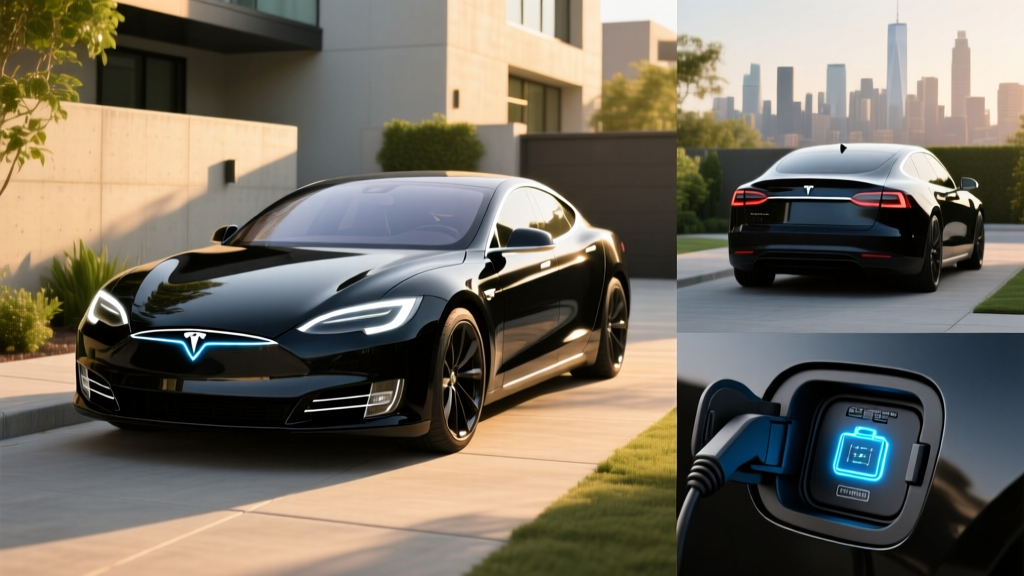
The 2025 Tesla Model S remains one of the few premium electric sedans that can genuinely serve as a no-compromise daily driver and road-trip machine. With an EPA-estimated 402 miles of range in Long Range trim, access to Tesla's Supercharger network, and blistering acceleration, it sets a high bar. But at a starting price near $80,000 and with increasing competition from the Lucid Air, BMW i7, and Mercedes-Benz EQS, buyers need to weigh whether Tesla's tech ecosystem and charging infrastructure justify the premium. This review breaks down every number that matters — from real-world range to charging curves to total ownership cost.
Range and Efficiency: EPA vs. the Real World
The 2025 Model S Long Range carries an EPA-estimated 402 miles of range, while the performance-oriented Plaid trim drops to 359 miles due to its more aggressive powertrain tuning and standard 21-inch wheels. Efficiency for the Long Range is rated at 124 MPGe combined (27 kWh/100 mi), according to fueleconomy.gov. That's excellent for a 4,500+ lb luxury sedan.
EPA Sticker: 402 miles (Long Range) / 359 miles (Plaid)
Expect in practice: ~320–350 miles on highway road trips at 70–80 mph. In cold weather (below 32°F), plan for 20–30% range reduction, bringing effective range to roughly 250–290 miles for the Long Range. City driving with regenerative braking recovers closer to the EPA figure, sometimes exceeding it in stop-and-go traffic.
Why the gap? EV range ratings use a blended city/highway cycle. Sustained highway speeds, headwinds, elevation changes, and HVAC use all consume more energy than the EPA test captures. Tesla's heat pump helps mitigate cold-weather losses compared to older EVs without one, but physics still applies.
| Spec | Long Range | Plaid |
|---|---|---|
| EPA Range | 402 mi | 359 mi |
| Battery (usable) | ~100 kWh (NMC) | ~100 kWh (NMC) |
| Drivetrain | Dual-Motor AWD | Tri-Motor AWD |
| Horsepower | 670 hp | 1,020 hp |
| 0–60 mph | 3.1 sec | 1.99 sec |
| MPGe (combined) | 124 MPGe | 116 MPGe |
| Efficiency | 27 kWh/100 mi | 29 kWh/100 mi |
| Top Speed | 155 mph | 200 mph |
| Base MSRP | $79,990 | $94,990 |
Both trims use a ~100 kWh (usable) nickel-manganese-cobalt (NMC) battery pack. Tesla does not use LFP chemistry in the Model S — LFP is reserved for the standard-range Model 3 and Model Y due to its lower energy density. NMC delivers the range and performance the Model S demands, though it benefits from staying between 20–80% state of charge for daily use to maximize long-term battery health.
Charging Speed: DC Fast Charging and Home Setup
Charging speed is where Tesla's vertical integration still pays dividends. The 2025 Model S supports up to 250 kW peak DC fast charging on Tesla's V3 Superchargers (and compatible V4 stalls). On a preconditioned battery, you'll see the charge curve ramp quickly to peak power, then taper as the battery fills.
| Charging Level | Power | Speed / Time | Connector |
|---|---|---|---|
| Level 1 (120V outlet) | ~1.4 kW | ~3–4 mi/hr | NACS (Tesla) |
| Level 2 (240V home, 48A) | 11.5 kW | ~34 mi/hr (~9 hr for full) | NACS (Tesla) |
| DC Fast (V3 Supercharger) | 250 kW peak | 10–80% in ~27 min | NACS (Tesla) |
| DC Fast (CCS adapter, 3rd-party) | Up to ~150–175 kW typical | 10–80% in ~35–40 min | CCS1 (via adapter) |
Charging curve reality: The 250 kW peak is sustained only between roughly 10–30% state of charge. By 50%, the rate drops to around 150 kW, and above 80% it tapers significantly to protect battery health. Plan road-trip stops to charge to 80% and move on — sitting at a Supercharger waiting for the last 20% adds 20+ minutes for minimal range gain.
Home charging: Installing a Tesla Wall Connector on a 60-amp circuit (48 amps continuous) delivers 11.5 kW, adding roughly 34 miles of range per hour. A full overnight charge from 20% to 80% takes about 5 hours — more than sufficient for any daily commute. Expect home installation to cost $500–$2,000 depending on panel capacity and run length; homes needing a 200-amp panel upgrade should budget an additional $1,500–$3,000. Always hire a licensed electrician and pull a permit.
Tesla now ships all vehicles with the NACS (North American Charging Standard) port natively. The included CCS adapter allows access to Electrify America, EVgo, and other networks, though charge rates on non-Tesla chargers may be lower due to handshake and protocol differences. Supercharger access remains the strongest argument in Tesla's favor for road-trippers.
Performance and Driving Dynamics
The Model S Long Range delivers 670 horsepower through its dual-motor all-wheel-drive powertrain, hitting 0–60 mph in 3.1 seconds. That's supercar territory from just a few years ago, in a five-seat luxury sedan with a frunk.
The Plaid's tri-motor setup produces 1,020 hp and a claimed 1.99-second 0–60 time (on a prepped surface with rollout subtracted). Real-world rollouts on typical pavement yield roughly 2.1–2.3 seconds — still absurdly quick and the fastest production sedan you can buy.
Adaptive air suspension is standard across both trims, offering adjustable ride height and automatic lowering at highway speeds for efficiency. The ride quality has improved significantly since the 2021 refresh, with better damping control and a more compliant feel over rough pavement. That said, the 21-inch Arachnid wheels on the Plaid transmit more road imperfection than the 19-inch Tempest wheels on the Long Range — choose accordingly if ride comfort is a priority.
Steering is precise but light, and the low center of gravity (battery pack under the floor) keeps body roll minimal. The Model S is more GT cruiser than sports sedan; the BMW i7 and Porsche Taycan offer more engaging steering feel, but neither matches the Tesla's straight-line punch at this price point.
Interior, Tech, and Cargo Space
The 2025 Model S interior features Tesla's minimalist design language: a 17-inch landscape touchscreen dominates the dash, supplemented by a 12.3-inch driver instrument cluster and a small 8-inch rear passenger screen. The yoke steering wheel remains optional (a round wheel is standard and, frankly, preferable for most drivers).
Infotainment: Tesla's software is the most responsive and feature-rich in the EV segment. Native navigation with real-time Supercharger routing, Spotify/Apple Music integration, a full web browser, and gaming capabilities (including AAA titles when parked) are all included. Over-the-air updates continuously add features — no dealer visits required. However, there is no Apple CarPlay or Android Auto, which remains a dealbreaker for some buyers accustomed to phone-mirroring interfaces.
Driver assistance: Basic Autopilot (lane centering, adaptive cruise control, automatic emergency braking) is standard. Full Self-Driving (Supervised), priced at $8,000 as a one-time purchase or $99/month, adds automatic lane changes, navigate-on-autopilot, traffic light/stop sign recognition, and parking assist.
Tesla's Full Self-Driving (Supervised) is an SAE Level 2 driver-assistance system. You must keep your hands on the wheel (or apply torque) and remain fully attentive at all times. It does not make the vehicle autonomous. FSD performs well on well-marked highways but can behave unpredictably in construction zones, unmapped areas, or adverse weather. Treat it as an advanced cruise control, not a chauffeur.
Cargo and passenger dimensions:
- Rear cargo (behind second row): 28.0 cu ft
- Total cargo (rear seats folded): 79.7 cu ft
- Front trunk (frunk): 5.3 cu ft
- Front legroom: 42.7 in
- Rear legroom: 40.9 in
- Seating: 5 passengers standard
The liftback design gives the Model S a practical advantage over traditional trunk-equipped sedans like the EQS and i7. Rear legroom is generous for adults on shorter trips but the floor-mounted battery creates a slightly knees-up seating position for taller passengers. The frunk is useful for charging cables and small bags.
Pricing, Trims, and Federal Tax Credit Eligibility
| Trim | Base MSRP | Destination | Total Before Incentives | Federal §30D Credit |
|---|---|---|---|---|
| Long Range | $79,990 | $1,990 | $81,980 | $0 (exceeds MSRP cap) |
| Plaid | $94,990 | $1,990 | $96,980 | $0 (exceeds MSRP cap) |
Federal tax credit status: The 2025 Model S does not qualify for the $7,500 IRS §30D federal EV tax credit. Under current rules, sedans must have an MSRP at or below $55,000 to be eligible (the cap is $80,000 for SUVs, vans, and trucks). Since both Model S trims exceed the sedan MSRP cap, neither qualifies regardless of buyer income or battery sourcing. See the IRS clean vehicle credit page for full eligibility rules.
- Sedan MSRP cap: $55,000 (Model S: $79,990+ — does not qualify)
- Buyer MAGI cap: $150,000 single / $300,000 joint
- Battery critical minerals and component sourcing requirements
- Vehicle must be assembled in North America
- Credit can be transferred to dealer at point of sale as a price reduction
Other incentives: Some states and utilities offer rebates or reduced electricity rates for EV owners. California's CVRP program, for instance, has income-based rebates — check your state's energy office for current programs. Consult a tax professional for personalized advice.
Popular options that raise the as-tested price:
- FSD (Supervised): +$8,000
- 21" Arachnid wheels (Long Range): +$4,500
- Premium interior colors (Cream, White): +$2,000
- Signature Red paint: +$3,000
A fully loaded Long Range with FSD and premium wheels can approach $98,000 before taxes and registration.
Warranty and Long-Term Ownership
Tesla's warranty coverage for the 2025 Model S:
- Basic vehicle warranty: 4 years / 50,000 miles
- Battery & drive unit warranty: 8 years / 150,000 miles (whichever comes first), with minimum 70% battery capacity retention guaranteed
The 150,000-mile battery warranty on the Model S is 25,000 miles more generous than the Model 3/Y (8 yr/120,000 mi), reflecting the premium positioning. If your battery degrades below 70% of its original capacity within the warranty period, Tesla will repair or replace it at no cost. Based on fleet data, Model S batteries typically lose 8–12% capacity over the first 100,000 miles, with degradation slowing significantly after the initial break-in period.
Long-term cost considerations: Out-of-warranty battery replacement for the Model S has historically ranged from $13,000 to $22,000 depending on pack configuration. However, failures are rare before 150,000+ miles. Routine maintenance is minimal — no oil changes, brake fluid flushes every 2 years, cabin air filter replacement, and tire rotations. Regenerative braking significantly extends brake pad life.
Insurance premiums for the Model S tend to run 15–25% higher than comparable gas-powered luxury sedans, reflecting higher repair costs and parts pricing. Get quotes before purchasing to budget accurately.
Model S vs. Key Competitors
The luxury EV sedan segment has grown considerably. Here's how the Model S stacks up against its primary rivals:
| Attribute | Tesla Model S LR | Lucid Air Pure | BMW i7 xDrive50 | Mercedes EQS 450+ |
|---|---|---|---|---|
| EPA Range | 402 mi | 419 mi | 318 mi | 390 mi |
| 0–60 mph | 3.1 sec | 5.2 sec | 4.5 sec | 5.9 sec |
| DC Fast Charge | 250 kW | 200 kW | 195 kW | 200 kW |
| Base MSRP | $79,990 | $69,900 | $105,700 | $104,400 |
| Rear Legroom | 40.9 in | 41.4 in | 42.8 in | 41.7 in |
| Supercharger Access | Native | NACS adapter avail. | NACS adapter avail. | NACS adapter avail. |
The Lucid Air Pure offers more range at a lower price but lacks Tesla's charging network maturity and software polish. The BMW i7 and Mercedes EQS provide superior ride refinement and rear-seat luxury but at significantly higher prices and lower range. The Model S occupies a unique middle ground: supercar acceleration, top-tier range, and the most robust charging ecosystem, at a price undercutting the German competition.
Choose the Model S Long Range if: You want maximum range, access to the Supercharger network for road trips, strong acceleration, and cutting-edge software — without paying six figures.
Choose the Model S Plaid if: Straight-line performance is a priority and you want the fastest sedan ever built, with enough practicality for daily use.
Look elsewhere if: You need the most luxurious rear-seat experience (BMW i7), want CarPlay/Android Auto, need to qualify for the federal tax credit, or prefer traditional luxury brand prestige.
- Class-leading 402-mile EPA range (Long Range)
- Native Supercharger network access — most reliable DC charging
- Supercar acceleration in a practical sedan
- Liftback cargo versatility (28 cu ft + frunk)
- Continuous OTA updates add features over time
- Air suspension with adjustable ride height
- No federal tax credit (MSRP exceeds $55K sedan cap)
- No Apple CarPlay or Android Auto
- Yoke steering wheel is polarizing and impractical for some
- Insurance costs above segment average
- Rear-seat luxury lags behind BMW i7 and Mercedes EQS
- FSD (Supervised) is expensive and still requires full driver attention
Frequently Asked Questions
What is the real-world range of the 2025 Tesla Model S?
Expect 320–350 miles in mixed highway driving for the Long Range trim, and 250–290 miles in cold weather (below freezing). City driving with regenerative braking can approach or even exceed the 402-mile EPA rating. The Plaid delivers roughly 280–310 miles real-world.
How fast does the Model S charge at home and on the road?
At home on a Level 2 Tesla Wall Connector (11.5 kW / 48A), the Model S adds about 34 miles of range per hour, fully charging overnight in roughly 9 hours. On a V3 Supercharger (250 kW peak), it charges from 10–80% in approximately 27 minutes, though the charge curve tapers significantly above 80%.
Does the 2025 Model S qualify for the federal EV tax credit?
No. Under IRS §30D rules, the federal clean vehicle credit for sedans is capped at vehicles with an MSRP of $55,000 or less. The Model S starts at $79,990, disqualifying it regardless of buyer income or battery sourcing. Check irs.gov for current rules and consult a tax professional.
Is the Tesla Model S worth buying over the Lucid Air or BMW i7?
The Model S wins on acceleration, Supercharger network access, and software. The Lucid Air Pure offers more range for less money, while the BMW i7 provides a more luxurious rear-seat experience. If road-trip charging reliability and performance are your top priorities, the Model S remains the strongest choice in its price bracket.
What is the battery warranty on the 2025 Model S?
Tesla covers the Model S battery and drive unit for 8 years or 150,000 miles, guaranteeing at least 70% capacity retention during that period. This is one of the most generous battery warranties in the luxury EV segment.
Does the Model S have a frunk?
Yes. The front trunk (frunk) offers 5.3 cubic feet of storage — enough for charging cables, a small duffel, or groceries. Combined with the 28.0 cu ft rear liftback area and 79.7 cu ft total with seats folded, the Model S is practical for its class.
How much does it cost to charge a Model S at home vs. Supercharging?
Home charging at the US average electricity rate of ~$0.16/kWh costs roughly $16 for a full 100 kWh charge, or about $0.04 per mile. Supercharger pricing varies by location and time of day but typically ranges from $0.25–$0.50/kWh, making a full charge $25–$50. For daily driving, home charging is dramatically cheaper — plan your routine around overnight charging for the lowest cost.