Quick Verdict: The 2019 Model S in Today's Used EV Market
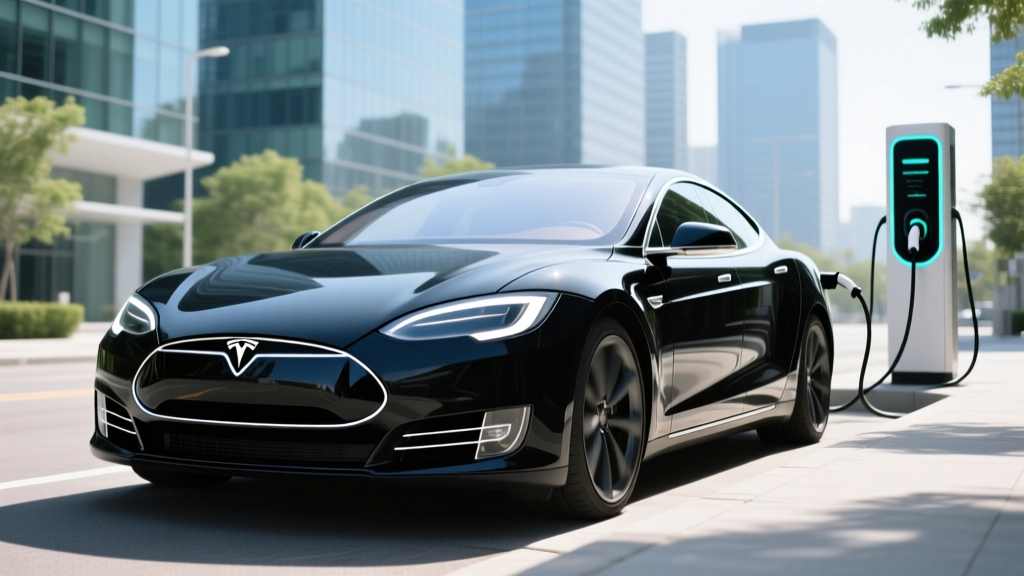
The 2019 Tesla Model S occupies a fascinating space in the 2026 used-EV landscape. It's a full-size luxury sedan with supercar-rivaling acceleration, access to Tesla's Supercharger network, and a cabin that prioritizes minimalism over traditional luxury opulence. For buyers eyeing the secondary market, it offers serious range (up to 370 miles EPA in Long Range trim) at a fraction of its original $75,000+ sticker. But age introduces real considerations: battery degradation, outdated MCU1 infotainment hardware on early-build examples, suspension wear, and the critical question of whether a used EV qualifies for the federal tax credit.
This review breaks down every spec, charging metric, and ownership reality you need to evaluate a 2019 Model S today — with exact numbers, not marketing gloss.
2019 Tesla Model S: Core Specifications at a Glance
| Specification | Long Range (Standard) | Long Range (Raven) | Performance (Raven) |
|---|---|---|---|
| EPA Range | 335 mi | 370 mi | 345 mi |
| Battery (usable) | ~90 kWh (NMC) | ~95 kWh (NMC) | ~95 kWh (NMC) |
| Drivetrain | Dual Motor AWD | Dual Motor AWD (Raven) | Dual Motor AWD (Raven) |
| Horsepower | ~469 hp (combined) | ~469 hp (combined) | ~762 hp (Ludicrous) |
| 0–60 mph | 4.1 sec | 3.7 sec | 2.4 sec (w/ rollout) |
| MPGe (combined) | 104 MPGe | 111 MPGe | 101 MPGe |
| DC Fast Charge (peak) | 120 kW (V2 Supercharger) | 200 kW (V3 capable) | 200 kW (V3 capable) |
| 10–80% DC Time | ~45 min | ~30 min | ~30 min |
| Level 2 Charge Rate | 11.5 kW (~34 mi/hr) | 16.5 kW (~49 mi/hr) | 16.5 kW (~49 mi/hr) |
| Original Base MSRP | $79,990 | $79,990 | $99,990 |
| Typical 2026 Used Price | $28,000–$35,000 | $32,000–$42,000 | $40,000–$55,000 |
Sources: fueleconomy.gov, Tesla press archives. "Raven" denotes the April 2019 mid-year refresh with adaptive air suspension and upgraded front motor. Pre-Raven 2019 models use the older drivetrain.
Real-World Range: What the EPA Sticker Doesn't Tell You
EPA sticker: 370 miles
Real-world highway (70–80 mph, 65°F): ~290–320 miles
Real-world mixed driving (moderate climate): ~310–340 miles
Cold weather (below 32°F, highway): ~220–260 miles
The 2019 Model S Long Range was one of the first production EVs to break the 370-mile EPA barrier, and that figure remains impressive. However, the Model S is a large, heavy sedan (4,941 lbs curb weight) with a wide frontal area — both enemies of highway efficiency. At sustained 75+ mph speeds, expect range to drop 15–20% below the EPA combined figure.
Cold weather compounds this. Lithium-ion NMC chemistry loses efficiency in freezing temperatures, and the Model S uses battery energy for cabin heating (it does not have a heat pump, which Tesla introduced in the 2021 refresh). In sub-30°F conditions with highway driving, plan for 30–40% range loss. That 370-mile sticker can shrink to ~220–260 miles in a Midwest winter.
Battery degradation note: A 2019 Model S is now 6–7 years old. Tesla's NMC packs typically lose 10–15% capacity over this period depending on charging habits. Expect a well-maintained example to show ~85–90% State of Health (SoH), meaning real range drops proportionally. Always request a battery health reading before purchase — Tesla service centers can pull this, or third-party tools like Tessie or the car's own energy graph can estimate it.
Charging Speeds: Supercharger Access Is the Big Advantage
Tesla's proprietary Supercharger network remains the most reliable DC fast-charging infrastructure in North America. The 2019 Model S uses Tesla's proprietary connector (not NACS — the NACS standard was formalized later, though Tesla vehicles have always used the same physical plug). This means seamless plug-and-charge at every Supercharger, no adapter needed.
| Charging Level | Power / Rate | Miles Added per Hour | Notes |
|---|---|---|---|
| Level 1 (120V household) | ~1.4 kW | ~3–4 mi/hr | Emergency/trickle only |
| Level 2 (240V, 48A Wall Connector) | 11.5 kW (pre-Raven) / 16.5 kW (Raven) | ~34 mi/hr (pre-Raven) / ~49 mi/hr (Raven) | Home daily charging; Raven models have a 48A onboard charger |
| DC Fast — V2 Supercharger | 120 kW peak | ~280 mi/hr at peak | Most common Supercharger type in 2019 |
| DC Fast — V3 Supercharger | 200 kW peak (Raven only) | ~440 mi/hr at peak | Raven models support V3; pre-Raven capped at ~120 kW |
The charge curve matters. The 2019 Model S Long Range (Raven) peaks near 200 kW on a V3 Supercharger but only between roughly 10–30% State of Charge (SoC). By 50% SoC, the rate tapers to ~100 kW, and above 80% it drops sharply to ~40 kW or less. A 10–80% session takes approximately 30 minutes on V3, but 80–100% can add another 25+ minutes. On road trips, charge to 80% and move on — this is faster and healthier for the battery.
Home charging setup: A Tesla Wall Connector on a 60-amp circuit delivers the full 48A (11.5–16.5 kW depending on the car's onboard charger). Expect a full overnight charge from 20% to 100% in roughly 6–8 hours. Installation typically runs $800–$2,000 depending on panel capacity and run length — factor this into your purchase budget if you don't already have a Level 2 setup.
Performance and Drivetrain: Still a Benchmark
Even in 2026, the 2019 Model S Performance with Ludicrous Mode delivers acceleration that embarrasses most supercars. The 2.4-second 0–60 mph time (with 1-foot rollout subtracted) remains in hypercar territory. The Long Range Raven isn't far behind at 3.7 seconds — genuinely quick for a 4,900-pound sedan.
The April 2019 "Raven" update was significant. It replaced the front induction motor with a permanent magnet synchronous reluctance motor (borrowed from the Model 3), improving efficiency and range. It also introduced adaptive air suspension with improved damping, replacing the older fixed-rate air springs that were prone to failure on pre-2019 models.
Drivetrain layout: All 2019 Model S variants are dual-motor all-wheel drive. The rear motor handles primary propulsion; the front motor assists under hard acceleration and enables regenerative braking on both axles. There was no RWD Model S offered in 2019.
Interior, Cargo, and Technology
The 2019 Model S interior divides opinion. The minimalist dashboard centers on a 17-inch portrait touchscreen that controls virtually every vehicle function — climate, media, navigation, vehicle settings, and even glovebox release. There are no physical buttons for climate control, which some buyers love and others find distracting while driving.
Infotainment hardware warning: Early 2019 Model S vehicles may still carry the MCU1 (Media Control Unit 1) with an NVIDIA Tegra processor. MCU1 is noticeably sluggish by 2026 standards and does not support the latest Tesla software features, Netflix/YouTube streaming, or the updated navigation maps. Tesla offered a paid MCU2 upgrade ($1,500–$2,500 at service centers). When evaluating a used 2019 Model S, confirm whether MCU2 (Intel Atom) is installed — it dramatically improves the ownership experience.
Passenger and cargo space:
- Front headroom: 38.8 in | Rear headroom: 38.1 in
- Front legroom: 42.7 in | Rear legroom: 35.4 in
- Rear cargo (trunk): 26.3 cu ft
- Front trunk (frunk): 5.3 cu ft
- Total cargo: 31.6 cu ft (seats up) / ~58.1 cu ft (rear seats folded)
The rear seat is comfortable for two adults on longer trips, though the center position is tight. The frunk is modest compared to the Model 3's but useful for charging cables or a small bag.
Driver assistance: The 2019 Model S comes with Tesla's Basic Autopilot (lane centering + adaptive cruise control). Enhanced Autopilot ($6,000 option at the time) added auto lane change, Navigate on Autopilot, and Smart Summon. Full Self-Driving (FSD) was available as a $7,000+ option but — critically — this is SAE Level 2 driver assistance. The driver must remain fully engaged with hands on the wheel and eyes on the road. It is not autonomous driving.
Pricing, Tax Credits, and Ownership Costs
A used 2019 Model S in 2026 typically trades between $28,000 and $55,000 depending on trim, mileage, condition, and Raven vs. pre-Raven status. This represents steep depreciation from original MSRPs of $75,000–$135,000+.
| Item | Long Range | Performance |
|---|---|---|
| Original MSRP (2019) | $79,990 | $99,990 |
| Typical Used Price (2026) | $28,000–$42,000 | $40,000–$55,000 |
| Federal Used EV Credit (§25E) | Up to $4,000 (30% of sale price, capped at $4,000) | |
| Credit-Adjusted Price (best case) | $24,000–$38,000 | $36,000–$51,000 |
Tax credit details (critical): The 2019 Model S does not qualify for the new-vehicle §30D credit (it's used, and the original MSRP exceeded the $55,000 sedan cap anyway). However, it may qualify for the §25E Previously Owned Clean Vehicle Credit. Per IRS rules, this credit equals 30% of the sale price up to a maximum of $4,000, with these requirements:
- Sale price must be $25,000 or less to maximize the credit (30% of $25,000 = $7,500, but the cap is $4,000)
- Buyer income limits: $75,000 single / $112,500 head of household / $150,000 married filing jointly (modified AGI)
- Vehicle must be at least 2 model years old (2019 qualifies in 2026)
- Must be purchased from a licensed dealer (private-party sales do not qualify)
- Credit can be transferred to the dealer at point of sale as a price reduction
- The vehicle must not have been previously transferred to a qualified buyer after August 16, 2022 (check VIN history)
Many 2019 Model S examples price above $25,000, meaning the credit will be capped at $4,000 rather than 30%. Always verify eligibility with a tax professional before relying on the credit.
5-Year Ownership Cost Considerations:
- Insurance: Model S premiums run 30–50% above comparable luxury sedans. Expect $2,500–$4,000/year depending on state and driving record.
- Electricity (charging): At the national average of $0.16/kWh and ~30 kWh/100 mi, fuel cost is roughly $0.048/mile — about one-third the cost of a comparable gas sedan at $3.50/gallon.
- Maintenance: No oil changes, minimal brake wear (regen braking saves pads). Budget for cabin air filter replacement (~$150/2yr), tire rotation, and wiper fluid. However, air suspension repairs on older units can cost $1,500–$3,000 per corner.
- Tires: The Model S is heavy and torque-rich. Expect tire replacement every 20,000–30,000 miles at $250–$400 per tire for the 19" or 21" OEM sizes.
Warranty Coverage: What Remains in 2026
Tesla's original warranty on the 2019 Model S included:
- Basic Vehicle: 4 years / 50,000 miles (expired for all 2019 models by 2023)
- Battery & Drive Unit: 8 years / 150,000 miles (Long Range) or 8 years / 150,000 miles (Performance), whichever comes first, with minimum 70% capacity retention
As of 2026, a 2019 Model S is still within the 8-year battery/drive unit warranty window if mileage is under 150,000. This is a significant safety net: if battery SoH drops below 70% or a drive unit fails before the 8-year mark (which varies by exact in-service date — typically mid-2027 for cars delivered mid-2019), Tesla covers the repair. Verify the original delivery date and current odometer reading to confirm remaining coverage.
After the battery warranty expires, a replacement 100 kWh pack costs approximately $15,000–$22,000 at a Tesla service center (parts + labor), though most packs last well beyond 200,000 miles with moderate degradation.
2019 Model S vs. Key Used-EV Competitors
- Class-leading EPA range (370 mi Long Range Raven)
- Supercharger network access — still the gold standard for road-trip charging
- Supercar-level acceleration (Performance trim)
- Spacious cabin with usable frunk and large trunk
- Over-the-air software updates keep the car current
- Remaining battery/drivetrain warranty (through ~2027)
- MCU1 hardware on early builds is outdated and slow
- No heat pump — significant cold-weather range loss
- Air suspension reliability concerns on high-mileage examples
- Insurance premiums well above segment average
- Minimalist interior lacks traditional luxury materials
- Does not qualify for the $7,500 new-vehicle §30D credit
- Pre-Raven models have slower charging and less range
vs. Used Porsche Taycan (2020–2021): The Taycan offers superior build quality, an 800V architecture for faster charging (270 kW peak), and a more engaging driving experience. However, it has less range (~200–227 mi EPA for early models), a smaller trunk, and no Supercharger access. Choose the Taycan for driving dynamics; choose the Model S for range and charging infrastructure.
vs. Used Lucid Air (2022+): The Lucid Air surpasses the Model S in range (up to 516 mi EPA) and interior luxury, but used examples start around $55,000+ and the Supercharger advantage still belongs to Tesla. The Air uses CCS with a NACS adapter for Supercharger access.
vs. Used Model 3 Long Range (2019–2020): The Model 3 is smaller but offers comparable range (~322 mi EPA for 2019 LR AWD), lower insurance, better efficiency, and MCU2 hardware standard. If you don't need the full-size sedan space, a used Model 3 is often the smarter financial choice.
Who Should Buy a 2019 Model S?
Buy the 2019 Model S Long Range if:
- You need a full-size luxury sedan with 300+ miles of real-world range
- You road-trip frequently and value Supercharger reliability
- You find a Raven-spec example under $40,000 with MCU2 and under 80,000 miles
- You want supercar acceleration without a supercar price tag
Look elsewhere if:
- You live in a cold climate and need maximum winter range (consider a heat-pump-equipped EV like the 2021+ Model S or Hyundai Ioniq 5)
- Your budget is tight and insurance costs are a concern
- You prefer traditional luxury interiors (look at the Taycan or BMW i7)
- You want the latest ADAS hardware — Tesla's HW3 (2019) is capable but HW4 (2023+) offers improved camera resolution and processing
Frequently Asked Questions
What is the real-world range of the 2019 Model S?
The EPA rates the Long Range (Raven) at 370 miles. In real-world mixed driving at moderate temperatures, expect 310–340 miles. Highway-only driving at 75+ mph yields ~290–320 miles, and cold-weather highway driving (below freezing) can drop to 220–260 miles. Battery degradation on a 6–7-year-old pack may reduce these figures by an additional 10–15%.
How fast does the 2019 Model S charge?
On a V3 Supercharger, Raven models peak at 200 kW and charge from 10–80% in approximately 30 minutes. Pre-Raven models are limited to ~120 kW, taking ~45 minutes for 10–80%. At home on a Level 2 Tesla Wall Connector (48A/240V), Raven models charge at 16.5 kW (~49 mi/hr), fully replenishing overnight in 6–8 hours.
Does the 2019 Model S qualify for a federal EV tax credit?
Not the new-vehicle §30D credit. However, it may qualify for the §25E Used Clean Vehicle Credit of up to $4,000 if purchased from a dealer for $25,000 or less and the buyer meets income caps ($75K single / $150K married filing jointly). Consult IRS.gov and a tax professional to confirm eligibility.
Is the 2019 Model S worth buying vs. newer EVs?
At $28,000–$42,000 used, the Model S offers range, performance, and Supercharger access that few competitors match at this price. However, newer EVs like the 2023+ Hyundai Ioniq 6 (360 mi EPA, heat pump, 800V charging) offer modern efficiency advantages. The Model S wins on space, acceleration, and charging network; newer EVs win on efficiency, cold-weather performance, and warranty freshness.
What should I check before buying a used 2019 Model S?
Confirm: (1) Raven vs. pre-Raven build (check VIN and suspension type), (2) MCU1 vs. MCU2 infotainment hardware, (3) battery State of Health via Tesla service or third-party app, (4) air suspension condition (listen for compressor noise, check for sagging), (5) remaining battery/drive unit warranty (8yr/150K mi from delivery date), and (6) clean title with no salvage history.
Is Tesla Autopilot on the 2019 Model S self-driving?
No. Tesla Autopilot and FSD (Full Self-Driving) are SAE Level 2 driver-assistance systems. They provide lane centering, adaptive cruise control, and assisted lane changes, but the driver must remain fully attentive with hands on the wheel and eyes on the road at all times. Only Level 4 services like Waymo operate without a human driver — and those are geofenced robotaxis, not consumer vehicles.