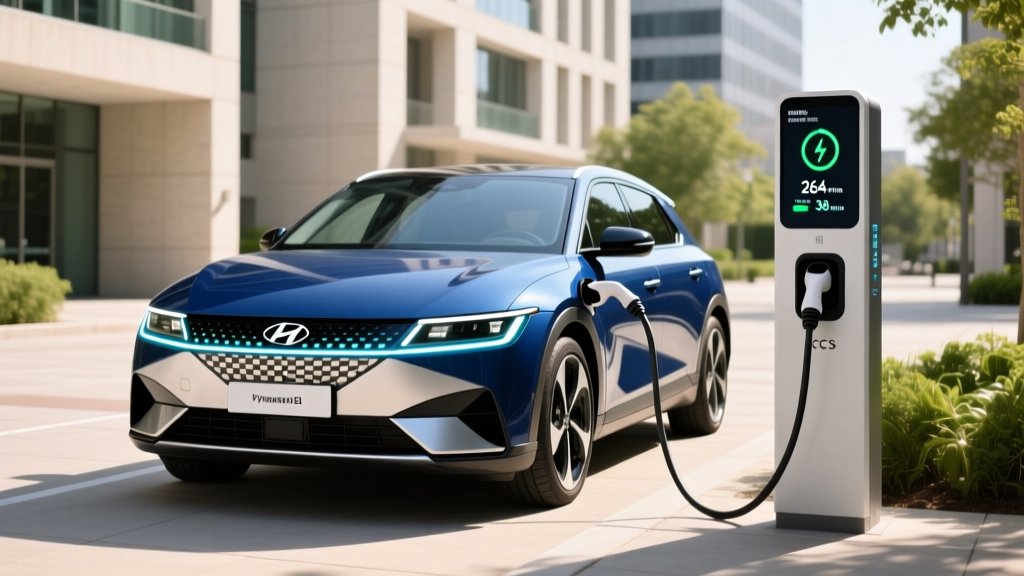
The 2023 Hyundai Ioniq 5 SEL occupies a sweet spot in the used EV market: an 800-volt architecture that still outpaces most rivals in DC fast-charging speed, a usable 77.4 kWh NMC battery, and a cabin that punches above its price class. As we evaluate it from a 2026 vantage point, the SEL remains one of the most practical mid-size electric crossovers available on the pre-owned market — provided you understand its real-world range, charging behavior, and current federal tax credit limitations.
This review covers the SEL trim specifically — the volume-selling mid-tier with the larger battery and either rear-wheel drive (RWD) or all-wheel drive (AWD). We'll walk through exact EPA figures, real-world range expectations, charging curves, ownership costs, and whether this model still holds up against newer competition.
Range, Efficiency, and the Real-World Reality Check
The 2023 Ioniq 5 SEL comes in two drivetrain configurations, each with different range and efficiency profiles:
| Configuration | EPA Range | Combined MPGe | kWh/100 mi | Drivetrain |
|---|---|---|---|---|
| SEL RWD (Standard Range battery not offered on SEL) | 303 miles | 114 MPGe | 30 | Rear-Wheel Drive |
| SEL AWD | 266 miles | 101 MPGe | 33 | Dual-Motor AWD |
Source: fueleconomy.gov
The EPA's 303-mile estimate for the RWD SEL assumes a mix of city and highway driving at moderate temperatures. In real-world conditions:
- Sustained highway driving (70-75 mph): Expect roughly 250–270 miles before needing a charge. The Ioniq 5's boxy shape creates more aerodynamic drag than sleeker competitors like the Tesla Model Y.
- Cold weather (below 32°F): Range drops 20–30% without preconditioning, putting realistic winter range for the RWD at approximately 210–240 miles. The heat pump (standard on AWD, optional on some RWD builds) mitigates this somewhat.
- City/suburban commuting: You'll often exceed the EPA estimate thanks to regenerative braking. 310+ miles is achievable in stop-and-go traffic at moderate temps.
Battery Specs: 77.4 kWh NMC with a Proven Track Record
The 2023 Ioniq 5 SEL uses a 77.4 kWh usable (approximately 84 kWh gross) lithium-ion battery pack with NMC (nickel-manganese-cobalt) chemistry. This is the same E-GMP platform battery found in the Kia EV6 and Genesis GV60.
NMC chemistry delivers higher energy density than LFP (lithium iron phosphate), which is why Hyundai could package 303 miles of range without excessive weight. The trade-off is that NMC cells degrade slightly faster than LFP over many charge cycles, though Hyundai's battery management system (BMS) includes a buffer — you're never truly accessing 0% or 100% of the gross capacity — which significantly extends pack life.
Based on fleet data and owner reports from 2022-2023 E-GMP vehicles now hitting 60,000–100,000 miles, degradation has been modest: typically 5–8% capacity loss over the first three years, which is in line with industry averages for liquid-cooled NMC packs.
Charging Speed: The 800V Advantage Still Matters
The Ioniq 5's 800-volt architecture remains one of its strongest selling points, even three years after launch. Here's what charging looks like across all levels:
| Charging Level | Power / Rate | 10–80% Time | Miles of Range Added |
|---|---|---|---|
| Level 1 (120V household) | ~1.4 kW | N/A (days) | ~3–4 miles/hour |
| Level 2 (240V home/public) | 10.9 kW (onboard charger max) | ~7 hours (0–100%) | ~32–36 miles/hour |
| DC Fast Charge (CCS) | Peak 235 kW | ~18 minutes (10–80%) | Up to ~210 miles in 18 min |
Charging curve reality: The Ioniq 5 SEL peaks at 235 kW only when the battery is preconditioned and State of Charge (SoC) is between roughly 10–45%. Above 55%, the rate tapers to around 150 kW; above 80%, it drops further to under 70 kW. This is normal for NMC chemistry and is why we quote 10–80% times — charging past 80% at a DC fast charger is rarely worth the wait.
At a 350 kW Electrify America or compatible CCS station, the Ioniq 5 SEL sustains an average of roughly 180–195 kW across the full 10–80% session, which translates to that 18-minute benchmark. At older 150 kW stations, expect 10–80% in roughly 25–28 minutes.
Note: The 2023 Ioniq 5 uses a CCS1 connector. If you plan to use Tesla Superchargers (which use NACS), you'll need a CCS-to-NACS adapter — Hyundai began including these with newer model years, but check with your specific vehicle.
Performance and Drivetrain
| Spec | SEL RWD | SEL AWD |
|---|---|---|
| Horsepower | 225 hp | 320 hp |
| Torque | 258 lb-ft | 446 lb-ft |
| 0–60 mph | ~7.0 sec | ~4.5 sec |
| Top Speed | 115 mph (electronically limited) | 115 mph |
| Towing Capacity | Not rated (no tow package on SEL) | Not rated (SEL; Limited AWD with tow package: 2,300 lbs) |
The RWD model is the efficiency play — adequate acceleration for merging and passing, with the reward of 37 extra miles of EPA range. The AWD model is genuinely quick at 4.5 seconds to 60, making it a compelling choice for buyers in snowy climates who don't want to sacrifice performance. Both use a single-speed reduction gear with no traditional transmission.
Pricing, Trims, and Federal Tax Credit Eligibility
The 2023 Ioniq 5 was originally offered in three trims: SE (base), SEL (mid), and Limited (top). The SEL was the volume seller and the focus of this review.
| Configuration | Original MSRP (2023) | Typical Used Price (2026) | Federal Tax Credit |
|---|---|---|---|
| SEL RWD | $49,145 (incl. destination) | $28,000–$34,000 | Up to $4,000 (used EV credit, §25E) |
| SEL AWD | $53,045 (incl. destination) | $30,000–$36,000 | Up to $4,000 (used EV credit, §25E) |
New purchase (§30D): The 2023 Ioniq 5 was assembled in South Korea, meaning it did not qualify for the $7,500 new-vehicle federal credit when sold new. This remains unchanged.
Used purchase (§25E): Buying a pre-owned 2023 Ioniq 5 SEL from a licensed dealer may qualify you for up to $4,000 (30% of the sale price, capped at $4,000) under the used clean vehicle credit. Requirements per IRS §25E:
- Sale price must be $25,000 or less (some SEL listings may exceed this — negotiate accordingly)
- Buyer income caps: $75,000 single / $112,500 head of household / $150,000 joint (MAGI)
- Vehicle must be at least 2 model years old (2023 models qualify in 2025+)
- Must purchase from a licensed dealer (private-party sales excluded)
- Can be applied at point of sale as a discount
Always confirm current eligibility with a tax professional and the IRS before finalizing a purchase. Rules and manufacturer sourcing status can change.
Interior, Cargo, and Daily Livability
The Ioniq 5's retro-futuristic cabin remains one of the most spacious in the compact EV crossover segment:
- Passenger volume: 106.5 cu ft (EPA)
- Rear legroom: 39.4 inches — genuinely generous, rivaling mid-size sedans
- Cargo behind rear seats: 27.2 cu ft
- Cargo with rear seats folded: 59.3 cu ft
- Front trunk (frunk): 0.85 cu ft (RWD) / 0.43 cu ft (AWD) — enough for charging cables, not groceries
The SEL trim includes dual 12.3-inch displays (instrument cluster + infotainment), wireless Apple CarPlay and Android Auto, heated front seats, a heated steering wheel, Hyundai Digital Key (NFC-based phone-as-key), and a sliding center console that can move forward or back to create extra floor space. The flat floor — a benefit of the E-GMP skateboard platform — makes the cabin feel larger than its exterior footprint suggests.
Notable drawbacks: The rear wiper was not included on 2023 models (a common complaint Hyundai addressed in later years). The infotainment system, while functional, lacks the responsiveness of Tesla's or even Hyundai's own newer software. Physical buttons for climate control would improve usability — everything is buried in the touchscreen.
Safety and Driver Assistance
The 2023 Ioniq 5 earned the IIHS Top Safety Pick+ award, the highest rating from the Insurance Institute for Highway Safety. It also received a 5-star overall rating from NHTSA.
The SEL comes standard with Hyundai SmartSense, which includes:
- Forward collision-avoidance assist with pedestrian/cyclist detection
- Blind-spot collision-avoidance assist
- Rear cross-traffic collision-avoidance assist
- Lane keeping assist and lane following assist
- Adaptive cruise control with stop-and-go
- Highway driving assist (HDA) — a Level 2 system combining ACC + lane centering on mapped highways
Highway Driving Assist is a Level 2 driver-assistance system per SAE classification. The driver must remain fully engaged, hands on or near the wheel, and eyes on the road at all times. This is not self-driving. It reduces fatigue on long highway stretches but does not replace the driver.
Warranty Coverage
| Coverage | Duration |
|---|---|
| Basic (bumper-to-bumper) | 5 years / 60,000 miles |
| Powertrain | 10 years / 100,000 miles |
| EV Battery | 10 years / 100,000 miles (capacity retention ≥ 70%) |
| Corrosion perforation | 7 years / unlimited miles |
| Roadside assistance | 5 years / unlimited miles |
Hyundai's 10-year/100,000-mile battery warranty is among the best in the industry. The 70% capacity retention threshold means if the battery degrades below 70% of its original capacity within the warranty period, Hyundai will repair or replace it. Note: this warranty transfers to the second owner but reduces to 5 years/60,000 miles for non-original owners on some coverage categories — check with Hyundai directly for specifics on a used purchase.
Pros, Cons, and Who Should Buy
Pros
- 800V DC fast charging (18 min 10–80%) still class-leading
- Spacious cabin with 39.4" rear legroom
- IIHS Top Safety Pick+ and 5-star NHTSA
- 10-yr/100k-mi battery warranty
- Vehicle-to-load (V2L) capability — power devices from the car
- Comfortable ride quality, quiet at highway speeds
- Competitive used pricing in 2026 market
Cons
- No rear wiper (2023 model year)
- CCS connector requires adapter for Tesla Superchargers
- Boxy shape hurts highway efficiency vs. sleeker rivals
- Infotainment not as responsive as competitors
- SEL trim lacks ventilated seats, premium audio (Limited only)
- No tow rating on SEL (tow package on Limited AWD only)
- Frunk is tiny — essentially a cable storage cubby
Who the 2023 Ioniq 5 SEL Suits Best
- Commuters and suburban families: The 266–303 mile range covers most weekly driving with home charging, and the spacious rear seat handles child seats and passengers comfortably.
- Road-trip-capable buyers: 18-minute DC fast charging makes highway travel practical on the Electrify America network (CCS).
- Value-conscious used EV shoppers: Depreciation has made the SEL attainable at $28k–$36k, and the §25E used credit can bring effective cost below $25k for eligible buyers.
- Not ideal for: Heavy tow-duty buyers (no SEL tow rating), those exclusively in Tesla Supercharger-dependent regions without an adapter, or buyers wanting the latest-gen infotainment.
Frequently Asked Questions
What is the real-world range of the 2023 Ioniq 5 SEL?
The EPA rates the RWD at 303 miles and AWD at 266 miles. In practice, expect 250–270 miles on the highway for the RWD, 220–240 for the AWD, and 20–30% less in freezing temperatures. City driving with regen braking can push past the EPA number.
How fast does the 2023 Ioniq 5 SEL charge?
On a 350 kW-capable CCS DC fast charger with a preconditioned battery, the SEL achieves 10–80% in approximately 18 minutes, peaking at 235 kW. At home on a Level 2 (240V, 48A circuit), the 10.9 kW onboard charger adds roughly 32–36 miles of range per hour, filling the battery overnight.
Does the 2023 Ioniq 5 SEL qualify for the federal EV tax credit?
It did not qualify for the $7,500 new-vehicle credit (§30D) because it was assembled in South Korea. However, buying one used from a dealer in 2026 may qualify you for up to $4,000 under the §25E used clean vehicle credit, provided the sale price is $25,000 or less and you meet income caps ($75k single / $150k joint). Consult a tax professional and review current IRS guidance.
Is the 2023 Ioniq 5 SEL worth buying over a Tesla Model Y or Kia EV6?
It depends on priorities. The Ioniq 5 SEL offers faster DC charging than the Model Y (235 kW vs. ~250 kW peak, but the Ioniq sustains its rate better on CCS networks), a more comfortable ride, and a more spacious rear seat. The Model Y wins on Supercharger network access (without an adapter), cargo volume, and software. The Kia EV6 is mechanically similar (same E-GMP platform) but has a sportier design and slightly less rear headroom. If CCS charging infrastructure is strong in your area, the Ioniq 5 SEL is a compelling choice.
What's the biggest thing to check when buying a used 2023 Ioniq 5 SEL?
Request a battery State of Health (SoH) report from a Hyundai dealer — this will show remaining capacity as a percentage. Check whether the vehicle received the rear wiper retrofit (some owners installed aftermarket solutions). Verify CCS adapter inclusion if you plan to use Tesla Superchargers. And confirm the remaining warranty coverage, as the 10-year/100k battery warranty partially transfers but may have reduced terms for second owners.