Quick Verdict: The Benchmark That Still Sets the Pace
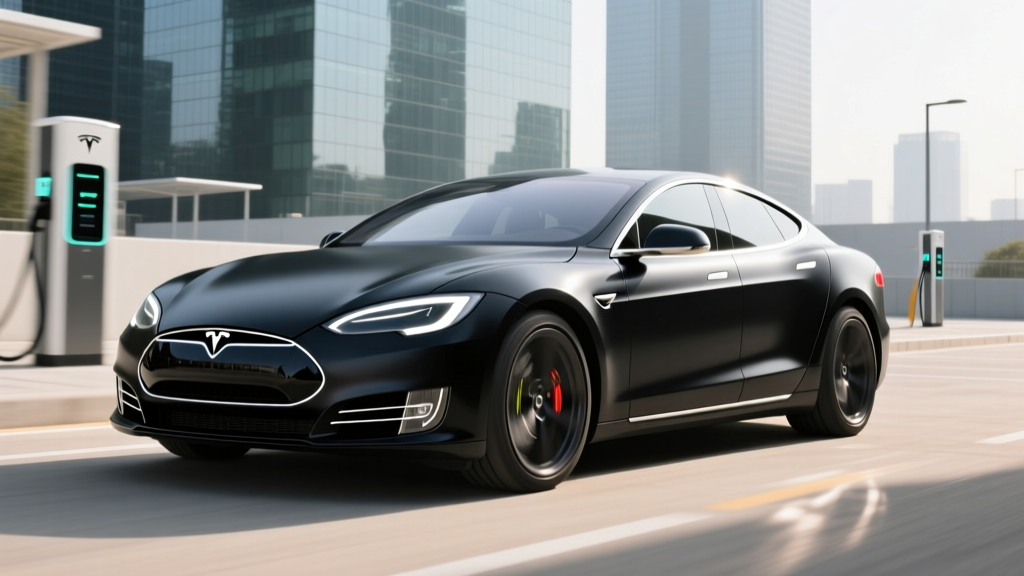
More than a decade after its debut, the Tesla Model S remains the sedan that performance-EV buyers measure everything against. The 2026 Model S lineup continues to offer two distinct personalities: the dual-motor Long Range model focused on maximum distance, and the tri-motor Plaid variant that delivers supercar-rivaling acceleration in a four-door package. While newer competitors from Lucid, Porsche, and Mercedes-Benz have closed gaps in luxury and ride refinement, the Model S still owns the intersection of range, charging infrastructure access, and straight-line speed — and its 0-60 mph times remain among the quickest of any production car, electric or otherwise.
This review breaks down the exact numbers behind the 2026 Tesla Model S: real-world range versus the EPA sticker, actual DC fast-charging behavior (including the taper above 80%), ownership costs, and whether the federal tax credit applies. If you've been searching for 0-60 Tesla S performance data with honest ownership context, this is your spec sheet.
2026 Tesla Model S Specifications at a Glance
| Specification | Long Range (Dual-Motor AWD) | Plaid (Tri-Motor AWD) |
|---|---|---|
| EPA Estimated Range | 402 miles | 359 miles |
| Battery (usable capacity) | ~100 kWh (NMC) | ~100 kWh (NMC) |
| Drivetrain | Dual-Motor AWD | Tri-Motor AWD (1 front, 2 rear) |
| Horsepower | 670 hp | 1,020 hp |
| 0-60 mph | 3.1 seconds | 1.99 seconds* |
| Top Speed | 155 mph | 200 mph |
| Max DC Fast-Charge Rate | 250 kW | 250 kW |
| 10-80% DC Fast Charge | ~30 minutes | ~30 minutes |
| Level 2 Home Charging | 11.5 kW (~34 mi/hr) | 11.5 kW (~34 mi/hr) |
| MPGe (combined) | 120 MPGe | 116 MPGe |
| Energy Consumption | 28 kWh/100 mi | 29 kWh/100 mi |
| Base MSRP | $79,990 | $94,990 |
| Battery/Drive Unit Warranty | 8 years / 150,000 miles | 8 years / 150,000 miles |
*Plaid 1.99-second 0-60 mph time requires rollout subtraction (1 ft) and prepared surface. Expect ~2.1-2.3 seconds in typical real-world conditions.
0-60 mph and Performance: What the Numbers Actually Mean
The Tesla Model S 0-60 mph time is what originally put this sedan on the map — and the 2026 Plaid's claimed 1.99-second sprint remains staggering. To put it in perspective, a Bugatti Chiron hits 60 mph in roughly 2.4 seconds. The Plaid accomplishes this through three permanent-magnet synchronous motors (one front, two rear) with torque-vectoring capability, delivering 1,020 horsepower to all four wheels with instantaneous electric response.
But here's what spec sheets don't tell you: the 1.99-second figure uses a 1-foot rollout subtraction (standard in drag racing), requires a prepped surface, and depends on battery state of charge. With a battery below 50% SoC or on a regular asphalt road, expect 2.1 to 2.3 seconds — still violently quick, but not quite sub-2. Launch control also requires the battery to be sufficiently warm, which the car manages through its thermal preconditioning system.
The Long Range model's 3.1-second 0-60 mph time from 670 hp is no slouch either. That matches or beats most V8-powered luxury sedans and is noticeably quicker than competitors like the Mercedes EQS 450+ (5.3 seconds) or the BMW i7 xDrive60 (4.5 seconds). For daily driving, the Long Range's acceleration is more than adequate — the Plaid's extra power is a track-day and bragging-rights proposition.
Real-World Range vs. EPA Estimates
Plaid: EPA 359 miles — expect ~280-310 miles highway; ~240-270 miles in freezing temperatures.
The EPA range figures for the 2026 Model S are among the highest of any production EV, but as with every electric vehicle, real-world results depend heavily on driving style, speed, temperature, and terrain. The Model S's large ~100 kWh NMC (nickel manganese cobalt) battery provides substantial energy reserves, but the car's efficiency (28-29 kWh/100 mi) reflects its size, weight (~4,700 lbs for Long Range, ~4,800 lbs for Plaid), and performance-oriented tuning.
In our experience and consistent with third-party testing, highway driving at 70-80 mph reduces range by roughly 15-20% compared to the EPA combined figure. Cold weather (below 32°F) introduces an additional 15-25% reduction due to battery chemistry limitations, cabin heating demands, and increased rolling resistance. The Model S does include a heat pump for more efficient cabin climate control, which mitigates some cold-weather loss compared to resistive heating systems.
For context on what this means practically: a Long Range owner driving 35 miles each way to work in moderate weather with home charging will use roughly 18-20% of the battery per day — meaning charging every third or fourth night is sufficient. Road trippers can plan Supercharger stops roughly every 250-280 miles at highway speeds, which aligns well with the typical 20-30 minute rest-and-charge cadence.
For the latest official efficiency data, see the EPA's EV comparison tool at fueleconomy.gov.
Charging Speed: DC Fast Charging and Home Level 2
Understanding the difference between kW (power — how fast energy flows) and kWh (energy — how much the battery holds) is essential when evaluating Model S charging. The 2026 Model S supports a peak DC fast-charge rate of 250 kW, which translates to adding roughly 200 miles of range in about 15 minutes at a V3 or V4 Tesla Supercharger — but only under ideal conditions.
| Charging Level | Power | Charge Time | Range Added |
|---|---|---|---|
| Level 1 (120V standard outlet) | ~1.4 kW | ~70+ hours (0-100%) | ~3-4 mi/hr |
| Level 2 (240V, 48A Wall Connector) | 11.5 kW | ~9-10 hours (0-100%) | ~34 mi/hr |
| DC Fast (Tesla Supercharger V3/V4) | Peak 250 kW | ~30 min (10-80%) | ~200 mi in 15 min (peak) |
| DC Fast (CCS adapter at third-party stations) | Up to 250 kW | ~30 min (10-80%) | Varies by station |
The charging curve reality: The 250 kW peak is only sustained between roughly 10-30% state of charge. Above 50% SoC, the rate tapers significantly — dropping to around 100-120 kW. Above 80%, it drops further to protect battery longevity. This is why the 10-80% time of approximately 30 minutes is the standard benchmark. Charging from 80-100% can add another 30-40 minutes, which is why Tesla's navigation system typically recommends charging only to the level needed to reach the next stop or destination.
For home charging, the Tesla Wall Connector at 48 amps (11.5 kW) is the practical standard. A full overnight charge from 20% to 80% takes roughly 5-6 hours, meaning any Model S owner with a Level 2 home charger starts each morning with a full daily allocation. Installation of a 240V/60A circuit typically runs $800-$2,000 depending on electrical panel proximity and local permitting. Always have a licensed electrician evaluate your panel capacity before installation.
The Model S uses Tesla's NACS (North American Charging Standard) connector natively. With Tesla opening the Supercharger network to other brands, the Model S benefits from the largest and most reliable DC fast-charging network in North America — over 6,000 Supercharger stations and 65,000+ connectors as of early 2026. Tesla also provides a CCS adapter for access to Electrify America, EVgo, and other third-party networks.
Pricing, Trims, and Federal Tax Credit Eligibility
| Trim | Base MSRP | Destination Fee | Est. As-Tested* | §30D Federal Tax Credit |
|---|---|---|---|---|
| Long Range | $79,990 | $1,995 | $84,000-$92,000 | Subject to eligibility rules (see below) |
| Plaid | $94,990 | $1,995 | $99,000-$110,000 | Subject to eligibility rules (see below) |
*As-tested pricing varies with options including FSD (Supervised), premium interior colors, larger wheels, and Yoke steering.
- MSRP Cap: Sedans must have an MSRP at or below $55,000. Both Model S trims exceed this cap and are NOT eligible for the new-vehicle §30D credit.
- Buyer Income Cap: Modified AGI must not exceed $150,000 (single) / $300,000 (joint) — relevant only if MSRP qualifies.
- Battery Sourcing: Critical minerals and battery component requirements must be met (moot if MSRP cap is exceeded).
- Point-of-Sale Transfer: Eligible credits can be transferred to the dealer at purchase for an immediate price reduction — but only if the vehicle qualifies.
Bottom line: The 2026 Tesla Model S does not qualify for the $7,500 federal new-vehicle tax credit due to its MSRP exceeding the $55,000 sedan cap. Buyers may still benefit from state-level incentives, utility rebates, or the used EV tax credit (up to $4,000 under §25E) if purchasing a pre-owned Model S from a dealer — subject to separate income and price caps. Consult IRS.gov for current §30D rules and a tax professional for personal eligibility.
Interior, Cargo, and Daily Usability
The Model S interior has evolved significantly with the current-generation refresh. The 17-inch center touchscreen (now in a "cinematic" landscape orientation with 2200x1300 resolution) handles nearly all vehicle controls, navigation, and entertainment. A second 8-inch screen for rear passengers provides climate and media control. The minimalist design remains polarizing — no physical buttons for climate or volume — but the interface responsiveness is excellent.
Passenger space:
- Front legroom: 42.7 inches
- Rear legroom: 35.4 inches
- Front headroom: 39.7 inches
- Rear headroom: 38.1 inches
Cargo capacity:
- Trunk (rear): 28.0 cu ft
- Frunk (front trunk): 3.1 cu ft
- Total with rear seats folded: 64.9 cu ft
The Model S is a large liftback sedan, which gives it a practical advantage over traditional trunk designs. The rear hatch opens wide, and the flat load floor accommodates bulky items. The frunk is smaller than the Model 3/Y due to the front motor and HVAC components but still holds a charging cable bag or small grocery run. For comparison, the Lucid Air offers 32 cu ft of trunk space, while the Mercedes EQS sedan provides 22 cu ft — making the Model S one of the more practical luxury EV sedans for cargo.
Notable drawbacks include the yoke steering wheel (standard on Plaid, optional on Long Range), which requires an adjustment period for low-speed maneuvers and parking. The absence of ultrasonic sensors (Tesla relies on Tesla Vision camera-based parking assist) means parking proximity alerts can be less precise than competitors using radar/ultrasonic systems. Build quality has improved markedly over earlier production years but still occasionally falls short of German luxury rivals in panel-gap consistency.
Standout Tech and Driver-Assist Features
The 2026 Model S includes Tesla's latest HW4 (Hardware 4) computer for driver-assist processing, supporting the following features:
- Autopilot (standard): Adaptive cruise control, lane-keeping, automatic emergency braking, blind-spot monitoring
- FSD Supervised (optional, ~$8,000 or $99/month): Adds Navigate on Autopilot (highway on/off-ramp management), Auto Lane Change, Autopark, Summon, and traffic-light/stop-sign recognition
- Tesla Vision: Camera-only perception system (no LiDAR or radar) for all driver-assist functions
- Over-the-air updates: Continuous feature additions and performance improvements
- 22-speaker audio: Immersive sound system with active noise cancellation
- Gaming: Up to 10 teraflops of GPU power for in-car gaming on the center display while parked
The Model S also benefits from Tesla's Sentry Mode (camera-based security recording while parked), Dog Mode (climate control for pets), and the ability to precondition the battery for fast charging via navigation routing to a Supercharger — a feature that meaningfully improves charge speeds in cold weather.
Warranty and Long-Term Ownership
Tesla provides the following warranty coverage for the 2026 Model S:
- Basic Vehicle Limited Warranty: 4 years / 50,000 miles
- Battery and Drive Unit Warranty: 8 years / 150,000 miles (whichever comes first), with a minimum 70% capacity retention guarantee over the warranty period
The 150,000-mile battery/drive unit warranty is generous and reflects Tesla's confidence in its NMC battery pack longevity. Real-world data from high-mileage Model S owners shows typical degradation of 8-12% over the first 100,000 miles, with the rate of loss slowing significantly after the initial 20,000-30,000 miles. Out-of-warranty battery replacement costs remain high — approximately $12,000-$20,000 depending on pack configuration — but are rarely needed within the warranty window.
Maintenance costs for the Model S are substantially lower than internal-combustion luxury sedans. There are no oil changes, spark plugs, or transmission fluid services. Brake pad life is extended significantly by regenerative braking (many owners report original brake pads at 80,000+ miles). The primary recurring maintenance items are cabin air filter replacement (~$100-$150 every 2 years), tire rotation, and wiper fluid. Expect tire replacement every 25,000-35,000 miles due to the car's weight and instant torque — budget $1,200-$2,000 for a set of four premium all-season or summer tires.
Pros and Cons
Pros
- Class-leading 0-60 mph (1.99s Plaid / 3.1s Long Range)
- 402-mile EPA range (Long Range) — among the highest of any EV
- Access to Tesla Supercharger network (65,000+ connectors)
- Spacious liftback cargo area (28 cu ft rear + frunk)
- Continuous OTA updates add features over time
- Strong 8-year/150,000-mile battery warranty
Cons
- Does NOT qualify for $7,500 federal tax credit (MSRP cap exceeded)
- Ride quality firm on larger wheel options; road noise noticeable
- Yoke steering divisive and impractical for some drivers
- Camera-only parking assist less precise than ultrasonic systems
- High tire wear costs due to weight and torque
- Interior materials good but not S-Class/7-Series luxury level
Who Should Buy the 2026 Tesla Model S?
Choose the Model S Long Range if:
- You want maximum EV range (402 mi EPA) for frequent road trips
- You need a spacious sedan with serious cargo capacity
- Supercharger network reliability is a top priority for your travel patterns
- Quick-but-not-insane acceleration (3.1s) meets your needs
Choose the Model S Plaid if:
- You want the quickest production sedan available and use-case justifies the cost
- Track days or performance driving are part of your ownership vision
- You can accept the 43-mile range trade-off vs. Long Range for 350 additional horsepower
Consider competitors if:
- Ride comfort and traditional luxury are top priorities (Mercedes EQS, BMW i7)
- You need a longer EPA range in a sedan (Lucid Air Grand Touring: 516 mi EPA)
- Tax credit eligibility is a dealbreaker — look at the Tesla Model 3, Hyundai Ioniq 6, or BMW i4
Frequently Asked Questions
What is the real-world range of the 2026 Tesla Model S?
The Long Range achieves an EPA-estimated 402 miles, but expect approximately 320-350 miles at sustained highway speeds (70-80 mph) and 270-300 miles in freezing temperatures. The Plaid's 359-mile EPA rating translates to roughly 280-310 miles highway and 240-270 miles in cold weather. Actual results vary with driving style, elevation changes, and climate control usage.
How fast does the Tesla Model S charge at home and on the road?
On a Tesla Supercharger (DC fast charging), the Model S peaks at 250 kW and charges from 10-80% in approximately 30 minutes, adding up to 200 miles in about 15 minutes under optimal conditions. At home with a Level 2 Tesla Wall Connector (11.5 kW / 48A), the car adds roughly 34 miles of range per hour, meaning a full overnight charge is easily achievable. A standard 120V outlet (Level 1) adds only 3-4 miles per hour and is suitable only for emergency or very low-mileage use.
Does the 2026 Tesla Model S qualify for the federal EV tax credit?
No. Under current IRS §30D rules, new sedans must have an MSRP at or below $55,000 to qualify for the $7,500 federal tax credit. Both Model S trims (starting at $79,990 and $94,990) exceed this cap. Buyers may still benefit from state incentives, utility rebates, or the used-EV tax credit (§25E, up to $4,000) when purchasing pre-owned. Consult a tax professional for your specific situation.
How does the Model S 0-60 compare to competitors?
The Model S Plaid's 1.99-second 0-60 mph time is the quickest of any production sedan. The Lucid Air Sapphire achieves 0-60 in approximately 1.89 seconds (with similar rollout caveats), while the Porsche Taycan Turbo GT hits 60 in about 2.1 seconds. The Long Range's 3.1-second time beats the Mercedes EQS 580 (4.1s) and BMW i7 M70 (3.5s). In the sub-$100K performance sedan category, the Model S Long Range's 3.1-second sprint is unmatched among EVs.
Is the Tesla Model S worth buying over the Lucid Air or Porsche Taycan?
The Model S wins on Supercharger network access, cargo versatility (liftback + frunk), and the balance of range and performance. The Lucid Air Grand Touring offers superior EPA range (516 miles) and a more spacious rear seat, but relies on third-party charging networks. The Porsche Taycan offers superior ride quality, handling dynamics, and interior craftsmanship, but with significantly less range (EPA 246-283 miles depending on trim). If charging infrastructure reliability and straight-line performance are your top priorities, the Model S remains the strongest all-around choice in its class.
What is the battery warranty on the Model S?
Tesla covers the Model S battery and drive units for 8 years or 150,000 miles, whichever comes first. The warranty guarantees a minimum of 70% battery capacity retention over that period. If the battery degrades below 70% of its original capacity within the warranty window, Tesla will repair or replace it at no cost. This is among the most comprehensive battery warranties in the luxury EV segment.
Sources: EPA fueleconomy.gov, Tesla.com official specifications, IRS.gov §30D clean vehicle credit guidelines. All specifications reflect 2026 model year data as of publication. Pricing, tax credit eligibility, and specifications are subject to change. Verify current details with Tesla and your tax advisor before purchasing.