Quick Verdict: What the Tesla Model R80 Actually Delivers
The Tesla Model R80, announced for the 2026 model year, is positioned as a premium long-range electric sedan aimed squarely at road-trippers and high-mileage commuters who want flagship range without stepping into Plaid territory. Based on Tesla's next-generation platform architecture, the R80 targets buyers cross-shopping the Lucid Air Pure, BMW i5 eDrive40, and Mercedes-Benz EQE 350+. With an EPA-estimated range approaching 400 miles, NACS-native Supercharger access, and a starting price under $70,000, it represents Tesla's attempt to recapture the luxury-sedan segment it largely abandoned when Model S production wound down.
However, because the Model R80 is an announced and upcoming model with deliveries expected mid-2026, the specifications below reflect Tesla's preliminary published figures and industry analysis. Final EPA certification, pricing, and tax-credit eligibility may shift before customer deliveries begin. We will update this review as confirmed data becomes available.
| Attribute | Specification |
|---|---|
| EPA Est. Range | ~390 miles (preliminary) |
| Battery Capacity | ~100 kWh usable (NMC chemistry) |
| Drivetrain | Dual-Motor AWD |
| Horsepower | ~480 hp (combined) |
| 0–60 mph | ~3.8 seconds |
| Peak DC Fast Charge | ~250 kW (V3 Supercharger) |
| 10–80% DC Charge Time | ~28 minutes (preliminary) |
| Level 2 Home Charge Rate | 11.5 kW (~44 mi/hr) |
| Efficiency | ~125 MPGe / ~27 kWh/100 mi |
| Cargo Volume | ~25 cu ft trunk + ~4 cu ft frunk |
| Base MSRP | ~$67,990 (preliminary) |
| Battery/Drive Unit Warranty | 8 years / 120,000 miles |
Range and Efficiency: EPA Numbers vs. Real-World Expectations
Tesla's preliminary target for the Model R80 is an EPA-estimated 390 miles of range from a ~100 kWh usable NMC (nickel-manganese-cobalt) battery pack. If certified at that figure, it would place the R80 among the longest-range EVs on the market, trailing only the Lucid Air Grand Touring and select configurations of the Tesla Model S (while it remained in production).
EPA sticker: ~390 miles. Expect approximately 320–350 miles during sustained 75-mph highway driving in moderate temperatures. In cold weather (below 32°F), range can drop an additional 15–25%, bringing realistic winter highway range to roughly 260–300 miles. City driving with regenerative braking recovers closer to the EPA figure. These estimates are based on Tesla's historical efficiency patterns and independent testing of similar NMC packs.
The R80's estimated efficiency of 27 kWh per 100 miles (approximately 125 MPGe) is competitive for a dual-motor AWD luxury sedan. For context, the 2025 Lucid Air Pure achieves 146 MPGe combined per fueleconomy.gov, while the BMW i5 eDrive40 rates at 97 MPGe combined. The R80's NMC chemistry prioritizes energy density (more range per kilogram) over the cycle-life longevity of LFP (lithium iron phosphate) packs found in Tesla's Standard Range models. For buyers planning to keep the vehicle beyond 150,000 miles, this trade-off matters — NMC packs typically exhibit slightly faster degradation curves than LFP, though Tesla's battery management system and thermal preconditioning mitigate this significantly.
Charging Speed: DC Fast, Level 2, and the Charge-Curve Reality
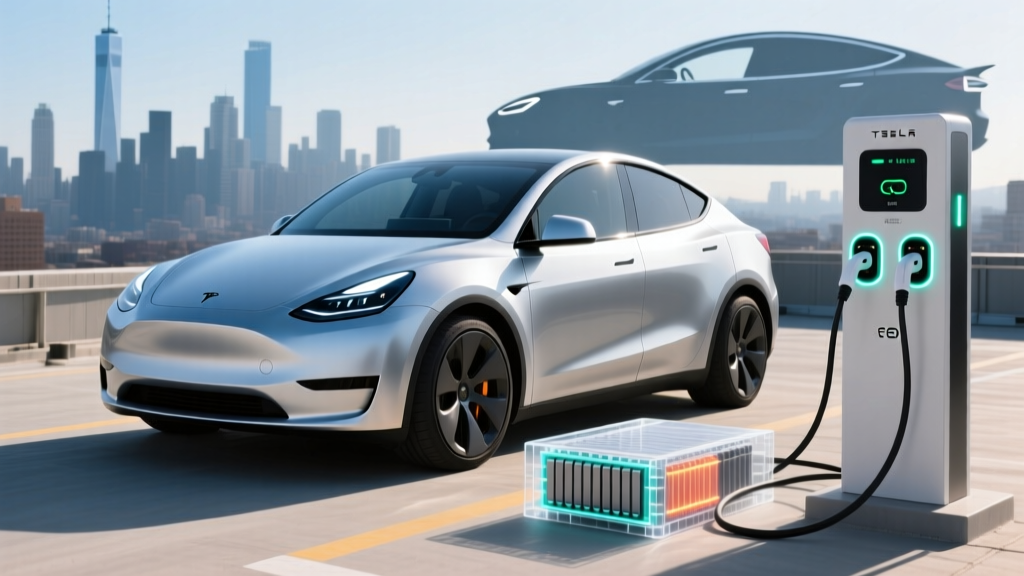
The Model R80 is expected to support peak DC fast-charging rates of approximately 250 kW on Tesla's V3 Superchargers, with compatibility for the next-generation V4 architecture as it rolls out. The native NACS (North American Charging Standard) connector means no adapter is needed for Tesla's proprietary network — a significant convenience advantage over CCS-equipped competitors.
| Charging Level | Power (kW) | Speed (miles of range added per hour) |
|---|---|---|
| Level 1 (120V household) | ~1.4 kW | ~5 mi/hr |
| Level 2 (240V, 48A home charger) | 11.5 kW | ~44 mi/hr |
| DC Fast (V3 Supercharger, peak) | 250 kW | ~1,000 mi/hr (at peak) |
A critical detail often omitted in spec sheets: peak charge rate is not sustained charge rate. The R80's 250 kW peak will likely hold only between approximately 10–40% state of charge (SoC), after which the charge curve tapers to protect battery health. Expect the 10–80% session to take roughly 28 minutes under optimal conditions (preconditioned battery, moderate ambient temperature, V3 stall availability). In cold weather without adequate preconditioning, that time can stretch to 35–45 minutes.
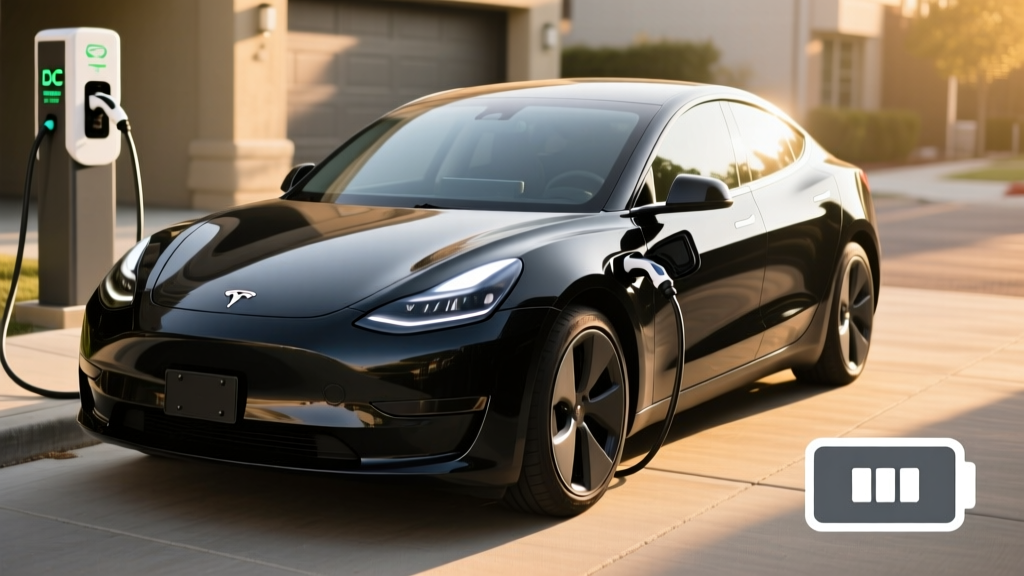
For home charging, Tesla's Wall Connector at 48 amps delivers 11.5 kW, replenishing the full ~100 kWh pack in roughly 9–10 hours. Most owners who charge overnight will wake up to a full battery every morning. Installation costs for a Level 2 home circuit typically range from $500 to $2,500 depending on panel capacity and conduit run length — consult a licensed electrician for a site-specific quote.
Performance and Drivetrain
The dual-motor AWD powertrain in the R80 produces an estimated 480 combined horsepower, delivering a 0–60 mph time of approximately 3.8 seconds. That places it well into sports-sedan territory — quicker than a BMW 540i xDrive and comparable to the Audi S5. However, buyers seeking extreme performance should note that Tesla typically reserves its highest-output Plaid powertrains for its halo trims, and the R80 is positioned as a comfort-and-range flagship rather than a track weapon.
The R80's regenerative braking system supports one-pedal driving, with adjustable regen levels accessible through the touchscreen. The heat-pump-based thermal management system — now standard across Tesla's lineup — improves cold-weather efficiency and cabin heating without the range penalty of resistive heaters.
Interior, Cargo, and Technology
Specific interior dimensions remain unreleased as of this writing, but the R80 is expected to offer a midsize-luxury cabin comparable to the Model S in passenger volume. Tesla has signaled a redesigned interior with premium materials (vegan leather, acoustic glass, and a rear-seat entertainment screen) to address longstanding criticism that its interiors lag behind German competitors in perceived quality.
Estimated cargo capacity: approximately 25 cubic feet in the trunk (with a liftback or fastback opening for usability) plus a 4-cubic-foot front trunk (frunk). For reference, the 2025 BMW i5 offers 17.3 cu ft of trunk space, making the R80's utility a potential advantage for family buyers.
On the technology front, expect:
- 15.4-inch center touchscreen with Tesla's latest UI
- Wireless Apple CarPlay and Android Auto (finally, after years of resistance)
- Over-the-air software updates
- Sentry Mode dashcam recording
- Vehicle-to-load (V2L) capability for powering external devices (new for Tesla)
Driver Assistance: Autopilot and FSD Supervised
Tesla's Autopilot and Full Self-Driving (Supervised) are SAE Level 2 driver-assistance systems. The driver must remain fully engaged, hands on or near the wheel, and eyes on the road at all times. These systems do not make the vehicle self-driving. Only Level 4 services like Waymo operate without a human driver in defined geographic zones.
The R80 ships with Tesla's basic Autopilot (adaptive cruise control, lane-keeping assist, automatic emergency braking). Full Self-Driving (Supervised) remains an optional add-on (historically $8,000 one-time or a monthly subscription), adding features like automatic lane changes, navigation-guided on-ramp-to-off-ramp driving, and traffic-light recognition. Despite the name, FSD Supervised still requires constant driver supervision and does not absolve the driver of responsibility. Tesla's camera-only vision approach (no LiDAR or radar) continues to draw scrutiny from NHTSA, and buyers should review the latest safety investigation data before purchasing the FSD package.
Pricing, Trims, and Federal Tax Credit Eligibility
The Model R80's preliminary base MSRP is approximately $67,990, with a potential Long Range Plus or Performance variant pushing toward $75,000–$79,000. These figures place the R80 below the IRS §30D MSRP cap of $80,000 for sedans, which is critical for tax-credit eligibility.
- MSRP Cap: Vehicle must have an MSRP ≤ $80,000 for sedans (the R80 base qualifies; top trims may not)
- Buyer Income Cap: Modified AGI ≤ $150,000 (single), $225,000 (head of household), $300,000 (joint)
- Battery Sourcing: Critical minerals and battery components must meet escalating domestic-sourcing thresholds — Tesla's supply chain compliance varies by model year and is subject to change
- Point-of-Sale Transfer: Eligible buyers can apply the credit as an immediate price reduction at purchase (up to $7,500)
- Final Assembly: Vehicle must be assembled in North America
Source: IRS §30D Clean Vehicle Credit. Always confirm eligibility with a tax professional before purchase.
If the base R80 qualifies for the full $7,500 credit, the effective purchase price drops to roughly $60,490 — a compelling value proposition against the Lucid Air Pure (~$70,000 after credit) and BMW i5 eDrive40 (~$67,000 after credit). However, battery-sourcing requirements have disqualified several Tesla configurations in previous years, and buyers should verify current compliance status on fueleconomy.gov before committing.
Ownership Costs and Warranty
Tesla's battery and drive-unit warranty for the Model R80 is expected to cover 8 years or 120,000 miles, with a minimum 70% capacity retention threshold — consistent with Tesla's Long Range model warranties. The basic vehicle limited warranty covers 4 years or 50,000 miles.
For total cost of ownership, the R80 benefits from:
- Electricity cost averaging $0.13–$0.16/kWh nationally (versus $3.50+/gallon gasoline)
- Zero oil changes, no transmission fluid, fewer brake replacements (regen braking reduces pad wear)
- Potential insurance premium increases (EVs cost 15–25% more to insure on average due to repair costs)
- Depreciation: Teslas have historically held value well, though market saturation and price cuts have softened resale values in 2024–2025
Pros and Cons
- Class-leading ~390-mile EPA range target
- Native NACS/Supercharger access — most reliable public charging network
- 250 kW DC fast-charging with ~28-minute 10–80% sessions
- Strong 3.8-second 0–60 performance from dual-motor AWD
- Potential $7,500 federal tax credit eligibility on base trim
- OTA updates and Tesla's software ecosystem
- Model not yet available — deliveries expected mid-2026 (preliminary specs)
- NMC battery may degrade faster than LFP over 150,000+ miles
- FSD Supervised is expensive and still requires full driver attention
- Interior quality historically trails German luxury competitors
- Tax-credit eligibility depends on battery-sourcing compliance (can change yearly)
- No confirmed V2H (vehicle-to-home) capability yet
Who Should Buy the Tesla Model R80?
The Model R80 is best suited for:
- High-mileage commuters driving 50+ miles daily who want to minimize charging stops
- Road-trip enthusiasts who rely on the Supercharger network for cross-country travel
- Tech-forward buyers who prioritize OTA updates, software integration, and Tesla's ecosystem
- Family sedan shoppers needing 25+ cu ft of cargo space and rear-seat comfort
It is less ideal for:
- Buyers who need a vehicle today (deliveries are months away)
- Those who prioritize interior luxury over software (consider the BMW i5 or Mercedes EQE)
- Ultra-high-mileage fleet buyers who might prefer LFP chemistry for maximum cycle life
Frequently Asked Questions
What is the real-world range of the Tesla Model R80?
While the preliminary EPA estimate is ~390 miles, real-world highway driving at 75 mph yields approximately 320–350 miles in moderate weather. In sub-freezing temperatures, expect 260–300 miles of highway range due to battery chemistry limitations and cabin heating demands.
How fast does the Model R80 charge?
On a V3 Supercharger, the R80 peaks at approximately 250 kW, achieving a 10–80% charge in roughly 28 minutes under optimal conditions. At home on a 48-amp Level 2 charger (11.5 kW), a full charge takes about 9–10 hours. Charge speed tapers significantly above 80% SoC to protect battery health.
Does the Tesla Model R80 qualify for the $7,500 federal EV tax credit?
The base R80 at ~$67,990 MSRP falls under the §30D sedan cap of $80,000, making it potentially eligible. However, eligibility also depends on buyer income limits, battery critical-mineral sourcing compliance, and North American final assembly. Always verify current status on fueleconomy.gov and consult a tax professional before purchase.
Is the Model R80 worth buying over the Lucid Air or BMW i5?
The R80 offers the best range and Supercharger-network convenience in its price class. The Lucid Air Pure delivers higher efficiency and a more luxurious interior but at a higher price point. The BMW i5 offers superior build quality and dealer service infrastructure but less range (EPA ~295 mi) and slower DC charging. Choose the R80 if range and charging-network reliability are your top priorities.
What battery chemistry does the R80 use?
Tesla is expected to use NMC (nickel-manganese-cobalt) chemistry in the R80 to achieve the high energy density required for ~390 miles of range. NMC offers more range per kilogram than LFP but may exhibit slightly faster long-term degradation. Tesla's battery management and thermal systems mitigate this, and the 8-year/120,000-mile warranty provides coverage if capacity drops below 70%.
When will the Tesla Model R80 be available for delivery?
As of early 2026, the Model R80 is an announced model with customer deliveries expected to begin in mid-2026. Reservations may be available on Tesla's website. Specifications, pricing, and tax-credit eligibility are preliminary and subject to change before deliveries begin.