Quick Verdict: Tesla Charging Speeds at a Glance
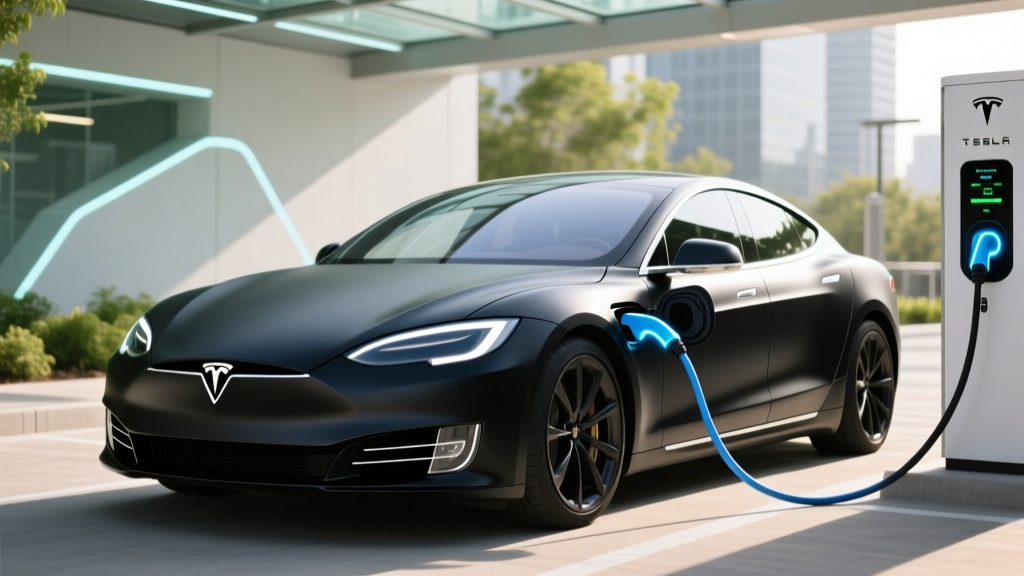
If you're researching a Tesla purchase and wondering how long charging actually takes, the short answer depends on which charger you're using. On a Tesla V4 Supercharger, a 2026 Model 3 Long Range can recover from 10% to 80% state of charge in roughly 18 minutes under ideal conditions. At home on a Level 2 Wall Connector, you'll add about 30 to 44 miles of range per hour, meaning a full overnight session easily replenishes a daily commute. But peak kilowatt ratings don't tell the whole story — charge curves taper, battery chemistry matters, and ambient temperature plays a major role.
This guide covers the two highest-volume Tesla models — the Model 3 and Model Y — with exact charging specs, real-world range expectations, pricing after federal tax credits, and a clear-eyed look at what ownership actually requires. We'll answer the question "how long does it take to charge a Tesla" across every scenario you'll encounter.
| Spec | Model 3 Long Range AWD | Model Y Long Range AWD |
|---|---|---|
| EPA Range | 363 miles | 320 miles |
| Battery (usable) | ~79 kWh (NMC) | ~79 kWh (NMC) |
| RWD Battery (Standard) | ~57.5 kWh (LFP) | ~57.5 kWh (LFP) |
| Max DC Fast Charge | 250 kW | 250 kW |
| 10–80% DC Time | ~18 min (LR) / ~22 min (LFP) | ~20 min (LR) / ~24 min (LFP) |
| Level 2 Home Rate | 11.5 kW (~44 mi/hr) | 11.5 kW (~36 mi/hr) |
| 0–60 mph | 4.2 sec | 4.8 sec |
| Horsepower | 384 hp | 384 hp |
| Drivetrain | Dual-motor AWD | Dual-motor AWD |
| MPGe (combined) | 132 MPGe | 122 MPGe |
| Efficiency | 25 kWh/100 mi | 28 kWh/100 mi |
| Base MSRP | $47,740 | $48,240 |
| Battery Warranty | 8 yr / 120,000 mi | 8 yr / 120,000 mi |
DC Fast Charging: How Long at a Supercharger?
Tesla's Supercharger network is the benchmark for public EV charging reliability, and in 2026 it includes both V3 stalls (250 kW peak) and newer V4 stalls capable of up to 350 kW — though Tesla's current vehicles cap their intake at 250 kW on V3 architecture. The Model 3 Long Range and Model Y Long Range both accept a peak 250 kW via their NMC battery packs.
Here's the critical nuance most buyers miss: peak kW is not sustained kW. A Tesla charging at 250 kW peak will taper to roughly 150 kW around 50% state of charge, and drop further to under 50 kW by 80%. This charge-curve taper protects battery longevity but means the last 20% takes nearly as long as the first 50%. That's why the industry-standard metric is 10–80% time, not a full 0–100% session.
| Charger Type | Power (kW) | Miles Added/Hr | 10–80% Time |
|---|---|---|---|
| Tesla V3 Supercharger (DC) | Up to 250 kW | ~170 mi in 15 min (peak) | ~18–22 min |
| Tesla V4 Supercharger (DC) | Up to 250 kW* | ~170 mi in 15 min (peak) | ~18–22 min |
| Electrify America / CCS adapter | Up to 150 kW | ~100 mi in 15 min | ~28–35 min |
| Tesla Wall Connector (L2 home) | 11.5 kW | ~36–44 mi/hr | 7–9 hours (full) |
| Mobile Connector (L1, 120V) | ~1.4 kW | ~3–5 mi/hr | Not recommended |
*Tesla vehicles currently cap at 250 kW intake even at V4 stalls rated higher. Future OTA updates may unlock higher rates.
For Long Range models with NMC chemistry, expect a 10–80% session in about 18–20 minutes on a V3 or V4 Supercharger. The Standard Range RWD models use LFP (lithium iron phosphate) batteries, which have a slightly different charge curve — they accept high power longer but have a smaller total capacity (~57.5 kWh), so the 10–80% session takes roughly 22–24 minutes despite the lower energy throughput.
Preconditioning matters. If you navigate to a Supercharger using the Tesla's built-in navigation, the car automatically warms or cools the battery to optimal temperature before you arrive. Skipping this step — for instance, pulling into a charger without navigation routing — can add 5–10 minutes to your session, especially in cold weather.
Home Level 2 Charging: The Daily Reality
Most Tesla owners do the vast majority of their charging at home, and for good reason: it's cheaper, more convenient, and gentler on the battery. The Tesla Wall Connector, hardwired to a 60-amp circuit (48 amps continuous), delivers up to 11.5 kW of Level 2 power.
At 11.5 kW, a Model 3 Long Range gains roughly 44 miles of range per hour of charging. A Model Y, being heavier and less efficient, gains about 36 miles per hour. If you arrive home with 40% battery after a 120-mile round-trip commute, you'll be back to 80% in under four hours — well before bedtime.
For homes with a standard NEMA 14-50 outlet (the same as a large appliance), the Mobile Connector or a third-party Level 2 unit delivers about 7.7 kW (32 amps), yielding roughly 29–35 miles per hour. This is adequate for most daily needs but slower for recovering from long road trips.
Installation cost reality: A Tesla Wall Connector unit costs $475. Professional installation on an existing 60-amp circuit typically runs $500–$1,500. If your electrical panel needs an upgrade to 200 amps — common in older homes — add $1,500–$3,000. Factor in permits ($50–$300 depending on your jurisdiction) for a total home charging setup of roughly $1,000–$5,000. Always consult a licensed electrician for a site-specific quote.
Real-World Range vs. EPA Estimates
EPA Sticker: Model 3 Long Range — 363 miles | Model Y Long Range — 320 miles
Real-World Expectation: In mixed driving at moderate temperatures (60–80°F), expect roughly 300–330 miles from the Model 3 and 270–290 from the Model Y. Sustained highway driving at 75+ mph reduces range by 10–15%. In freezing weather (below 32°F), expect a 20–30% reduction, bringing the Model 3 down to 250–290 miles and the Model Y to 220–260 miles. Using the heat pump (standard on all 2026 Teslas) mitigates some cold-weather loss compared to resistive heating.
Tesla's efficiency is among the best in the industry. The Model 3 Long Range achieves 132 MPGe combined (25 kWh per 100 miles) according to fueleconomy.gov, meaning it converts battery energy to motion more effectively than most competitors. The Model Y, with its taller profile and greater weight, achieves 122 MPGe combined (28 kWh/100 mi).
Standard Range RWD models with LFP batteries post lower EPA figures — roughly 272 miles for the Model 3 RWD and 260 miles for the Model Y RWD. The LFP chemistry trades energy density for longevity and cost, which we'll address in the battery section below.
Battery Chemistry: LFP vs. NMC and What It Means
Tesla uses two battery chemistries across its lineup, and understanding the difference directly affects your charging habits and long-term ownership:
- NMC (Nickel Manganese Cobalt) — Used in Long Range and Performance models. Higher energy density means more range in the same physical pack. Better suited for frequent fast-charging. Tesla recommends daily charging to 80% and periodic 100% charges for calibration.
- LFP (Lithium Iron Phosphate) — Used in Standard Range RWD models. Lower energy density but significantly longer cycle life and better thermal stability. Tesla recommends charging to 100% regularly, which simplifies daily routine. LFP degrades more slowly over time but has reduced range in extreme cold.
Both chemistries are covered by Tesla's battery warranty: 8 years or 120,000 miles (whichever comes first) with a guaranteed minimum 70% capacity retention. This is competitive with the industry standard. Real-world data from high-mileage Tesla owners suggests NMC packs retain roughly 85–90% capacity at 100,000 miles under normal charging patterns, while LFP packs show even slower degradation curves.
Pricing, Trims, and Federal Tax Credit Eligibility
Tesla pricing shifts frequently, but as of early 2026, here's where the lineup stands:
| Trim | Base MSRP | Est. After §30D Credit | Credit Eligible? |
|---|---|---|---|
| Model 3 RWD (LFP) | $38,990 | $31,490 | Yes — up to $7,500 |
| Model 3 Long Range AWD | $47,740 | $40,240 | Yes — up to $7,500 |
| Model 3 Performance | $54,990 | $47,490 | Yes — up to $7,500 |
| Model Y RWD (LFP) | $44,990 | $37,490 | Yes — up to $7,500 |
| Model Y Long Range AWD | $48,240 | $40,740 | Yes — up to $7,500 |
| Model Y Performance | $53,490 | $45,990 | Yes — up to $7,500 |
Federal tax credit rules (§30D): As of 2026, the full $7,500 credit requires meeting both battery component and critical mineral sourcing requirements, which are phased in annually under the Inflation Reduction Act. Tesla's US-built vehicles have generally qualified for the full or partial credit, but eligibility depends on the specific build date and battery sourcing. Additionally, buyer income caps apply: modified adjusted gross income must not exceed $150,000 (single), $225,000 (head of household), or $300,000 (joint filers). The vehicle MSRP must be under $55,000 for sedans (Model 3) and under $80,000 for SUVs/trucks (Model Y). Since 2024, the credit can be transferred to the dealer at point of sale as an immediate price reduction — you don't need to wait until tax filing. Always verify current eligibility on IRS.gov and confirm with your tax professional.
Interior, Cargo, and Technology
The Model 3 and Model Y share Tesla's minimalist interior architecture — a single 15.4-inch center touchscreen handles infotainment, climate, navigation, and vehicle settings. There is no traditional instrument cluster; speed and range information appears in the upper corner of the main display. Build quality on the 2026 "Highland" (Model 3) and "Juniper" (Model Y) refreshes has improved significantly, with better panel gaps, ventilated front seats, ambient lighting, and rear-seat ventilation on Long Range trims.
Cargo capacity:
- Model 3: 23 cu ft trunk + rear frunk — suitable for two large suitcases and groceries, but the sedan trunk opening limits bulky items
- Model Y: 30 cu ft behind the second row (76 cu ft with seats folded) + front trunk — genuinely practical for families, camping gear, and large-box store runs
- Model Y offers an optional third row (very small, best for children under ~4'6"), bringing total seating to 7
Driver assistance: All Teslas ship with Basic Autopilot (adaptive cruise + lane centering), which is an SAE Level 2 system — the driver must remain attentive with hands on or near the wheel at all times. Full Self-Driving (Supervised) is available as an $8,000 add-on or $99/month subscription and adds automatic lane changes, traffic light/stop sign recognition, and Navigate on Autopilot. Despite the name, FSD remains Level 2 and requires active driver supervision. It is not a self-driving system.
Standout tech: Over-the-air updates continuously add features. Sentry Mode (360° parking surveillance), Dog Mode (climate-controlled pet safety), Tesla Profiles (per-driver seat/mirror/climate memory), and the integrated Supercharger route planner with automatic preconditioning are among the most useful daily features.
Pros
- Class-leading Supercharger network — 50,000+ stalls globally with strong uptime
- Best-in-class energy efficiency (lowest kWh/100mi in segment)
- Fast 10–80% DC charging (18–22 min)
- Strong resale value relative to other EVs
- Continuous OTA feature improvements
- Point-of-sale tax credit transfer simplifies purchase
Cons
- No physical buttons — all controls via touchscreen (wipers, glovebox, mirrors)
- FSD (Supervised) remains Level 2 despite the name and high price
- Rear visibility limited in Model 3; no rear wiper on Model Y
- Insurance premiums above segment average
- Service center wait times can be long in some metro areas
- LFP Standard Range models lose more range in cold weather
Who Should Buy a Tesla (and Who Shouldn't)
Choose the Model 3 if: You prioritize efficiency and range over cargo space, commute solo or with one passenger, and want the lowest cost-per-mile in the Tesla lineup. The Long Range AWD at ~$40,240 after credits is arguably the best value sedan in the EV market.
Choose the Model Y if: You need SUV cargo flexibility, have a family, or regularly haul bulky items. The hatchback design and 76 cu ft of max cargo space make it the practical choice. It's the best-selling vehicle in the world for a reason.
Look elsewhere if: You want physical buttons and a traditional cockpit layout, you need a truck bed or serious towing capacity (3,500 lb max on Model Y), you live in an area with no Supercharger access and no home charging option, or you want a Level 4 autonomous experience (no consumer vehicle offers this today).
Key competitors worth cross-shopping include the Hyundai Ioniq 6 (361-mile range, 800V charging architecture), the BMW i4 (more traditional luxury feel), and the Ford Mustang Mach-E (comparable SUV space to Model Y with a more conventional interior). None match Tesla's Supercharger ecosystem, but all offer competitive range and charging on Electrify America or other networks.
Frequently Asked Questions
How long does it take to charge a Tesla at home overnight?
On a Tesla Wall Connector (11.5 kW Level 2), a Model 3 Long Range adds about 44 miles of range per hour. If you plug in at 10 PM with 40% battery and wake at 6 AM, you'll have roughly 8 hours of charging — adding approximately 350 miles, which fully replenishes the battery. Even on a NEMA 14-50 outlet at 7.7 kW, an overnight session adds ~240 miles, sufficient for most daily needs.
How long does it take to charge a Tesla at a Supercharger on a road trip?
Plan for 18–25 minutes per stop to go from 10% to 80%. Tesla's trip planner typically routes you through Superchargers spaced 120–180 miles apart, and you'll arrive at each stop at roughly 10–15% SoC. A cross-country drive from LA to New York involves roughly 8–10 charging stops, each under 25 minutes — adding about 3–4 hours total to a 40-hour drive.
Does charging to 100% damage the Tesla battery?
For NMC batteries (Long Range/Performance), Tesla recommends daily charging to 80–90% and reserving 100% for road trips. Occasional 100% charges won't cause significant harm, but habitual 100% sessions accelerate degradation. For LFP batteries (Standard Range RWD), Tesla recommends regular 100% charging to keep the battery management system calibrated. LFP chemistry tolerates full charges far better.
How much does it cost to charge a Tesla at home vs. a Supercharger?
At the US average residential electricity rate of ~$0.17/kWh, fully charging a Model 3 Long Range (79 kWh) costs about $13.40 — roughly $0.04 per mile. Supercharger pricing varies by location and time of day but averages $0.28–$0.36/kWh, making a full charge roughly $22–$28, or about $0.07–$0.09 per mile. Both are substantially cheaper than gasoline at $3.50/gallon and 30 MPG ($0.12/mile).
Does the Tesla Model 3 or Model Y qualify for the $7,500 federal tax credit?
As of 2026, both the Model 3 and Model Y generally qualify for the full $7,500 federal EV tax credit under IRS §30D, provided the buyer meets income caps ($150K single / $300K joint) and the vehicle meets battery sourcing requirements. The credit can be applied at point of sale as an immediate price reduction. Verify current eligibility at fueleconomy.gov before purchasing, as sourcing rules tighten annually.
Is a Tesla worth buying vs. competitors in 2026?
Tesla's combination of Supercharger access, energy efficiency, software ecosystem, and post-credit pricing remains difficult to beat. If charging infrastructure reliability is your top priority, Tesla still leads. However, competitors like the Hyundai Ioniq 5/6, Kia EV6, and Ford Mustang Mach-E offer compelling alternatives with faster 800V-class charging, more conventional interiors, and competitive range. Test-drive at least two options before committing.