The Short Answer on the Electric Defender by Land Rover
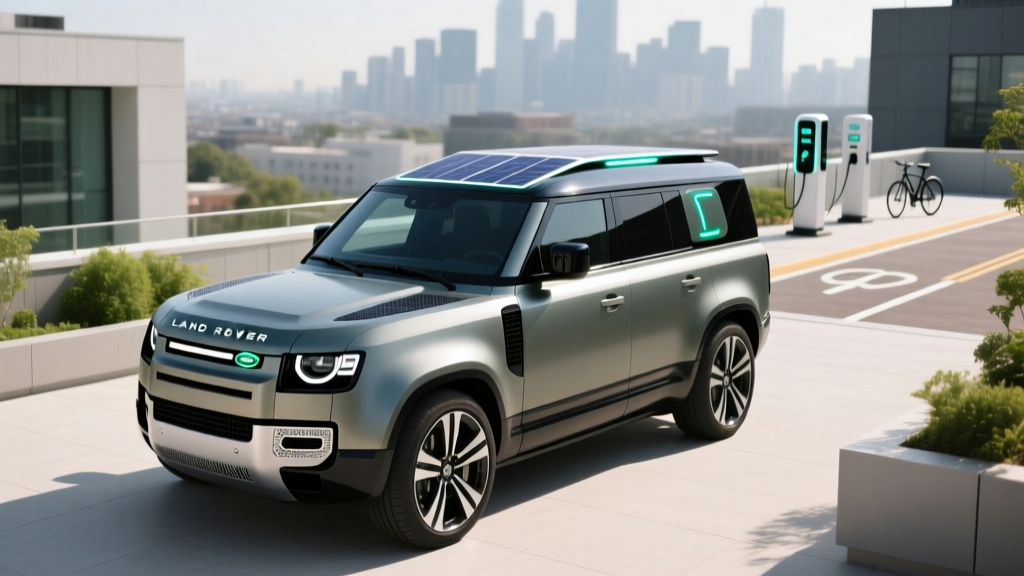
Land Rover has confirmed an all-electric Defender as part of its Jaguar Land Rover (JLR) electrification strategy, built on the modular EMA (Electric Modular Architecture) platform. As of early 2026, the electric Defender remains in pre-production/announced status — final EPA range, pricing, and delivery dates have not been officially published. Based on JLR's stated targets and the EMA platform's capabilities shared with the upcoming electric Range Rover Sport, expect an EPA-estimated range of 280–350 miles, a battery in the 100–120 kWh usable range, DC fast charging up to ~200–250 kW, and a starting MSRP likely between $90,000–$110,000 before incentives. If you need an electric luxury off-roader today, the Rivian R1S or Mercedes EQG are available alternatives. If you can wait, the electric Defender promises unmatched heritage branding paired with serious off-road EV capability.
What We Know About the Electric Defender So Far
JLR CEO Adrian Mardell and later successor PB Balaji have repeatedly confirmed that every Land Rover nameplate will offer a battery-electric variant by the mid-2020s. The Defender, alongside the Range Rover and Range Rover Sport, sits at the top of that priority list. The electric Defender will ride on JLR's EMA platform, an 800-volt-capable architecture designed for dual- and tri-motor configurations, advanced torque vectoring, and the low-speed off-road control Land Rover's Terrain Response system demands.
What this means in practical terms: the electric Defender should deliver the kind of precise, wheel-by-wheel torque management that actually improves off-road capability over a mechanical differential setup — something Rivian has already demonstrated with the R1T and R1S quad-motor system.
| Spec | Estimated / Target | Notes |
|---|---|---|
| Platform | EMA (Electric Modular Architecture) | 800V-capable |
| Battery (usable) | ~100–120 kWh | Likely NMC chemistry for energy density |
| EPA Range (est.) | 280–350 mi | Depends on motor config & body style (90/110/130) |
| DC Fast Charge (peak) | ~200–250 kW | 10–80% est. 25–35 min |
| Level 2 Charge | ~11–22 kW onboard | Full overnight charge |
| Drivetrain | Dual or tri-motor AWD | Terrain Response integration |
| 0–60 mph (est.) | 4.5–6.0 sec | Varies by power output |
| Towing (est.) | ~7,500–8,200 lbs | Match or exceed gas Defender |
| Base MSRP (est.) | $90,000–$110,000 | Before any incentives |
Real-World Range Expectations
EPA estimate: 280–350 mi (preliminary) — but plan for reality. A boxy, heavy off-roader pushing through highway air resistance at 75 mph will lose roughly 15–20% below EPA. In cold weather (below 30°F), expect another 15–25% reduction. Real-world highway range in winter could dip to 180–240 miles depending on conditions. This is physics, not a defect — the Rivian R1S and Mercedes G580 (EQG) face the same aerodynamic penalty.
Electric Defender vs. Gas Defender 110: The Numbers
The current gas-powered Defender 110 with the P400 mild-hybrid inline-six gets an EPA-estimated 18 city / 23 highway / 20 combined MPG. Let's compare that to what the electric Defender should deliver on cost per mile.
| Metric | Gas Defender 110 (P400) | Electric Defender (Est.) |
|---|---|---|
| EPA Efficiency | 20 MPG combined | ~55–65 MPGe / ~2.0 kWh/mi |
| Annual miles (12,000) | 600 gallons | ~2,400 kWh |
| Fuel cost (national avg) | $2,280/yr @ $3.80/gal | $360/yr home @ $0.15/kWh; $960/yr public @ $0.40/kWh |
| Annual fuel savings (home charging) | — | ~$1,920/yr |
| 5-year fuel savings | — | ~$9,600 (home) / ~$6,600 (mixed) |
| Oil changes | ~$150/yr (synthetic) | $0 |
| Brake wear | Normal replacement cycle | Greatly extended (regen braking) |
The math favors the electric Defender on operating costs — but only if you can charge at home. Public DC fast charging at $0.35–$0.50/kWh erodes much of the savings advantage, and the electric Defender's higher purchase price means you'll need years of ownership to close the gap.
Charging the Electric Defender: What to Expect
With an estimated 100–120 kWh battery, the electric Defender will be one of the largest battery packs in any consumer vehicle. That's great for range, but it also means charging logistics matter more than they do for a compact EV.
| Level | Power | Miles Added per Hour | Full Charge Time (10–100%) |
|---|---|---|---|
| Level 1 (120V household) | ~1.4 kW | ~3–4 mi/hr | ~80+ hours (impractical) |
| Level 2 (240V, 48A home) | ~11.5 kW | ~28–35 mi/hr | ~10–12 hours |
| Level 2 (240V, 80A) | ~19.2 kW | ~45–55 mi/hr | ~6–7 hours |
| DC Fast (peak 250 kW) | 250 kW | ~600+ mi/hr (peak) | 10–80% in ~25–35 min |
Home charging is essentially mandatory for a vehicle this size. A 120V Level 1 outlet adds roughly 3–4 miles per hour — meaning a depleted battery would take over three days to fill. Most electric Defender buyers will need a Level 2 home charger on a 60A or higher circuit. Installation typically runs $800–$2,500 depending on your panel capacity and run length. If your home has a 200A electrical panel that's already near capacity, a panel upgrade to 300–400A could add $2,000–$5,000.
Charging curve reality: Even at 250 kW peak, the battery won't sustain that rate past ~40–50% state of charge. Expect the curve to taper significantly above 80%, which is why most road-trip charging strategies target 10–80% sessions rather than full fills. On a long highway trip, plan for 25–35 minute stops every 200–250 miles in moderate weather.
Real Ownership Costs: The 5-Year Picture
| Cost Category | Gas Defender 110 P400 | Electric Defender (Est.) |
|---|---|---|
| Purchase price (base MSRP) | ~$63,500 | ~$95,000 (est.) |
| Federal tax credit (§30D) | $0 | Up to $7,500 (see eligibility below) |
| Home charger install | $0 | $1,200–$2,500 |
| Fuel/energy (5 yrs, home charging) | $11,400 | $1,800 |
| Maintenance (5 yrs) | $3,500–$5,000 | $1,500–$2,500 |
| Insurance (5 yrs, est.) | $10,000–$13,000 | $12,000–$16,000 |
| Depreciation (est. 5-yr) | ~$32,000 | ~$45,000–$55,000 (EV luxury depreciation is steep) |
| Estimated 5-yr total | ~$120,000–$127,000 | ~$150,000–$175,000 |
The electric Defender will cost significantly more to buy and will likely depreciate faster than its gas counterpart — luxury EVs have seen steeper value drops than ICE equivalents in recent years. However, the fuel and maintenance savings are real. The break-even point versus a gas Defender likely falls around 7–10 years of ownership assuming mostly home charging and moderate annual mileage.
Federal Tax Credit Eligibility (§30D)
Under current IRS §30D rules, the electric Defender could qualify for up to $7,500 in federal tax credits — but several conditions apply:
- MSRP cap: SUVs must have a base MSRP at or below $80,000. If the electric Defender starts above this threshold, it will NOT qualify for the new-vehicle credit regardless of other factors.
- Buyer income limits: AGI must not exceed $300,000 (joint), $225,000 (head of household), or $150,000 (single).
- Battery sourcing: Critical minerals and battery components must meet escalating domestic-sourcing thresholds. JLR's supply chain compliance will determine whether the credit is $3,750 (minerals only), $7,500 (both), or $0.
- Point-of-sale transfer: Eligible buyers can transfer the credit to the dealer for an immediate price reduction at purchase.
Key risk: Given the electric Defender's estimated $90,000+ starting price, it is very likely to exceed the $80,000 SUV MSRP cap — making it ineligible for the federal new-vehicle credit. Consult a tax professional and check the latest fueleconomy.gov credit listings once official pricing is released.
Myths vs. Facts: Common EV Misconceptions
| Myth | Fact |
|---|---|
| "EVs can't handle off-road terrain." | Electric motors deliver instant torque at zero RPM with precise per-wheel control. Rivian's R1T has completed the Trans-America Trail. The electric Defender's Terrain Response system will likely be more capable off-road than the gas version. |
| "The battery will need replacing in 5 years." | Modern NMC and LFP batteries are engineered for 200,000+ miles with less than 20% degradation. JLR's battery warranty is expected to cover 8 years/100,000 miles with a 70% capacity retention guarantee — consistent with industry norms. |
| "Charging takes too long for road trips." | A 10–80% DC fast charge in ~25–35 minutes aligns with a natural rest stop. Plan ahead using apps like PlugShare or A Better Routeplanner. |
| "EVs are worse in cold weather." | Range drops 15–25% in sub-freezing temps — a real limitation. But preconditioning (warming the battery while plugged in) mitigates charging-speed loss, and electric motors don't suffer cold-start issues like gas engines. |
| "I'll save money immediately." | Higher purchase price, possible home charger install, and steeper depreciation mean savings accumulate over years, not months. Run the full TCO before buying. |
Who Should Buy the Electric Defender — And Who Shouldn't
Decision Framework
Choose the electric Defender if:
- You have reliable home charging (garage or driveway with 240V access)
- You want a luxury off-roader with the lowest per-mile operating cost in the segment
- You value silent trail running — no engine noise means you hear nature, and you don't disturb wildlife or camp neighbors
- You're willing to wait for production and accept first-model-year risk
- Your daily driving is under 200 miles round-trip with occasional longer road trips
Stick with the gas Defender 110 (or consider a PHEV variant) if:
- You live in an apartment or lack access to home/work charging
- You regularly tow heavy loads over long distances (towing crushes EV range — expect 40–50% reduction)
- You frequently drive in extreme cold (below 10°F) on long rural routes with sparse charging
- You want the lowest purchase price and proven long-term resale data
- You need a vehicle today — the electric Defender is not yet available for delivery
Consider a Rivian R1S or Mercedes G580 (EQG) if:
- You want an electric luxury off-roader now, with proven production and available service networks
What First-Time EV Buyers Need to Know
If the electric Defender would be your first EV, here are the ownership realities that brochures won't emphasize:
- Home charging is the foundation. Without it, daily EV ownership becomes a chore. Budget $1,200–$2,500 for a quality Level 2 charger and professional installation. Get quotes from licensed electricians before committing to the vehicle.
- kW is power (how fast you charge); kWh is energy (how big the battery is). A 250 kW charger fills a 110 kWh battery quickly — but only up to a point. The charge curve tapers above 80% to protect the battery.
- EPA range is a best-case estimate. Real highway driving at 75+ mph, cold weather, hill climbing, and towing all reduce range materially. Budget your trips around 70–80% of the EPA number for safety.
- Insurance costs more for EVs. Higher repair costs, specialized parts, and expensive battery packs push premiums 15–30% above equivalent gas vehicles. Get quotes before purchasing.
- Regenerative braking changes how you drive. Most EVs offer one-pedal driving modes that recapture energy when you lift off the accelerator. It extends range and saves brake pads — expect to replace brakes far less often than on a gas vehicle.
- Software updates improve the car over time. JLR's OTA (over-the-air) update capability means features, efficiency tweaks, and bug fixes arrive without a dealer visit.
Frequently Asked Questions
When will the electric Defender be available to buy?
JLR has confirmed the electric Defender is in development on the EMA platform, but as of early 2026, no firm on-sale date has been published. Industry estimates point to a late 2026 or 2027 model-year launch. Reservations have not yet opened.
Will the electric Defender have the same off-road capability as the gas version?
JLR has stated it will not compromise the Defender's off-road identity. The EMA platform's 800V architecture and multi-motor AWD should deliver superior low-speed torque control. Approach/departure angles and wading depth will depend on final body design, but the electric powertrain itself is an off-road advantage, not a liability.
Can the electric Defender tow a boat or camper?
Estimated towing capacity is 7,500–8,200 lbs, comparable to the gas Defender. However, towing drastically reduces EV range — expect a 40–50% reduction when pulling a heavy trailer at highway speeds. A 300-mile range becomes 150–180 miles with a loaded trailer. Plan accordingly.
Will it qualify for the $7,500 federal EV tax credit?
It's unlikely. The §30D credit caps SUV MSRPs at $80,000, and the electric Defender is expected to start well above that threshold. Always verify current eligibility on irs.gov and consult a tax professional before making a purchase decision based on incentives.
What about the Defender PHEV?
JLR currently offers a PHEV Defender 110 (P400e) in some markets with approximately 25–30 miles of electric-only range. If you can't wait for the full EV or lack home charging, the PHEV offers a bridge — but its electric range covers only short commutes, and you'll still pay for gas on longer trips.
How does it compare to the Rivian R1S?
The Rivian R1S is available now with an EPA range up to 410 miles (Max Pack), quad-motor AWD, and a starting price around $79,900. It's a proven, award-winning electric adventure SUV. The electric Defender will compete on brand heritage, interior luxury, and JLR's Terrain Response expertise — but will need to match or beat the R1S on range and charging speed to justify a higher price.