Why Tesla Model 3 Owners Are Choosing Vinyl Wraps in 2026
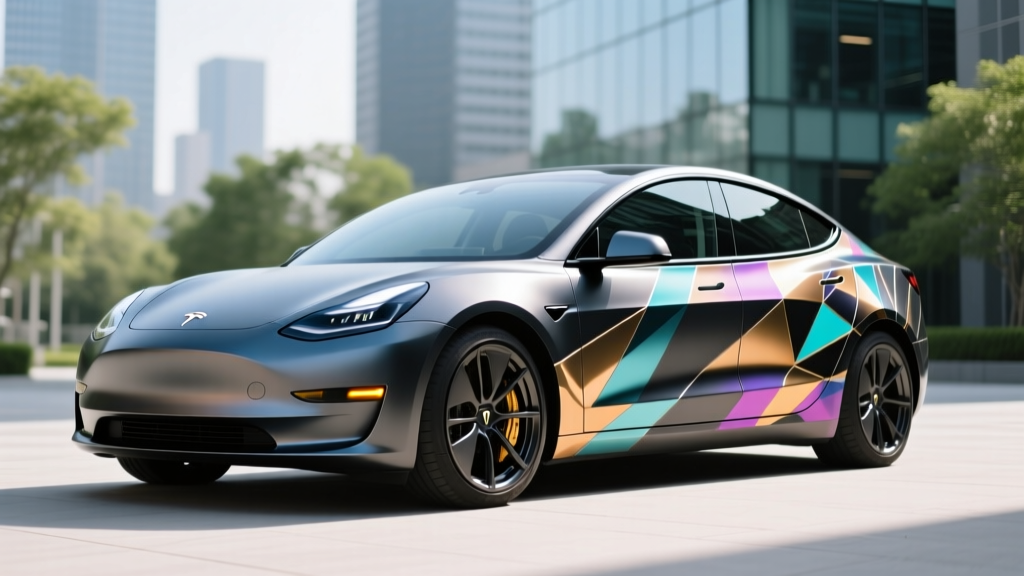
The Tesla Model 3 remains one of the most popular electric sedans on American roads, and a growing number of owners are personalizing theirs with vinyl wraps. Whether you want a matte black finish, a color-shifting chameleon effect, or paint protection from road debris, wrapping a Model 3 is a reversible, cost-effective alternative to a custom paint job. But how much does it actually cost, and does the underlying EV still deliver the range, charging speed, and value that made it a bestseller?
This guide covers everything you need to know: the real price of wrapping a Tesla Model 3 in 2026, plus a complete review of the current Model 3's EPA range, battery specs, charging performance, federal tax credit eligibility, and how it stacks up against key rivals like the Hyundai Ioniq 6 and BMW i4.
How Much Does It Cost to Wrap a Tesla Model 3?
The cost to wrap a Tesla Model 3 varies based on vinyl quality, finish type, shop reputation, and your location. Here is a realistic breakdown based on 2026 installer pricing across major U.S. metro areas:
| Wrap Type | Vinyl Quality | Estimated Cost | Longevity |
|---|---|---|---|
| Partial Wrap (roof, hood, mirrors) | Mid-grade cast vinyl | $800 – $1,500 | 3–5 years |
| Full Exterior (gloss or satin) | Premium cast (3M, Avery Dennison) | $2,500 – $4,000 | 5–7 years |
| Full Exterior (matte, metallic, chrome-delete) | Premium cast with specialty finish | $3,500 – $5,500 | 5–7 years |
| Color-shift / chameleon / custom printed | Specialty film | $5,000 – $8,000+ | 4–6 years |
Key cost factors: The Model 3's relatively clean body lines make it one of the more affordable sedans to wrap — fewer complex curves than a Corvette, but more panel area than a compact hatch. Shops in Los Angeles, Miami, and New York typically charge 15–25% more than Midwestern installers. Always insist on cast vinyl (not calendared), which conforms properly to body panels and won't shrink or crack at edges over time.
2026 Tesla Model 3: EPA Range, Battery, and Real-World Efficiency
The current Tesla Model 3 lineup (refreshed "Highland" platform) offers three primary configurations. Here are the official EPA figures and what you can expect in daily driving:
| Trim | Drivetrain | Battery (usable kWh) | Chemistry | EPA Range | Real-World Range* | MPGe (Combined) | kWh/100 mi |
|---|---|---|---|---|---|---|---|
| Model 3 RWD | Rear-Wheel Drive | 57.5 kWh | LFP | 272 mi | 220–245 mi | 132 MPGe | 25 |
| Model 3 Long Range AWD | Dual-Motor AWD | 75 kWh | NMC | 341 mi | 280–310 mi | 132 MPGe | 25 |
| Model 3 Performance | Dual-Motor AWD | 75 kWh | NMC | 315 mi | 255–285 mi | 124 MPGe | 27 |
*Real-world range reflects mixed highway/city driving at 70–75 mph. In cold weather (below 32°F), expect 15–25% range reduction due to battery resistance and cabin heating demands. The Model 3's standard heat pump helps mitigate this compared to EVs without thermal management.
The RWD model's LFP (lithium iron phosphate) battery is notable: it sacrifices some energy density for exceptional cycle life and can be charged to 100% daily without degradation concerns. Tesla recommends periodic 100% charges for LFP packs to keep the BMS calibrated. The Long Range and Performance trims use NMC chemistry, which offers higher energy density but benefits from an 80% daily charge limit for long-term health.
Charging Speed: DC Fast Charging and Home Level 2
Charging speed is where the refreshed Model 3 shows meaningful improvement over pre-2024 versions. Here is what you get across the lineup:
| Charging Method | Model 3 RWD (LFP) | Model 3 Long Range / Performance |
|---|---|---|
| Max DC Fast Charge Rate | 170 kW (peak) | 250 kW (peak) |
| 10–80% DC Fast Charge Time | ~28 minutes | ~18 minutes |
| Level 2 Home Charging (kW) | 11 kW (48A) | 11.5 kW (48A) |
| Level 2 Miles Added per Hour | ~37 mi/hr | ~44 mi/hr |
| Connector | NACS (native) | NACS (native) |
Charging-curve reality: The 250 kW peak on Long Range and Performance trims is not sustained across the full session. You will see peak rates between 10–40% state of charge, tapering to roughly 100 kW by 60% and dropping below 50 kW above 85%. This is normal lithium-ion behavior, and Tesla's thermal preconditioning (triggered automatically when you navigate to a Supercharger) ensures you hit peak rates upon arrival.
At home, a 48-amp Level 2 wall connector on a 60-amp circuit delivers a full overnight charge in roughly 7–9 hours depending on trim. Installation typically runs $800–$2,000 depending on panel proximity and local permitting, according to Tesla's certified installer network.
Performance, Interior, and Technology
The Highland refresh brought meaningful improvements to ride quality, cabin noise, and interior materials. Here are the performance and comfort specs:
| Spec | RWD | Long Range AWD | Performance |
|---|---|---|---|
| 0–60 mph | 5.8 sec | 4.2 sec | 2.9 sec |
| Horsepower | 271 hp | 346 hp | 510 hp |
| Top Speed | 125 mph | 125 mph | 163 mph |
| Cargo Volume (trunk + frunk) | 23 cu ft | 23 cu ft | 23 cu ft |
| Rear Legroom | 35.3 in | 35.3 in | 35.3 in |
| Curb Weight | 3,862 lbs | 4,034 lbs | 4,065 lbs |
Standout tech: The 15.4-inch center touchscreen runs Tesla's latest software with ventilated front seats, ambient lighting, rear-seat touchscreen, and significantly improved NVH (noise, vibration, harshness) levels. Autopilot (SAE Level 2 driver assistance) is standard; Full Self-Driving (Supervised) remains a $8,000 option or $99/month subscription. FSD is not autonomous — you must remain engaged and ready to take over at all times.
Pricing, Tax Credits, and Total Cost
Here is what the 2026 Model 3 lineup costs before and after the federal EV tax credit, along with wrap cost factored in:
| Trim | Base MSRP | As-Tested (common config) | Federal §30D Credit* | Effective Price After Credit | + Full Wrap (est.) |
|---|---|---|---|---|---|
| RWD | $38,990 | $39,990 | Up to $7,500 | ~$32,490 | $35,000 – $38,000 |
| Long Range AWD | $45,740 | $47,740 | Up to $7,500 | ~$40,240 | $43,000 – $46,000 |
| Performance | $52,990 | $54,990 | Up to $7,500 | ~$47,490 | $50,000 – $53,000 |
*Federal tax credit eligibility under IRS §30D depends on multiple factors:
- MSRP cap: Sedans must be priced at or below $55,000 (all Model 3 trims qualify at base)
- Buyer income cap: AGI must not exceed $150,000 (single), $225,000 (head of household), or $300,000 (joint)
- Battery sourcing: Critical minerals and battery component requirements must be met — Tesla's supply chain currently qualifies most Model 3 builds for the full $7,500, but verify your specific VIN via the IRS portal before purchase
- Point-of-sale transfer: You can now transfer the credit to the dealer at purchase, reducing your out-of-pocket cost immediately rather than waiting for tax filing
Warranty Coverage
Tesla's warranty for the Model 3 is competitive within the segment:
- Basic Vehicle: 4 years / 50,000 miles
- Battery & Drive Unit (RWD): 8 years / 100,000 miles
- Battery & Drive Unit (Long Range/Performance): 8 years / 120,000 miles
- Capacity retention threshold: Warranty covers degradation below 70% of original capacity during the warranty period
For a wrap-specific note: vinyl wraps do not void Tesla's paint or body warranty as long as installation is done professionally and removal doesn't damage factory clear coat. Most reputable installers document pre-existing paint condition before application.
Pros, Cons, and Who the Model 3 Suits Best
Pros
- Class-leading Supercharger network access (native NACS)
- LFP option allows daily 100% charging without degradation worry
- Best-in-segment efficiency (25 kWh/100 mi)
- Highland refresh dramatically improved ride comfort and cabin noise
- Strong resale value relative to competitors
- Over-the-air updates continuously add features
Cons
- Minimalist interior not for everyone — no physical stalks or buttons
- Rear seat space is tighter than Ioniq 6 or BMW i4
- Turn-signal buttons on steering wheel take adjustment
- FSD subscription cost adds up without delivering full autonomy
- Insurance premiums run 15–30% higher than comparable gas sedans
Who Should Buy the Model 3?
Choose the RWD if: You commute under 50 miles daily, charge at home, and want the lowest entry price with LFP longevity.
Choose the Long Range AWD if: You take regular road trips, live in a cold climate, or need all-weather traction with maximum range.
Choose the Performance if: Track-capable acceleration matters to you and you're willing to trade ~25 miles of range for it.
Look elsewhere if: You need generous rear-seat room for car seats or tall passengers (consider the Hyundai Ioniq 6), or you prefer traditional controls and physical buttons.
How the Model 3 Compares to Key Competitors
| Spec | Tesla Model 3 LR | Hyundai Ioniq 6 SEL | BMW i4 eDrive40 |
|---|---|---|---|
| EPA Range | 341 mi | 316 mi | 301 mi |
| Base MSRP | $45,740 | $42,450 | $52,200 |
| Max DC Charge (kW) | 250 | 235 | 200 |
| 10–80% Time | ~18 min | ~18 min | ~31 min |
| Rear Legroom | 35.3 in | 36.8 in | 34.7 in |
| §30D Credit Eligible | Yes (up to $7,500) | Yes (up to $7,500) | No (MSRP cap issue on some trims) |
The Model 3 Long Range still leads on range and charging infrastructure. The Ioniq 6 offers more rear-seat room and a lower starting price. The BMW i4 delivers a more traditional luxury experience but at a significant premium and without the Supercharger advantage.
Frequently Asked Questions
Will wrapping my Tesla Model 3 void the warranty?
No. A professionally installed vinyl wrap does not void Tesla's vehicle or battery warranty. However, if wrap removal damages factory paint, that specific repair won't be covered. Choose an experienced installer who uses premium cast vinyl with proper edge-wrapping techniques.
How long does a Tesla Model 3 wrap last?
Premium cast vinyl (3M 2080 series, Avery Dennison Supreme Wrapping Film) lasts 5–7 years with proper care. Avoid automated car washes with abrasive brushes — touchless or hand-wash only. Garage parking extends lifespan significantly by reducing UV exposure.
Can I wrap over Tesla's factory paint protection film (PPF)?
Yes, vinyl can be applied over PPF. Some owners do this to change color while keeping the underlying PPF for rock-chip protection. Removal sequence is wrap first, then PPF remains intact.
Does the Model 3 qualify for the full $7,500 federal tax credit in 2026?
Most Model 3 configurations currently qualify for the full $7,500 under IRS §30D, provided you meet income thresholds and the vehicle's battery sourcing meets critical-mineral requirements. Tesla's U.S. production and LFP/NMC sourcing currently satisfy these rules for most VINs. Always verify via the fueleconomy.gov credit lookup before purchasing, as eligibility can shift with supply-chain changes.
What's the real cost of ownership including a wrap?
Over five years, a Model 3 Long Range with a $4,000 wrap, after the $7,500 federal credit, with home charging at $0.13/kWh and 12,000 miles/year, totals roughly $38,000–$42,000 including electricity, insurance, and maintenance — significantly less than a comparably equipped BMW 3 Series on fuel alone, even factoring the wrap cost.