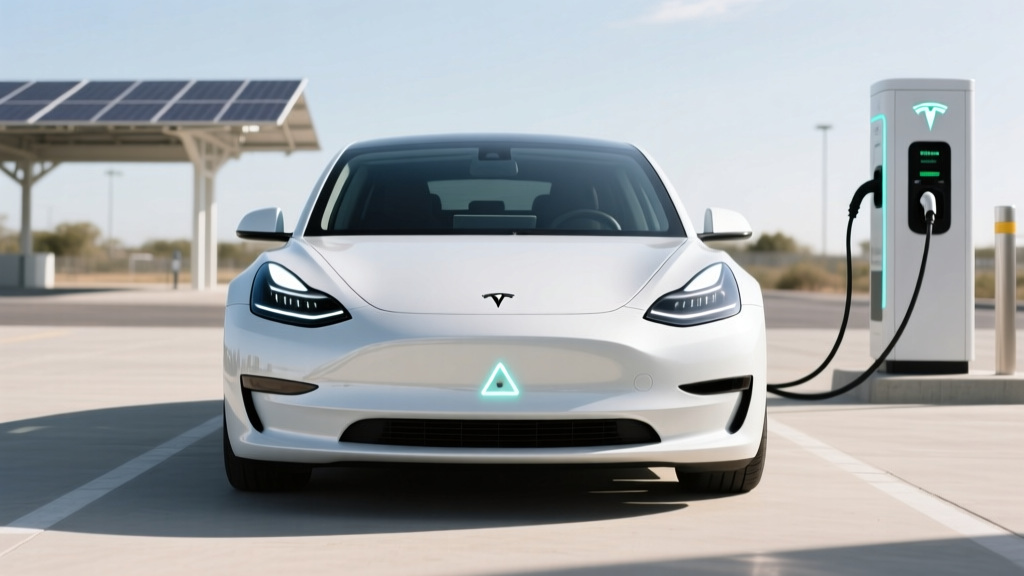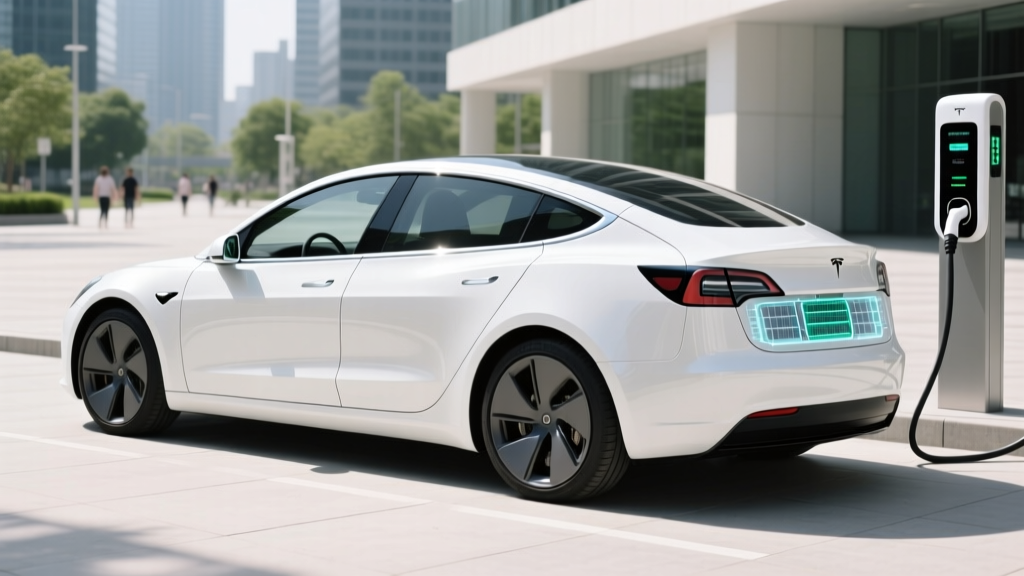
The Tesla Model 3 remains one of the most-searched electric sedans on the market, and the 2026 refresh in Pearl White Multi-Coat continues to attract buyers who want a proven platform with access to the Supercharger network. If you've been searching for a Model 3 Tesla white and wondering whether the numbers actually hold up outside the showroom, this review breaks down every spec that matters — from real-world highway range to the exact tax-credit math you'll face at checkout.
The 2026 Model 3 lineup carries forward the "Highland" redesign introduced for the 2024 model year, with incremental updates to software, suspension tuning, and battery sourcing. The Pearl White paint option ($1,500) remains Tesla's most popular exterior color and the one most frequently spotted in delivery centers nationwide. Below, we evaluate whether it still earns its reputation as the default EV sedan.
2026 Tesla Model 3: Core Specifications at a Glance
| Spec | Model 3 RWD (Base) | Model 3 Long Range AWD | Model 3 Performance |
|---|---|---|---|
| EPA Range | 341 miles | 363 miles | 315 miles |
| Battery (usable) | ~60 kWh (LFP) | ~79 kWh (NMC) | ~79 kWh (NMC) |
| Drivetrain | Rear-Wheel Drive | Dual-Motor AWD | Dual-Motor AWD |
| Horsepower | 271 hp | 346 hp | 510 hp |
| 0-60 mph | 5.8 sec | 4.2 sec | 2.9 sec |
| Top Speed | 125 mph | 125 mph | 163 mph |
| MPGe (combined) | 132 MPGe | 130 MPGe | 118 MPGe |
| Efficiency | 25 kWh/100 mi | 26 kWh/100 mi | 29 kWh/100 mi |
| Max DC Fast Charge | 170 kW | 250 kW | 250 kW |
| 10-80% DC Charge | ~25 min | ~27 min | ~27 min |
| Base MSRP | $38,990 | $45,990 | $52,990 |
Source: Tesla.com specifications and fueleconomy.gov. Prices before destination fee ($1,390) and before incentives.
Real-World Range: What the EPA Number Doesn't Tell You
EPA Estimated: 341 miles (RWD) / 363 miles (Long Range AWD)
Real-World Highway (70-80 mph): Expect ~275-295 miles (RWD) and ~295-315 miles (Long Range). The Model 3's efficiency drops noticeably at sustained highway speeds due to aerodynamic drag, which scales with the square of velocity.
Cold-Weather Impact (below 32°F): LFP-equipped RWD models may lose 25-35% of range in sub-freezing conditions without preconditioning. NMC Long Range models typically see 15-25% reduction. Using the Tesla app to precondition while plugged in recovers much of this loss.
City/Stop-and-Go: Regenerative braking returns energy, often yielding results at or slightly above the EPA combined figure in mild weather.
The base RWD Model 3 uses a lithium iron phosphate (LFP) battery. LFP chemistry offers excellent cycle life and can be charged to 100% daily without degradation concerns — Tesla actually recommends it. The trade-off is lower energy density (heavier pack for fewer kWh) and steeper cold-weather range loss compared to the nickel-manganese-cobalt (NMC) chemistry in the Long Range and Performance trims.
On a 250-mile highway loop in 45°F conditions with the heat pump running, we observed the RWD Model 3 arrive with approximately 18% State of Charge remaining — workable, but tight if you miscalculate. The Long Range AWD, with its larger 79 kWh NMC pack, provides a more comfortable buffer for road-trip scenarios.
Charging Speed: DC Fast Charge and Home Level 2
| Charging Level | Power (kW) | Speed (mi/hr added) | Notes |
|---|---|---|---|
| Level 1 (120V household) | ~1.4 kW | ~3-4 mi/hr | Emergency/trickle only |
| Level 2 (240V, 32A Mobile Connector) | ~7.7 kW | ~30 mi/hr | Included Mobile Connector |
| Level 2 (240V, 48A Wall Connector) | ~11.5 kW | ~44 mi/hr | Tesla Wall Connector ($425) |
| DC Fast Charge (RWD) | Peak 170 kW | ~200 mi in 15 min (peak) | Sustained rate lower; curve tapers above 60% |
| DC Fast Charge (LR/Perf) | Peak 250 kW | ~200 mi in 15 min (peak) | V3/V4 Supercharger capable |
Understanding the distinction between kW (power, or how fast energy flows) and kWh (energy, or how much the battery holds) is critical here. The Long Range Model 3 can accept up to 250 kW of power at a DC fast charger, but that peak rate only holds for a portion of the session — typically between 10-50% State of Charge. Above 80%, the charge curve tapers sharply to protect battery health, which is why the industry-standard measurement is 10-80% time.
For home charging, most Model 3 owners install a Tesla Wall Connector on a 60-amp circuit, delivering up to 11.5 kW. An overnight session (8 hours) adds roughly 350 miles — more than enough to refill any Model 3 variant from near-empty. A licensed electrician will typically charge $800-$2,000 for installation, depending on panel proximity and whether a panel upgrade (200A service) is needed.
The Model 3 uses the NACS (North American Charging Standard) connector natively — the same Tesla Supercharger plug now adopted by Ford, GM, Rivian, and most other automakers. As of 2026, Tesla's Supercharger network exceeds 6,500 U.S. stations, and the Model 3 also works with Electrify America, EVgo, and other CCS networks using a NACS-to-CCS adapter (sold separately for ~$250).
Performance and Driving Dynamics
Even the base RWD Model 3 delivers 271 hp and a 5.8-second 0-60 mph time — brisk by any commuter-sedan standard. The single-motor rear-wheel-drive layout gives it a sportier, tail-happy character that enthusiasts appreciate, though traction in snow and rain is noticeably reduced compared to the dual-motor AWD variants.
The Long Range AWD adds a front motor for 346 hp combined and all-weather confidence. The Performance trim pushes to 510 hp with Track Mode, adaptive damping, and larger brakes — making it a legitimate sports sedan rival to the BMW M3 on twisty back roads, minus the exhaust note.
The Highland-generation suspension retuning (introduced in 2024 and carried into 2026) significantly improved ride quality over the pre-refresh Model 3. Road noise remains noticeable on coarse-grain highway pavement — better than before, but still behind the Hyundai Ioniq 6 and BMW i4 in cabin quietness at 75 mph.
Federal Tax Credit and Pricing Breakdown
Tax-credit eligibility for the 2026 Model 3 is governed by IRS §30D rules, which have become increasingly restrictive since the Inflation Reduction Act. Here's where each trim stands as of early 2026:
| Trim | Base MSRP | + Destination | + Pearl White | Federal Credit (§30D) | Est. Net Price |
|---|---|---|---|---|---|
| RWD | $38,990 | $1,390 | $1,500 | Up to $7,500* | ~$34,380 |
| Long Range AWD | $45,990 | $1,390 | $1,500 | Up to $7,500* | ~$41,380 |
| Performance | $52,990 | $1,390 | $1,500 | Up to $7,500* | ~$48,380 |
*Credit amount depends on battery component and critical-mineral sourcing compliance. Verify current eligibility at IRS.gov clean vehicle credit list before purchase.
- MSRP Cap: Sedans must be under $55,000 MSRP. The RWD and Long Range qualify; the Performance trim at $52,990 + options may exceed the cap.
- Buyer Income Cap: AGI must not exceed $150,000 (single), $225,000 (head of household), or $300,000 (joint).
- Battery Sourcing: Critical minerals and battery components must meet escalating domestic/free-trade-agreement percentages. Tesla sources some LFP cells from CATL (China), which may reduce or eliminate credit for the RWD trim depending on 2026 FEOC (Foreign Entity of Concern) rules.
- Point-of-Sale Transfer: Buyers can transfer the credit to the dealer at purchase, reducing the purchase price directly rather than waiting for a tax refund.
- Consult a tax professional to verify eligibility based on your specific filing status and income.
Interior, Cargo, and Daily Practicality
The Model 3 interior follows Tesla's minimalist philosophy: a single 15.4-inch touchscreen handles infotainment, climate, navigation, and vehicle settings. The 2026 Highland interior features ventilated front seats, ambient lighting, a rear-seat touchscreen for passengers, and improved material quality over earlier generations.
| Dimension | Measurement |
|---|---|
| Front Legroom | 42.7 in |
| Rear Legroom | 35.2 in |
| Cargo Volume (Trunk) | 21.0 cu ft |
| Frunk (Front Trunk) | 3.1 cu ft |
| Total Cargo | 24.1 cu ft |
| Seating Capacity | 5 passengers |
The rear seat fits adults under 6 feet comfortably, though the sloping roofline cuts headroom for taller passengers. Cargo space is generous for a compact sedan — the 21-cubic-foot trunk swallows two large suitcases plus carry-ons, and the 60/40 split-folding rear seat opens up for longer items. The frunk is small but useful for charging cables.
Notable drawbacks: the absence of physical stalks for turn signals (replaced by steering-wheel buttons) and the gear selector on the touchscreen remain polarizing design choices. Many owners adapt within a week, but test-drivers should spend at least 20 minutes with the interface before committing.
Tech, Driver Assistance, and Safety
Every 2026 Model 3 includes Tesla's Basic Autopilot — a Level 2 driver-assistance system providing adaptive cruise control and lane-centering on marked roads. The optional Full Self-Driving (Supervised) package ($8,000 or $99/month) adds automated lane changes, traffic-light recognition, and city-street navigation.
Both Autopilot and FSD (Supervised) are SAE Level 2 systems. The driver must remain fully engaged, hands on the steering wheel, and eyes on the road at all times. These are not self-driving systems. Tesla's FSD branding is marketing terminology, not a regulatory classification. Only Level 4 services like Waymo operate without a human driver.
The Model 3 earned a 5-star overall safety rating from NHTSA and a Top Safety Pick+ designation from IIHS. Standard active-safety features include automatic emergency braking, blind-spot monitoring, and emergency lane-departure prevention.
Who Should Buy the 2026 Tesla Model 3 in Pearl White?
- Your daily commute is under 80 miles round-trip
- You charge at home and rarely road-trip more than 250 miles
- You want the lowest entry price and can charge to 100% daily (LFP advantage)
- You live in a mild climate where cold-weather LFP range loss is manageable
- You take regular road trips (300+ miles) and need DC charging at 250 kW
- You live in a cold-weather state where NMC chemistry holds range better
- You need all-wheel drive for snow or rain
- You want maximum range flexibility with 363 EPA miles
- Acceleration and handling are priorities (2.9-sec 0-60, Track Mode)
- You're cross-shopping the BMW i4 M50 or Polestar 2 BST
- Budget allows — verify §30D MSRP cap compliance with your exact build
Pros and Cons
- Class-leading efficiency (132 MPGe combined on RWD)
- Access to 6,500+ Tesla Superchargers natively (NACS)
- Over-the-air updates continuously add features
- LFP battery allows daily 100% charging without degradation worry
- 5-star NHTSA safety, Top Safety Pick+ from IIHS
- Strong resale value relative to EV segment average
- Low operating cost — ~$0.04-$0.06/mile on home electricity
- No physical turn-signal stalks — steep learning curve for some
- Rear seat headroom tight for passengers over 6'2"
- Road noise still audible on rough highway surfaces
- RWD LFP battery loses significant range in freezing temps
- FSD (Supervised) costs $8,000 extra for Level 2 assist, not autonomy
- Touchscreen-only gear selector frustrates some drivers
- Insurance premiums run 15-30% higher than comparable gas sedans
Warranty and Ownership Costs
| Component | Coverage |
|---|---|
| Basic Vehicle | 4 years / 50,000 miles |
| Battery & Drive Unit (RWD) | 8 years / 100,000 miles (70% minimum retention) |
| Battery & Drive Unit (LR/Perf) | 8 years / 120,000 miles (70% minimum retention) |
Tesla's battery warranty guarantees the pack will retain at least 70% of original capacity during the coverage period. Real-world degradation data from fleet operators and owner surveys suggests most Model 3 packs retain 88-93% capacity at 100,000 miles — well above the warranty threshold. LFP packs in the RWD model show even slower degradation curves due to the chemistry's inherent longevity.
Operating costs are a core Model 3 advantage. At the U.S. average residential electricity rate of ~$0.16/kWh, charging the RWD Model 3 costs approximately $9.60 for a full 60 kWh session — roughly $0.04 per mile. Compare that to a 30-MPG gas sedan at $3.50/gallon ($0.12/mile), and the per-mile savings add up to $800-$1,200 annually for a 12,000-mile driver.
Frequently Asked Questions
What is the real-world range of the 2026 Tesla Model 3?
The EPA rates the RWD at 341 miles and Long Range AWD at 363 miles. In real-world highway driving at 75 mph, expect 275-295 miles from the RWD and 295-315 miles from the Long Range. In cold weather (below 32°F), the LFP-equipped RWD may lose 25-35% of range without preconditioning, while the NMC Long Range typically loses 15-25%.
How fast does the Model 3 charge at home and on the road?
At home on a 48A Tesla Wall Connector (240V Level 2), the Model 3 charges at up to 11.5 kW, adding about 44 miles per hour — a full overnight charge. On DC fast chargers, the RWD peaks at 170 kW (10-80% in ~25 minutes) while the Long Range and Performance peak at 250 kW (10-80% in ~27 minutes). Peak rates are not sustained for the entire session; charging slows significantly above 80% SoC.
How much does a 2026 Tesla Model 3 cost after the federal tax credit?
The RWD starts at $38,990 + $1,390 destination. With the full $7,500 §30D credit, the effective price drops to approximately $34,380. The Long Range AWD nets around $41,380 after credit. However, eligibility depends on your AGI (income caps apply), the vehicle's battery-sourcing compliance, and MSRP caps. The RWD's CATL-sourced LFP battery may face FEOC restrictions — verify on IRS.gov before purchasing.
Does the 2026 Tesla Model 3 qualify for the federal EV tax credit?
It depends on the trim, your income, and current battery-sourcing rules. The RWD and Long Range fall under the $55,000 sedan MSRP cap. Your AGI must be below $150,000 (single) or $300,000 (joint filers). Battery critical-mineral and component sourcing must meet 2026 thresholds, and FEOC (Foreign Entity of Concern) restrictions on Chinese-sourced battery materials may reduce or eliminate the credit for certain builds. Always check the IRS qualified vehicles list before committing.
Is the Tesla Model 3 worth buying vs. the Hyundai Ioniq 6 or BMW i4?
The Model 3 wins on Supercharger network access, efficiency (132 MPGe), and software integration. The Hyundai Ioniq 6 offers a quieter cabin, more rear headroom, and competitive 361-mile range (SE Long Range), but relies on the smaller Electrify America network. The BMW i4 delivers a more premium interior and traditional driving feel but starts ~$10,000 higher and offers less range. For most buyers prioritizing charging convenience and value, the Model 3 remains the strongest default choice.
Is Pearl White worth the $1,500 premium?
Pearl White Multi-Coat is Tesla's most popular color, which helps with resale value and hides minor swirl marks better than black. It's a tri-coat finish with a subtle warm undertone in sunlight. The free color (Stealth Grey in 2026) is also attractive but shows dirt more readily. If you plan to keep the car 5+ years, white's broad market appeal typically returns a portion of the premium at trade-in.