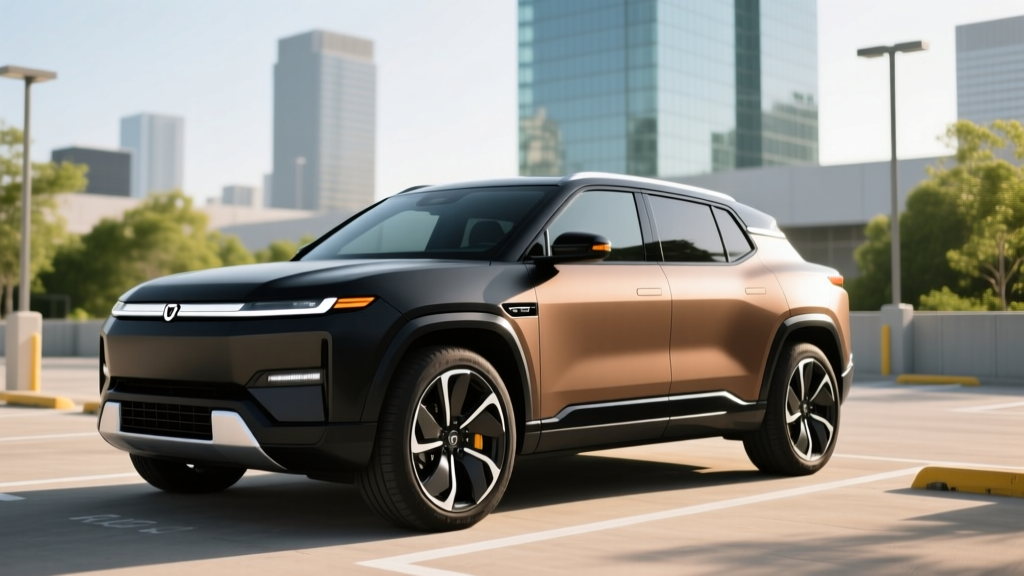
The Rivian R2 is the most anticipated mainstream electric SUV since the Tesla Model Y reshaped the segment. Slotted below the R1S and R1T, the R2 targets a lower price point while promising genuine off-road capability, a usable frunk, and a NACS-native charging experience on Tesla's Supercharger network. With first deliveries inching closer, buyers are searching for one thing above all else: the Rivian R2 production date and whether the preliminary specs justify a reservation.
As of early 2026, Rivian has confirmed that R2 assembly will begin at its Normal, Illinois factory in the first half of 2026, with initial customer deliveries expected by mid-year. A second production line at the upcoming Stanton, Georgia plant will follow later. Below, we break down every confirmed and estimated spec — and flag where numbers remain preliminary ahead of EPA certification.
Rivian R2 Production Timeline and Availability
Rivian officially unveiled the R2 in March 2024 and has since been tooling its Illinois facility for a new, more cost-efficient vehicle architecture. Here is the current production roadmap:
- Q1–Q2 2026: Initial production begins at the Normal, IL plant (pre-production and early customer units).
- Mid-2026: First customer deliveries of Launch Edition and dual-motor AWD trims.
- Late 2026–2027: Ramp-up continues; single-motor RWD variants and Standard battery pack expected to follow.
- 2028 (projected): Stanton, GA plant comes online to expand R2 and R3 capacity.
Rivian is prioritizing reservation holders in the order they were placed. If you are joining the waitlist in 2026, expect a delivery window stretching into late 2026 or 2027 depending on trim and configuration. The R2 is not yet available for immediate purchase; all specs below are based on Rivian's official announcements and are subject to EPA finalization.
Preliminary Specs: Range, Battery, and Efficiency
| Specification | Estimated / Confirmed |
|---|---|
| EPA Est. Range (Large Battery AWD) | ~330 miles (preliminary) |
| Battery Capacity (usable) | ~85 kWh (Large), ~68 kWh (Standard, est.) |
| Battery Chemistry | NMC (Large); LFP planned for Standard pack |
| Max DC Fast Charge Rate | ~200 kW peak (preliminary) |
| 10–80% DC Fast Charge Time | ~25 minutes (est.) |
| Level 2 Home Charge Rate | 11.5 kW / ~33 mi/hr |
| Charging Port | NACS (native Tesla Supercharger access) |
| 0–60 mph (Dual-Motor AWD) | ~4.5 seconds (est.) |
| Horsepower (Dual-Motor AWD) | ~450 hp (est.) |
| Drivetrain | Dual-motor AWD (Launch); single-motor RWD later |
| Efficiency | ~110 MPGe / ~30 kWh/100 mi (est.) |
| Cargo Volume (behind 2nd row) | ~34 cu ft (est. + frunk ~11 cu ft) |
| Seating | 5 passengers |
| Towing Capacity | ~3,300 lbs (est.) |
Real-World Range Expectations
The preliminary EPA estimate of ~330 miles for the Large Battery AWD variant is promising for the segment. However, real-world results will vary:
- Highway driving (70–80 mph): Expect ~270–290 miles before needing a charge stop, as aerodynamic drag reduces efficiency at sustained speed.
- Cold weather (below 32°F): Range loss of 15–25% is typical for NMC packs without aggressive preconditioning — plan for ~250–280 miles in winter conditions.
- City / mixed commuting: You may match or slightly exceed the EPA sticker thanks to regenerative braking recapturing energy in stop-and-go traffic.
Rivian's thermal management system and heat pump (confirmed standard) should mitigate cold-weather losses compared to older EV platforms, but physics still applies. Plan road trips around ~250-mile realistic segments for comfort.
Charging Speed: DC Fast, Level 2, and Supercharger Access
The R2 will ship with a native NACS charge port, meaning it plugs directly into Tesla Superchargers and the growing number of NACS-equipped public stations from Electrify America and others — no adapter required. This is a significant usability advantage over CCS-equipped competitors that still rely on dongles for Supercharger access.
| Charging Level | Power / Rate | Miles Added |
|---|---|---|
| Level 1 (120V household) | ~1.4 kW | ~4–5 miles per hour |
| Level 2 (240V home / public) | 11.5 kW | ~33 miles per hour |
| DC Fast Charge (peak) | ~200 kW | ~175 miles in 15 min (est.) |
Charging curve reality check: The ~200 kW peak rate will not be sustained across the entire session. Expect peak speeds between 10–40% state of charge, tapering progressively above 60%, and dropping sharply past 80%. A 10–80% session should take approximately 25 minutes at a 250 kW+ station, but 80–100% top-offs could add another 20+ minutes. For road trips, plan 10–80% stops and skip the last 20% unless you need it for the final leg.
At home on a 48-amp Level 2 wall connector (11.5 kW), a full overnight charge from 20% to 100% takes roughly 7 hours. Most owners will plug in nightly and rarely dip below 50%, making home charging essentially invisible to daily routines. If your home electrical panel is limited to a 200-amp service, your electrician may recommend a 40-amp circuit (9.6 kW), which still delivers ~27 miles per hour of charging — more than adequate for most commutes.
Pricing, Trims, and Federal Tax Credit Eligibility
Rivian has positioned the R2 aggressively against the Tesla Model Y, Ford Mustang Mach-E, and upcoming Hyundai Ioniq 5 SUV refresh. Here is the projected pricing structure:
| Trim | Est. MSRP | After Est. §30D Credit |
|---|---|---|
| Standard Battery RWD (2027 est.) | ~$45,000 | ~$37,500* |
| Large Battery Dual-Motor AWD | ~$52,000 | ~$44,500* |
| Launch Edition (AWD, fully loaded) | ~$58,000 | ~$50,500* |
*Federal tax credit estimates assume eligibility. Actual credit amount depends on battery sourcing and critical mineral requirements.
Federal §30D tax credit rules (2026): Under current IRS guidelines, the R2 should qualify as an SUV (MSRP cap of $80,000 — well above the R2's price). However, the full $7,500 credit depends on two sub-requirements:
- Battery component sourcing: A percentage of battery components must be manufactured or assembled in North America (threshold increases annually through 2029).
- Critical minerals: A percentage of critical minerals must be sourced from the US or a free-trade-agreement partner.
- Buyer income caps: Modified AGI must not exceed $150,000 (single), $225,000 (head of household), or $300,000 (joint).
- Point-of-sale transfer: Eligible buyers can transfer the credit to the dealer at purchase, reducing the upfront price rather than waiting for a tax refund.
Rivian's US-based manufacturing in Illinois is a strong advantage for North American content rules. However, battery cell sourcing is the variable that determines whether buyers receive the full $7,500, a partial $3,750, or no credit. Rivian has not yet published a definitive §30D eligibility breakdown for the R2. We recommend consulting a tax professional and checking the IRS's updated qualified-vehicle list closer to your delivery date.
Performance, Tech, and Interior Features
The dual-motor AWD R2 is expected to produce approximately 450 horsepower with a 0–60 mph time near 4.5 seconds — quick enough for confident highway merging and passing, though a step below the R1S Dual-Max's sub-4-second sprints. A single-motor RWD variant arriving later will prioritize efficiency over acceleration, likely targeting a ~6-second 0–60 time.
Standout tech and features:
- Rivian Driver+ (Level 2 ADAS): Enhanced highway assist with lane-centering and adaptive cruise. Hands-on-wheel supervision required at all times — this is SAE Level 2, not autonomous driving.
- 15.6-inch center touchscreen running Rivian's custom infotainment OS with native trip planning, Supercharger routing, and OTA updates.
- Gear Tunnel (optional): A pass-through storage compartment behind the rear seats, carried over from R1S/R1T DNA — ideal for skis, camping gear, or long items.
- Frunk (front trunk): Approximately 11 cu ft of lockable, weather-sealed storage — a genuine differentiator versus competitors with no front cargo space.
- Vehicle-to-Load (V2L): Power external devices (camping equipment, tools) from the R2's battery via built-in outlets.
- Off-road modes: Rivian's heritage includes genuine trail capability; expect selectable terrain modes, adjustable ride height, and underbody protection.
ADAS Limitation Notice
Rivian Driver+ is an SAE Level 2 driver-assistance system. The driver must remain fully engaged, with hands on the steering wheel and eyes on the road at all times. It does not make the R2 a self-driving vehicle. Only Level 4 services like Waymo operate without a human driver in geofenced areas.
Warranty Coverage and Battery Longevity
Rivian's warranty for the R2 is expected to mirror or slightly improve upon its R1 series coverage:
- Battery & Drive Unit: 8 years / 120,000 miles (whichever comes first), with a minimum 70% capacity retention threshold.
- Limited Vehicle Warranty: 5 years / 60,000 miles bumper-to-bumper.
- Corrosion Protection: Expected 5 years / unlimited miles.
The 8-year/120,000-mile battery warranty is competitive and aligns with federal mandates for clean-vehicle components. For buyers concerned about long-term degradation, the NMC chemistry in the Large Battery pack should retain 85–90% capacity after 100,000 miles based on industry data from similar packs (e.g., Tesla, Hyundai E-GMP). The planned LFP Standard pack will trade some energy density for significantly longer cycle life — LFP cells routinely outlast NMC by 2–3x in calendar life, making them ideal for high-mileage commuters who charge daily.
Who the Rivian R2 Is For (and Who Should Look Elsewhere)
Choose the Rivian R2 If:
- You want a compact electric SUV with genuine off-road chops and a frunk — not just a crossover with an EV badge.
- Native NACS / Supercharger access without an adapter is a top priority for road-trip charging convenience.
- You value US-built vehicles and want to maximize your chances of qualifying for the §30D federal tax credit.
- You need ~330 miles of range for 300-mile road-trip legs without excessive charge stops.
Look at Competitors If:
- Tesla Model Y Juniper: Better if you want immediate availability, a proven Supercharger ecosystem, and the lowest cost per mile in the segment.
- Hyundai Ioniq 5: Better if you prioritize ultra-fast 800V charging (~18 min 10–80%) and don't mind using a NACS adapter.
- Ford Mustang Mach-E: Better if you need a lower entry price and don't require off-road capability.
- You need 3-row seating: The R2 is strictly a 5-seater. Look at the R1S or Kia EV9 for family hauling.
Pros
- Native NACS port — no adapter needed for Tesla Superchargers
- Estimated 330-mile EPA range covers most road trips comfortably
- Frunk + optional Gear Tunnel offer class-leading cargo versatility
- US-built with strong §30D tax credit potential
- Genuine off-road capability rare in this segment
- V2L capability for camping and emergency power
Cons
- Not yet available — first deliveries mid-2026 at earliest
- DC fast charge rate (~200 kW) trails 800V competitors (Ioniq 5, EV6 at ~240–350 kW)
- Launch Edition pricing near $58K may exceed budget buyers' limits
- No 3-row option — 5-seat max
- Rivian's service center network is still expanding; rural owners may face longer wait times
- Full §30D credit amount unconfirmed pending battery sourcing finalization
Frequently Asked Questions
When exactly will the Rivian R2 start production?
Rivian has confirmed R2 production will begin at its Normal, Illinois facility in the first half of 2026, with initial customer deliveries expected by mid-2026. Reservation holders will receive priority based on their original order date.
What is the real-world range of the Rivian R2?
The preliminary EPA estimate is approximately 330 miles for the Large Battery AWD variant. In real-world highway driving at 70–80 mph, expect 270–290 miles. In cold weather (below freezing), plan for 250–280 miles. City commuters using regenerative braking may match or slightly exceed the EPA figure.
How fast does the R2 charge at home and on the road?
On a Level 2 home charger (11.5 kW / 48 amps), the R2 adds approximately 33 miles of range per hour, fully charging overnight in ~7 hours from 20%. On a DC fast charger, it peaks at ~200 kW, achieving a 10–80% charge in approximately 25 minutes. Peak rates taper above 60% SoC.
How much does the Rivian R2 cost after federal tax credits?
The dual-motor AWD Large Battery variant is estimated at ~$52,000 MSRP. If you qualify for the full $7,500 §30D credit (based on income caps, battery sourcing, and MSRP limits), the effective price drops to approximately $44,500. The base Standard Battery RWD (expected 2027) targets ~$45,000 MSRP, potentially ~$37,500 after credit. Always verify current eligibility with a tax professional and the IRS clean vehicle credit page.
Does the Rivian R2 qualify for the $7,500 federal EV tax credit?
The R2 is expected to qualify, but the exact amount ($7,500, $3,750, or $0) depends on battery component sourcing and critical mineral requirements under IRS §30D rules. Rivian's US manufacturing is favorable, but final battery cell sourcing determines the credit tier. Buyer income must also fall under IRS caps ($300K joint, $150K single). Check the IRS qualified vehicle list closer to your delivery date.
Is the Rivian R2 worth buying over the Tesla Model Y?
The R2 offers advantages in off-road capability, frunk storage, native NACS Supercharger access (same as Tesla), and a more rugged, adventure-oriented design. The Model Y currently wins on availability, proven reliability data, and potentially lower cost. If you value outdoor utility and want to avoid Tesla's brand controversies, the R2 is a strong alternative — but you will wait until mid-2026 or later for delivery.
Will the R2 have a front trunk (frunk)?
Yes. The R2 includes a weather-sealed front trunk estimated at ~11 cubic feet — large enough for a carry-on bag, charging cables, or groceries. This is a significant practical advantage over several competitors that eliminated the frunk to reduce costs.
Can the Rivian R2 tow?
Rivian estimates the R2 will tow approximately 3,300 pounds when properly equipped. This is adequate for a small teardrop trailer, bike rack, or light utility trailer, but falls short of the R1T's 11,000-pound capacity. Towing will significantly reduce range — expect a 30–40% reduction at highway speeds with a loaded trailer.
Note: All specifications, pricing, and tax credit information in this article are based on Rivian's official announcements and preliminary data as of early 2026. Final EPA range, efficiency ratings, and IRS §30D eligibility will be confirmed closer to the R2's on-sale date. Always verify with Rivian's official site, the EPA's fueleconomy.gov database, and a qualified tax professional before making a purchase decision.